Literary Fiction
All countries
Afghanistan
Algeria
Antigua and Barbuda
Argentina
Australia
Austria
Azerbaijan
Bangladesh
Barbados
Belgium
Benin
Bosnia and Herzegovina
Brazil
Bulgaria
Burkina Faso
Burundi
Cabo Verde
Canada
Central African Republic
Chile
China
Colombia
Congo, Democratic Republic
Costa Rica
Côte d’Ivoire (Ivory Coast)
Croatia
Cyprus
Czech Republic
Denmark
Dominica
Dominican Republic
Egypt
El Salvador
Estonia
Ethiopia
France
Germany
Ghana
Greece
Hungary
Iceland
India
Iran
Iraq
Ireland
Italy
Jamaica
Japan
Jordan
Kazakhstan
Kenya
Kuwait
Latvia
Lebanon
Libya
Lithuania
Madagascar
Mexico
Moldova
Morocco
Myanmar
Netherlands
New Zealand
Nigeria
North Korea
North Macedonia
Norway
Oman
Pakistan
Palestine
Philippines
Poland
Portugal
Puerto Rico
Russia
Rwanda
Saint Kitts and Nevis
Saudi Arabia
Senegal
Singapore
South Korea
Spain
Sri Lanka
Sudan
Sweden
Switzerland
Syria
Taiwan
Tanzania
Thailand
Türkiye
Uganda
United Arab Emirates
United Kingdom
United States
Uzbekistan
Vietnam
Zambia
1
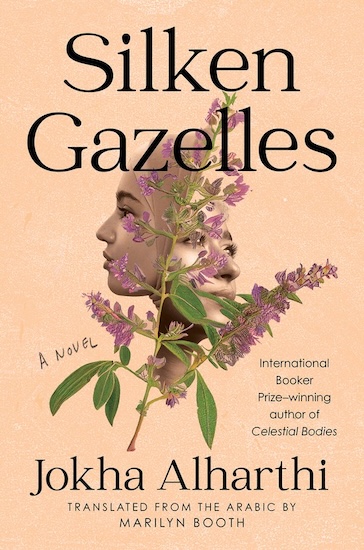
Silken Gazelles
Set between a small mountain village and the bustling capital of Muscat, Oman, Silken Gazelles explores the enduring bonds between women, the pain of separation, and the complicated ways childhood relationships shape adult lives.
Ghazaala and Asiya grow up as milk-sisters, sharing a bond considered as close as that between biological siblings. But tragedy tears them apart, and Asiya is forced to leave their village. Her disappearance leaves a lasting wound in Ghazaala’s life, prompting her to search for love and belonging elsewhere.
Years later, Ghazaala falls in love with a violinist and moves to Muscat, where she attempts to balance marriage, motherhood, and her education. At university, she befriends Harir, who begins documenting their deepening friendship in her diary. Unbeknownst to either woman, Asiya’s mysterious past connects their lives in unexpected ways.
Moving between past and present, Jokha Alharthi weaves together the stories of three women navigating love, loss, family expectations, and the pursuit of independence. The novel offers an intimate portrait of Omani society while examining how friendships evolve over time—and how the absence of someone can continue to shape the lives of those left behind.
Oman
2024
2
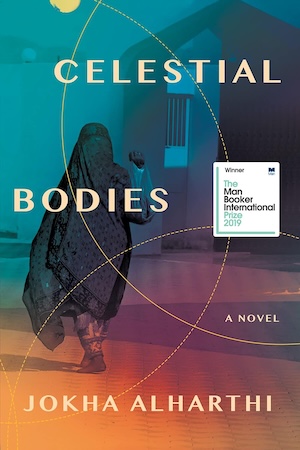
Celestial Bodies
In the Omani village of al-Awafi, three sisters navigate love, marriage, family expectations, and the changing world around them. Mayya marries Abdallah, the son of a wealthy merchant, after experiencing heartbreak. Asma enters marriage out of a sense of duty, while Khawla refuses every suitor, remaining devoted to the man she loves, who has emigrated to Canada.
Through the intertwined lives of these women and their extended family, Jokha Alharthi paints a richly layered portrait of Oman across generations. The novel moves between memories, personal histories, and shifting perspectives, gradually revealing how individual lives are shaped by social class, gender roles, and the legacy of slavery. As Oman transitions from a traditional society to a modern nation, its people struggle to reconcile inherited customs with new possibilities.
Poetic and intricately structured, Celestial Bodies explores the tension between personal desire and social obligation, showing how love, loss, and family secrets echo across generations. The novel won the 2019 Man Booker International Prize, shared by Alharthi and her translator, Marilyn Booth.
Oman
2010
3
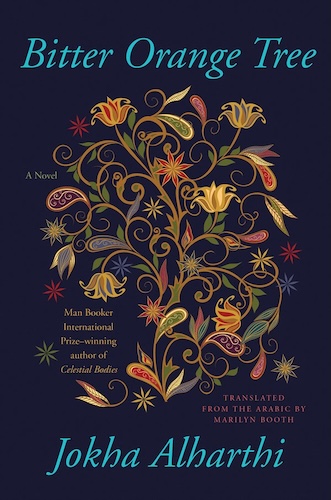
Bitter Orange Tree
When Omani student Zuhour leaves her home to study at a university in Britain, she finds herself caught between the promise of a new life and the memories of the people she has left behind. Among them is Bint Aamir, the woman she regarded as her grandmother, whose love and sacrifices shaped Zuhour’s childhood. Bint Aamir’s own life was marked by constrained choices and dreams she was never able to fulfil, finding solace beneath a beloved bitter orange tree.
As Zuhour struggles with loneliness, complicated friendships, and the challenge of finding her place in an unfamiliar country, memories and dreams draw her back to Oman. Through a lyrical, nonlinear narrative, Jokha Alharthi weaves together the lives of two women separated by generations but connected by longing, affection, and the desire for independence. Bitter Orange Tree explores how family histories, social class, and gender expectations shape women’s lives—and how understanding the past can help us imagine a different future.
Oman
2002