Literary Fiction
All countries
Afghanistan
Algeria
Antigua and Barbuda
Argentina
Australia
Austria
Azerbaijan
Bangladesh
Barbados
Belgium
Benin
Bosnia and Herzegovina
Brazil
Bulgaria
Burkina Faso
Burundi
Cabo Verde
Canada
Central African Republic
Chile
China
Colombia
Congo, Democratic Republic
Costa Rica
Côte d’Ivoire (Ivory Coast)
Croatia
Cyprus
Czech Republic
Denmark
Dominica
Dominican Republic
Egypt
El Salvador
Estonia
Ethiopia
France
Germany
Ghana
Greece
Hungary
Iceland
India
Iran
Iraq
Ireland
Italy
Jamaica
Japan
Jordan
Kazakhstan
Kenya
Kuwait
Latvia
Lebanon
Libya
Lithuania
Madagascar
Mexico
Moldova
Morocco
Myanmar
Netherlands
New Zealand
Nigeria
North Korea
North Macedonia
Norway
Oman
Pakistan
Palestine
Philippines
Poland
Portugal
Puerto Rico
Russia
Rwanda
Saint Kitts and Nevis
Saudi Arabia
Senegal
Singapore
South Korea
Spain
Sri Lanka
Sudan
Sweden
Switzerland
Syria
Taiwan
Tanzania
Thailand
Türkiye
Uganda
United Arab Emirates
United Kingdom
United States
Uzbekistan
Vietnam
Zambia
1
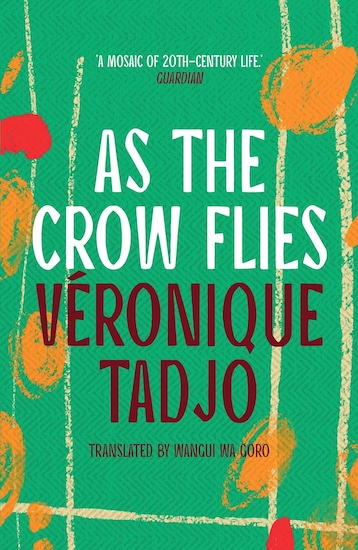
As The Crow Flies
In As the Crow Flies, Véronique Tadjo creates a lyrical, fragmented portrait of human life through a series of interconnected stories, reflections, and poetic vignettes. Rather than following a single plot, the book moves between different voices and experiences, exploring how people meet, fall in love, suffer, separate, and continue searching for meaning. Its characters are often anonymous, representing lives that might otherwise go unnoticed.
Through intimate observations, allegories, everyday encounters, and references to ancestral myths, Tadjo reflects on desire, loneliness, loss, and the fragile connections that bind people together. The narrative moves freely across emotional and geographical boundaries, suggesting that individual lives are never entirely separate but continually intersect and influence one another.
Blending prose and poetry, the book challenges conventional storytelling, embracing the uncertainty and complexity of human experience. Its central message is that life rarely follows a neat, predictable path: relationships change, people drift apart, and destinies remain unresolved. Like a crow flying across an open landscape, the narrative follows the unpredictable routes through which love and human connection unfold.
Côte d’Ivoire (Ivory Coast)
2024
2
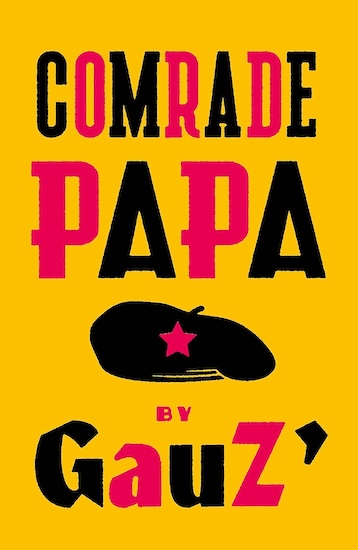
Comrade Papa
In Comrade Papa, Ivorian writer Gauz’ weaves together two stories separated by a century to examine colonialism, political ideology, and the complicated connections between Africa and Europe.
In 1880, Maxime Dabilly, a young Frenchman grieving the deaths of his parents, leaves France in search of adventure and joins a colonial expedition into Côte d’Ivoire. As he travels deeper into African territory, he becomes involved in the establishment of French trading routes and encounters the people whose lives and lands are about to be transformed by European expansion.
Nearly a century later, Anouman, a Black boy growing up in Amsterdam in a family of committed communists, is raised by a father who teaches him to oppose capitalism and imperialism. When family circumstances bring him to Côte d’Ivoire to live with his grandmother, he begins discovering his African heritage and unexpected connections to the past.
Through these parallel coming-of-age stories, Gauz’ uses irony, humour, and contrasting perspectives to challenge conventional narratives of colonial history. The novel explores how ideology shapes identity, how colonial power affects generations, and how personal histories can reveal the enduring consequences of imperialism.
Côte d’Ivoire (Ivory Coast)
2024
3
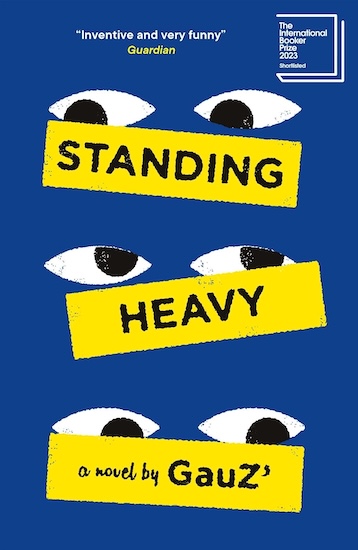
Standing Heavy
Set in Paris, Standing Heavy is a witty, politically charged novel about African immigrants working as security guards in a society that often overlooks their presence. Through the interconnected experiences of Ferdinand, Ossiri, and Kassoum, three men from Côte d’Ivoire navigating life in France across different decades, Gauz’ explores the realities of undocumented work, racial discrimination, and the enduring consequences of colonialism.
Drawing on the security guards’ observations of shoppers, wealthy passers-by, and everyday consumer habits, the novel exposes the contradictions of a society where the people responsible for protecting luxury stores remain largely invisible themselves. Its narrative moves between the 1960s, 1990s, and 2010s, connecting individual lives to France’s changing immigration policies and its complicated relationship with Africa.
Combining sharp humour, social observation, and historical reflection, Gauz’ challenges conventional ideas about belonging, labour, and power. The novel offers a distinctive perspective on the immigrant experience, showing how those positioned at the margins of society can see its inequalities more clearly than those at its centre. It was shortlisted for the 2023 International Booker Prize.
Côte d’Ivoire (Ivory Coast)
France
2022
4
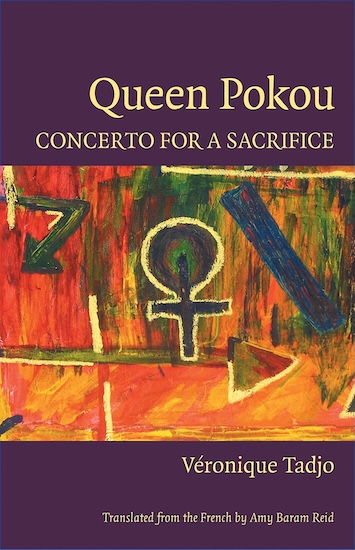
Queen Pokou
In Queen Pokou, Véronique Tadjo reimagines the legend of Queen Abraha Pokou, the eighteenth-century Akan leader traditionally credited with founding the Baoulé people of Côte d’Ivoire. According to the legend, as Pokou leads her people away from danger and across the Comoé River, she faces an impossible choice: sacrifice her only son to secure their passage and save her community. Her decision becomes a defining story of collective survival, maternal grief, and the origins of a people.
Rather than presenting the legend as one fixed historical truth, Tadjo retells it through multiple imagined possibilities. What if Pokou refused to sacrifice her child? What if grief destroyed her, or her journey led her towards a different fate? These alternative narratives challenge the authority of traditional stories and explore how myths are reshaped by the people who inherit them.
Moving between eighteenth-century West Africa and more recent conflicts across the continent, Tadjo connects the queen’s legendary sacrifice to the enduring consequences of war, displacement, and political violence. At its heart, the book asks what communities demand of their leaders—and what individuals must surrender for collective survival. It is both a reimagining of an important African legend and a reflection on motherhood, historical memory, and the human cost of founding a nation.
Côte d’Ivoire (Ivory Coast)
2009
5
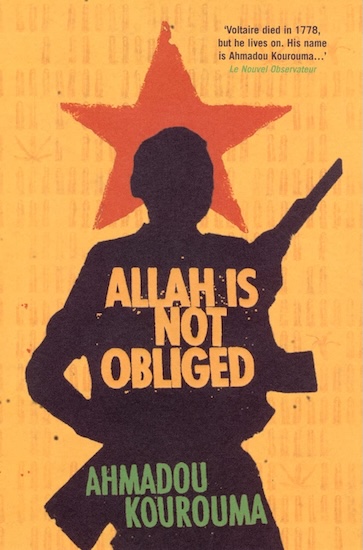
Allah Is Not Obliged
In Allah Is Not Obliged, Ahmadou Kourouma tells the harrowing story of Birahima, an orphaned boy from Côte d’Ivoire who becomes a child soldier during the civil wars that devastated Liberia and Sierra Leone. After his mother dies, Birahima sets out with Yacouba, a cunning sorcerer and confidence trickster, to find his aunt. Their journey takes a terrifying turn when they encounter armed rebel groups, and Birahima is forced into a world of violence, exploitation, and survival.
Narrated in the boy’s blunt, irreverent voice, the novel combines brutal scenes of war with dark humour and sharp satire. Birahima tries to make sense of the chaos around him using street slang, African expressions, and definitions borrowed from dictionaries, exposing the absurdity of the adult world that has stolen his childhood. Through his experiences, Kourouma examines the devastating consequences of civil war, the recruitment of children into armed groups, and the corruption and political struggles that allow such violence to continue. Despite its grim subject, the novel’s dark comedy makes its critique of war and human cruelty especially powerful.
Côte d’Ivoire (Ivory Coast)
2000
6
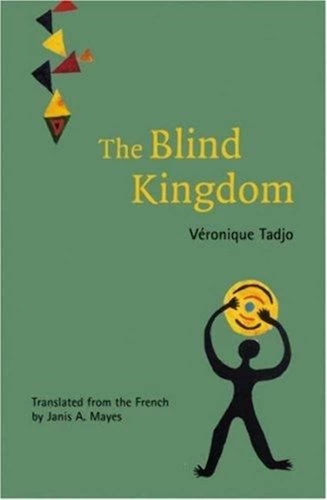
The Blind Kingdom
In The Blind Kingdom, Véronique Tadjo imagines a society thrown into chaos when a devastating natural disaster shakes the land and an epidemic of blindness takes hold. As the kingdom struggles to survive, its people face fear, uncertainty, and the collapse of the structures that once held their world together. Yet the crisis exposes more than physical suffering: it reveals the moral blindness of those in power and the indifference of a ruler who remains detached from the misery of his subjects.
At the centre of the story is a tyrannical king whose obsession with authority prevents him from recognising the suffering around him. His daughter, however, begins to question the kingdom’s injustice and becomes drawn to a man seeking to save the country from oppression. Through this allegorical tale, Tadjo explores dictatorship, social inequality, and the dangers of political leaders who refuse to see the realities faced by ordinary people.
Blending novelistic storytelling with poetic and symbolic elements, Tadjo creates a powerful reflection on a society approaching collapse. Although rooted in the political realities of Côte d’Ivoire and wider African experiences, the novel’s themes of authoritarianism, resistance, and collective responsibility resonate far beyond its setting.
Côte d’Ivoire (Ivory Coast)
1990