History
All countries
Algeria
Belarus
Cambodia
China
Cuba
Cyprus
Egypt
France
India
Iran
Ireland
Malta
Pakistan
Palestine
Russia
Taiwan
Turkmenistan
United Kingdom
United States
Yemen
1
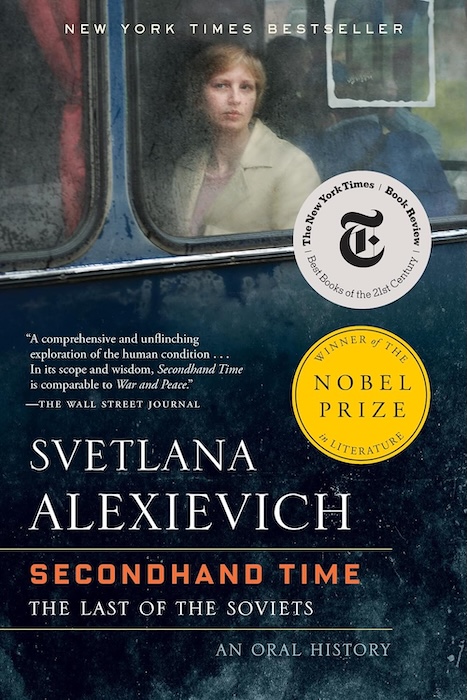
Secondhand Time
Secondhand Time is a documentary work by Nobel Prize-winning Belarusian writer Svetlana Alexievich that captures the emotional and psychological aftermath of the collapse of the Soviet Union. Through hundreds of interviews with ordinary people across the former Soviet republics, Alexievich assembles a collective portrait of a society struggling to understand the end of an entire political and cultural world. Her subjects include former Soviet idealists, disillusioned workers, survivors of political repression, and younger generations searching for meaning in a transformed society. Their testimonies reveal conflicting memories of communism, nostalgia for a lost sense of belonging, and the difficulties of adapting to new economic and social realities. Moving between intimate personal experiences and major historical events, the book explores how ideology shapes identity and how political change reverberates through private lives. Rather than presenting a single interpretation of the Soviet collapse, Alexievich allows contradictory voices to coexist, revealing the complexity of collective memory and the enduring human desire for dignity, security, and meaning.
Belarus
2013
2
Kissing the Sword: A Prison Memoir
In Kissing the Sword, Iranian writer Shahrnush Parsipur recounts her experiences as a political prisoner in post-revolutionary Iran. Following the 1979 Iranian Revolution, the new authorities began detaining people associated with opposing political views. Parsipur herself was imprisoned without formal charges, experiencing the fear, uncertainty, and psychological strain of incarceration.
Through vivid personal recollections, she describes life inside Iranian prisons, including encounters with fellow prisoners, interrogations, ideological disputes, and the harsh treatment of detainees. Her memoir also explores the restrictions imposed on women, particularly debates surrounding religious authority, dress, and individual autonomy.
Combining painful memories with moments of dark humour and reflection, Parsipur examines the relationship between political power and personal freedom. The book is both a record of her own experiences and a broader meditation on censorship, resistance, and the resilience required to preserve one’s voice under repression.
Iran
2013
3
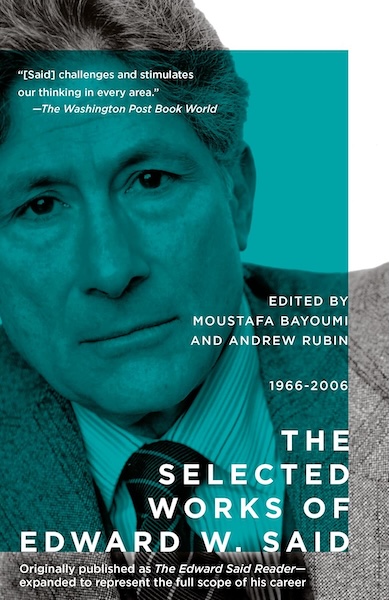
The Selected Works of Edward Said, 1966 - 2006
How do literature, culture, and politics shape the way we understand the world? And whose voices are missing from the stories history tells?
The Selected Works of Edward Said brings together key writings from four decades of one of the most influential intellectuals of the twentieth century. Edited by Moustafa Bayoumi and Andrew Rubin, this expanded collection traces Said’s thinking across subjects ranging from colonialism and Palestinian identity to literature, music, media, and the responsibilities of intellectuals.
Featuring selections from Orientalism, Culture and Imperialism, and Out of Place, alongside important essays and later writings, the collection offers an overview of Said’s evolving ideas about power, representation, and cultural identity.
Essential for understanding Said’s intellectual legacy, this volume reveals how cultural narratives influence political realities—and why questioning dominant perspectives remains vital.
Palestine
United States
2007
4
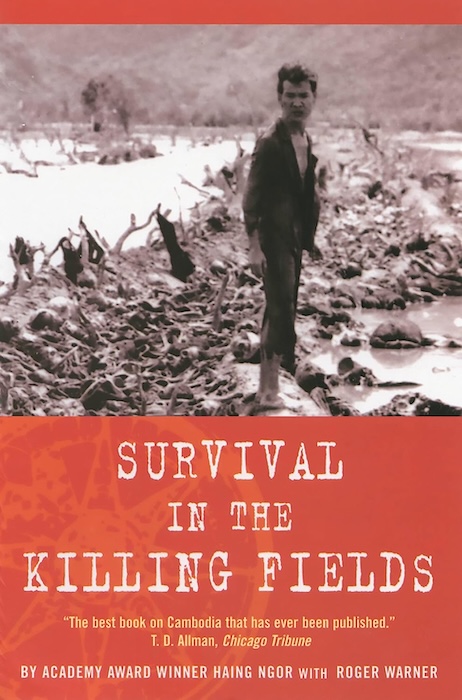
Survival in the Killing Fields
Survival in the Killing Fields is the harrowing memoir of Haing S. Ngor, a Cambodian doctor who survived the brutal rule of the Khmer Rouge between 1975 and 1979. Before the regime took power, Ngor worked as a physician and lived with his wife in Phnom Penh. Under the new government, educated professionals were persecuted, cities were emptied, and millions of Cambodians were forced into labour camps, where starvation, disease, torture, and execution became part of everyday life.
Ngor recounts his experiences of forced labour, imprisonment, and the desperate struggle to stay alive while concealing his medical training. He also describes the devastating loss of his wife and the collapse of the life he had once known. After the Khmer Rouge regime fell, he eventually escaped Cambodia and resettled in the United States.
His memoir offers a firsthand account of one of the darkest periods in Cambodian history. It is both a testimony to the suffering inflicted on ordinary people and a reflection on the resilience required to survive war, persecution, and profound personal loss.
Cambodia
2003
5
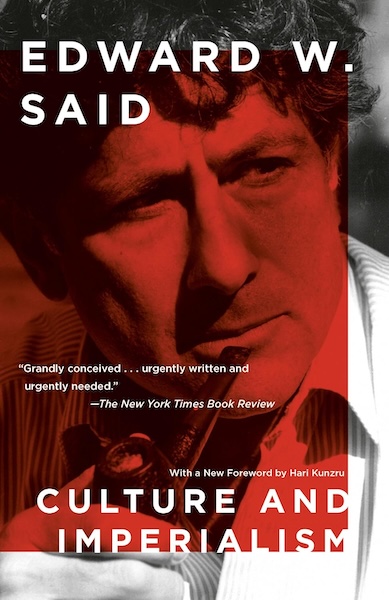
Culture and Imperialism
What if some of the world’s most celebrated literary works also reveal the hidden structures of empire?
In Culture and Imperialism, Edward W. Said examines how novels, music, and other cultural works have reflected—and sometimes reinforced—the expansion of European and American power. Building on the ideas developed in Orientalism, he explores how imperial assumptions appear in literature by writers such as Jane Austen, Joseph Conrad, and Rudyard Kipling.
Said also highlights the voices and resistance of people living under colonial rule, showing how culture can become a space for both domination and opposition. By connecting artistic expression with historical power, he invites readers to reconsider familiar literary classics and recognise the imperial histories that shaped them.
Palestine
United States
1993
6
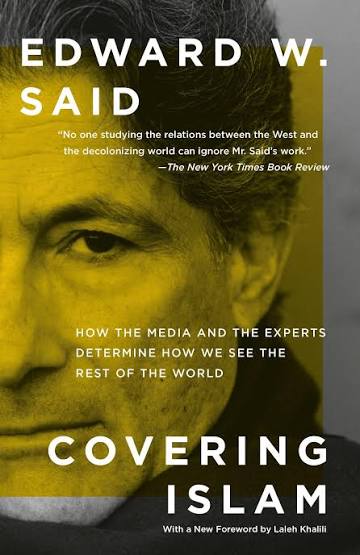
Covering Islam
How does the media shape what the world believes about Islam?
In Covering Islam, Edward W. Said investigates how Western news organisations, academics, and political commentators represent Islam and Muslim societies. He argues that media coverage often reduces diverse communities to simplified images associated with extremism, conflict, and political threat, obscuring the complexity of their histories and everyday lives.
Said explores the relationship between knowledge, media institutions, and political power, asking readers to question who gets to define another culture and whose perspectives are excluded. The book remains an important study of representation, stereotyping, and the influence of public narratives on international understanding.
Palestine
United States
1981
7
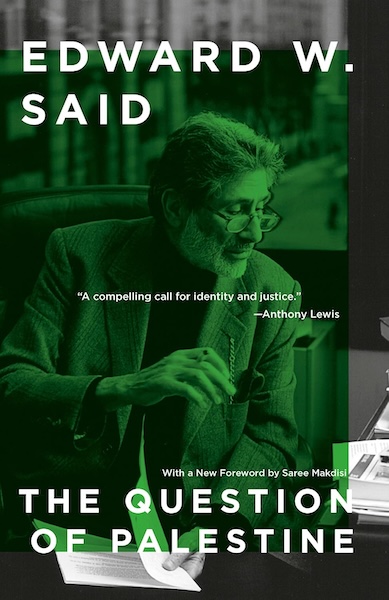
The Question of Palestine
In The Question of Palestine, Edward W. Said examines the history of Palestinian displacement, the development of Zionism, and the struggle for Palestinian national identity and self-determination. Combining historical analysis with personal insight, Said challenges dominant Western narratives that often marginalise Palestinian experiences and perspectives.
First published in 1979, this influential work explores how competing historical claims, political power, and cultural representation have shaped the Palestinian question. Said calls for Palestinians to be recognised not as abstractions in a political conflict, but as a people with their own history, identity, and aspirations.
Palestine
1979
8
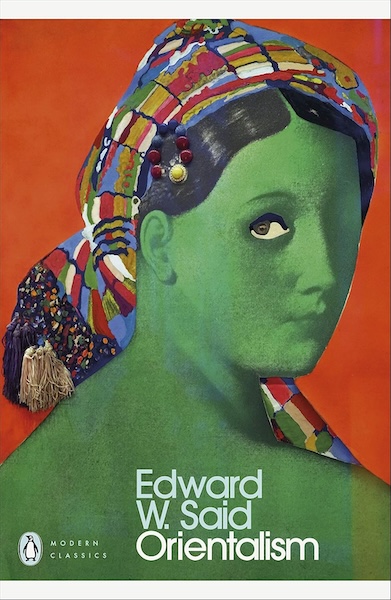
Orientalism
What if the way we see another culture tells us more about ourselves than about the people we are observing?
In Orientalism, literary critic and intellectual Edward W. Said examines how Western writers, scholars, artists, and political authorities constructed an image of the “Orient”—particularly the Arab and Islamic world—as exotic, irrational, backward, and fundamentally different from the West. He argues that these representations were not simply misunderstandings or harmless stereotypes: they became intertwined with imperial power, helping Europe justify its domination of Eastern societies.
Drawing on literature, history, art, and political thought, Said reveals how descriptions of other cultures can shape public opinion and influence the exercise of power. He challenges readers to question who has the authority to represent a people, whose voices are excluded, and how supposedly objective knowledge can reinforce existing hierarchies.
First published in 1978, Orientalism transformed postcolonial studies and continues to influence debates about cultural representation, racism, and the relationship between knowledge and power. It invites us to reconsider not only how the East has been portrayed, but also how these inherited images continue to shape the world today.
Palestine
United States
1978
9
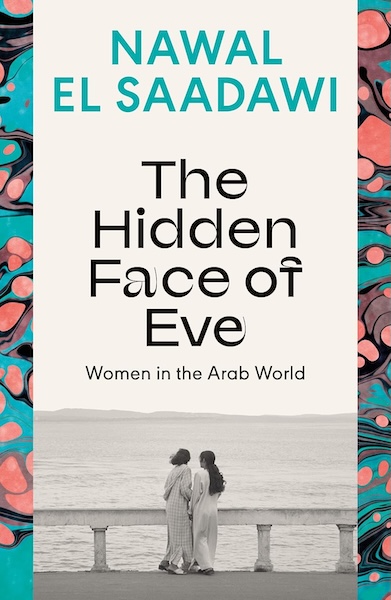
The Hidden Face of Eve
What lies beneath the traditions, laws, and social expectations that have shaped women’s lives for generations?
Drawing on her experience as a physician and feminist activist, Nawal El Saadawi examines the realities of women’s lives across the Arab world. She confronts subjects often pushed into silence, including female genital mutilation, sexual violence, honour killings, reproductive rights, and legal inequality.
Combining personal testimony, historical analysis, and cultural criticism, El Saadawi challenges the patriarchal structures used to justify women’s oppression. She also recovers the histories of women who resisted restrictive gender roles, questioning the boundaries between tradition, religion, and power.
First published in Arabic in 1977, this uncompromising work remains a landmark of Arab feminist writing and a powerful call for women’s freedom and equality.
Egypt
1977
10
God Dies by the Nile and Other Novels
What lies beneath the traditions, laws, and social expectations that have shaped women’s lives for generations?
In The Hidden Face of Eve, Egyptian writer, physician, and feminist Nawal El Saadawi examines the realities of women’s lives across the Arab world, drawing on her medical work in rural Egypt and her experiences as a women’s rights activist. She confronts subjects often pushed into silence, including female genital mutilation, sexual violence, honour killings, reproductive rights, and legal inequality.
Moving between personal testimony, historical analysis, religion, and cultural criticism, El Saadawi challenges the social structures used to justify women’s oppression. She also explores the historical contributions of Arab women and the struggles of those who have resisted restrictive gender roles.
Passionate and uncompromising, this influential work asks readers to question the boundaries between tradition, faith, and patriarchal power. First published in Arabic in 1977, The Hidden Face of Eve remains a landmark of Arab feminist writing and a powerful call for women’s freedom and equality.
Egypt
1977
11
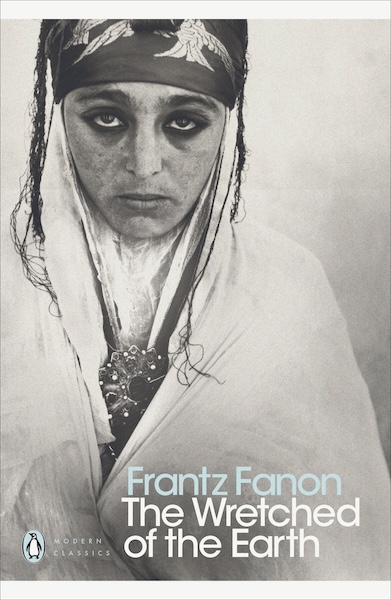
The Wretched of the Earth
What happens to a people when their land, culture, and identity are shaped by colonial rule—and what does it take to become free?
In The Wretched of the Earth, psychiatrist and revolutionary thinker Frantz Fanon examines the psychological, cultural, and political consequences of colonialism. Writing against the backdrop of Algeria’s struggle for independence from France, Fanon explores how colonial systems dehumanise the oppressed, reshape their sense of self, and create conditions for resistance.
Fanon confronts the role of violence in revolutionary movements while also warning that independence alone does not guarantee liberation. New national elites can reproduce the inequalities of colonial rule, leaving ordinary people excluded from the freedom they fought to achieve. He argues for a deeper transformation: one that challenges inherited hierarchies and creates a new society grounded in human dignity.
Passionate, provocative, and influential, The Wretched of the Earth remains a foundational work of anti-colonial thought. It asks readers to consider not only how colonial power is dismantled, but also what kind of world should replace it.
Algeria
1961
12
Dying Colonialism
How does a people’s struggle for freedom transform not only a nation, but also the everyday lives of its people?
In A Dying Colonialism, Frantz Fanon examines the Algerian Revolution against French colonial rule, revealing how the fight for independence reshaped Algerian society from within. Through the changing roles of women, the influence of radio, the use of medicine, and transformations in family life, Fanon explores how ordinary cultural practices became intertwined with political resistance.
Practices once dismissed or misunderstood by colonial authorities took on new meanings as Algerians challenged the structures imposed upon them. Clothing, language, technology, and social relationships became part of a wider struggle over identity and power. Fanon shows that decolonisation is not simply a political event: it reaches into the most intimate aspects of how people live, communicate, and understand themselves.
Based on his experience of the Algerian liberation movement, this influential work reveals colonialism as a system that attempts to control both institutions and everyday life. It also shows how resistance can transform a society in unexpected ways.
Algeria
1959