Historical Fiction
All countries
Afghanistan
Albania
Algeria
Angola
Antigua and Barbuda
Argentina
Armenia
Australia
Austria
Azerbaijan
Bangladesh
Barbados
Belize
Benin
Bosnia and Herzegovina
Brazil
Bulgaria
Burundi
Canada
Chile
China
Congo, Democratic Republic
Côte d’Ivoire (Ivory Coast)
Croatia
Cuba
Cyprus
Denmark
Djibouti
Dominica
Dominican Republic
Egypt
El Salvador
Ethiopia
Fiji
France
Georgia
Germany
Ghana
Greece
Guatemala
Hungary
Iceland
India
Indonesia
Iran
Iraq
Ireland
Italy
Jamaica
Japan
Kazakhstan
Kenya
Kuwait
Latvia
Lebanon
Libya
Madagascar
Malaysia
Mexico
Moldova
Morocco
Myanmar
Netherlands
Nigeria
North Korea
Oman
Pakistan
Palestine
Philippines
Poland
Portugal
Puerto Rico
Romania
Rwanda
Saudi Arabia
Senegal
Singapore
Slovenia
South Africa
South Korea
Spain
Sri Lanka
Sudan
Sweden
Switzerland
Syria
Taiwan
Tanzania
Thailand
Türkiye
Turkmenistan
Uganda
Ukraine
United Arab Emirates
United Kingdom
United States
Uruguay
Uzbekistan
Vietnam
Yemen
Zambia
Zimbabwe
1
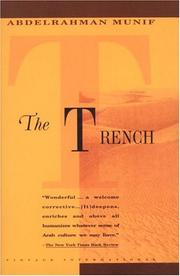
The Trench
The Trench is the second novel in Abdul Rahman Munif’s Cities of Salt quintet, which explores the transformation of the Arabian Peninsula following the discovery of oil. Set in the fictional emirate of Harran, the novel follows the growing power of the ruling elite as oil wealth reshapes society, politics, and everyday life. Foreign interests, local rulers, and emerging institutions compete for influence, while ordinary people struggle to understand and adapt to a rapidly changing world.
Through vivid characters and a broad social panorama, Munif examines how economic modernization can deepen inequality, weaken traditional communities, and concentrate power in the hands of a privileged few. The novel offers a critical portrait of a society caught between inherited customs and the disruptive forces of global capitalism, exposing the human costs behind promises of progress.
Saudi Arabia
1991
2
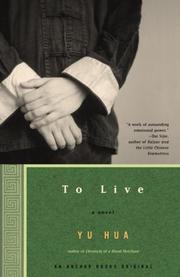
To Live
To Live follows Fugui, the son of a wealthy Chinese landowner whose reckless gambling eventually costs his family its fortune. Forced to abandon his privileged lifestyle, Fugui begins a difficult journey through decades of political and social upheaval in twentieth-century China, including the Chinese Civil War, the Great Leap Forward, and the Cultural Revolution. As the country undergoes profound transformations, Fugui and his family struggle to survive poverty, political persecution, and personal tragedy.
Told through Fugui’s recollections to a travelling folk singer, the novel offers an intimate portrait of ordinary people caught in the forces of history. Despite repeated losses, Fugui continues to endure, finding meaning in the simple act of living. Yu Hua combines stark realism with moments of dark humour and tenderness, exploring family bonds, resilience, and the fragility of human happiness. Ultimately, To Live is a moving reflection on suffering and survival, suggesting that the determination to continue can itself become a form of courage.
China
1993
3
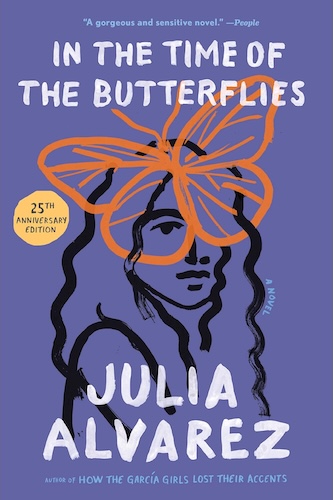
In the Time of the Butterflies
Four sisters. One brutal dictatorship. A courage that would outlive them all.
In the Dominican Republic under Rafael Trujillo’s oppressive regime, the Mirabal sisters lead seemingly ordinary lives until they are drawn into the underground resistance. As Minerva, Patria, and María Teresa risk everything to challenge the dictator, their youngest sister, Dedé, must confront the consequences of their growing defiance. Inspired by the true story of the Mirabal sisters, three of whom were murdered on Trujillo’s orders in 1960, Julia Alvarez brings their lives to the page with tenderness and emotional power. Through love, family bonds, and acts of extraordinary bravery, this moving novel explores the price of resistance and the strength it takes to stand against tyranny. The sisters, remembered as Las Mariposas (the Butterflies), became enduring symbols of freedom and courage.
Dominican Republic
1994
4
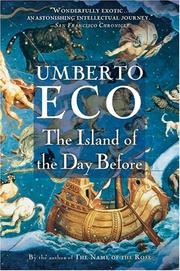
The Island of the Day Before
Set in the seventeenth century, The Island of the Day Before follows Roberto della Griva, an Italian nobleman who survives a shipwreck and finds himself stranded aboard an abandoned vessel in the South Pacific. The ship lies near a beautiful island that he can see but cannot reach, partly because he cannot swim. Alone, Roberto reflects on his childhood, his experiences of war, his education, and his complicated ideas about love and destiny. He becomes increasingly preoccupied with the island’s location on the opposite side of the international date line, imagining that it might hold the secret to travelling into yesterday. Through his reflections and encounters with the history of scientific discovery, Eco explores the relationship between time, knowledge, and human perception. Blending historical fiction, philosophy, and adventure, the novel examines the limits of reason and the ways solitude can transform a person’s understanding of reality.
Italy
1994
5
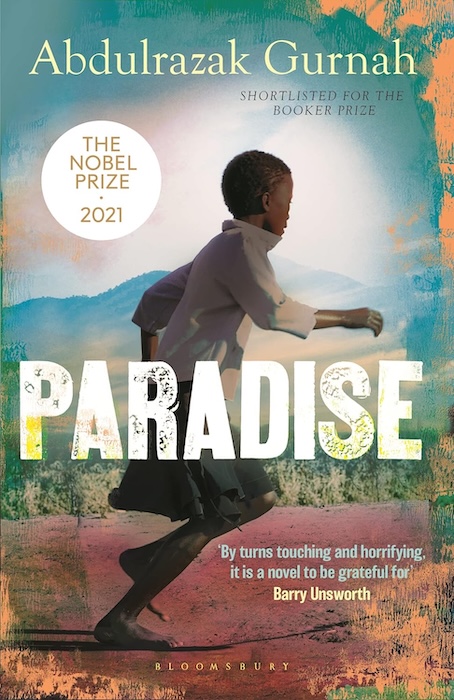
Paradise
Paradise follows Yusuf, a twelve-year-old boy growing up in East Africa at the beginning of the twentieth century. When his father falls into debt, Yusuf is handed over to Aziz, a wealthy merchant, as repayment. Taken away from his family, Yusuf begins working for the merchant and gradually discovers a world shaped by trade, cultural exchange, religious traditions, and colonial expansion. His journeys through towns and trading routes expose him to the inequalities and tensions of a society on the brink of profound change. As Yusuf grows older, he struggles to understand his place in a world where freedom is limited by economic dependence, social hierarchies, and the ambitions of powerful men. Drawing on East African history and the region’s diverse cultural influences, Gurnah explores exploitation, displacement, desire, and the loss of innocence. The novel’s title evokes a promised paradise that remains elusive, revealing the gap between the beauty of the natural world and the harsh realities of human power and domination.
Tanzania
1994
6
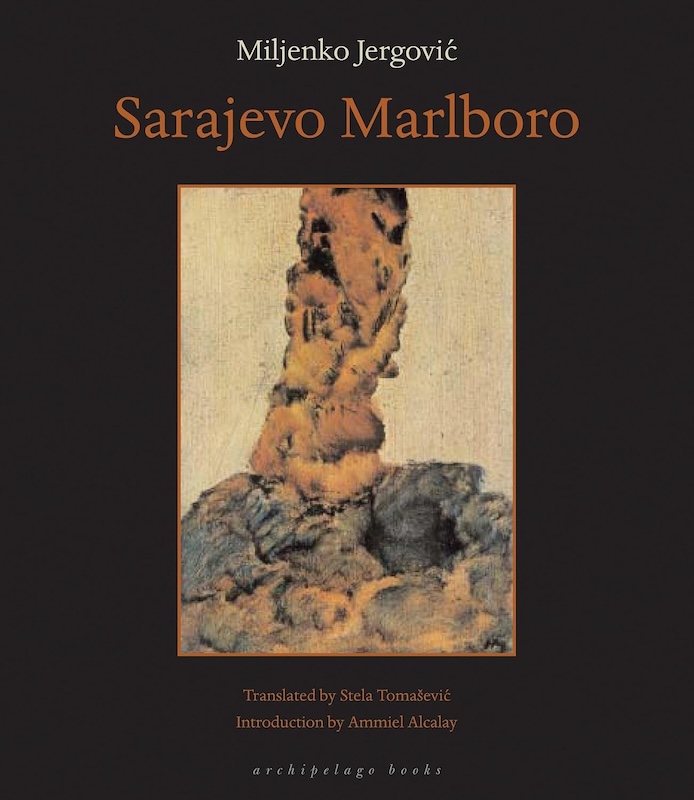
Sarajevo Marlboro
Sarajevo Marlboro is a collection of short stories set during the Bosnian War, portraying the lives of ordinary people caught in the siege of Sarajevo. Rather than focusing on battles or political leaders, Miljenko Jergović turns his attention to the everyday experiences of civilians as familiar routines collapse under the pressure of violence, fear, and uncertainty.
Through intimate portraits of neighbours, families, friends, and strangers, the stories reveal how war transforms relationships, reshapes identities, and exposes both the cruelty and compassion of human nature. Small, seemingly insignificant details—a household object, a remembered conversation, or a fleeting act of kindness—become powerful symbols of a world that is disappearing. Written with restraint, dark humour, and deep humanity, the collection offers a fragmented yet deeply personal portrait of Sarajevo and the lasting emotional consequences of conflict.
Bosnia and Herzegovina
1994
7
The Land of Green Plums
Set in communist Romania under the dictatorship of Nicolae Ceaușescu, The Land of Green Plums follows a group of young people from minority backgrounds who struggle to survive in a society ruled by fear, surveillance, and political repression. After a young woman from a German-speaking community begins studying in the city, she becomes part of a circle of friends whose lives are increasingly threatened by the secret police. As they face interrogation, betrayal, and the constant possibility of violence, their friendships become both a source of comfort and a test of loyalty. Through fragmented storytelling and haunting imagery, Herta Müller portrays the psychological consequences of authoritarianism and the erosion of trust under constant surveillance. The novel explores the struggle for personal freedom, the fragility of human relationships, and the lasting trauma inflicted by a regime that seeks to control every aspect of life.
Romania
1994
8
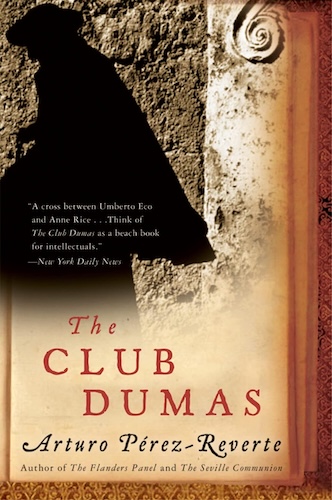
The Club Dumas
Lucas Corso is a cynical, resourceful book detective who makes his living tracking down rare editions for wealthy collectors. When he is hired to authenticate a manuscript believed to be a chapter from Alexandre Dumas’s The Three Musketeers, he finds himself drawn into a mystery involving a suspicious death, literary forgery, and a secret society of Dumas enthusiasts. But another assignment soon takes him into even darker territory: a wealthy collector wants him to verify a rare book entitled The Nine Doors of the Kingdom of Shadows, a mysterious volume said to contain instructions for summoning the Devil.
As Corso travels between Madrid, Toledo, and Paris, he encounters obsessive bibliophiles, enigmatic women, and individuals whose fascination with forbidden knowledge borders on madness. The two investigations begin to intertwine, blurring the boundaries between literary scholarship and the occult. With every clue, Corso becomes less certain about whom he can trust—or whether the dangers surrounding him are entirely human.
Combining intellectual mystery, Gothic suspense, and a playful exploration of literary history, Pérez-Reverte creates a thrilling tribute to the power of books and the obsessions they inspire. The Club Dumas asks whether rare books are merely objects to possess or gateways to worlds that might be better left unexplored.
Spain
1996
9
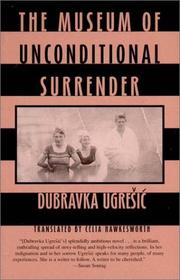
The Museum of Unconditional Surrender
The Museum of Unconditional Surrender explores exile, memory, and the fragmented experience of living after the breakup of Yugoslavia. Its unnamed narrator, a writer living in Berlin, moves through a world of photographs, objects, recollections, and encounters that evoke a lost homeland. Ordinary details—a family photograph, a recipe, a personal possession—become fragments through which she attempts to reconstruct a life disrupted by political upheaval and displacement. Rather than following a conventional plot, the novel unfolds as a series of reflections that mirror the instability of memory itself. Ugrešić examines how exile transforms a person’s relationship with language, history, and belonging, particularly when the country that once provided a sense of identity no longer exists in the same form. The novel portrays the difficulty of preserving a coherent self when personal memories are inseparable from a fractured collective past.
Croatia
1996
10
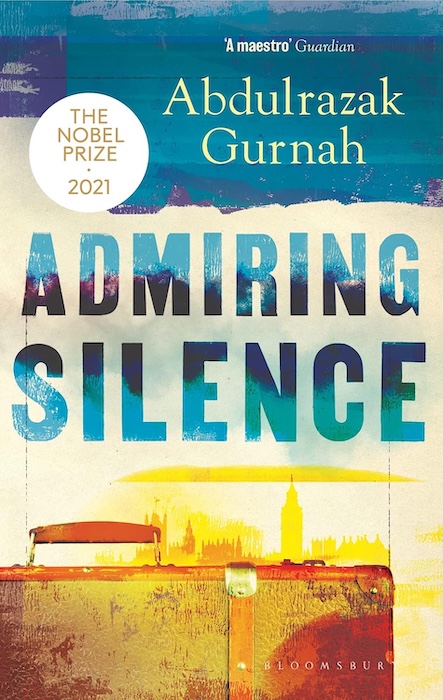
Admiring Silence
Admiring Silence tells the story of an unnamed man from Zanzibar who escapes to England in the 1960s and builds a new life as a teacher. He forms a relationship with an English woman and raises their daughter while concealing uncomfortable truths about his background and experiences. For years, he presents his family with a carefully constructed version of his past, using silence and storytelling to protect himself from painful memories. When he eventually returns to Zanzibar after two decades away, he discovers that the place he remembers has changed and that he no longer entirely belongs there. Through the narrator’s divided loyalties, Gurnah examines migration, cultural displacement, self-deception, and the tension between the identity people present to others and the lives they have actually lived.
Tanzania
1996
11
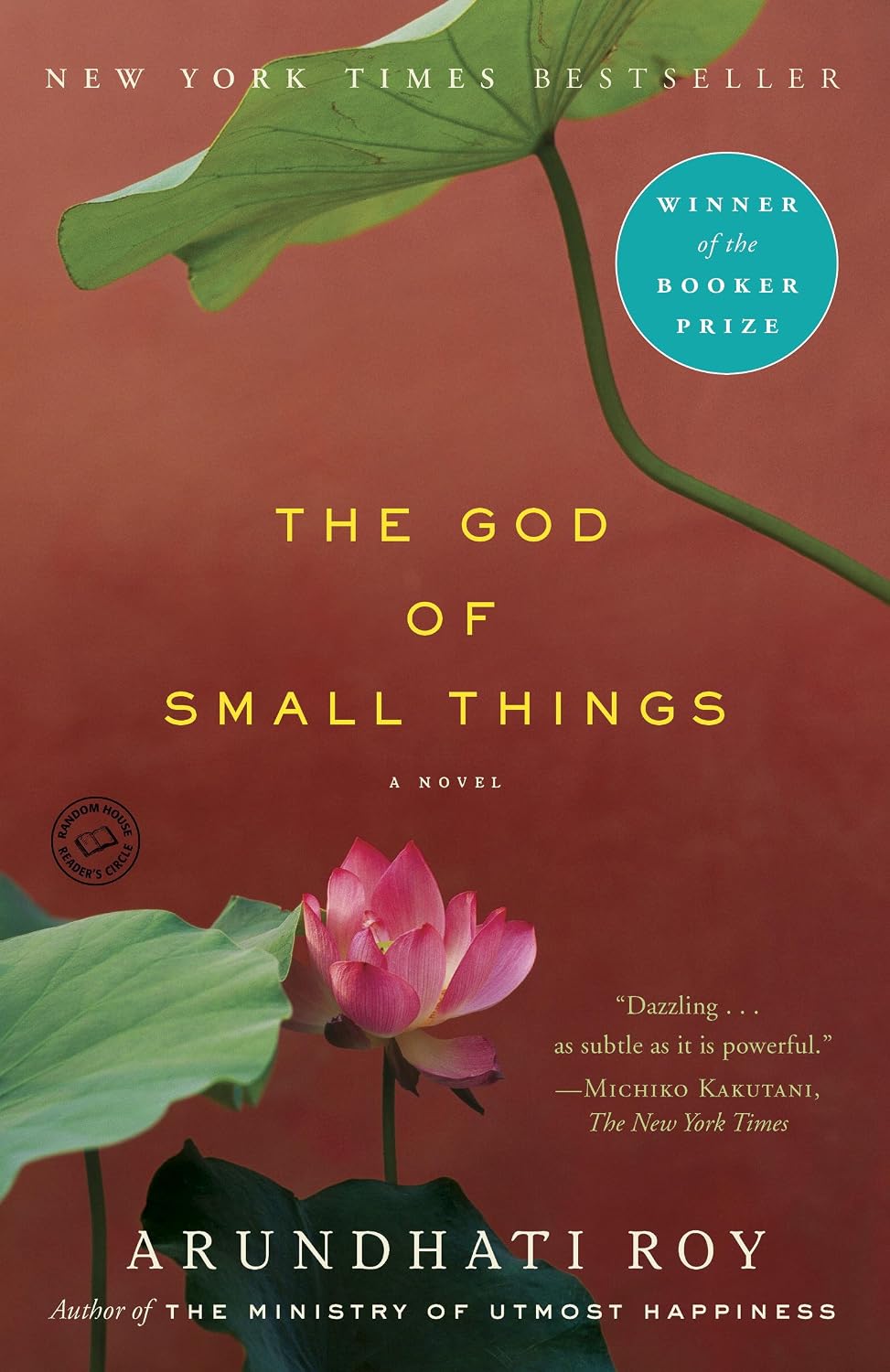
The God of Small Things
Set in Kerala, southern India, The God of Small Things tells the story of fraternal twins Estha and Rahel, whose childhood is shattered by a series of tragic events that permanently alter their family. Through a nonlinear narrative that moves between their childhood in 1969 and their reunion as adults, the novel explores the consequences of forbidden love, social prejudice, and deeply rooted cultural expectations. When their cousin Sophie Mol visits from England, an unexpected tragedy exposes the family’s hidden tensions and the cruelty of the social hierarchies governing their lives. At the centre of the story is Ammu, the twins’ mother, whose relationship with Velutha, a man from an oppressed caste, challenges the rigid boundaries of Indian society. Roy’s lyrical prose captures the beauty of childhood perception alongside the devastating effects of discrimination, silence, and loss. The novel examines how seemingly small moments can shape entire lives, revealing the profound consequences of breaking society’s unwritten rules.
India
1997
12

Independent People
Independent People follows Bjartur of Summerhouses, a stubborn Icelandic sheep farmer determined to achieve financial independence after years of working as a tenant. Having finally acquired his own small farm, he dedicates his life to preserving his freedom, believing that self-sufficiency is the highest form of dignity. However, his relentless pursuit of independence comes at a devastating cost to his family, particularly his wife and children, who endure poverty, isolation, and emotional hardship. Set against Iceland’s harsh rural landscape in the early twentieth century, the novel portrays the struggle between individual ambition and human connection. Through Bjartur’s tragic determination, Halldór Laxness explores poverty, pride, social inequality, and the contradictions of freedom, questioning whether a life entirely devoted to independence can ever lead to genuine happiness.
Iceland
1997