Historical Fiction
All countries
Afghanistan
Albania
Algeria
Angola
Antigua and Barbuda
Argentina
Armenia
Australia
Austria
Azerbaijan
Bangladesh
Barbados
Belize
Benin
Bosnia and Herzegovina
Brazil
Bulgaria
Burundi
Canada
Chile
China
Congo, Democratic Republic
Côte d’Ivoire (Ivory Coast)
Croatia
Cuba
Cyprus
Denmark
Djibouti
Dominica
Dominican Republic
Egypt
El Salvador
Ethiopia
Fiji
France
Georgia
Germany
Ghana
Greece
Guatemala
Hungary
Iceland
India
Indonesia
Iran
Iraq
Ireland
Italy
Jamaica
Japan
Kazakhstan
Kenya
Kuwait
Latvia
Lebanon
Libya
Madagascar
Malaysia
Mexico
Moldova
Morocco
Myanmar
Netherlands
Nigeria
North Korea
Oman
Pakistan
Palestine
Philippines
Poland
Portugal
Puerto Rico
Romania
Rwanda
Saudi Arabia
Senegal
Singapore
Slovenia
South Africa
South Korea
Spain
Sri Lanka
Sudan
Sweden
Switzerland
Syria
Taiwan
Tanzania
Thailand
Türkiye
Turkmenistan
Uganda
Ukraine
United Arab Emirates
United Kingdom
United States
Uruguay
Uzbekistan
Vietnam
Yemen
Zambia
Zimbabwe
1

Of Strangers and Bees
In Of Strangers and Bees, Uzbek writer Hamid Ismailov weaves together the experiences of a contemporary exile and the extraordinary life of Avicenna, the celebrated medieval philosopher, physician, and polymath. The novel follows Sheikhov, an Uzbek writer living far from his homeland, who awakens from a troubling dream convinced that Avicenna continues to wander the world in different incarnations. Their journeys echo one another across centuries and cultures, moving through Ottoman Turkey, medieval Germany, and Renaissance Italy.
Blending historical fiction, philosophical reflection, traditional storytelling, and Sufi mysticism, Ismailov explores the meaning of belonging and the loneliness of life in exile. The novel also draws on Hayy ibn Yaqzan, a landmark work of medieval Islamic philosophy concerned with knowledge, reason, and spiritual awakening. Through layered narratives and allegorical episodes, Ismailov considers how people search for truth and wisdom while negotiating the boundaries between cultures, histories, and identities. The result is an imaginative meditation on displacement, intellectual freedom, and the enduring human quest for understanding.
Uzbekistan
2019
2

The Devils' Dance
In 1937, during Stalin’s Great Terror, the celebrated Uzbek writer Abdulla Qodiriy is arrested by the Soviet secret police and imprisoned in Tashkent. Facing brutal interrogations and the constant threat of execution, he seeks refuge in his imagination, attempting to reconstruct the historical novel he was writing before his arrest. His unfinished work tells the story of Oyxon, a nineteenth-century enslaved girl who rises to prominence in the courts of Central Asian khans, only to become entangled in a dangerous world of political rivalries, forced marriages, and imperial intrigue. As Qodiriy develops Oyxon’s story in his mind, the boundaries between his fictional world and his own terrifying circumstances begin to dissolve. Their experiences mirror one another, connecting the struggles of a woman fighting for agency in a patriarchal society with those of a writer facing persecution under a repressive regime. Rich in Uzbek poetry, folklore, and historical detail, Hamid Ismailov’s novel is both a tribute to Central Asian literary traditions and a powerful meditation on artistic freedom, cultural identity, and the devastating consequences of political oppression.
Uzbekistan
2018
3
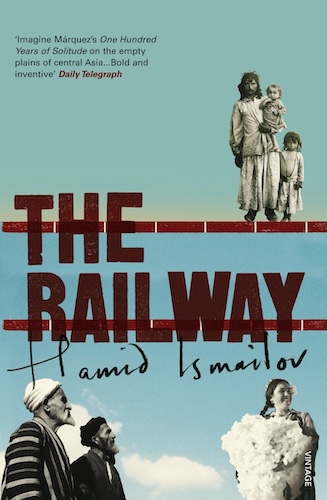
The Railway
In the fictional Uzbek town of Gilas, situated along the ancient Silk Road, a railway station becomes the centre of an extraordinary tapestry of human lives. Spanning much of the twentieth century, The Railway follows a diverse community of Uzbeks, Russians, Persians, Jews, Koreans, Tatars, and other ethnic groups whose lives intersect amid the upheavals of modern Central Asian history. Among its colourful inhabitants are an alcoholic intellectual, a Russian Orthodox priest, a formidable police chief, and an elderly moneylender. Through their stories, Hamid Ismailov captures a society caught between tradition and modernity, religious beliefs and revolutionary ideology, and local loyalties and outside influences. The arrival of the railway represents both opportunity and disruption, connecting this isolated community to a rapidly changing world while transforming its social structures. Blending humour, folklore, philosophical reflection, and historical observation, Ismailov creates a richly layered portrait of a multicultural society confronting the consequences of imperial expansion and Soviet rule. The novel offers a distinctive perspective on Central Asia’s complex cultural heritage and the profound changes that shaped the region during the twentieth century.
Uzbekistan
2006