Historical Fiction
All countries
Afghanistan
Albania
Algeria
Angola
Antigua and Barbuda
Argentina
Armenia
Australia
Austria
Azerbaijan
Bangladesh
Barbados
Belize
Benin
Bosnia and Herzegovina
Brazil
Bulgaria
Burundi
Canada
Chile
China
Congo, Democratic Republic
Côte d’Ivoire (Ivory Coast)
Croatia
Cuba
Cyprus
Denmark
Djibouti
Dominica
Dominican Republic
Egypt
El Salvador
Ethiopia
Fiji
France
Georgia
Germany
Ghana
Greece
Guatemala
Hungary
Iceland
India
Indonesia
Iran
Iraq
Ireland
Italy
Jamaica
Japan
Kazakhstan
Kenya
Kuwait
Latvia
Lebanon
Liberia
Libya
Madagascar
Malaysia
Mali
Mexico
Moldova
Morocco
Mozambique
Myanmar
Netherlands
Nigeria
North Korea
Oman
Pakistan
Palestine
Philippines
Poland
Portugal
Puerto Rico
Romania
Rwanda
Saudi Arabia
Senegal
Sierra Leone
Singapore
Slovenia
South Africa
South Korea
Spain
Sri Lanka
Sudan
Sweden
Switzerland
Syria
Taiwan
Tanzania
Thailand
Tunisia
Türkiye
Turkmenistan
Uganda
Ukraine
United Arab Emirates
United Kingdom
United States
Uruguay
Uzbekistan
Vietnam
Yemen
Zambia
Zimbabwe
1
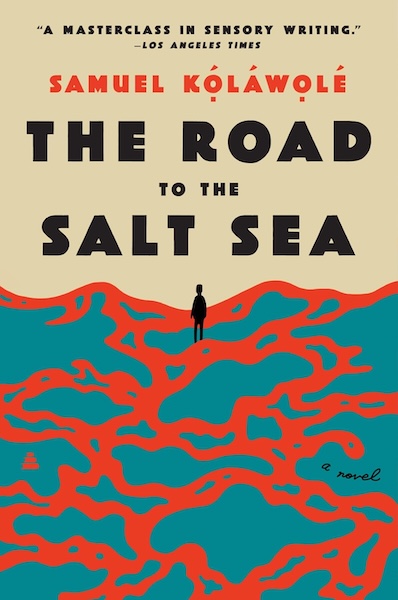
The Road to the Salt Sea
Able God is a bright young Nigerian man with an engineering degree, a love of chess, and hopes for a better future. But instead of building the life he imagined, he works long hours delivering room service at a luxury hotel, serving wealthy guests while struggling to make ends meet. When an encounter with a powerful and dangerous hotel guest turns violent, Able God finds himself caught in a situation that leaves him with few options. Fearing the consequences, he flees Nigeria and joins a group of migrants travelling across the Sahara toward Europe.
Led by a charismatic religious figure, the travellers embark on a perilous journey through Niger and Libya, hoping to reach a place where they can begin again. Instead, they encounter human traffickers, starvation, exploitation, and violence. As survival becomes his only priority, Able God is forced to question his beliefs about morality, faith, and the possibility of a better life. In The Road to the Salt Sea, Samuel Kolawole offers a powerful portrait of migration, exposing the human cost of inequality and the desperate choices made by those seeking safety and opportunity beyond their homeland.
Libya
Nigeria
Italy
2024
2
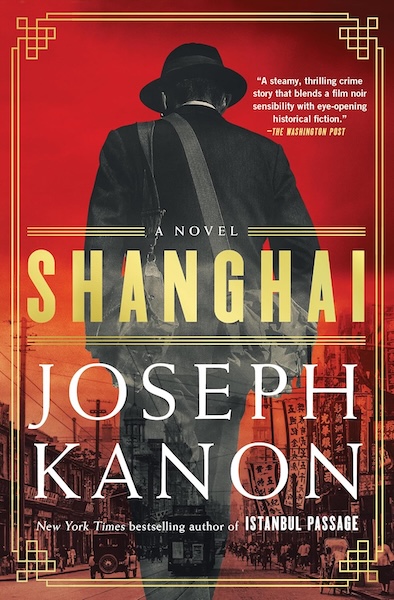
Shanghai
In 1938, as Nazi persecution intensifies across Europe, Shanghai becomes an unlikely refuge for Jewish refugees fleeing Germany. But escaping persecution does not mean escaping danger.
Daniel Lohr, a German Jew who has survived the Gestapo, arrives in Shanghai hoping to begin again. Penniless and stateless, he turns to his uncle Nathan, a mysterious businessman who runs a glamorous nightclub and maintains dangerous connections with the city’s criminal underworld. Meanwhile, Daniel cannot forget Leah, a woman he met during the voyage to China, whose fate becomes entangled with his own.
As political tensions rise and Japanese occupation looms, Daniel is drawn into a world of gang warfare, corruption, espionage, and shifting loyalties. In a city where survival depends on knowing whom to trust, every alliance carries a price—and the past is never entirely left behind.
Atmospheric and suspenseful, Shanghai brings to life a city caught between cultures and conflicts, where desperate refugees, gangsters, and political operatives struggle to survive. Joseph Kanon explores the moral compromises people make in extraordinary circumstances, asking how much of oneself can be sacrificed in the pursuit of safety.
China
Germany
2024
3
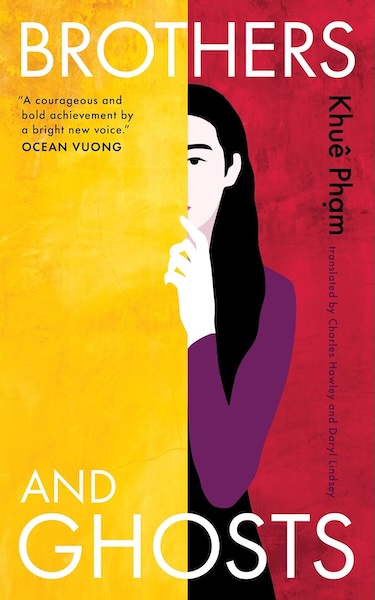
Brothers and Ghosts
Some families carry their history in photographs and stories. Others bury it in silence, leaving the next generation to piece together the fragments.
Kiều, a Vietnamese-German journalist living in Berlin, calls herself Kim because it is easier for Europeans to pronounce. She has spent years distancing herself from her Vietnamese heritage, content to live without asking too many questions about her family’s past. But when an unexpected message arrives from her estranged uncle in California announcing that her grandmother is dying, the carefully maintained distance begins to collapse.
Travelling to America with her parents, Kiều encounters a family divided by the Vietnam War. Her father supported the communist revolution, while his brother sided with the Americans. Decades of silence have left their competing memories unresolved, and the family reunion brings buried conflicts, painful loyalties, and forgotten stories back to the surface.
Moving between generations and continents, Brothers and Ghosts explores how war shapes families long after the fighting ends. Khuê Phạm examines the complicated inheritance of migration: the languages lost, identities reshaped, and histories passed down incompletely. It is a moving story about belonging, memory, and the courage to ask questions that previous generations could not bear to answer.
Vietnam
Germany
United States
2024
4
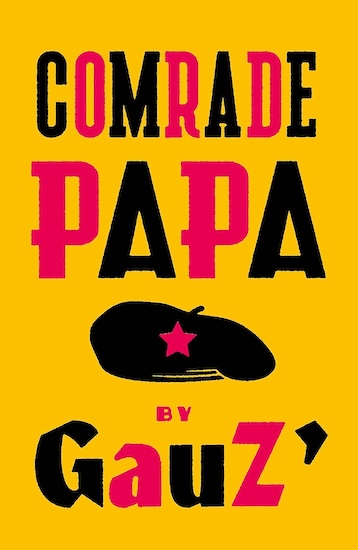
Comrade Papa
In Comrade Papa, Ivorian writer Gauz’ weaves together two stories separated by a century to examine colonialism, political ideology, and the complicated connections between Africa and Europe.
In 1880, Maxime Dabilly, a young Frenchman grieving the deaths of his parents, leaves France in search of adventure and joins a colonial expedition into Côte d’Ivoire. As he travels deeper into African territory, he becomes involved in the establishment of French trading routes and encounters the people whose lives and lands are about to be transformed by European expansion.
Nearly a century later, Anouman, a Black boy growing up in Amsterdam in a family of committed communists, is raised by a father who teaches him to oppose capitalism and imperialism. When family circumstances bring him to Côte d’Ivoire to live with his grandmother, he begins discovering his African heritage and unexpected connections to the past.
Through these parallel coming-of-age stories, Gauz’ uses irony, humour, and contrasting perspectives to challenge conventional narratives of colonial history. The novel explores how ideology shapes identity, how colonial power affects generations, and how personal histories can reveal the enduring consequences of imperialism.
Côte d’Ivoire (Ivory Coast)
2024
5

Brandy Sour
Set in Cyprus during the twentieth century, Brandy Sour explores the island’s turbulent history through the lives of people connected to the iconic Ledra Palace Hotel in Nicosia. Built in the 1950s as a symbol of a modern, independent Cyprus, the hotel becomes a meeting place for people whose personal stories reflect the island’s political upheavals, cultural divisions, and uncertain future.
Through a series of interconnected vignettes, Soteriou introduces a diverse cast of characters, including King Farouk of Egypt, a hotel porter who secretly cultivates roses from his village, a United Nations officer struggling with the heat and political deception, and a housekeeper who carries holy water wherever she goes. Each character has a distinct relationship with the hotel and the world beyond its walls, revealing how history shapes even the most ordinary aspects of daily life.
Food, drinks, memories, and personal rituals become powerful symbols of cultural identity and belonging. As political tensions deepen between Greek Cypriots and Turkish Cypriots, the hotel stands as a witness to the hopes, disappointments, and divisions that have shaped the island.
Written in a fragmented, evocative style, Brandy Sour transforms the history of Cyprus into an intimate portrait of ordinary people caught in extraordinary circumstances. The novel explores how collective memory is preserved through individual lives, and how a country’s past continues to influence its present. The book won Cyprus’s National Book Prize in 2023.
Cyprus
2024
6
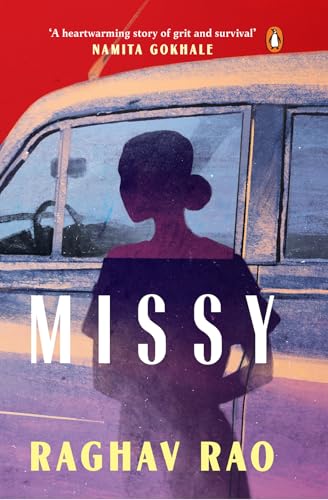
Missy
Madras, India, 1974. Seventeen-year-old Savi has grown up in St Ursula’s convent, where orphaned girls are expected to become nuns or domestic servants. Intelligent and gifted with languages, she dreams of a different future. When she becomes a governess for the wealthy Nandiyar family, she encounters a world of privilege and possibility—and falls in love with Ananda, a young apprentice sculptor. But a night of horrific violence forces them to flee India and begin new lives under different identities.
Four decades later, Savi has reinvented herself as Missy, a successful driving school owner in Chicago and a respected member of the South Asian community. A devoted mother to her two daughters, Mansi and Shilpa, she appears to have achieved the American dream. However, when a charming young doctor named Varun enters their lives, secrets from her past threaten to unravel everything she has built. Spanning continents and generations, Missy explores migration, reinvention, family loyalty, and the lasting consequences of the choices people make to survive.
India
2024
7
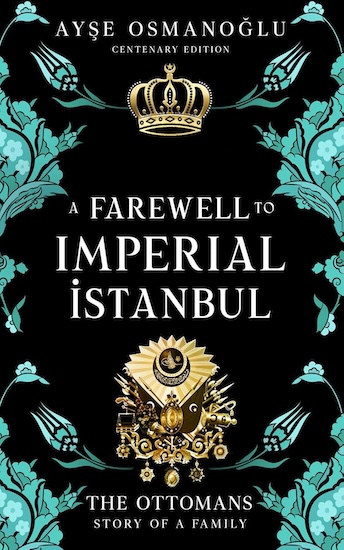
A Farewell To Imperial Istanbul
Istanbul, 1922. The Ottoman Empire is collapsing, and the imperial family faces the loss of the world they have known for centuries. As the Turkish nationalist movement brings an end to the Sultanate, Prince Nihad struggles to protect his family and preserve the legacy of a fading dynasty. His son, Prince Vâsıb, dreams of a future in which Istanbul can recover its freedom from foreign occupation. Against a backdrop of political upheaval, personal sacrifice, and a city caught between empires and a new republic, Ayşe Osmanoğlu tells a moving story of family loyalty, displacement, and the painful end of an era. Inspired by her own imperial heritage, this historical novel brings the final days of Ottoman Istanbul vividly to life.
Türkiye
2024
8
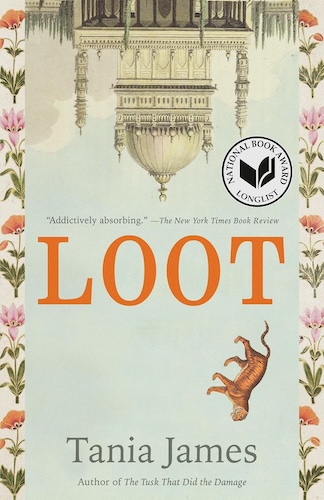
Loot
A stolen tiger, a young craftsman, and the spoils of an empire collide in this imaginative historical adventure. In eighteenth-century Mysore, seventeen-year-old Abbas catches the attention of Tipu Sultan, who commissions him to help create an extraordinary mechanical tiger. But when British forces invade the palace, the magnificent automaton is carried away as war booty. Years later, Abbas travels to Europe, determined to recover his creation and reclaim a piece of the world stolen from him. Spanning India, France, and England, Loot combines romance, adventure, and ingenious storytelling to explore artistic ambition, the costs of empire, and the enduring question of who has the right to own another culture’s treasures.
India
2024
9
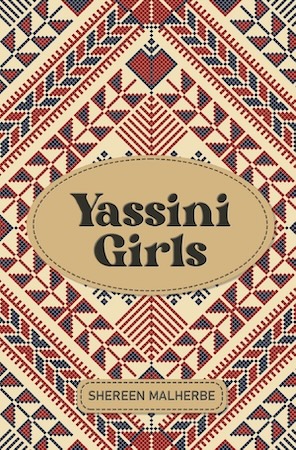
Yassini Girls
In the ancient streets of Jerusalem, Fatima receives an unexpected phone call that awakens memories she has spent years trying to bury. Thousands of miles away in the English countryside, Layla discovers a family heirloom hidden beneath her attic floor, setting her on a journey into the painful, long-silenced history of Palestine. As the two women’s stories begin to converge, family secrets reveal the enduring consequences of displacement and the fragile threads connecting generations to their homeland. Inspired by the author’s own discovery of her family’s history during a BBC documentary, Yassini Girls is a deeply personal novel about Palestinian identity, inherited trauma, and the power of storytelling to preserve what history threatens to erase. Through the traditions, memories, and resilience of Palestinian women, it explores how understanding the past can become an act of resistance and a way of safeguarding the future.
Palestine
2024
10
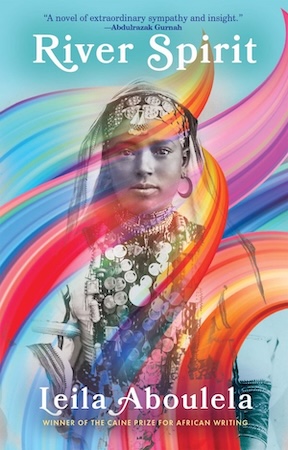
River Spirit
Set in nineteenth-century Sudan during the turbulent years surrounding the Mahdist uprising against Egyptian and British-backed rule, River Spirit explores a society transformed by war, faith, and the struggle for independence.
At the heart of the novel is a group of interconnected characters whose lives are swept up in political upheaval. Among them is Akuany, a young woman whose experiences of violence, displacement, and loss shape her understanding of freedom and belonging. As the conflict spreads, personal loyalties collide with religious conviction and competing visions of Sudan’s future. Through the characters’ intertwined journeys, Aboulela examines how ordinary people endure extraordinary circumstances and how love and compassion can survive amid brutality.
The Nile provides a powerful backdrop to this story of a nation in transition. Drawing on Sudanese history and Islamic traditions, Aboulela offers a nuanced perspective on a frequently overlooked chapter of African history. Rather than presenting the uprising solely as a political struggle, she explores its human consequences, illuminating the complex relationships between faith, identity, colonial power, and resistance.
Sudan
2024
11
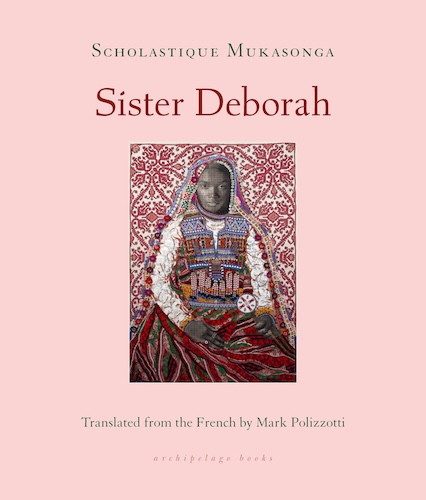
Sister Deborah
In 1930s Rwanda, a mysterious American evangelist arrives with a revolutionary message: the coming Messiah will be a Black woman, and women will finally be liberated from centuries of suffering. Known as Sister Deborah, she is both a healer and a prophetess, attracting women who long for a world beyond colonial domination and patriarchal authority. Her teachings unsettle not only the European missionaries but also the colonial administration, which fears the growing power of her movement. When Sister Deborah suddenly disappears, rumours multiply: was she murdered, or did she escape to begin a new life elsewhere? Years later, Ikirezi, a woman who was healed by Sister Deborah as a child, sets out to uncover the truth. Moving between historical records, folklore, and competing memories, Scholastique Mukasonga weaves a haunting tale about the struggle to reclaim forgotten histories. The novel explores how religion can become both an instrument of oppression and a language of resistance, particularly for women whose voices have been silenced.
Rwanda
2024
12
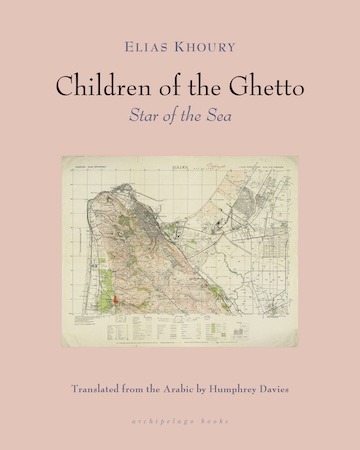
Children of the Ghetto: Star of the Sea
How many lives can one person inhabit before losing sight of who he really is? Adam Dannoun was an infant when the 1948 Nakba tore his family apart and destroyed his childhood home in Lydda, Palestine. Years later, after fleeing an oppressive stepfather, he arrives in Haifa determined to reinvent himself. He becomes Adam Danon, a young man with a fabricated past who claims to be Jewish and born in the Warsaw Ghetto. His new identity offers him a chance to escape his history, but it also traps him in a web of lies, particularly when he falls in love with the daughter of the man who has taken him in. As Adam moves between identities, Elias Khoury explores the devastating consequences of displacement and the impossibility of escaping collective memory. Both a deeply personal story and a sweeping reflection on Palestinian history, this novel asks whether reinvention can ever erase the wounds of the past.
Palestine
2024