Historical Fiction
All countries
Afghanistan
Albania
Algeria
Angola
Antigua and Barbuda
Argentina
Armenia
Australia
Austria
Azerbaijan
Bangladesh
Barbados
Belize
Benin
Bosnia and Herzegovina
Brazil
Bulgaria
Burundi
Canada
Chile
China
Congo, Democratic Republic
Côte d’Ivoire (Ivory Coast)
Croatia
Cuba
Cyprus
Denmark
Djibouti
Dominica
Dominican Republic
Egypt
El Salvador
Ethiopia
Fiji
France
Georgia
Germany
Ghana
Greece
Guatemala
Hungary
Iceland
India
Indonesia
Iran
Iraq
Ireland
Italy
Jamaica
Japan
Kazakhstan
Kenya
Kuwait
Latvia
Lebanon
Liberia
Libya
Madagascar
Malaysia
Mali
Mexico
Moldova
Morocco
Mozambique
Myanmar
Netherlands
Nigeria
North Korea
Oman
Pakistan
Palestine
Philippines
Poland
Portugal
Puerto Rico
Romania
Rwanda
Saudi Arabia
Senegal
Sierra Leone
Singapore
Slovenia
South Africa
South Korea
Spain
Sri Lanka
Sudan
Sweden
Switzerland
Syria
Taiwan
Tanzania
Thailand
Tunisia
Türkiye
Turkmenistan
Uganda
Ukraine
United Arab Emirates
United Kingdom
United States
Uruguay
Uzbekistan
Vietnam
Yemen
Zambia
Zimbabwe
1
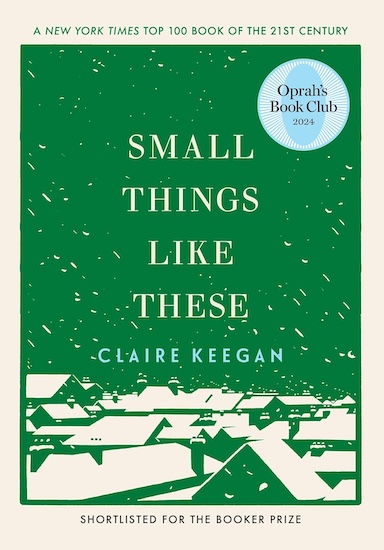
Small Things Like These
It is 1985 in a small Irish town, and coal merchant Bill Furlong is preparing for the busiest weeks of the year. A devoted husband and father of five daughters, he has built a modest but stable life through hard work. Yet as Christmas approaches, a delivery to the local convent reveals something deeply troubling: girls are being confined there under the authority of the Catholic Church, their suffering concealed behind respectable walls.
The discovery forces Bill to confront uncomfortable memories of his own childhood and the kindness that once helped him survive. In a community where the Church holds enormous power and silence protects those in authority, speaking out could jeopardise his livelihood and his family’s security. With remarkable economy and emotional depth, Small Things Like These explores complicity, moral courage, and the quiet choices that define a person’s character. It is a powerful story about the cost of doing what is right when looking away would be easier.
Ireland
2021
2
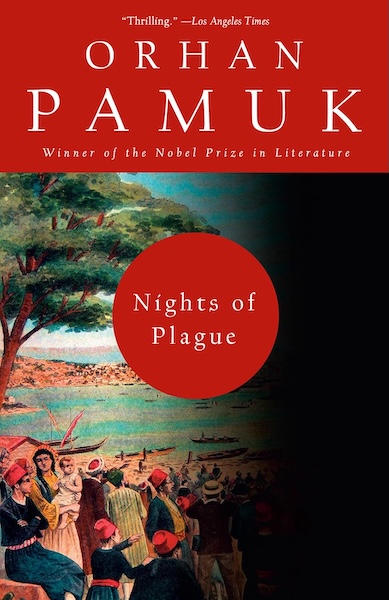
Nights of Plague
In 1901, a deadly plague reaches Mingheria, a fictional island in the eastern Mediterranean and the twenty-ninth province of the declining Ottoman Empire. Home to both Muslim and Greek Orthodox communities, the island is already divided by religious tensions and political rivalries. As the epidemic spreads, the Ottoman authorities send experts to impose quarantine measures, but suspicion, resistance, and competing loyalties threaten to undermine every attempt to contain the disease.
When a mysterious murder complicates the crisis, the island descends into a struggle involving religious leaders, government officials, scientists, and ordinary people desperate to survive. As the Ottoman administration loses control, the epidemic becomes a catalyst for rebellion and the emergence of a new national identity.
Blending historical epic, detective story, and political satire, Nights of Plague explores how fear reshapes societies and how crises expose the fragility of authority. Through an imagined history of an Ottoman island, Pamuk examines nationalism, religious conflict, scientific reasoning, and the human tendency to choose ideology over evidence.
Türkiye
2021
3
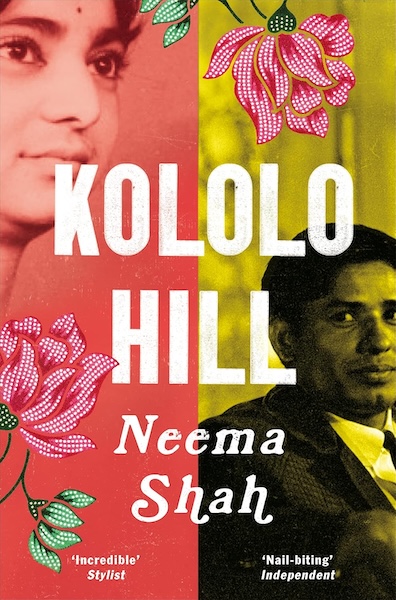
Kololo Hill
In 1972, Ugandan Asians are given just ninety days to leave the country under President Idi Amin’s expulsion order. For Asha and Pran, newly married and working to secure their future, the decree means abandoning the family business and the life they have built. Pran’s mother, Jaya, must also leave the home she has known for decades. As violence escalates in Kampala and people begin disappearing, the family faces an uncertain journey to Britain, where refuge does not necessarily mean belonging.
Arriving in a country that feels unfamiliar, they must rebuild their lives while carrying the emotional weight of everything they have lost. But their struggle is complicated by a devastating secret surrounding their expulsion—one that threatens to fracture the family just when they need one another most.
Moving between the green hills of Kampala and the terraced streets of London, Kololo Hill explores displacement, family loyalty, and the meaning of home. Inspired by the history of Uganda’s Asian community and the author’s own family heritage, this moving novel reveals how political upheaval can reshape lives across generations.
Uganda
United Kingdom
2021
4
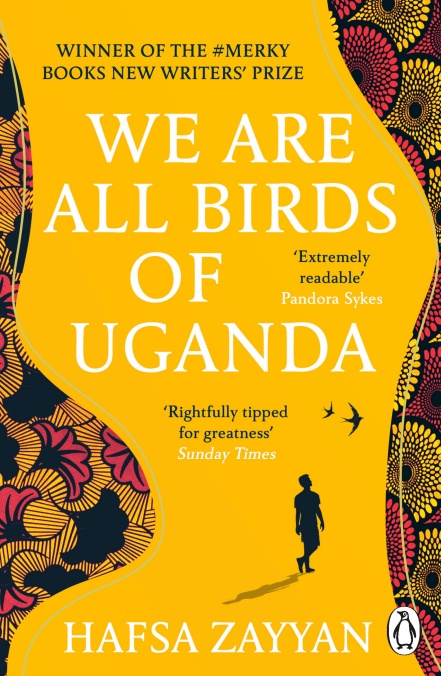
We Are All Birds Of Uganda
In 1960s Uganda, Hasan is struggling to rebuild his life after the death of his wife. Just as he begins to find his footing, political upheaval and rising racial prejudice threaten everything he has worked for. As a member of Uganda’s South Asian community, Hasan faces an uncertain future in a country his family has long called home. The political climate deteriorates further under Idi Amin’s regime, which ultimately forces many South Asians to leave Uganda.
Decades later, in London, Sameer appears to have everything: a successful career as a lawyer and the future he once dreamed of. Yet beneath his achievements lies a persistent sense of emptiness. An unexpected family tragedy draws him back into his family’s history, revealing the sacrifices, losses, and unanswered questions that shaped his identity.
Moving between generations and continents, We Are All Birds of Uganda explores displacement, racial prejudice, inherited trauma, and the complicated meaning of belonging. Through Hasan and Sameer’s intertwined stories, Hafsa Zayyan examines how migration reshapes families and how the past continues to influence those who inherit its consequences.
Uganda
United Kingdom
2021
5
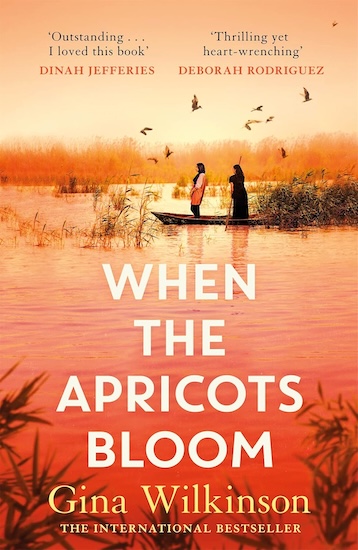
When the Apricots Bloom
Baghdad, 2002. Under Saddam Hussein’s dictatorship, three women find their lives entangled in a dangerous web of secrets, surveillance, and betrayal. Huda, a secretary at the Australian embassy, is ordered by Iraq’s secret police to befriend and spy on Ally Wilson, the wife of a Western diplomat. Refusing could endanger her teenage son, who faces the threat of forced recruitment into a brutal militia. Meanwhile, Rania, Huda’s estranged childhood friend and the daughter of a once-wealthy sheikh, struggles to protect her own daughter as her family’s fortunes collapse.
Ally, too, carries secrets connected to her mother’s past in Iraq, and as the women’s lives intersect, they discover that trust can be both dangerous and necessary. Forced to navigate a society where even friendships can become instruments of control, they must decide how much they are willing to risk to protect their children and reclaim their freedom. Inspired by the author’s experiences reporting from Iraq, When the Apricots Bloom is a suspenseful novel about female friendship, motherhood, survival, and the impossible choices people face under an oppressive regime.
Iraq
2021
6
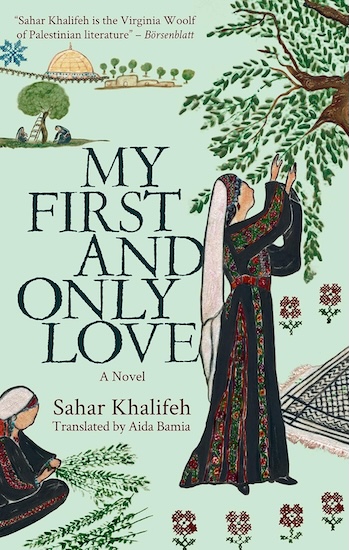
My First and Only Love
After decades of exile, Nidal returns to her family’s ancestral home in Nablus, hoping to restore the crumbling house and reconnect with the land she left behind. As she revisits the memories of her childhood, she recalls falling in love with Rabie, a young freedom fighter whose ideals embodied her hopes for Palestine’s future. Their love unfolds against the final years of the British Mandate, when political upheaval, resistance, and the struggle for national independence transform ordinary lives. Years later, when Nidal and Rabie meet again, he encourages her to read the memoirs of her uncle Amin, revealing long-buried family secrets and the hidden history of her absent mother. Through intertwined stories of love, loss, and resistance, Sahar Khalifeh explores how political conflict fractures families, separates lovers, and reshapes personal destinies. This sweeping novel is both an intimate portrait of a woman confronting her past and a meditation on the enduring connection between love, memory, and homeland.
Palestine
2021
7
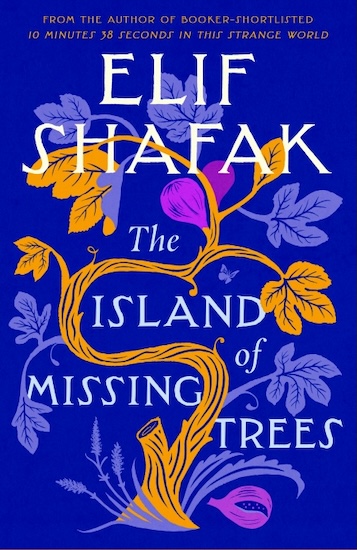
The Island of Missing Trees
A Greek Cypriot boy and a Turkish Cypriot girl fall in love in 1970s Cyprus, meeting secretly beneath a fig tree in a tavern as ethnic tensions threaten to tear their world apart. Decades later, in London, their daughter Ada struggles with grief and a past her parents have never fully revealed. As family secrets emerge, a fig tree growing in their garden becomes a living connection to a homeland left behind. Narrated partly through the tree itself, this moving novel explores displacement, inherited trauma, forbidden love, and the fragile bonds between people, nature, and memory.
Cyprus
2021
8
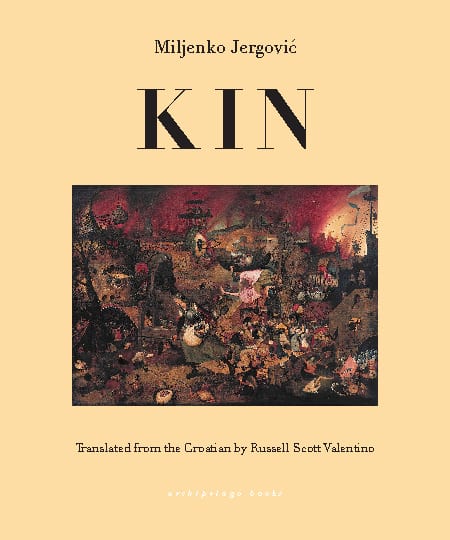
Kin
Spanning the twentieth century, Kin is an expansive family saga that traces generations of one family through the turbulent history of the Balkans. Beginning with forgotten relatives and seemingly insignificant objects—a grandfather’s beekeeping journals, a rusty lighter, an old military raincoat—Miljenko Jergović reconstructs a world shaped by personal memories, family secrets, and historical upheaval. From the assassination of Archduke Franz Ferdinand and the two World Wars to the Cold War and the Bosnian War of the 1990s, the novel follows the transformations of Sarajevo and the changing identities of the people who call it home. Blending memoir, fiction, and historical reflection, Jergović explores how political violence and shifting borders reverberate through ordinary lives. At its heart, Kin is a meditation on belonging, memory, and the fragile connections between generations—a tribute to a multicultural world threatened by nationalism, intolerance, and forgetting.
Bosnia and Herzegovina
2021
9
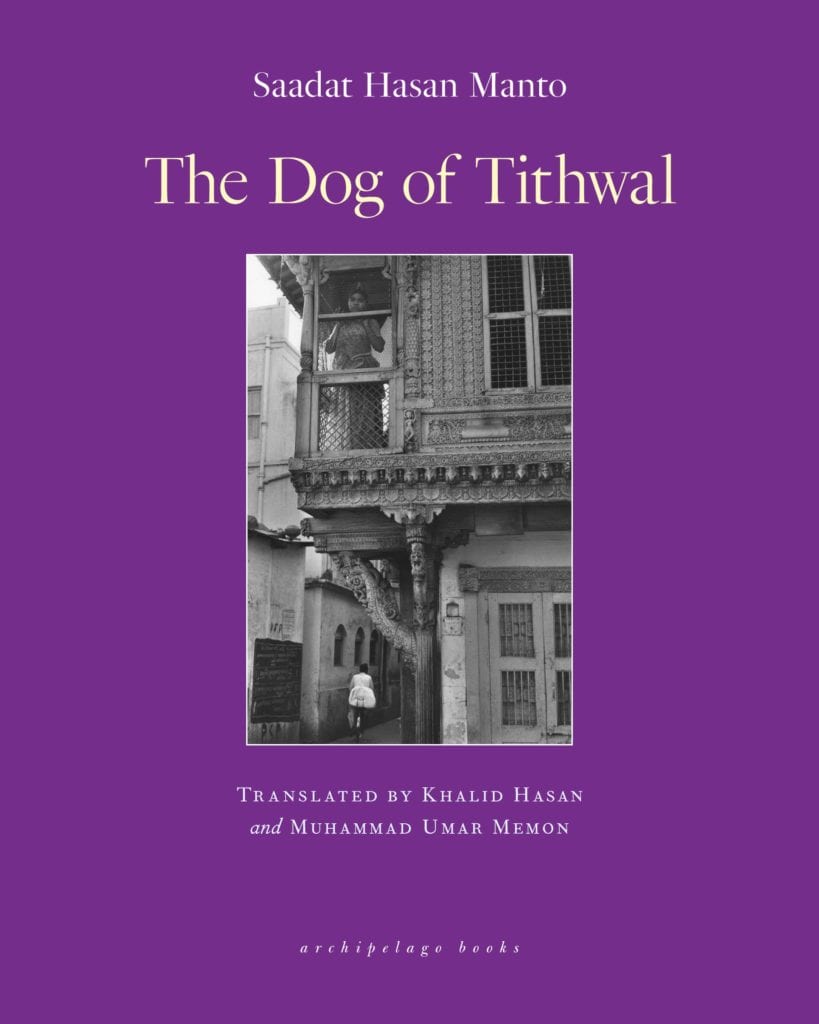
The Dog of Tithwal
On the mountainous border between India and Pakistan, two groups of soldiers face each other in a tense military standoff. Their routine is interrupted by the arrival of a stray dog, an innocent creature that wanders between the opposing camps. The soldiers begin to claim the dog as their own, giving it names and interpreting its movements as signs of loyalty or betrayal. What begins as a seemingly harmless game gradually turns sinister, exposing the absurdity of nationalism and the cruelty of a conflict in which even an animal cannot remain neutral. With biting irony and devastating simplicity, Saadat Hasan Manto transforms this brief encounter into a powerful allegory of Partition and the violence produced by artificial divisions. The story asks what happens to humanity when political identity becomes more important than compassion—and when the innocent are made to pay for the hostility of others.
Pakistan
2021
10
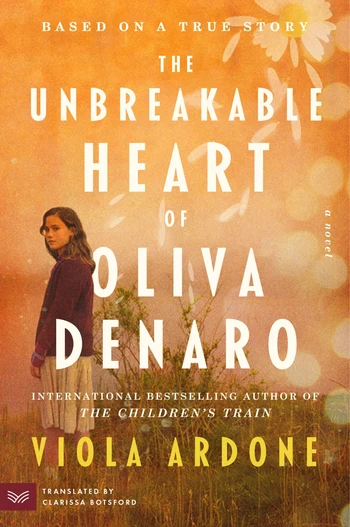
The Unbreakable Heart of Oliva Denaro
Sicily, 1960s. Fifteen-year-old Oliva Denaro loves running through the countryside and dreams of a life beyond the strict rules imposed on girls. But when a local boy decides he wants her, Oliva discovers how little control a young woman has over her own future in a society ruled by tradition and shame. Inspired by a true story, this moving novel follows Oliva’s courageous struggle to reclaim her freedom in a world that expects women to remain silent. Through her determination, Viola Ardone explores the cost of defiance and the extraordinary strength it takes to say no when everyone expects you to obey.
Italy
2021
11
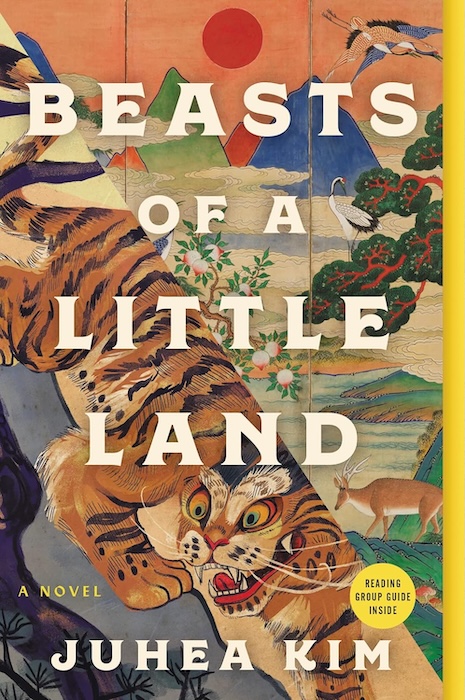
Beasts of a Little Land
In 1917, Korea is under Japanese colonial rule, and the lives of its people are shaped by poverty, violence, and the struggle for independence. When ten-year-old Jade is sold by her desperate family to a courtesan school in Pyongyang, she enters a world where survival depends on learning to navigate rigid social hierarchies. After fleeing to Seoul, she meets JungHo, an orphan boy struggling to survive on the streets. Their bond becomes a defining force in both their lives, even as their paths diverge and JungHo becomes involved in the resistance movement.
Spanning five decades, from the final years of the Korean Empire through colonial occupation and the upheavals of the twentieth century, this sweeping historical novel follows a cast of interconnected characters whose destinies are shaped by love, ambition, betrayal, and political turmoil. Moving between courtesan houses, bustling cities, and battle-scarred forests, the story explores what it means to fight for personal dignity and national freedom when the world seems determined to take both away.
South Korea
2021
12
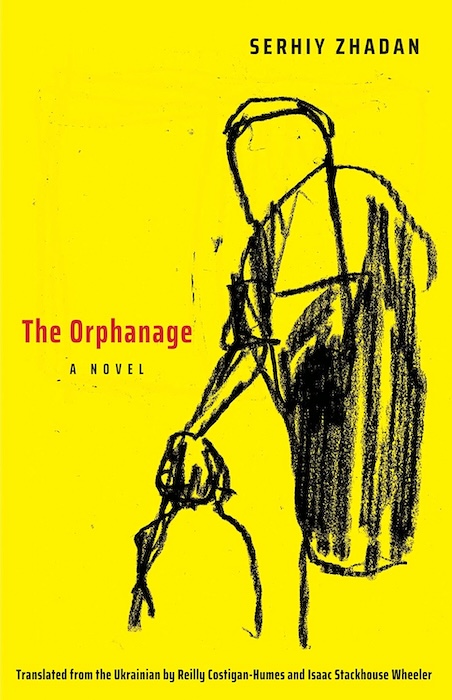
The Orphanage
Set in eastern Ukraine during the war in Donbas, The Orphanage follows Pasha, a thirty-five-year-old Ukrainian language teacher who has spent his life avoiding politics and keeping his distance from the conflicts around him. When fighting reaches a neighbouring city, he must cross the front line to retrieve his thirteen-year-old nephew, Sasha, from a boarding school that has become increasingly dangerous.
What should be a straightforward journey turns into a harrowing passage through a landscape devastated by shelling, military checkpoints, and collapsing infrastructure. As Pasha encounters soldiers, displaced civilians, and people struggling to survive, his familiar world becomes unrecognisable. With each step, he is forced to reconsider his loyalties, his responsibilities, and what it means to belong to a country at war.
Written with stark lyricism and an unflinching eye for everyday suffering, Zhadan’s novel portrays the human cost of armed conflict. Beyond the physical dangers, it explores indifference, moral responsibility, and the difficult realisation that remaining neutral may no longer be possible. The Orphanage won the 2022 EBRD Literature Prize.
Ukraine
2021