Fiction
All countries
Afghanistan
Albania
Antigua and Barbuda
Argentina
Armenia
Australia
Austria
Azerbaijan
Bahamas
Bahrain
Bangladesh
Barbados
Belarus
Belgium
Belize
Bhutan
Bosnia and Herzegovina
Brazil
Brunei
Bulgaria
Cabo Verde
Canada
Central African Republic
Chile
China
Congo, Democratic Republic
Croatia
Cuba
Czech Republic
Denmark
Djibouti
Dominica
Dominican Republic
Ecuador
Egypt
Fiji
Finland
France
Georgia
Germany
Greece
Hungary
Iceland
India
Indonesia
Iran
Iraq
Ireland
Italy
Jamaica
Japan
Jordan
Kazakhstan
Kenya
Kuwait
Kyrgyzstan
Lebanon
Libya
Malaysia
Mexico
Morocco
Netherlands
New Zealand
Nigeria
Norway
Oman
Pakistan
Palestine
Panama
Peru
Philippines
Poland
Portugal
Romania
Russia
Saudi Arabia
Senegal
Singapore
Slovenia
Somalia
South Korea
Spain
Sri Lanka
Sudan
Sweden
Switzerland
Syria
Taiwan
Tanzania
Thailand
Türkiye
Turkmenistan
Ukraine
United Arab Emirates
United Kingdom
United States
Uzbekistan
Yemen
Zambia
1
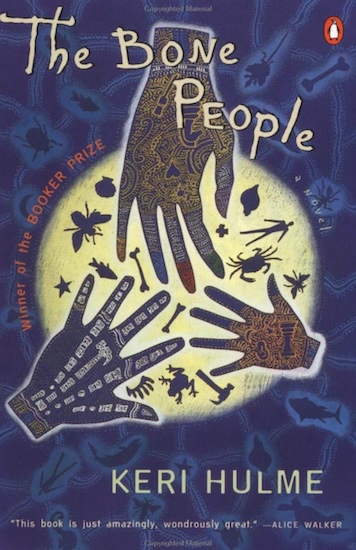
The Bone People
The Bone People is a powerful, unconventional novel set on the rugged coast of New Zealand, exploring the complicated relationships between three isolated individuals: Kerewin Holmes, a reclusive artist; Simon, a mysterious mute child; and Joe, his Māori foster father. When their lives become intertwined, they form an unconventional family shaped by loneliness, affection, violence, and the desire for connection. Through experimental storytelling and elements of Māori mythology, Keri Hulme examines the tensions between Māori and Pākehā identities, the legacy of colonialism, and the possibility of healing after trauma. The novel challenges traditional ideas of family and belonging, portraying human relationships as both deeply destructive and potentially transformative. It won the Booker Prize in 1985.
New Zealand
1986
2
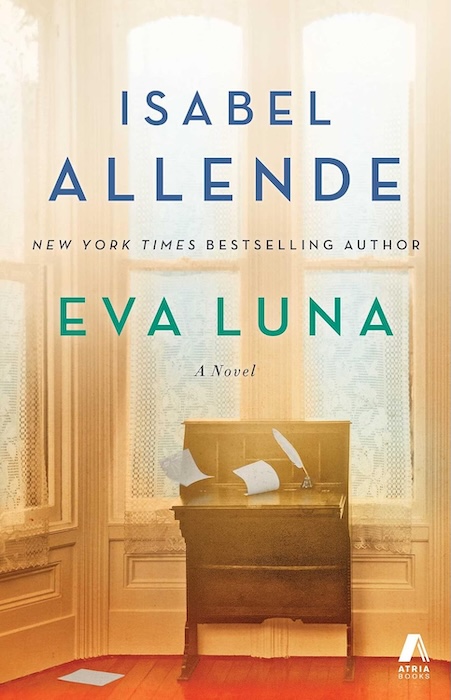
Eva Luna
Eva Luna follows the life of Eva, an imaginative young woman who discovers early on that storytelling can become both a refuge and a means of survival. Orphaned as a child, she grows up among people from different social backgrounds in an unnamed Latin American country marked by political unrest and inequality. Through her relationships, adventures, and encounters with revolutionaries, artists, and ordinary people, Eva gradually shapes her own destiny. Her ability to invent stories becomes a source of power, allowing her to reinterpret painful experiences and challenge the limitations imposed on her. Blending magical realism, romance, and political history, Allende explores the relationship between imagination and freedom. Eva’s journey celebrates resilience, female independence, and the transformative power of storytelling.
Chile
1987
3
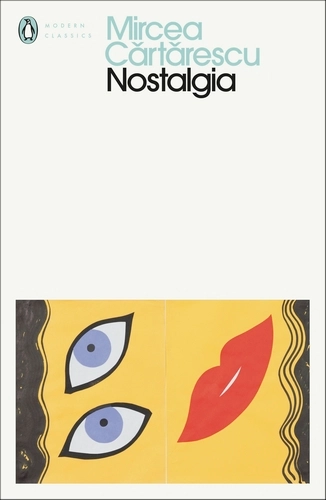
Nostalgia
First published in 1989, Nostalgia is a collection of five interconnected stories by Romanian writer Mircea Cărtărescu that blur the boundaries between childhood memories, dreams, and reality. Set primarily in Bucharest, the book transforms familiar urban landscapes into mysterious, surreal worlds where ordinary experiences acquire an almost mythical significance. In The Roulette Player, a man becomes obsessed with a dangerous game of chance; in The Architect, a young man encounters an extraordinary figure whose existence challenges conventional understanding of reality. Other stories explore childhood friendships, adolescent desires, and the strange emotional intensity of growing up. Throughout the collection, Cărtărescu combines magical realism, psychological exploration, and elaborate, dreamlike imagery to examine how memory reshapes the past. Bucharest becomes more than a setting: it is a labyrinth of hidden worlds, secret passages, and impossible experiences that reflect the inner lives of its inhabitants. Both unsettling and hypnotic, Nostalgia explores the fragile boundary between imagination and reality, suggesting that the past never disappears completely but survives in the mysterious landscapes of memory and desire.
Romania
1989
4
Women Without Men
Set in Iran against the backdrop of the 1953 coup d’état, Women Without Men follows the interconnected lives of five women whose experiences reflect the restrictions placed on women by family, marriage, and society. Among them are Munis, a woman longing to escape her brother’s control; Faizeh, her friend who dreams of marriage; Mahdokht, a woman troubled by conventional expectations of femininity; Farrokhlaqa, a wealthy housewife seeking a different life; and Zarrinkolah, a sex worker who begins to question the world around her.
Their individual journeys eventually lead them to a garden on the outskirts of Tehran, where they attempt to create a life beyond the rules that have governed them. Blending magical realism, mysticism, and historical events, Parsipur explores female autonomy, sexuality, and the search for identity. Through surreal transformations and symbolic storytelling, the novella imagines the possibility of women reclaiming their bodies, choices, and futures.
Iran
1989
5
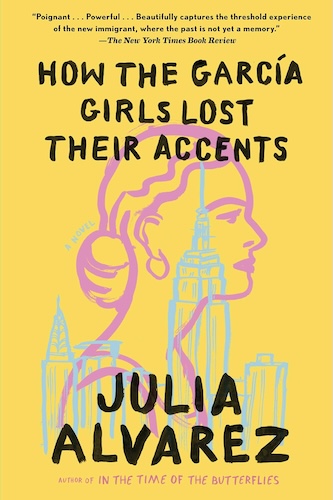
How the Garcia Girls Lost Their Accents
Four sisters. Two cultures. One homeland they can never quite leave behind.
When the García family flees the Dominican Republic for New York in 1960, sisters Carla, Sandra, Yolanda, and Sofía find themselves caught between the world they left and the one they are expected to embrace. As they straighten their hair, abandon Spanish, and navigate American adolescence, each struggles to reconcile family traditions with the freedom to become someone new. Told in reverse chronological order through interconnected stories, Julia Alvarez’s celebrated debut novel explores the intimate costs of immigration: the longing to belong, the awkwardness of growing up between cultures, and the parts of ourselves we lose—or discover—along the way. Witty, tender, and deeply personal, it captures the bittersweet experience of having more than one home and never feeling entirely at home in either.
Dominican Republic
1991
6
Cloudstreet
Cloudstreet tells the story of two working-class Australian families, the Pickles and the Lambs, who come to share a large, weathered house in Perth after separate family tragedies. Over two decades, their lives become intertwined through births, deaths, arguments, reconciliations, and everyday routines. The Pickles are impulsive and frequently unlucky, while the Lambs are guided by faith, discipline, and a strong sense of responsibility. Despite their differences, both families struggle with grief, poverty, and the desire to create a better future for their children. Winton combines realism, humour, folklore, and supernatural elements to portray the complexity of ordinary lives. The house itself becomes a powerful symbol of shared history, suggesting that healing and belonging can emerge from the unexpected connections between people.
Australia
1991
7
The Trench
The Trench is the second novel in Abdul Rahman Munif’s Cities of Salt quintet, which explores the transformation of the Arabian Peninsula following the discovery of oil. Set in the fictional emirate of Harran, the novel follows the growing power of the ruling elite as oil wealth reshapes society, politics, and everyday life. Foreign interests, local rulers, and emerging institutions compete for influence, while ordinary people struggle to understand and adapt to a rapidly changing world.
Through vivid characters and a broad social panorama, Munif examines how economic modernization can deepen inequality, weaken traditional communities, and concentrate power in the hands of a privileged few. The novel offers a critical portrait of a society caught between inherited customs and the disruptive forces of global capitalism, exposing the human costs behind promises of progress.
Saudi Arabia
1991
8
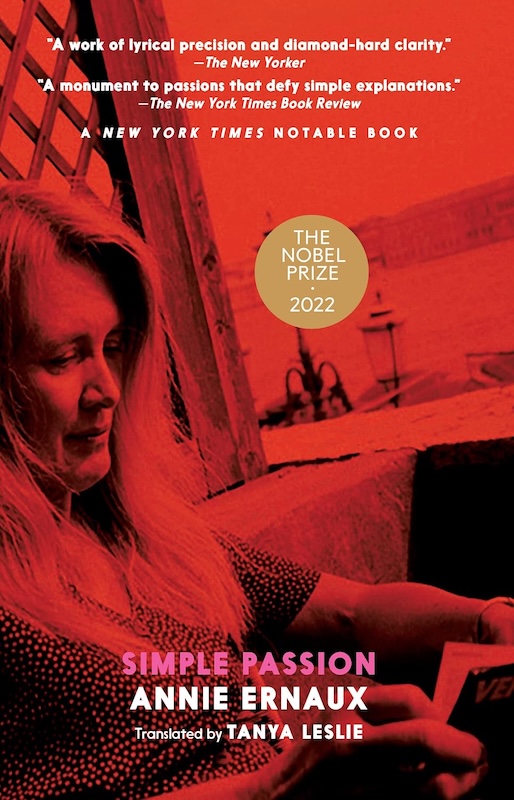
Simple Passion
Simple Passion is a concise, intensely personal account of a woman’s consuming affair with a married man. The narrator, an educated French woman, describes how her relationship gradually takes over her existence, shaping her thoughts, routines, and sense of time. Waiting for her lover’s phone calls and anticipating their meetings become the organising principles of her life, while ordinary activities lose their significance in comparison with the possibility of seeing him again.
Drawing on her own experiences, Annie Ernaux examines desire with remarkable honesty and emotional precision, refusing to romanticise or condemn the narrator’s obsession. She explores the vulnerability of surrendering oneself to another person, as well as the ways passion can disrupt independence and alter one’s perception of reality. Blending autobiography with detached observation, the book challenges conventional ideas about female desire, dignity, and romantic love. Its direct, unembellished prose transforms a deeply private experience into a broader reflection on the power of longing and the consuming nature of passion.
France
1991
9
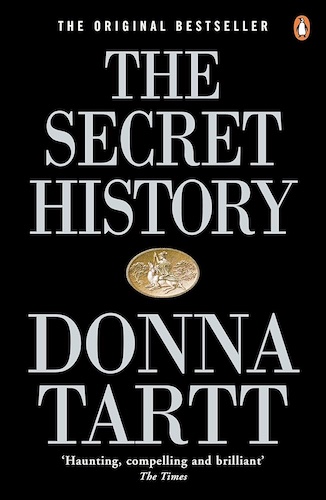
The Secret History
At an elite Vermont college, a tight-knit group of classics students becomes consumed by beauty, intellectual obsession, and the darker side of ancient philosophy. When their pursuit of an extraordinary experience leads to murder, their carefully constructed world begins to unravel. An atmospheric psychological novel about guilt, privilege, and the dangerous allure of belonging.
United States
1992
10
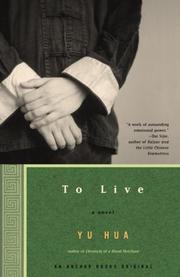
To Live
To Live follows Fugui, the son of a wealthy Chinese landowner whose reckless gambling eventually costs his family its fortune. Forced to abandon his privileged lifestyle, Fugui begins a difficult journey through decades of political and social upheaval in twentieth-century China, including the Chinese Civil War, the Great Leap Forward, and the Cultural Revolution. As the country undergoes profound transformations, Fugui and his family struggle to survive poverty, political persecution, and personal tragedy.
Told through Fugui’s recollections to a travelling folk singer, the novel offers an intimate portrait of ordinary people caught in the forces of history. Despite repeated losses, Fugui continues to endure, finding meaning in the simple act of living. Yu Hua combines stark realism with moments of dark humour and tenderness, exploring family bonds, resilience, and the fragility of human happiness. Ultimately, To Live is a moving reflection on suffering and survival, suggesting that the determination to continue can itself become a form of courage.
China
1993
11
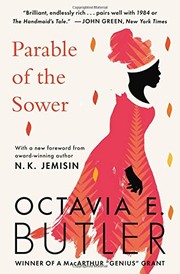
Parable of the Sower
In 2025, with the world descending into madness and anarchy, one woman begins a fateful journey toward a better future.
Lauren Olamina and her family live in one of the only safe neighborhoods remaining on the outskirts of Los Angeles. Behind the walls of their defended enclave, Lauren’s father, a preacher, and a handful of other citizens try to salvage what remains of a culture that has been destroyed by drugs, disease, war, and chronic water shortages. While her father tries to lead people on the righteous path, Lauren struggles with hyperempathy, a condition that makes her extraordinarily sensitive to the pain of others.
When fire destroys their compound, Lauren’s family is killed and she is forced out into a world that is fraught with danger. With a handful of other refugees, Lauren must make her way north to safety, along the way conceiving a revolutionary idea that may mean salvation for all mankind.
United States
1993
12
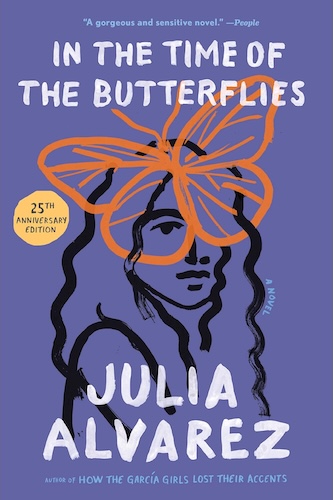
In the Time of the Butterflies
Four sisters. One brutal dictatorship. A courage that would outlive them all.
In the Dominican Republic under Rafael Trujillo’s oppressive regime, the Mirabal sisters lead seemingly ordinary lives until they are drawn into the underground resistance. As Minerva, Patria, and María Teresa risk everything to challenge the dictator, their youngest sister, Dedé, must confront the consequences of their growing defiance. Inspired by the true story of the Mirabal sisters, three of whom were murdered on Trujillo’s orders in 1960, Julia Alvarez brings their lives to the page with tenderness and emotional power. Through love, family bonds, and acts of extraordinary bravery, this moving novel explores the price of resistance and the strength it takes to stand against tyranny. The sisters, remembered as Las Mariposas (the Butterflies), became enduring symbols of freedom and courage.
Dominican Republic
1994