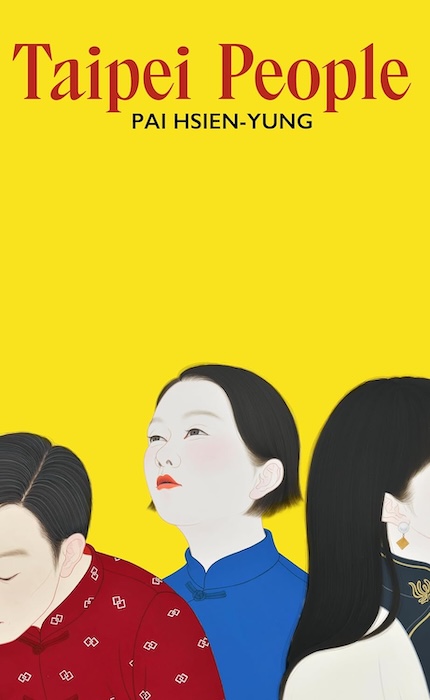
Taipei People
Taiwan

Taipei People

by Pai Hsien-yung

Summary

Taipei People is a collection of fourteen short stories portraying the lives of people who fled mainland China for Taiwan following the Chinese Civil War in 1949. Set primarily in Taipei, the stories follow former aristocrats, military officers, performers, and other displaced individuals as they struggle to adapt to a new society while remaining emotionally attached to the world they left behind.

Through characters haunted by memories of lost homes, vanished social positions, and past relationships, Pai Hsien-yung explores the experience of exile and the passage of time. Formerly celebrated figures confront aging and declining fortunes, while younger characters inherit the emotional burdens of a history they barely understand. Their private struggles reflect the wider transformations of Chinese society during the twentieth century.

Combining psychological depth with elegant, modernist storytelling, the collection examines nostalgia, displacement, loneliness, and the impossibility of returning to the past. Taipei becomes both a refuge and a place of alienation, inhabited by people who are physically present but remain inwardly connected to another time and place. Widely regarded as a classic of Taiwanese literature, Taipei People offers a moving portrait of lives shaped by historical upheaval and the enduring longing for home.

Reviews

Login to leave a review.

No reviews yet. Be the first!

You might also like
Pai Hsien-yung
Pai Hsien-yung

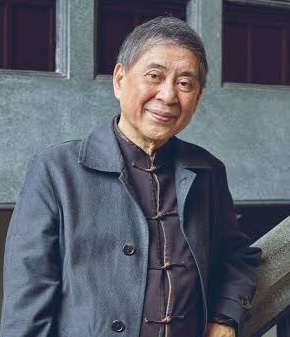
Pai Hsien-yung (白先勇), also known as Kenneth Pai, is a Taiwanese novelist and playwright born in Guilin, China, in 1937. The son of prominent military general Bai Chongxi, he spent his early years moving between Chinese cities during a period of political upheaval. In 1952, he moved to Taiwan, where he later studied foreign languages and literature at National Taiwan University. In 1960, he co-founded Modern Literature, an influential literary magazine that helped introduce modernist writing to Taiwanese readers. Pai continued his studies in the United States, earning a master’s degree in creative writing from the University of Iowa in 1965. He subsequently taught Chinese literature at the University of California, Santa Barbara, where he remained until his retirement in 1994. His best-known works include Taipei People (1971), a collection of fourteen stories portraying mainland Chinese émigrés in Taiwan, and Crystal Boys (1983), a landmark novel exploring the lives of marginalized gay men in Taipei. His fiction combines modernist techniques with a deep sensitivity to displacement, memory, identity, and social change. Beyond literature, Pai has devoted considerable energy to preserving traditional Chinese culture, particularly Kunqu opera. He served as general producer and artistic director of the acclaimed Youth Edition of The Peony Pavilion, helping introduce this classical art form to new generations. He is widely regarded as one of the most influential writers in modern Taiwanese literature.

View author page
Published
1982
Author
Pai Hsien-yung