Fiction
All countries
Afghanistan
Albania
Antigua and Barbuda
Argentina
Armenia
Australia
Austria
Azerbaijan
Bahamas
Bahrain
Bangladesh
Barbados
Belarus
Belgium
Belize
Bhutan
Bosnia and Herzegovina
Brazil
Brunei
Bulgaria
Cabo Verde
Canada
Central African Republic
Chile
China
Congo, Democratic Republic
Croatia
Cuba
Czech Republic
Denmark
Djibouti
Dominica
Dominican Republic
Ecuador
Egypt
Fiji
Finland
France
Georgia
Germany
Greece
Hungary
Iceland
India
Indonesia
Iran
Iraq
Ireland
Italy
Jamaica
Japan
Jordan
Kazakhstan
Kenya
Kuwait
Kyrgyzstan
Lebanon
Libya
Malaysia
Mexico
Morocco
Netherlands
New Zealand
Nigeria
Norway
Oman
Pakistan
Palestine
Panama
Peru
Philippines
Poland
Portugal
Romania
Russia
Saudi Arabia
Senegal
Singapore
Slovenia
Somalia
South Korea
Spain
Sri Lanka
Sudan
Sweden
Switzerland
Syria
Taiwan
Tanzania
Thailand
Türkiye
Turkmenistan
Ukraine
United Arab Emirates
United Kingdom
United States
Uzbekistan
Yemen
Zambia
1
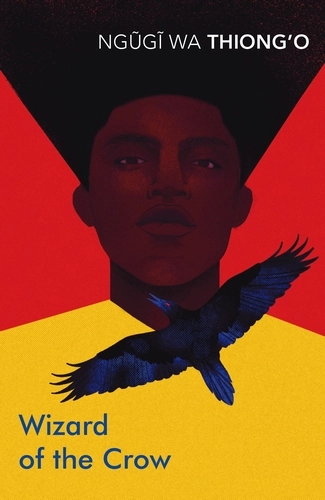
Wizard of the Crow
Set in the fictional African nation of Aburiria, Wizard of the Crow is a sprawling political satire about dictatorship, corruption, resistance, and the absurdities of absolute power. The country is ruled by a megalomaniacal leader known simply as the Ruler, whose grandiose ambitions and paranoia shape every aspect of public life. When the government announces plans to construct a monumental project called Marching to Heaven, it seeks financial support from international lenders, exposing the regime’s vanity and dependence on foreign approval.
At the center of the story are Kamĩtĩ, an unemployed university graduate who becomes known as the Wizard of the Crow, and Nyawĩra, a courageous activist involved in the underground resistance. Their lives become entangled with the Ruler’s increasingly bizarre court, where ministers compete for influence and ordinary citizens struggle to survive the consequences of political repression.
Combining magical realism, folklore, grotesque humor, and political allegory, Ngũgĩ examines how authoritarian regimes manipulate fear, language, religion, and superstition to maintain control. The novel also celebrates the resourcefulness of ordinary people and their capacity to challenge oppressive systems. Both a comic epic and a fierce critique of postcolonial power, it explores the struggle for dignity and freedom in a society ruled by absurdity and terror.
Kenya
2006
2
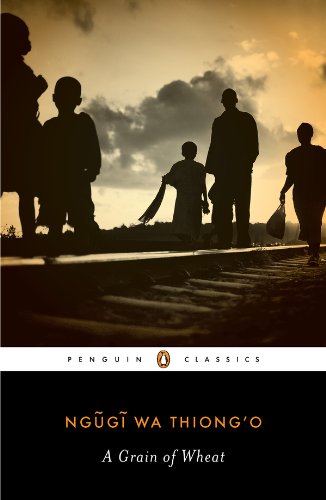
A Grain of Wheat
Set in Kenya in the days leading up to independence from British colonial rule, A Grain of Wheat explores the sacrifices, betrayals, and moral compromises behind a nation’s struggle for freedom. The novel centres on Mugo, a quiet villager whom his community regards as a hero because of his suffering during the colonial government’s emergency rule. As the village prepares to celebrate independence, however, hidden truths about the resistance movement begin to emerge. Through interconnected stories of former freedom fighters, their families, and their neighbours, Ngũgĩ examines the lasting consequences of colonial violence and the complicated legacy of resistance. The novel asks what it means to be a hero, how communities remember their past, and whether political independence can bring genuine reconciliation when individuals remain haunted by guilt and betrayal.
Kenya
2012