Fiction
All countries
Afghanistan
Albania
Antigua and Barbuda
Argentina
Armenia
Australia
Austria
Azerbaijan
Bahamas
Bahrain
Bangladesh
Barbados
Belarus
Belgium
Belize
Bhutan
Bosnia and Herzegovina
Brazil
Brunei
Bulgaria
Cabo Verde
Canada
Central African Republic
Chile
China
Congo, Democratic Republic
Croatia
Cuba
Czech Republic
Denmark
Djibouti
Dominica
Dominican Republic
Ecuador
Egypt
Fiji
Finland
France
Georgia
Germany
Greece
Hungary
Iceland
India
Indonesia
Iran
Iraq
Ireland
Italy
Jamaica
Japan
Jordan
Kazakhstan
Kenya
Kuwait
Kyrgyzstan
Lebanon
Libya
Malaysia
Mexico
Morocco
Netherlands
New Zealand
Nigeria
Norway
Oman
Pakistan
Palestine
Panama
Peru
Philippines
Poland
Portugal
Romania
Russia
Saudi Arabia
Senegal
Singapore
Slovenia
Somalia
South Korea
Spain
Sri Lanka
Sudan
Sweden
Switzerland
Syria
Taiwan
Tanzania
Thailand
Türkiye
Turkmenistan
Ukraine
United Arab Emirates
United Kingdom
United States
Uzbekistan
Yemen
Zambia
1

Batouala
Set in French Equatorial Africa, in the territory that is now the Central African Republic, Batouala follows Batouala, a respected Banda village chief whose authority and way of life are threatened by the growing influence of French colonial rule. Through his daily experiences, relationships, and observations of village life, the novel portrays a community shaped by traditional customs, ceremonies, rivalries, and its close relationship with the natural world.
As colonial exploitation increasingly disrupts local life, Batouala witnesses the consequences of forced labour, economic extraction, and the arrogance of colonial administrators. Maran depicts the gap between the French colonial administration’s claims of bringing civilisation and the suffering experienced by the people living under its authority.
Published in 1921, the novel became a landmark in Francophone literature for its direct criticism of colonialism. Its preface, written by Maran himself, intensified the controversy surrounding the book. Batouala won the Prix Goncourt that year, making Maran the first Black writer to receive the prestigious French literary prize. The novel remains an important work for understanding colonial power, cultural identity, and resistance.
Central African Republic
1921
2
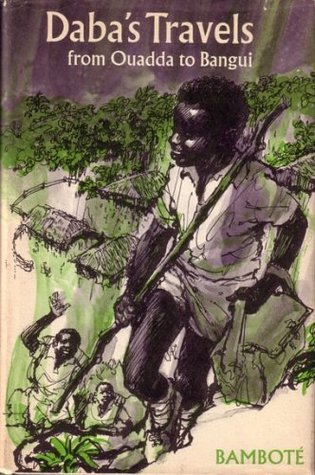
Daba’s Travels from Ouadda to Bangui
Daba’s Travels from Ouadda to Bangui follows Daba, a young boy growing up in the Central African Republic, whose life changes when he leaves his village of Ouadda to pursue an education. Raised in a close-knit rural community, Daba develops a deep affection for his family, his homeland, and the natural world around him. His journey takes him far beyond the familiar landscapes of his childhood, introducing him to new towns, people, and ways of life.
As Daba travels towards Bangui, the country’s capital, he encounters different communities and experiences that broaden his understanding of the world. Education becomes a gateway to new opportunities, but his travels also make him more aware of the contrasts between rural and urban life.
Drawing on the author’s own childhood experiences, the novel offers young readers an introduction to the geography, traditions, and everyday life of the Central African Republic. Through Daba’s adventures, Bamboté explores education, cultural identity, and the transition from childhood towards greater independence.
Central African Republic
1970