Solitude & Exile
Meditations on isolation, exile, and the inner life.
All countries
Angola
Argentina
Australia
Austria
Belgium
Denmark
France
Germany
Hungary
Iran
Italy
Japan
Lebanon
Libya
Norway
Palestine
Portugal
Romania
Russia
South Korea
Spain
Taiwan
Türkiye
Ukraine
United States
1
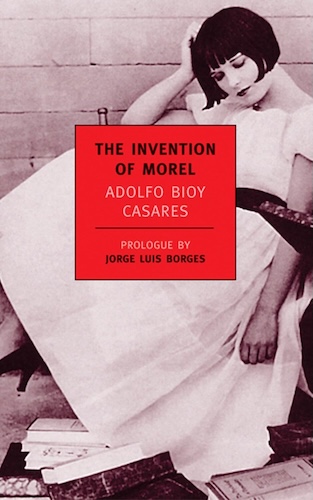
The Invention of Morel
The Invention of Morel follows a fugitive who seeks refuge on a seemingly deserted island, where he discovers a group of people behaving as though he does not exist. Among them is Faustine, a woman whose presence fascinates him, though she remains unaware of him. As he investigates the mysterious inhabitants, he uncovers a strange invention that challenges the boundaries between reality, memory, and illusion. Blending philosophical speculation with elements of science fiction and mystery, Adolfo Bioy Casares explores the human desire to overcome mortality and preserve love beyond the limits of physical existence. The novel raises unsettling questions about consciousness, the nature of reality, and the price of eternal life.
Argentina
2003
2
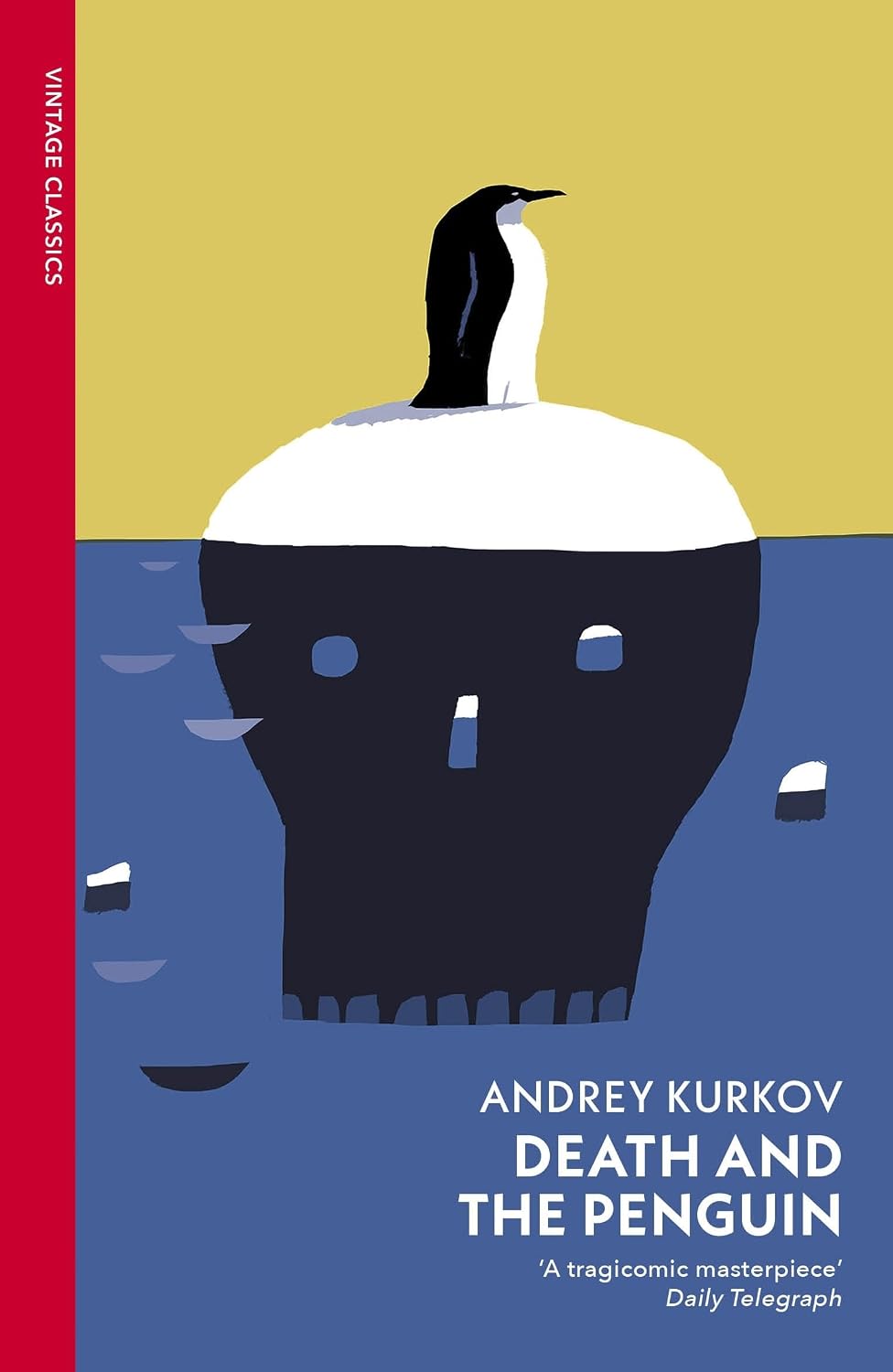
Death and the Penguin
In post-Soviet Kyiv, struggling writer Viktor Alekseyevich Zolotaryov lives a quiet, lonely existence with his unusual companion, Misha, a king penguin rescued from a zoo that can no longer afford to feed its animals. When Viktor secures a job writing obituaries for a local newspaper, he believes his fortunes may finally be changing. His editor, however, has an unsettling request: the obituaries must be written for prominent people who are still alive.
Soon, the subjects of Viktor’s obituaries begin dying under mysterious circumstances, drawing him into a dangerous world of political corruption and organised crime. As he tries to understand his role in these events, his apartment becomes a refuge for a young girl and her nanny, bringing unexpected responsibilities into his isolated life.
Blending dark humour, absurdism, and political satire, Death and the Penguin offers a haunting portrait of a society struggling to find its footing after the collapse of the Soviet Union. Through Viktor’s unlikely bond with Misha, Kurkov explores loneliness, moral compromise, and the quiet struggle to remain human in a world where violence has become ordinary.
Ukraine
2001
3
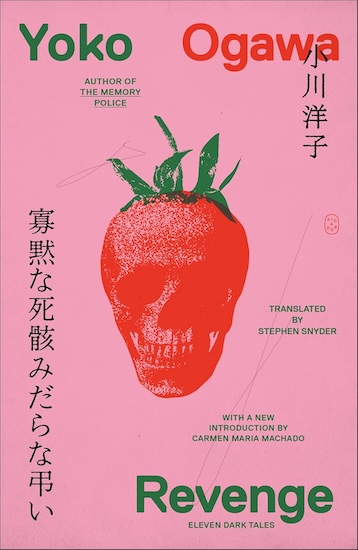
Revenge
A grieving mother visits a bakery to buy a strawberry cake for her son’s birthday. There is just one detail that makes the request impossible to forget: her son has been dead for years. From this quietly unsettling encounter, Yōko Ogawa begins weaving a world where ordinary lives conceal extraordinary darkness, and seemingly unrelated strangers are connected by secrets neither they nor the reader fully understand.
In Revenge: Eleven Dark Tales, a woman discovers a disturbing truth about her landlady, a surgeon becomes entangled in a web of jealousy and obsession, and a lonely craftsman finds himself drawn toward violence. Other characters drift through the stories like shadows, reappearing in unexpected places and revealing new layers to events that once seemed insignificant. A forgotten object, a peculiar conversation, or an unfamiliar face can become the thread connecting one nightmare to another.
Ogawa transforms everyday settings into something quietly menacing. Her prose is restrained and almost delicate, making the grotesque moments all the more disturbing. Rather than relying on sudden shocks, she builds dread through small details and unsettling coincidences, leaving the reader to piece together the hidden connections.
Beautifully eerie and psychologically intricate, Revenge explores grief, obsession, cruelty, and the darkness that can exist beneath the surface of ordinary life.
Japan
1998
4
The Island of the Day Before
Set in the seventeenth century, The Island of the Day Before follows Roberto della Griva, an Italian nobleman who survives a shipwreck and finds himself stranded aboard an abandoned vessel in the South Pacific. The ship lies near a beautiful island that he can see but cannot reach, partly because he cannot swim. Alone, Roberto reflects on his childhood, his experiences of war, his education, and his complicated ideas about love and destiny. He becomes increasingly preoccupied with the island’s location on the opposite side of the international date line, imagining that it might hold the secret to travelling into yesterday. Through his reflections and encounters with the history of scientific discovery, Eco explores the relationship between time, knowledge, and human perception. Blending historical fiction, philosophy, and adventure, the novel examines the limits of reason and the ways solitude can transform a person’s understanding of reality.
Italy
1994
5
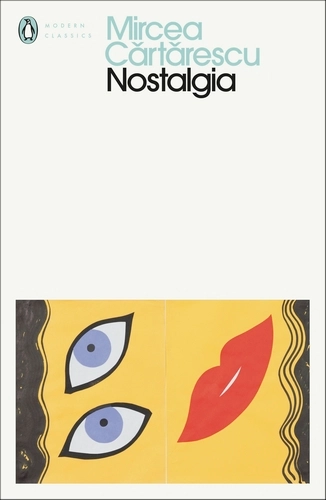
Nostalgia
First published in 1989, Nostalgia is a collection of five interconnected stories by Romanian writer Mircea Cărtărescu that blur the boundaries between childhood memories, dreams, and reality. Set primarily in Bucharest, the book transforms familiar urban landscapes into mysterious, surreal worlds where ordinary experiences acquire an almost mythical significance. In The Roulette Player, a man becomes obsessed with a dangerous game of chance; in The Architect, a young man encounters an extraordinary figure whose existence challenges conventional understanding of reality. Other stories explore childhood friendships, adolescent desires, and the strange emotional intensity of growing up. Throughout the collection, Cărtărescu combines magical realism, psychological exploration, and elaborate, dreamlike imagery to examine how memory reshapes the past. Bucharest becomes more than a setting: it is a labyrinth of hidden worlds, secret passages, and impossible experiences that reflect the inner lives of its inhabitants. Both unsettling and hypnotic, Nostalgia explores the fragile boundary between imagination and reality, suggesting that the past never disappears completely but survives in the mysterious landscapes of memory and desire.
Romania
1989
6
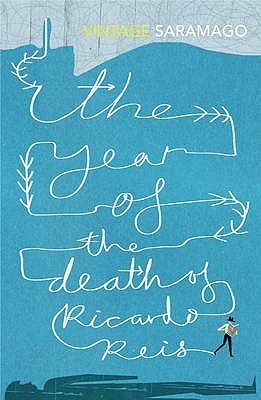
The Year of the Death of Ricardo Reis
Set in Lisbon in 1936, The Year of the Death of Ricardo Reis follows Ricardo Reis, a doctor and poet who returns to Portugal after sixteen years in Brazil, having learned of the death of the poet Fernando Pessoa. Reis is one of Pessoa’s fictional literary alter egos, brought to life by Saramago as a character who must navigate a world increasingly shaped by political turmoil.
Staying in a Lisbon hotel, Reis spends his days wandering the city, reading newspapers, writing poetry, and becoming involved with two women: Lídia, a hotel maid, and Marcenda, a young woman with a paralysed left hand. He is also visited by the ghost of Pessoa, with whom he discusses literature, life, and death.
Beyond Reis’s private existence, Portugal is living under António de Oliveira Salazar’s authoritarian regime, while fascism is spreading across Europe and the Spanish Civil War is approaching. Through Reis’s detached observations, Saramago examines the tension between individual contemplation and historical responsibility. Blending philosophical reflection, political commentary, and the uncanny, the novel explores mortality, isolation, and the difficulty of remaining a passive observer in a world marked by injustice.
Portugal
1984
7
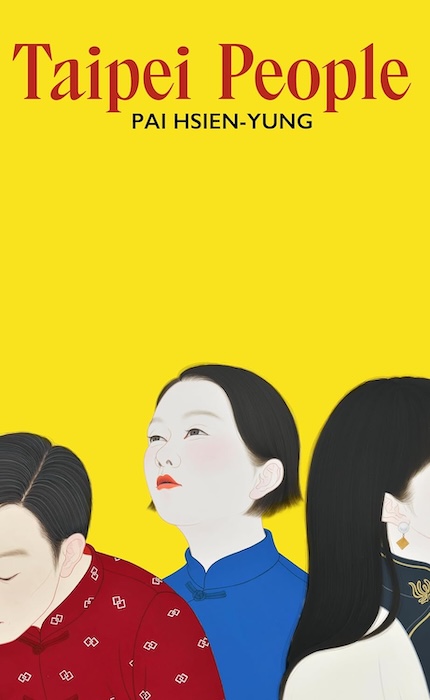
Taipei People
Taipei People is a collection of fourteen short stories portraying the lives of people who fled mainland China for Taiwan following the Chinese Civil War in 1949. Set primarily in Taipei, the stories follow former aristocrats, military officers, performers, and other displaced individuals as they struggle to adapt to a new society while remaining emotionally attached to the world they left behind.
Through characters haunted by memories of lost homes, vanished social positions, and past relationships, Pai Hsien-yung explores the experience of exile and the passage of time. Formerly celebrated figures confront aging and declining fortunes, while younger characters inherit the emotional burdens of a history they barely understand. Their private struggles reflect the wider transformations of Chinese society during the twentieth century.
Combining psychological depth with elegant, modernist storytelling, the collection examines nostalgia, displacement, loneliness, and the impossibility of returning to the past. Taipei becomes both a refuge and a place of alienation, inhabited by people who are physically present but remain inwardly connected to another time and place. Widely regarded as a classic of Taiwanese literature, Taipei People offers a moving portrait of lives shaped by historical upheaval and the enduring longing for home.
Taiwan
1982
8
The Book of Disquiet
The Book of Disquiet is a fragmentary, deeply introspective work attributed to Bernardo Soares, an assistant bookkeeper living a quiet, unremarkable life in Lisbon. Through a series of diary-like reflections, philosophical meditations, and poetic observations, Soares examines his inner world, revealing a profound sense of alienation from society and an ongoing struggle to understand his own existence. Ordinary experiences, from walking through Lisbon’s streets to sitting at his desk, become starting points for reflections on dreams, identity, time, and the distance between the self and the world.
Rather than following a conventional narrative, Fernando Pessoa’s work unfolds as an intimate record of consciousness, capturing the contradictions and uncertainties of being human. The narrator finds both refuge and imprisonment in his imagination, often preferring the richness of dreams to the demands of reality. Blurring the boundaries between autobiography, fiction, and philosophy, The Book of Disquiet is a haunting meditation on loneliness, the fragmented nature of identity, and the quiet beauty of an uneventful life.
Note: Although Pessoa began writing the fragments decades earlier, the book was first published posthumously in Portuguese in 1982.
Portugal
1982
9
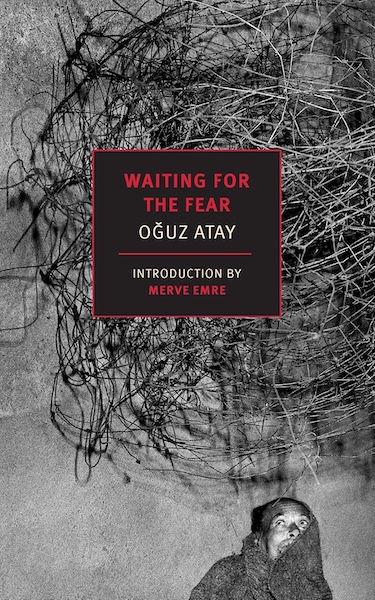
Waiting for the Fear
What happens when an ordinary letter makes you question everything you thought you knew? In the title story of Waiting for the Fear, an isolated man receives a mysterious message written in a language he cannot understand. As he struggles to decipher its meaning, suspicion gradually takes over his life, transforming his home into a place of dread and his everyday existence into an increasingly surreal nightmare.
Across eight stories, Oğuz Atay introduces a cast of outsiders, misfits, and troubled souls struggling to connect with a society that seems determined to misunderstand them. A woman confronts unsettling memories after discovering her former lover’s body; lonely storytellers sell invented tales to passengers at a remote railway station; other characters find themselves trapped between their private fantasies and an indifferent world.
Blending dark humour, psychological unease, absurdity, and experimental storytelling, Waiting for the Fear explores the fragile boundary between reality and imagination. Atay’s characters are haunted not only by external threats but also by their own thoughts, revealing the loneliness of people who can no longer trust the world—or themselves.
Türkiye
1975
10
The Wall
The Wall follows an unnamed woman who becomes inexplicably isolated in the Austrian countryside after an invisible, impenetrable wall suddenly separates her from the rest of the world. On the other side, all human life appears to have vanished. Trapped in a remote mountain valley with only a dog, a cow, and a few other animals for company, she must learn to survive without any hope of rescue.
As the seasons pass, the woman develops routines to secure food, gather firewood, and care for her animals. Her solitary existence forces her to confront the essentials of life while reflecting on her former identity, human relationships, and the society she has left behind. The natural world becomes both her refuge and her greatest challenge, offering moments of beauty alongside hunger, exhaustion, and danger.
Through its restrained, diary-like narration, Haushofer explores isolation, survival, freedom, and humanity’s relationship with nature. The novel also questions the assumptions of modern civilization, revealing how solitude can transform a person’s understanding of herself and the world.
Austria
1963
11
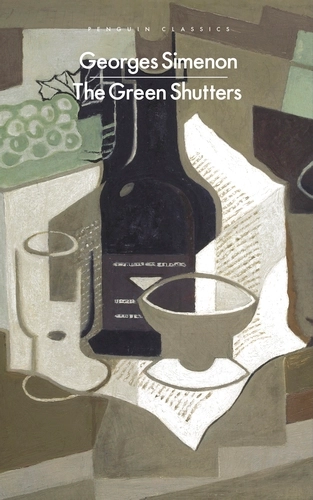
The Green Shutters
What remains of a man when fame, success, and the fearsome reputation he has built can no longer protect him from himself? Émile Maugin is a celebrated French actor who has spent his life commanding attention, intimidating those around him, and escaping his troubles through alcohol. But shortly before his sixtieth birthday, a devastating medical diagnosis forces him to confront his mortality. As memories of his impoverished childhood, failed relationships, and estranged son resurface, Maugin begins to question the life he has constructed. Beneath his arrogance lies a man haunted by a longing for something he has never truly possessed: the security and warmth of an ordinary family home. With Simenon’s characteristic psychological insight, this haunting novel explores the loneliness behind celebrity, the wounds inherited from childhood, and the painful distance between the person we present to the world and the person we really are.
Belgium
1950
12
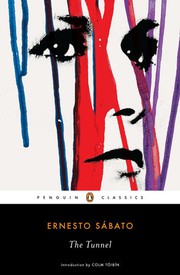
The Tunnel
The Tunnel is a psychological novel narrated by Juan Pablo Castel, an Argentine painter who confesses to murdering María Iribarne. From his prison cell, he recounts the events that led to the crime, beginning with an encounter at an art exhibition. Castel becomes fascinated by María after noticing that she is the only person who understands a small but meaningful detail in one of his paintings.
Convinced that they share a rare connection, Castel becomes increasingly obsessed with her. His longing to be understood gradually turns into jealousy, suspicion, and paranoia, making it impossible for him to distinguish genuine intimacy from his own fears. As his relationship with María deteriorates, he retreats further into isolation.
Through its unreliable narrator and claustrophobic atmosphere, Sábato explores alienation, obsession, and the human desire to be understood. The tunnel becomes a metaphor for Castel’s isolated inner world, in which he remains trapped despite his desperate search for connection.
Argentina
1948
About this theme
- Books
- 30
- Countries
- 25
Countries with this theme
Angola
Africa
Argentina
South America
Australia
Oceania
Austria
Europe
Belgium
Europe
Denmark
Europe
France
Europe
Germany
Europe
Hungary
Europe
Iran
Asia
Italy
Europe
Japan
Asia
Lebanon
Asia
Libya
Africa
Norway
Europe
Palestine
Asia
Portugal
Europe
Romania
Europe
Russia
Europe
South Korea
Asia
Spain
Europe
Taiwan
Asia
Türkiye
Asia
Ukraine
Europe
United States
North America