Society & Class
Examinations of class, power, and the structures we live within.
All countries
Austria
Bangladesh
Belarus
Benin
Bhutan
Bosnia and Herzegovina
Brazil
Bulgaria
Burundi
Cabo Verde
Cameroon
Chile
China
Congo, Democratic Republic
Costa Rica
Côte d’Ivoire (Ivory Coast)
Czech Republic
Denmark
Dominican Republic
Egypt
Fiji
France
Georgia
Germany
Ghana
Greece
India
Iraq
Ireland
Italy
Jamaica
Japan
Jordan
Kuwait
Lithuania
Mexico
Morocco
Nigeria
Pakistan
Palestine
Russia
Saudi Arabia
Senegal
South Africa
South Korea
Spain
Sudan
Sweden
Türkiye
Ukraine
United Kingdom
United States
Uzbekistan
Zambia
1

Music Against the Night
Set against the political and cultural upheavals of the late eighteenth and nineteenth centuries, Yiyun Li’s sweeping historical novel follows two gifted musicians whose ambitions take them across continents.
John Field, born in Dublin in 1782, is a musical prodigy whose father dreams of making him the next Mozart. His talent carries him from Ireland to England, France, and eventually Russia, where he becomes a celebrated pianist and composer. He helps popularize the nocturne, a musical form later associated most famously with Frédéric Chopin.
Meanwhile, in Pondicherry, French India, Adelaide Percheron—an orphan raised by her formidable grandmother—discovers her own passion for music. Determined to escape the limitations imposed by her circumstances, she pursues opportunities in Paris and Moscow, striving to build a life beyond the expectations placed upon women of her time.
When their paths eventually converge, John and Adelaide must navigate the complexities of marriage, artistic ambition, and competing desires. Through their intertwined lives, Li examines the price of genius, the exploitation of talent, and the fragile boundary between artistic achievement and personal fulfilment. The novel asks what artists must sacrifice for recognition—and whether their work can outlive the people who create it.
China
2026
2
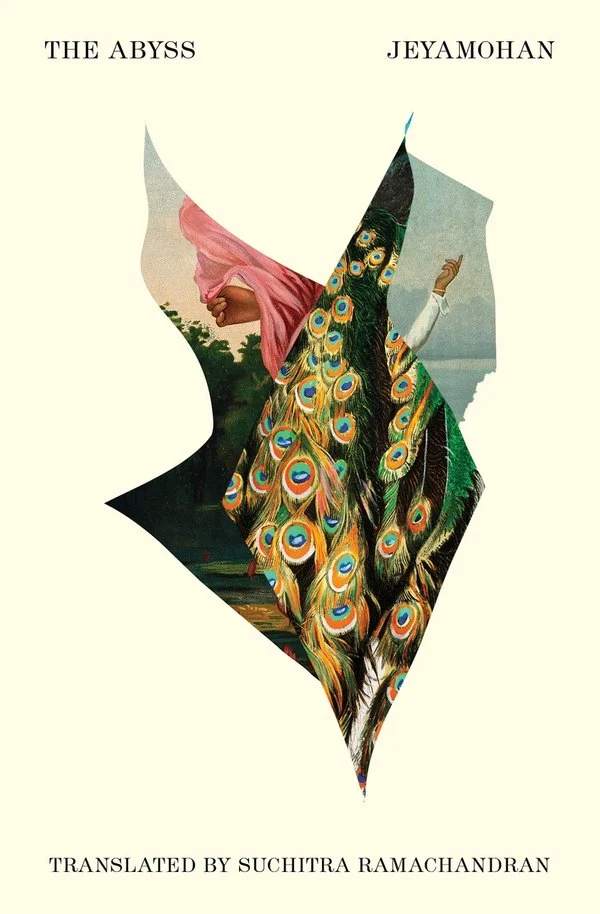
The Abyss
In the hidden world of India’s professional begging networks, human suffering has become a business. Pothivelu Pandaram is a respected, religious man who has built his prosperity on an appalling trade: he buys and breeds people with physical disabilities, then places them outside temples to beg for money. Among those he exploits are Mangandi Samy, a profoundly disabled man whose haunting songs express a longing for divine love, and others whose lives have been reduced to commodities. Pandaram treats them as possessions rather than human beings, convinced that his success and social standing justify his actions. But when an unexpected transaction disrupts his carefully controlled world, the moral foundations of his existence begin to crumble. Combining dark humour, grotesque realism, and spiritual inquiry, Jeyamohan confronts readers with uncomfortable questions about compassion, exploitation, and human dignity. Rather than offering easy answers, The Abyss challenges us to examine the cruelty people can inflict on one another—and the possibility of liberation even in the most degrading circumstances.
India
2026
3

Jérôme Lindon
What makes a great editor—and what happens when the person who believes in your work is no longer there? In this intimate, witty memoir, French novelist Jean Echenoz remembers Jérôme Lindon, the formidable publisher who led Éditions de Minuit and helped shape modern French literature. Their relationship began in 1979, when Echenoz, an unpublished writer, nervously submitted his first novel to Lindon. Instead of rejecting the manuscript, Lindon offered him a contract, beginning a friendship and professional partnership that would last more than twenty years. Through recollections of early-morning phone calls, lunches, disagreements, and conversations about the smallest details of writing, Echenoz reveals a man whose stern exterior concealed generosity, conviction, and an unwavering commitment to literature. Both a personal farewell and a portrait of literary life, this slender book celebrates the often complicated bond between a writer and the editor who helps bring his work into the world.
France
2026
4

Complete Stories
What if the most intimate relationships in our lives were also where power, violence, and oppression began? Ingeborg Bachmann’s Complete Stories brings together the short fiction of one of the most important German-language writers of the twentieth century. Across stories set in Vienna, Rome, Paris, and beyond, Bachmann portrays women and men caught in relationships shaped by obsession, shame, silence, and unequal power. Lovers struggle to communicate, women confront the invisible restrictions imposed by patriarchal society, and ordinary lives reveal the lingering wounds of European fascism. With lyrical precision and psychological intensity, Bachmann explores the limits of language and the difficulty of telling the truth about ourselves and others. Both intimate and political, these stories reveal how history’s deepest structures of domination can persist in private life, long after the events that created them have passed.
Austria
2026
5
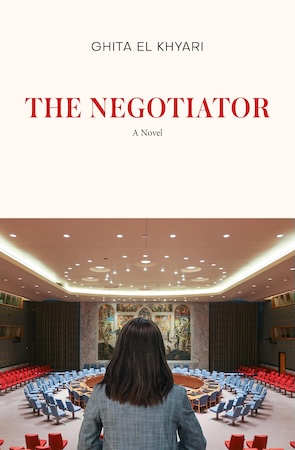
The Negotiator: A Woman at the Heart of the UN
Alya, a 45-year-old United Nations diplomat, is finally given the assignment she has spent years working towards: leading peace negotiations on Syria from Geneva. Experienced, determined, and deeply committed to diplomacy, she knows that success depends on patience, careful preparation, and the ability to find common ground between opposing sides. But when she meets Alexei, her Russian counterpart, professional collaboration becomes entangled with personal feelings. Then Russia invades Ukraine, transforming the geopolitical landscape and threatening everything Alya has built, both professionally and privately. As diplomatic tensions intensify, she must confront the contradictions between her ideals and the political realities of the institution she serves. Drawing on the author’s experience inside the United Nations, this novel explores the hidden complexities of international diplomacy, the compromises required to pursue peace, and the personal sacrifices women make while navigating positions of power. It is also an intimate portrait of a woman reconsidering her identity and ambitions at midlife, asking what remains of the self when professional responsibilities and personal desires collide.
Morocco
2026
6
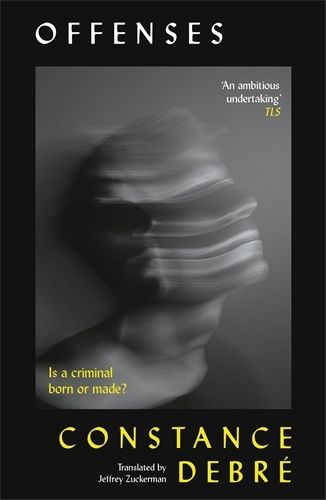
Offenses
Based on a real murder case, Offenses examines the relationship between crime, poverty, and justice in contemporary France. In a housing estate outside Paris, a nineteen-year-old man stabs his elderly neighbour ten times to settle a €450 drug debt. The crime appears senseless in its brutality, but Constance Debré looks beyond the immediate act to examine the social conditions surrounding both the perpetrator and his victim.
Drawing on her experience as a criminal defence lawyer, Debré explores the boundaries between individual responsibility and collective failure. The young man’s circumstances, the victim’s vulnerability, and the environment in which they live become part of a wider portrait of a society divided by class and opportunity. Written in Debré’s characteristic spare, unsentimental prose, the novella questions whether justice can truly be separated from the inequalities that shape people’s lives. Rather than offering easy explanations or moral resolutions, it confronts readers with uncomfortable questions about guilt, punishment, and the possibility of escaping the circumstances into which one is born.
France
2026
7
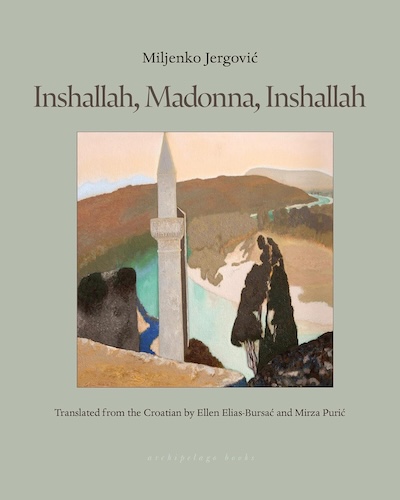
Inshallah, Madonna, Inshallah
In Inshallah, Madonna, Inshallah, Croatian-Bosnian writer Miljenko Jergović draws on the rich oral traditions, folk songs, and legends of Bosnia to create a collection of nineteen stories in which ordinary lives take on the dimensions of myth. Inspired by the music that filled the streets, cafés, and homes of Sarajevo during the author’s childhood, the stories imagine the extraordinary events and forgotten histories that might lie behind traditional songs.
Jergović’s characters inhabit a world where miracles seem possible, fate shapes human destinies, and misfortune can transform individuals into enduring legends. Christians and Muslims share a landscape marked by centuries of cultural exchange, imperial domination, and conflict. Their stories are sometimes comic, sometimes brutal, but always deeply connected to the collective memory of the region.
Moving between folklore, historical imagination, and intimate portraits of human experience, Jergović explores how communities preserve their identities through storytelling. The collection offers a vivid literary portrait of the Balkans, revealing how individual lives become part of a larger cultural inheritance that survives across generations.
Bosnia and Herzegovina
2026
8
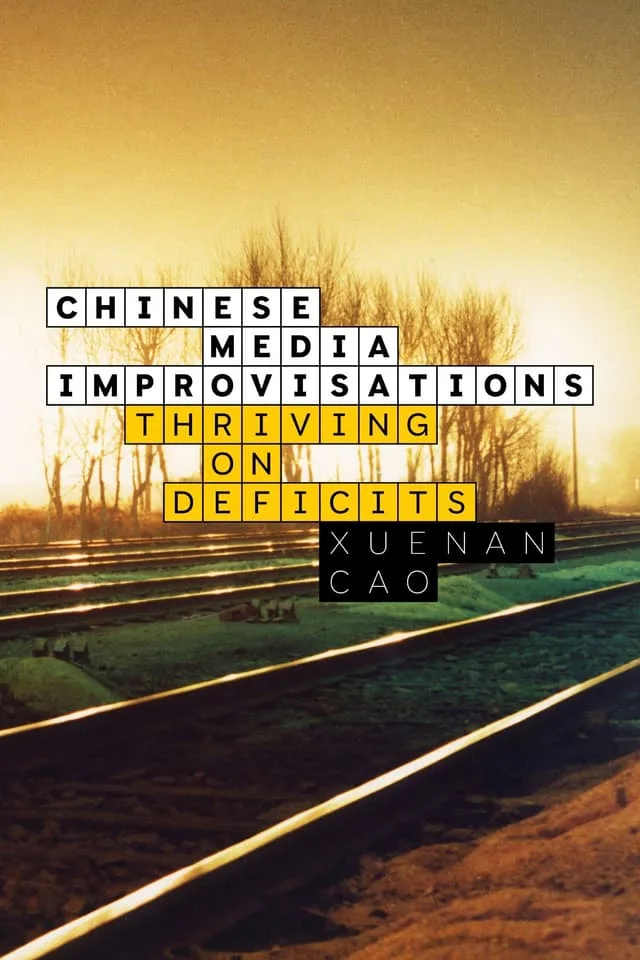
Chinese Media Improvisations
How does a society innovate when resources are scarce? In Chinese Media Improvisations: Thriving on Deficits, scholar Xuenan Cao offers a fresh perspective on China’s technological development, examining how shortages, political pressures, and material constraints have shaped the country’s media and technological imagination. Moving across several periods of Chinese history, Cao explores the printing shortages of Mao’s Great Leap Forward, the challenges of modernising China’s railway infrastructure, early experiments in information theory when computers were unavailable, and contemporary attempts to incorporate artificial intelligence into urban life. These seemingly disparate episodes reveal a recurring pattern: people adapt existing tools, improvise unconventional solutions, and transform limitations into opportunities for experimentation. Drawing on archival documents, newspapers, scientific publications, and literary works, Cao combines historical research with media theory to challenge assumptions about technological progress that originate in Western scholarship. The result is an interdisciplinary study of creativity, scarcity, and innovation that illuminates how China’s distinctive historical and political circumstances have shaped its relationship with technology.
China
2026
9

Twilight in Musashino
Set in postwar Japan in 1959, Twilight in Musashino begins with the discovery of a young Japanese flight attendant strangled on the icy banks of a river. As Detective Fujisawa investigates the murder, his attention turns to a foreign priest and the Guglielmo Church, a charitable Christian mission with an unsettling connection to the victim. What initially appears to be a straightforward criminal investigation gradually reveals a tangled web involving narcotics, postwar relief operations, and international diplomacy. The deeper Fujisawa digs, the more he encounters powerful institutions determined to protect their reputations and conceal uncomfortable truths. Blending meticulous police work with an incisive examination of social power, Seicho Matsumoto constructs a slow-burning mystery in which the pursuit of justice collides with political influence and institutional silence. The novel offers a compelling portrait of a society negotiating its identity in the aftermath of war, exposing the tensions between public morality and private corruption.
Japan
2026
10
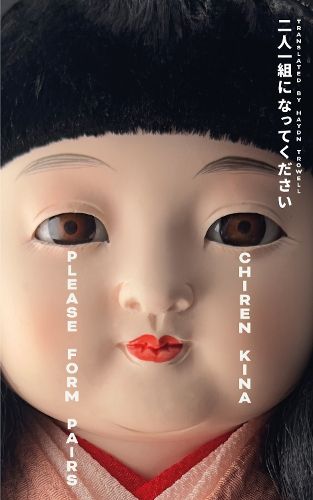
Please Form Pairs
In a world where popularity determines survival, Mishin Mizushima is a teenage girl who struggles to meet Japan’s unforgiving standards of beauty and social status. Unpopular at school and abandoned emotionally by her mother, she occupies the lowest rung of a ruthless social hierarchy dominated by glamorous, powerful girls. But when a new teacher introduces a seemingly simple instruction—students must form pairs, and no two people can pair together twice—the established order begins to collapse. Those left without partners face a terrifying consequence: execution. Blending the vicious social politics of Mean Girls with the deadly competition of Squid Game, Chiren Kina’s dark, candy-coloured thriller explores bullying, conformity, beauty standards, and the desperate human need to belong. Beneath its exaggerated, unsettling premise lies a sharp examination of how easily social exclusion can become a matter of life and death.
Japan
2026
11
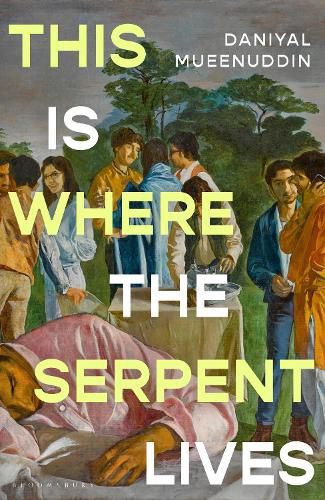
This is Where the Serpent Lives
Spanning six decades, This Is Where the Serpent Lives is an expansive portrait of contemporary Pakistan, where wealth, privilege and inherited social hierarchies shape the destinies of generations. At its centre is Yazid, an orphan who rises from poverty on the streets of Rawalpindi to become a trusted chauffeur in the household of a powerful landowning family. Around him, the lives of aristocrats, servants, ambitious farmers and young lovers intersect across Pakistan’s chaotic cities and feudal countryside. Saqib, the son of a poor gardener, receives an opportunity to manage a new agricultural enterprise, but his determination to improve his position leads him into dangerous territory. Meanwhile, rivalries, romantic entanglements and political corruption threaten the fragile order maintained by the wealthy elite. Through a richly interconnected cast of characters, Mueenuddin examines the price of ambition and the ways class, money and power perpetuate inequality. The novel offers an intimate, unsparing view of a society caught between changing aspirations and deeply entrenched traditions.
Pakistan
2026
12
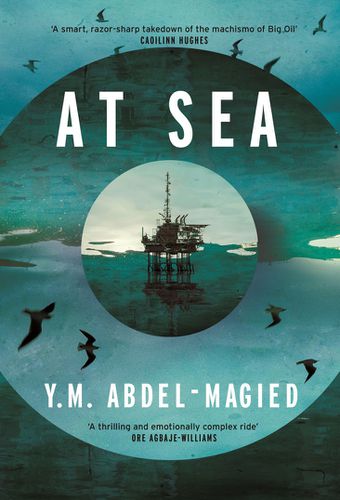
At Sea
Zainab is an expert driller accustomed to working in an industry where women must constantly prove their competence. When she is offered the opportunity to oversee a high-stakes offshore oil rig operation, she leaves behind her pregnant sister and heads out to sea, determined to demonstrate that she has earned her place at the top. But the assignment quickly becomes a test of both her professional abilities and her moral convictions. She is the only woman among a crew of hardened men who resent her authority, and the rig itself is teetering on the edge of disaster.
As Zainab investigates the technical problems threatening the operation, she discovers that the danger extends beyond the machinery. Corporate greed, careless decision-making, and the crew’s determination to complete the job as cheaply and quickly as possible threaten everyone’s lives. With her warnings repeatedly dismissed, she must decide how far she is willing to go to prevent a catastrophe.
Drawing on the author’s own experience as a drilling engineer, this gripping literary thriller explores sexism, ambition, environmental responsibility, and the human cost of unchecked capitalism. Against the vast and unpredictable power of the ocean, Zainab confronts a world in which professional authority and ethical responsibility are constantly at odds. The novel asks what it means to stand by one’s principles when the people in power refuse to listen.
Sudan
2026
About this theme
- Books
- 140
- Countries
- 54
Countries with this theme
Austria
Europe
Bangladesh
Asia
Belarus
Europe
Benin
Africa
Bhutan
Asia
Bosnia and Herzegovina
Europe
Brazil
South America
Bulgaria
Europe
Burundi
Africa
Cabo Verde
Africa
Cameroon
Africa
Chile
South America
China
Asia
Congo, Democratic Republic
Africa
Costa Rica
North America
Côte d’Ivoire (Ivory Coast)
Africa
Czech Republic
Europe
Denmark
Europe
Dominican Republic
North America
Egypt
Africa
Fiji
Oceania
France
Europe
Georgia
Asia
Germany
Europe
Ghana
Africa
Greece
Europe
India
Asia
Iraq
Asia
Ireland
Europe
Italy
Europe
Jamaica
North America
Japan
Asia
Jordan
Asia
Kuwait
Asia
Lithuania
Europe
Mexico
North America
Morocco
Africa
Nigeria
Africa
Pakistan
Asia
Palestine
Asia
Russia
Europe
Saudi Arabia
Asia
Senegal
Africa
South Africa
Africa
South Korea
Asia
Spain
Europe
Sudan
Africa
Sweden
Europe
Türkiye
Asia
Ukraine
Europe
United Kingdom
Europe
United States
North America
Uzbekistan
Asia
Zambia
Africa