Society & Class
Examinations of class, power, and the structures we live within.
All countries
Austria
Bangladesh
Belarus
Benin
Bhutan
Bosnia and Herzegovina
Brazil
Bulgaria
Burundi
Cabo Verde
Cameroon
Chile
China
Congo, Democratic Republic
Costa Rica
Côte d’Ivoire (Ivory Coast)
Czech Republic
Denmark
Dominican Republic
Egypt
Fiji
France
Georgia
Germany
Ghana
Greece
India
Iraq
Ireland
Italy
Jamaica
Japan
Jordan
Kuwait
Lithuania
Mexico
Morocco
Nigeria
Pakistan
Palestine
Russia
Saudi Arabia
Senegal
South Africa
South Korea
Spain
Sudan
Sweden
Türkiye
Ukraine
United Kingdom
United States
Uzbekistan
Zambia
1
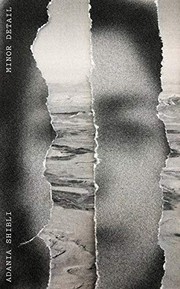
Minor Detail
Minor Detail by Palestinian writer Adania Shibli is a haunting novel that connects a crime committed in the Negev desert in 1949 with a contemporary woman’s search for the truth decades later. The first part recounts the abduction, rape, and murder of a young Bedouin woman by Israeli soldiers shortly after the 1948 war, presenting the events through a detached, almost clinical narrative that emphasizes the brutality of the act and the victim’s anonymity. In the second part, a Palestinian woman in Ramallah becomes obsessed with a seemingly minor detail: the exact date of the crime. Determined to investigate, she travels across checkpoints and restricted territories, confronting the physical and psychological barriers that shape life under occupation. Through spare prose and a carefully controlled structure, Shibli explores violence, historical erasure, memory, and the unequal power to tell stories. The novel asks how forgotten suffering can be recovered and what it means to seek truth in a landscape where history remains deeply contested.
Palestine
2020
2
Representations of the Intellectual
Should intellectuals challenge those in power, even when doing so threatens their careers, reputations, or personal safety?
Based on his 1993 BBC Reith Lectures, Representations of the Intellectual explores the role of the thinker in public life. Edward W. Said argues that intellectuals have a responsibility to question accepted wisdom, resist political and institutional pressure, and speak honestly about injustice—even when their views are unpopular.
Drawing on figures such as Theodor Adorno and Jonathan Swift, as well as contemporary political events, Said examines the dangers of allowing expertise, ambition, nationalism, or financial interests to silence independent thought. He presents the intellectual as an outsider who must remain willing to challenge authority rather than simply serve it.
Passionate and provocative, this short collection asks what it means to preserve intellectual independence in a world shaped by powerful institutions and competing interests. It remains a compelling reflection on the relationship between knowledge, conscience, and public responsibility.
Palestine
United States
1994
3
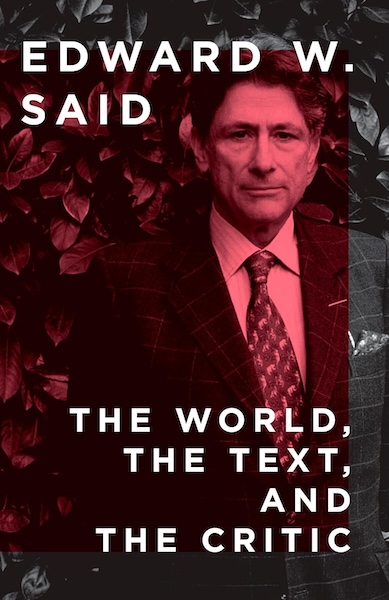
The World, the Text, and the Critic
Can literature ever be separated from the world in which it is created?
In The World, the Text, and the Critic, Edward W. Said challenges the idea that literary works should be understood independently of their historical and political contexts. Through a series of essays, he examines the relationship between literature, intellectual life, institutions, and social power.
Said introduces the idea of worldliness: texts are produced within particular historical circumstances and participate in the societies around them, whether their authors acknowledge it or not. He also considers the critic’s responsibility to question established assumptions rather than simply reinforce dominant ideas. This influential collection explores how literary criticism can become a form of intellectual independence and public engagement.
Palestine
United States
1983
4
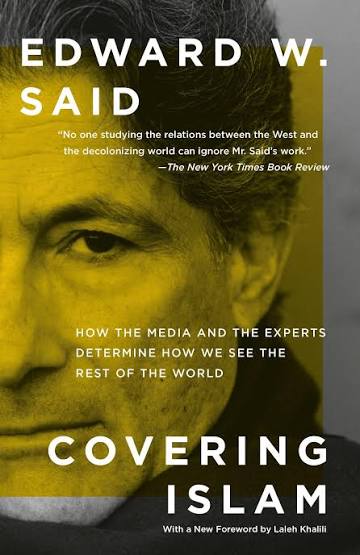
Covering Islam
How does the media shape what the world believes about Islam?
In Covering Islam, Edward W. Said investigates how Western news organisations, academics, and political commentators represent Islam and Muslim societies. He argues that media coverage often reduces diverse communities to simplified images associated with extremism, conflict, and political threat, obscuring the complexity of their histories and everyday lives.
Said explores the relationship between knowledge, media institutions, and political power, asking readers to question who gets to define another culture and whose perspectives are excluded. The book remains an important study of representation, stereotyping, and the influence of public narratives on international understanding.
Palestine
United States
1981
About this theme
- Books
- 4
- Countries
- 54
Countries with this theme
Austria
Europe
Bangladesh
Asia
Belarus
Europe
Benin
Africa
Bhutan
Asia
Bosnia and Herzegovina
Europe
Brazil
South America
Bulgaria
Europe
Burundi
Africa
Cabo Verde
Africa
Cameroon
Africa
Chile
South America
China
Asia
Congo, Democratic Republic
Africa
Costa Rica
North America
Côte d’Ivoire (Ivory Coast)
Africa
Czech Republic
Europe
Denmark
Europe
Dominican Republic
North America
Egypt
Africa
Fiji
Oceania
France
Europe
Georgia
Asia
Germany
Europe
Ghana
Africa
Greece
Europe
India
Asia
Iraq
Asia
Ireland
Europe
Italy
Europe
Jamaica
North America
Japan
Asia
Jordan
Asia
Kuwait
Asia
Lithuania
Europe
Mexico
North America
Morocco
Africa
Nigeria
Africa
Pakistan
Asia
Palestine
Asia
Russia
Europe
Saudi Arabia
Asia
Senegal
Africa
South Africa
Africa
South Korea
Asia
Spain
Europe
Sudan
Africa
Sweden
Europe
Türkiye
Asia
Ukraine
Europe
United Kingdom
Europe
United States
North America
Uzbekistan
Asia
Zambia
Africa