Society & Class
Examinations of class, power, and the structures we live within.
All countries
Austria
Bangladesh
Belarus
Benin
Bhutan
Bosnia and Herzegovina
Brazil
Bulgaria
Burundi
Cabo Verde
Cameroon
Chile
China
Congo, Democratic Republic
Costa Rica
Côte d’Ivoire (Ivory Coast)
Czech Republic
Denmark
Dominican Republic
Egypt
Fiji
France
Georgia
Germany
Ghana
Greece
India
Iraq
Ireland
Italy
Jamaica
Japan
Jordan
Kuwait
Lithuania
Mexico
Morocco
Nigeria
Pakistan
Palestine
Russia
Saudi Arabia
Senegal
South Africa
South Korea
Spain
Sudan
Sweden
Türkiye
Ukraine
United Kingdom
United States
Uzbekistan
Zambia
1
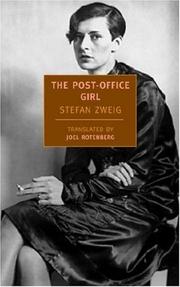
The Post-Office Girl
Set in Austria after the First World War, The Post-Office Girl follows Christine Hoflehner, a young woman working in a small post office in a provincial town. Trapped in poverty and burdened by the responsibility of caring for her sick mother, Christine leads a life marked by exhaustion and limited possibilities. Her circumstances change unexpectedly when she receives an invitation to visit her wealthy aunt in Switzerland, where she experiences luxury, freedom, and a world previously beyond her imagination. However, her brief escape exposes the deep divisions between social classes and makes returning to her former life almost unbearable. When Christine encounters Ferdinand, a disillusioned war veteran, they begin to imagine a different future together. Zweig portrays the psychological consequences of poverty, the fragility of hope, and the crushing effects of social inequality in a society struggling to recover from war.
Austria
1982
2
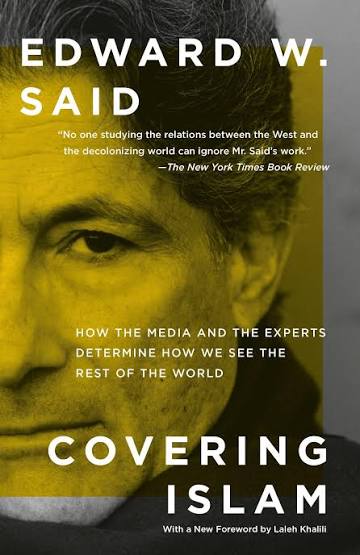
Covering Islam
How does the media shape what the world believes about Islam?
In Covering Islam, Edward W. Said investigates how Western news organisations, academics, and political commentators represent Islam and Muslim societies. He argues that media coverage often reduces diverse communities to simplified images associated with extremism, conflict, and political threat, obscuring the complexity of their histories and everyday lives.
Said explores the relationship between knowledge, media institutions, and political power, asking readers to question who gets to define another culture and whose perspectives are excluded. The book remains an important study of representation, stereotyping, and the influence of public narratives on international understanding.
Palestine
United States
1981
3
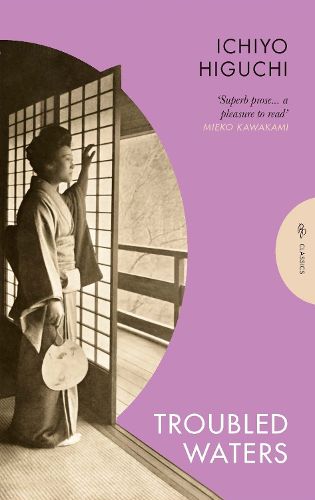
Troubled Waters
Set in the pleasure district of Meiji-era Japan, Troubled Waters (Nigorie) portrays the troubled life of Oriki, a popular courtesan at the Kikunoi establishment. Beautiful and admired by her customers, Oriki conceals a deep unhappiness rooted in poverty, social exclusion, and the limited choices available to women in her position. Her past is intertwined with Genshichi, a former customer whose obsessive devotion to her has cost him his business and left his wife and child in desperate circumstances. Although Oriki has begun seeing another wealthy patron, she remains haunted by the consequences of her earlier relationship.
Through fragmented conversations and shifting perspectives, Higuchi gradually reveals the emotional burdens carried by Oriki and those around her. The story examines the destructive effects of poverty, the unequal power dynamics between men and women, and the social structures that trap individuals in seemingly inescapable circumstances. With psychological subtlety and compassion, Higuchi gives voice to people marginalized by respectable society. Troubled Waters remains a powerful portrait of female vulnerability and the human cost of a world in which economic hardship and social expectations constrain personal freedom.
Publication note: The original Japanese story, Nigorie, appeared in 1895. English translations have been published under several titles, including Muddy Bay (1958) and Troubled Waters (1981). A new translation by Bryan Karetnyk is included in a 2026 collection of Higuchi’s stories published by Pushkin Press.
Japan
1981
4

Cynics
Set in Moscow during the turbulent years following the Russian Revolution, Cynics is a darkly comic portrait of love, survival, and moral compromise under Bolshevik rule. At its center is Vladimir, an idealistic intellectual hopelessly in love with Olga, a woman whose priorities are shaped increasingly by the struggle to obtain food, warmth, and security. When Olga becomes interested in serving the revolution, Vladimir introduces her to his brother Sergei, a Bolshevik official. Their relationships develop into a painful love triangle in which personal desires collide with political ambition and material necessity.
Written in a sharp, fragmented style, Marienhof’s novel juxtaposes intimate emotions with the absurdities and brutality of everyday life during War Communism and the New Economic Policy. Its characters navigate a society where ideological convictions often conceal self-interest, and basic necessities can outweigh romantic ideals. Through biting satire, grotesque humor, and cinematic scenes, Marienhof exposes the contradictions of revolutionary life without romanticizing either the old order or the new regime. Initially published in Berlin because Soviet censorship prevented its domestic publication, Cynics remains a striking exploration of how political upheaval reshapes private morality and human relationships.
Russia
1973
5
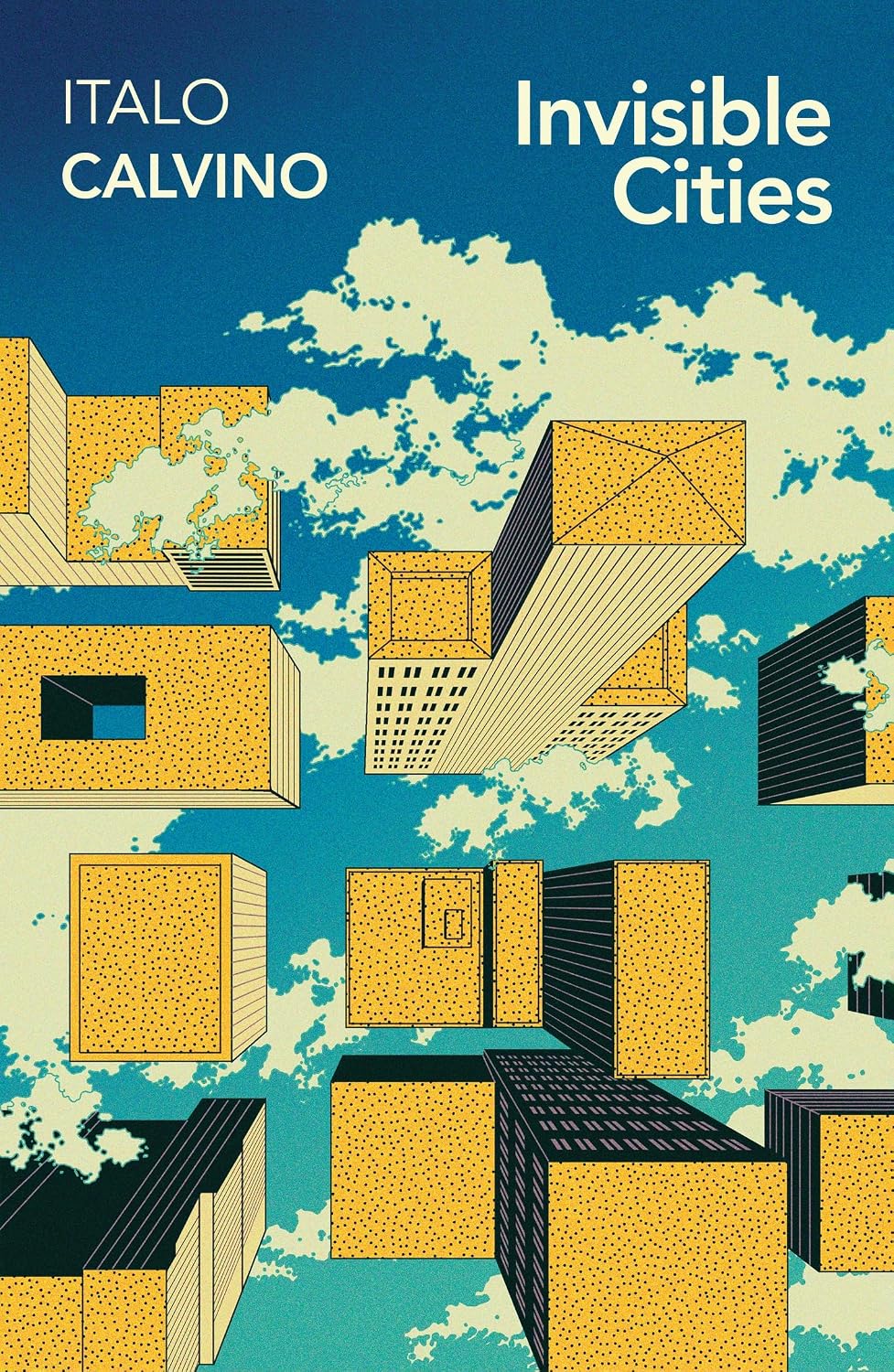
Invisible Cities
Invisible Cities imagines a series of conversations between the Venetian traveller Marco Polo and the Mongol emperor Kublai Khan. Polo describes extraordinary cities he claims to have visited, each possessing distinctive customs, architecture, memories, and relationships with time. Some cities seem suspended between life and death; others are organised around desire, exchange, or the endless accumulation of objects. Gradually, the descriptions become less like conventional travel accounts and more like meditations on human experience. Khan attempts to understand the vastness of his empire through Polo’s stories, while the traveller uses language to explore places that may reflect aspects of Venice itself. Calvino combines fantasy, philosophy, and poetic imagery to examine memory, communication, urban life, and the relationship between imagination and reality. The book invites readers to consider how cities express the hopes, fears, and contradictions of the people who inhabit them.
Italy
1972
6
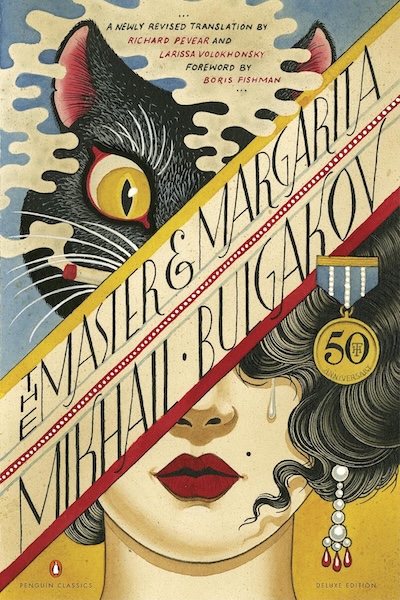
The Master and Margarita
The Master and Margarita is a surreal, satirical novel in which the Devil arrives in Moscow accompanied by a bizarre entourage, including a giant talking black cat. Their supernatural antics expose the hypocrisy, greed, cowardice, and corruption of Soviet society, throwing the city’s literary establishment and ordinary citizens into chaos.
Alongside this fantastical story, the novel follows the Master, a writer whose novel about Pontius Pilate has brought him persecution, and Margarita, the woman who loves him and refuses to abandon him. Desperate to find the Master, Margarita enters a dangerous bargain that leads her into the Devil’s extraordinary world. Interwoven with their story are chapters retelling the trial and execution of Jesus through the perspective of Pontius Pilate, who struggles with fear, conscience, and moral responsibility.
Blending fantasy, political satire, romance, and philosophical reflection, Bulgakov’s masterpiece explores the conflict between truth and authority, the power of love, artistic freedom, and the enduring struggle between good and evil.
Russia
1966
7
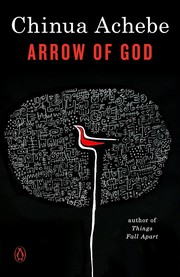
Arrow of God
Arrow of God is set in the Igbo communities of southeastern Nigeria during the early twentieth century, as British colonial rule and Christian missionary activity begin to transform traditional society. At the centre of the novel is Ezeulu, the chief priest of Ulu, the most powerful deity of six neighbouring villages. Proud, intelligent, and deeply committed to his religious responsibilities, Ezeulu sees himself as the guardian of his people’s spiritual and cultural traditions. However, his growing conflicts with colonial administrators, Christian missionaries, and rival community leaders gradually undermine his authority.
When Ezeulu refuses to cooperate with the British authorities, his decision creates a crisis that threatens both his position and the unity of his people. His personal pride and religious convictions become entangled with broader struggles over power, belief, and cultural survival. Through Ezeulu’s tragic story, Chinua Achebe examines the consequences of colonialism, the tensions between tradition and change, and the dangers of political and spiritual inflexibility. The novel offers a nuanced portrait of a society confronting profound transformation from within and without.
Nigeria
1964
8
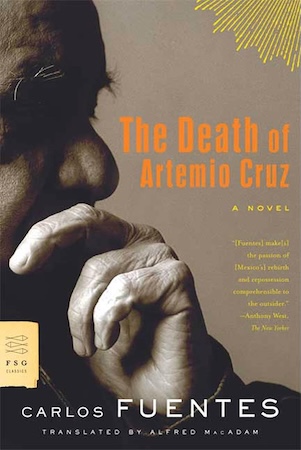
The Death of Artemio Cruz
On his deathbed, Artemio Cruz, a wealthy and powerful Mexican businessman, looks back over a life built on ambition, betrayal, and corruption. Once a young soldier fighting in the Mexican Revolution, he began with ideals of justice and freedom. But as the years passed, he traded those ideals for wealth and influence, exploiting the very people the revolution had promised to liberate.
Through fragmented memories spanning several decades, Fuentes reconstructs Cruz’s rise from a young revolutionary to a ruthless political and economic power broker. His recollections reveal lost love, compromised loyalties, and the personal sacrifices behind his success. As his body fails, he must confront the gulf between the man he once hoped to become and the man he has made himself.
Experimenting with shifting perspectives and a nonlinear narrative, Fuentes transforms one man’s final hours into a sweeping portrait of twentieth-century Mexico. The novel exposes how revolutions can betray their promises, how power corrupts, and how personal ambition can become inseparable from a nation’s troubled history. Both a psychological reckoning and a fierce political critique, The Death of Artemio Cruz asks what remains of a person’s ideals when the pursuit of power has consumed everything else.
Mexico
1962
9
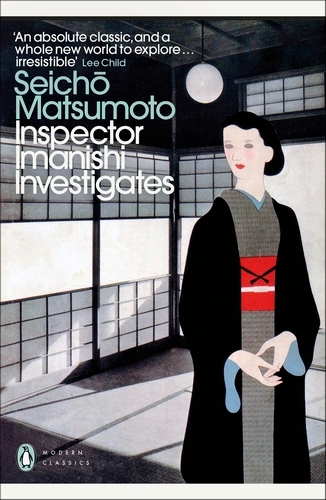
Inspector Imanishi Investigates
First published in 1961, Inspector Imanishi Investigates is a classic Japanese crime novel that follows Inspector Eitaro Imanishi as he investigates the mysterious murder of a man found dead beneath a train in Tokyo. What initially appears to be a straightforward case gradually unfolds into a complex investigation involving false identities, concealed pasts, and the social prejudices of postwar Japan. As Imanishi follows a trail of clues across the country, he encounters people whose lives have been shaped by ambition, discrimination, and the desire to escape their origins. Seichō Matsumoto combines the careful logic of a police procedural with a thoughtful examination of Japanese society, creating a mystery in which understanding human motivations is just as important as uncovering physical evidence.
Japan
1961
10
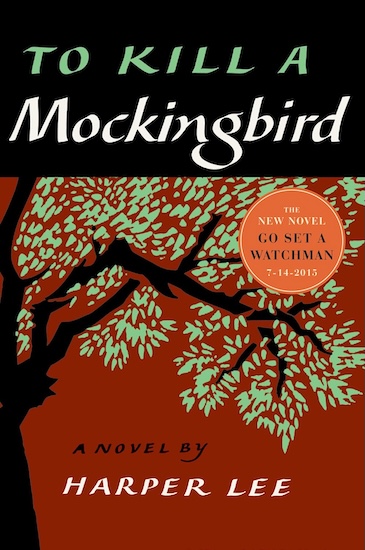
To Kill a Mockingbird
Set in the fictional town of Maycomb, Alabama, during the Great Depression, To Kill a Mockingbird is narrated by Scout Finch, a young girl growing up in a deeply segregated society. Her father, Atticus Finch, is a lawyer who agrees to defend Tom Robinson, a Black man falsely accused of assaulting a white woman. As Scout and her brother Jem observe the trial and its consequences, they encounter the realities of racial prejudice, social inequality, and moral courage. Their experiences challenge their childhood assumptions about justice and human goodness. Through Scout’s developing understanding of the world, Harper Lee examines the conflict between personal conscience and social convention, showing how prejudice can distort even the most fundamental principles of fairness.
United States
1960
11
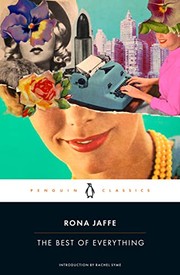
Best of Everything
The Best of Everything follows five young women working in a New York publishing company during the late 1950s as they navigate professional ambition, romance, and the expectations placed on women in postwar America. Caroline Bender dreams of building a meaningful career, while her colleagues struggle with relationships, financial insecurity, and the pressure to find suitable husbands. Their experiences reveal a world in which women are encouraged to pursue independence but are still judged by their marital status and appearance. As the characters encounter workplace discrimination, emotional disappointments, and difficult personal choices, they begin to question what success and happiness really mean. Jaffe offers an unvarnished portrait of women’s lives in a rapidly changing society, exploring the conflict between individual aspirations and conventional expectations. The novel examines gender inequality, ambition, and the price women are often expected to pay for trying to have both a career and a fulfilling personal life.
United States
1958
12
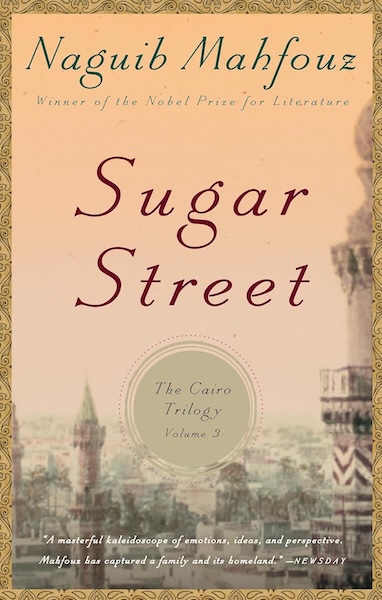
Sugar Street
Sugar Street is the final novel in Naguib Mahfouz’s Cairo Trilogy, following the al-Sayyid family into the 1930s and the political and social changes that reshape Egypt. As the country moves toward greater independence, a new generation emerges with different ideas about religion, politics, and personal freedom. The family patriarch, Ahmad Abd al-Jawad, is now ageing, while his children and grandchildren navigate a world increasingly distant from the traditions that once governed their lives.
The novel focuses on the consequences of these generational shifts, particularly as family members become involved in competing political movements and question established beliefs. Kamal, now a teacher, struggles with disillusionment and the loss of the ideals that once shaped his youth. Through the family’s experiences, Mahfouz examines the rise of nationalism, the appeal of secular thought, and the tensions between religious conservatism and modernity. Set against the lively streets and changing social landscape of Cairo, Sugar Street explores how political transformation influences private lives and how each generation must negotiate the relationship between inherited traditions and an uncertain future.
Egypt
1957
About this theme
- Books
- 140
- Countries
- 54
Countries with this theme
Austria
Europe
Bangladesh
Asia
Belarus
Europe
Benin
Africa
Bhutan
Asia
Bosnia and Herzegovina
Europe
Brazil
South America
Bulgaria
Europe
Burundi
Africa
Cabo Verde
Africa
Cameroon
Africa
Chile
South America
China
Asia
Congo, Democratic Republic
Africa
Costa Rica
North America
Côte d’Ivoire (Ivory Coast)
Africa
Czech Republic
Europe
Denmark
Europe
Dominican Republic
North America
Egypt
Africa
Fiji
Oceania
France
Europe
Georgia
Asia
Germany
Europe
Ghana
Africa
Greece
Europe
India
Asia
Iraq
Asia
Ireland
Europe
Italy
Europe
Jamaica
North America
Japan
Asia
Jordan
Asia
Kuwait
Asia
Lithuania
Europe
Mexico
North America
Morocco
Africa
Nigeria
Africa
Pakistan
Asia
Palestine
Asia
Russia
Europe
Saudi Arabia
Asia
Senegal
Africa
South Africa
Africa
South Korea
Asia
Spain
Europe
Sudan
Africa
Sweden
Europe
Türkiye
Asia
Ukraine
Europe
United Kingdom
Europe
United States
North America
Uzbekistan
Asia
Zambia
Africa