Identity & Belonging
Explorations of self, belonging, and what it means to find your place.
All countries
Afghanistan
Albania
Algeria
Argentina
Azerbaijan
Barbados
Belgium
Bosnia and Herzegovina
Botswana
Brazil
Brunei
Bulgaria
Canada
Chile
China
Congo, Democratic Republic
Croatia
Cuba
Cyprus
Czech Republic
Denmark
Djibouti
Dominica
Dominican Republic
Ecuador
Egypt
France
Germany
Ghana
Greece
Guatemala
Iceland
India
Indonesia
Iran
Ireland
Italy
Jamaica
Japan
Kazakhstan
Kenya
Kuwait
Kyrgyzstan
Lebanon
Libya
Luxembourg
Mexico
Morocco
Netherlands
New Zealand
Nigeria
North Macedonia
Norway
Pakistan
Palestine
Panama
Russia
Rwanda
Singapore
Slovenia
Somalia
South Korea
Sudan
Sweden
Taiwan
Tanzania
Türkiye
Ukraine
United Kingdom
United States
Uzbekistan
Zimbabwe
1
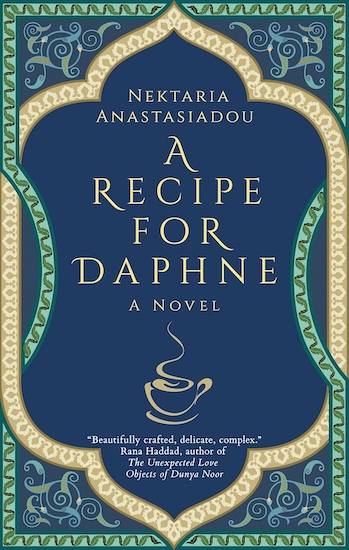
A Recipe for Daphne
In contemporary Istanbul, Fanis Paleologos is a charming widower and a respected member of the city’s dwindling Rum community, Greek Orthodox Christians whose families have lived in Istanbul for centuries. His quiet routines are disrupted when Daphne, an American-born woman of Greek and Ottoman heritage, arrives in search of her roots. Her presence awakens old memories of the woman Fanis once loved and lost during the devastating 1955 Istanbul pogrom. Meanwhile, Kosmas, a talented pastry chef hoping to find a suitable wife within his community, also falls for Daphne and attempts to win her heart through his culinary skills. As romantic rivalries unfold amid afternoon tea, traditional pastries, and lively neighbourhood gatherings, long-buried family secrets threaten to complicate their hopes for happiness. Blending humour, romance, and history, Nektaria Anastasiadou’s novel explores cultural identity, the meaning of home, and the resilience of a community determined to preserve its traditions despite decades of discrimination and upheaval.
Türkiye
2021
2
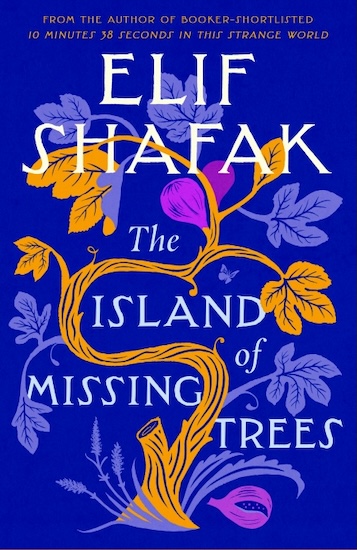
The Island of Missing Trees
A Greek Cypriot boy and a Turkish Cypriot girl fall in love in 1970s Cyprus, meeting secretly beneath a fig tree in a tavern as ethnic tensions threaten to tear their world apart. Decades later, in London, their daughter Ada struggles with grief and a past her parents have never fully revealed. As family secrets emerge, a fig tree growing in their garden becomes a living connection to a homeland left behind. Narrated partly through the tree itself, this moving novel explores displacement, inherited trauma, forbidden love, and the fragile bonds between people, nature, and memory.
Cyprus
2021
3
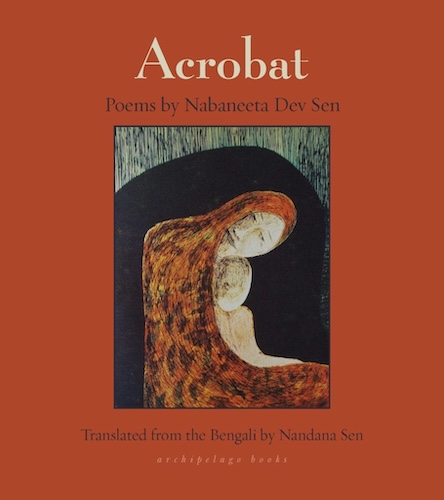
Acrobat
In Acrobat, Nabaneeta Dev Sen transforms the experiences of an ordinary life into an intimate, unflinching exploration of womanhood, love, motherhood, and mortality. This posthumously published poetry collection moves between the exhilaration of first love, the physical and emotional demands of childbirth, the complexities of family relationships, and the inevitable approach of old age. With a voice that can be tender one moment and fiercely rebellious the next, Dev Sen examines the expectations imposed on women and the quiet acts of resistance through which they reclaim their lives. The acrobat becomes a powerful image for the precarious balancing act of being human: navigating intimacy, pain, desire, and loss while attempting to remain upright. Both compassionate and unsparing, these poems celebrate the body and its vulnerabilities, revealing the extraordinary intensity hidden within everyday existence. Translated from Bengali by the author’s daughter, Nandana Dev Sen, the collection also becomes a moving literary dialogue between mother and daughter.
India
2021
4
Catch the Rabbit
Catch the Rabbit follows Lejla and Sara, two women who grew up together in Bosnia but became estranged as their lives took different directions. Years later, Lejla calls Sara and asks her to help find Armin, Lejla’s brother, who disappeared after leaving the country. Sara returns from Ireland, where she has built a new life, and the two women embark on a road trip through the former Yugoslavia. Their journey brings back memories of childhood, friendship, and the divisions created by the breakup of their country. As old grievances surface, they must confront the ways their personal histories have been shaped by ethnic identity, political violence, and the stories they tell themselves. Bastašić explores memory, belonging, and the fragility of friendship, revealing how the past can continue to govern the present even when people believe they have escaped it.
Bosnia and Herzegovina
2021
5
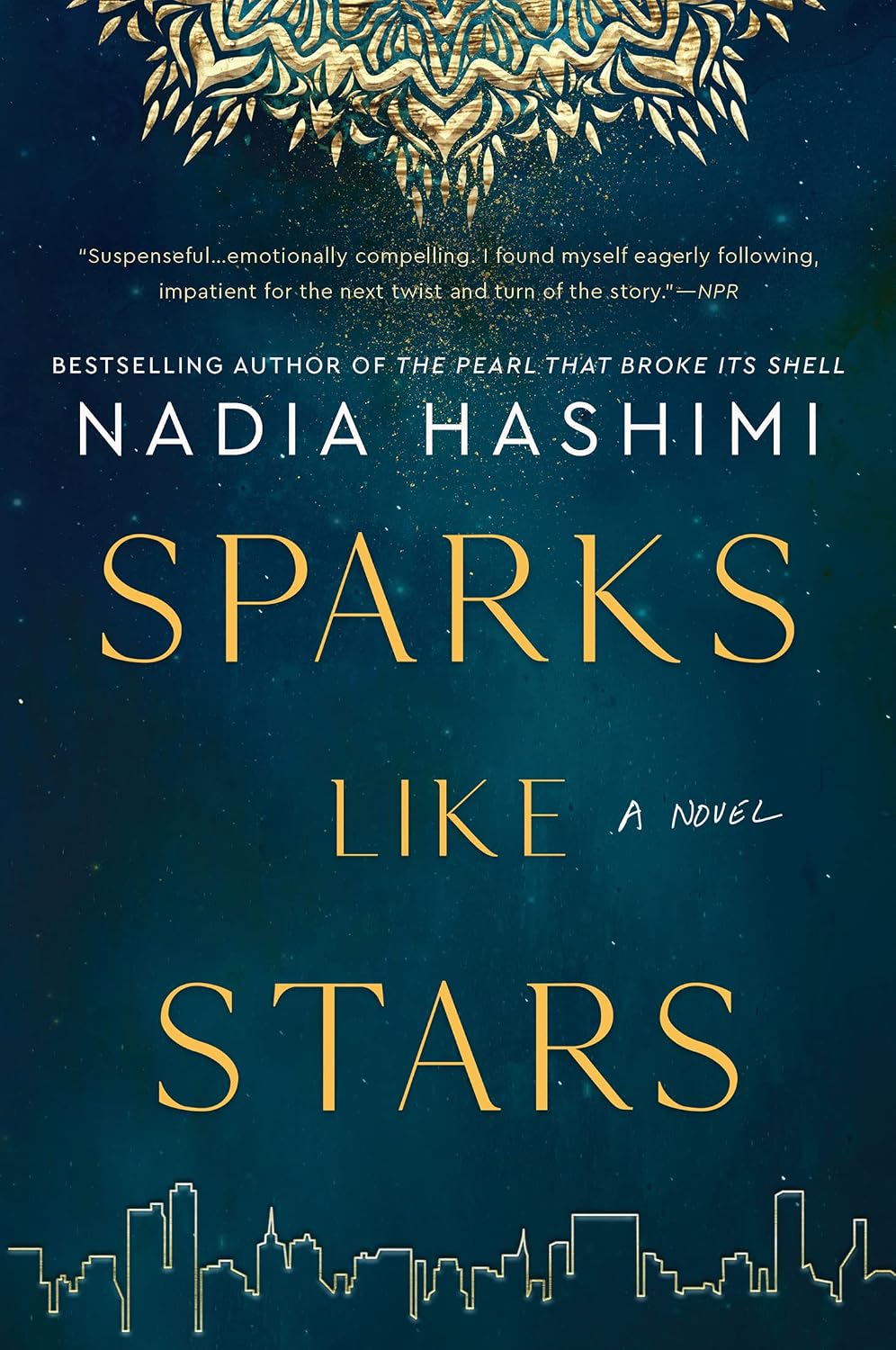
Sparks Like Stars
Sparks Like Stars begins in Kabul in 1978, when ten-year-old Sitara Zamani witnesses the violent overthrow of Afghanistan’s president and the murder of members of his household, including her family. Rescued by an American diplomat, she is taken to the United States and grows up under a new name, attempting to build a life far removed from the trauma of her childhood. Decades later, now a successful doctor in New York, she encounters a man whose appearance brings back memories she has spent years trying to suppress. Determined to uncover the truth about her past, she returns to the history she left behind. Hashimi explores the lasting effects of political violence, the fragility of memory, and the complex relationship between identity and belonging, asking whether confronting painful truths can help someone reclaim a lost part of themselves.
Afghanistan
2021
6
Nervous Conditions
Nervous Conditions follows Tambudzai, a young girl growing up in a poor Shona family in colonial Rhodesia, now Zimbabwe. Determined to escape the limitations imposed on her by poverty and gender, Tambu works hard to obtain an education. When her brother dies, she is given the opportunity to attend the mission school previously reserved for him, opening a path toward a future her family could never have imagined for her.
At school, Tambu becomes increasingly aware of the contradictions between traditional Shona culture and the values promoted by colonial education. Her cousin Nyasha, who has returned from England, struggles with similar tensions, rebelling against the expectations placed on her by her father and society. Through their experiences, Tsitsi Dangarembga explores the psychological effects of colonialism, the restrictions imposed on women, and the complicated relationship between education and liberation. The novel examines how family, culture, and social inequality shape identity, revealing that gaining access to new opportunities does not necessarily mean escaping oppression.
Zimbabwe
2021
7
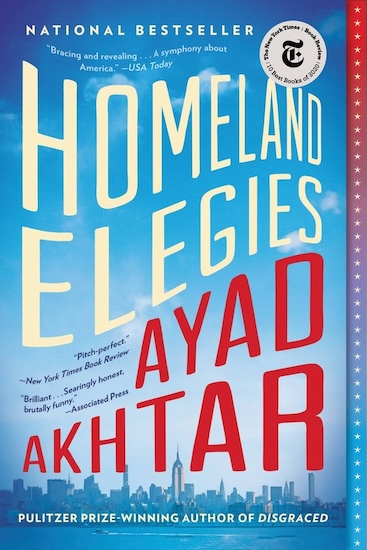
Homeland Elegies
Homeland Elegies blends fiction, memoir, and social commentary to explore what it means to be Muslim, Pakistani American, and American in a country struggling with questions of race, religion, patriotism, and belonging.
The novel follows a fictionalised version of Ayad Akhtar and his relationship with his father, a Pakistani immigrant and devoted admirer of Donald Trump. As father and son navigate their complicated relationship, their personal experiences unfold against the backdrop of post-9/11 America, where Islamophobia, political division, and economic insecurity have reshaped the lives of immigrant communities.
Moving between family memories, political reflections, cultural criticism, and encounters with people across different social worlds, Akhtar examines the contradictions of the American Dream. His narrator grapples with the privileges and prejudices of American society, the burden of inherited expectations, and the tension between wanting to belong to a country and feeling rejected by it.
Rather than presenting a straightforward autobiographical account, Akhtar deliberately blurs the boundaries between truth and invention. The result is an intimate and provocative portrait of a nation wrestling with its identity, told through the experiences of a family whose personal struggles mirror America’s broader divisions.
United States
2020
8
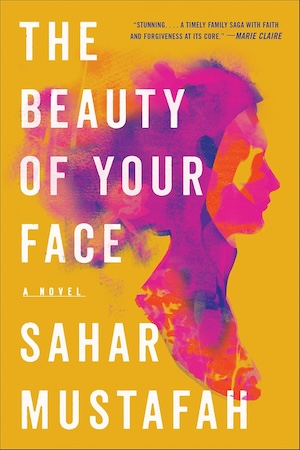
The Beauty of Your Face
On an ordinary morning in suburban Chicago, a masked gunman storms an Islamic school, forcing principal Afaf Rahman to confront the memories she has spent a lifetime trying to escape. As she guides her students toward safety, her thoughts return to her childhood as the daughter of Palestinian immigrants, her family’s struggles with faith and belonging, and the devastating events that shaped her life. From her father’s growing disillusionment with America to her sister’s rebellion and her own complicated relationship with Islam, Afaf’s story unfolds across decades of love, loss, and searching. Against a backdrop of rising Islamophobia and cultural alienation, The Beauty of Your Face explores what it means to hold on to faith when the world seems determined to turn you into an outsider. Intimate and deeply moving, it is a novel about sisterhood, resilience, and the possibility of finding beauty and belonging in the most unexpected places.
United States
2020
9
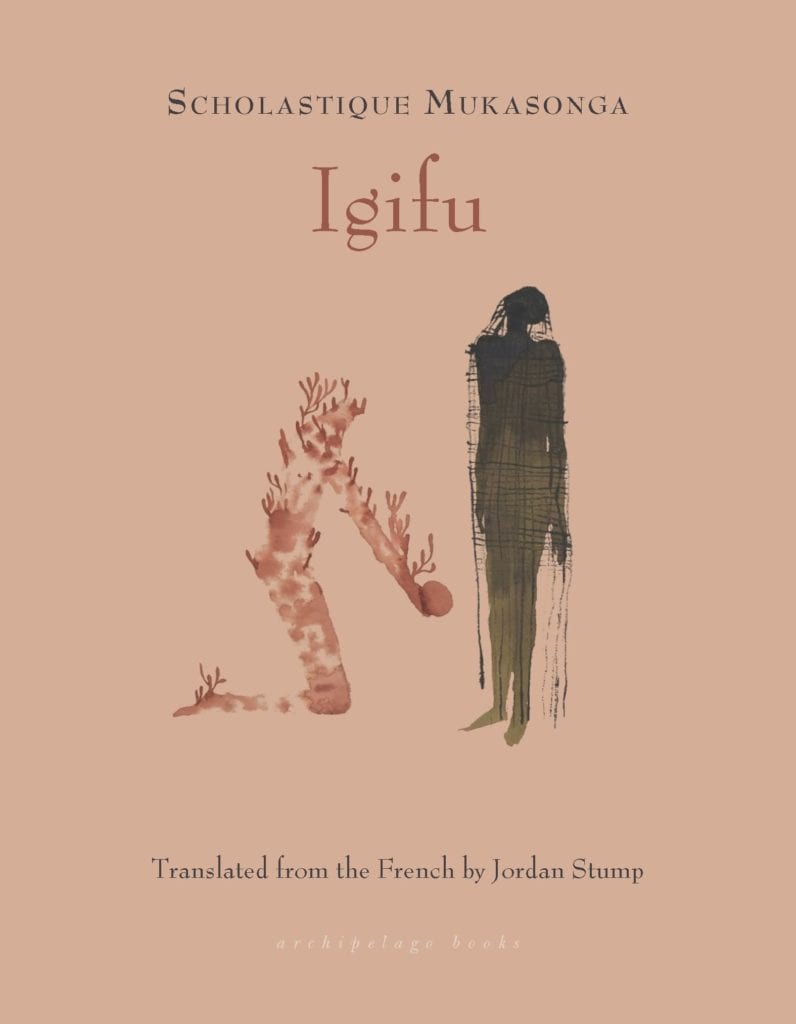
Igifu
In this haunting collection of autobiographical stories, Scholastique Mukasonga brings to life a Rwanda shaped by exile, hunger, persecution, and the enduring wounds of genocide. Through vivid memories of childhood and the traditions of the Tutsi community, she evokes a world of cattle, family rituals, rural landscapes, and fragile moments of happiness threatened by violence. In the title story, a five-year-old girl named Colomba struggles with igifu—a relentless, almost living hunger that consumes her body and imagination. Other stories explore the dignity of cattle-herding traditions, the fear that shadows children growing up amid ethnic persecution, and the devastating consequences of being a Tutsi woman in a society marked by prejudice. Yet this is not simply a book about suffering. With tenderness and remarkable clarity, Mukasonga preserves the humanity of those who were lost, ensuring that their lives, customs, and memories survive alongside the history of their tragedy.
Rwanda
2020
10
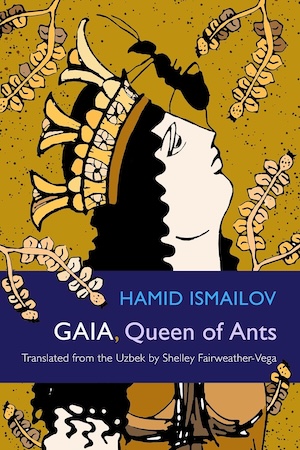
Gaia, Queen of Ants
In Gaia, Queen of Ants, Uzbek novelist Hamid Ismailov weaves together political intrigue, mythology, Sufi philosophy, and the complicated legacies of Central Asian history. Set primarily in contemporary England, the novel follows three characters whose lives have been shaped by displacement and ethnic conflict. Domrul, a young Meskhetian Turk who fled Uzbekistan as a child, struggles to reconcile his Muslim heritage with his life in the West. His Irish girlfriend, Emer, carries her own painful memories of growing up amid the violence of the Bosnian War. Their lives become entangled with Gaia, an eighty-year-old Russian-Uzbek woman whose formidable personality conceals a disturbing past connected to Soviet political power. As their stories unfold, Ismailov moves between contemporary Europe and the turbulent history of Central Asia, blending realistic encounters with fables, religious parables, and surreal imagery. The result is a richly layered exploration of exile, cultural identity, corruption, and the ways people use stories to make sense of their lives. With dark humour and lyrical prose, the novel challenges readers to question the boundaries between truth, myth, and personal memory.
Uzbekistan
2020
11
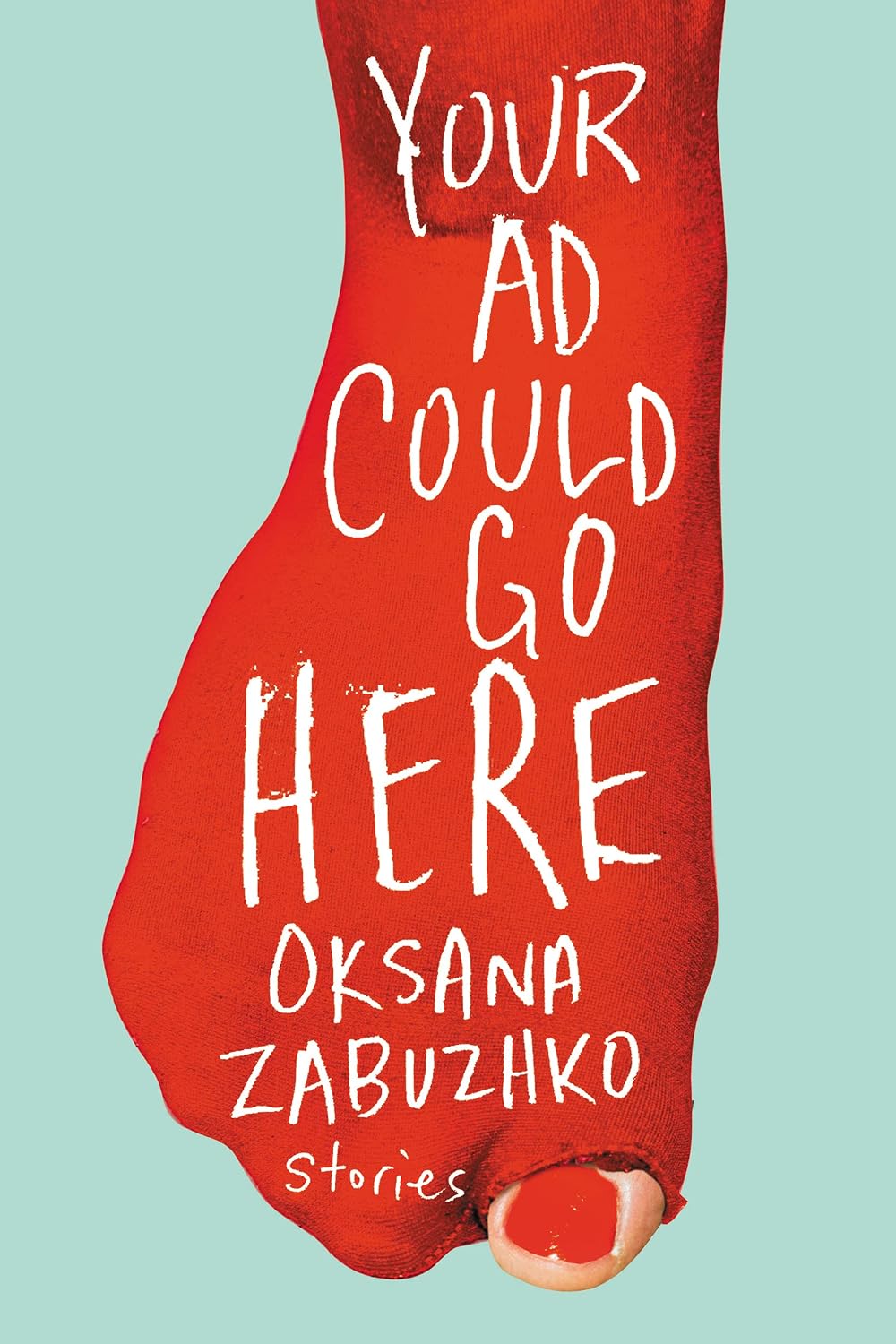
Your Ad Could Go Here: Stories
In Your Ad Could Go Here: Stories, Ukrainian writer Oksana Zabuzhko brings together a collection of fiction exploring the intimate connections between personal experience, collective memory, and national identity. Originally published in Ukrainian in 2014, the collection moves between the political upheavals of independent Ukraine and the seemingly ordinary dramas of everyday life, revealing how history shapes even the most private moments.
Through stories involving the Orange Revolution, family rivalries, romantic encounters, and unexpected personal triumphs, Zabuzhko examines the stories people tell themselves to make sense of their lives. Her characters navigate the complicated relationship between truth and illusion, individual desires and collective expectations, and the past and present. Myth, folklore, and fairy-tale elements frequently enter these recognisable settings, unsettling the boundary between what is real and what is imagined.
Lyrical, intellectually playful, and sharply observant, the collection explores how personal narratives become intertwined with cultural memory. Zabuzhko asks how individuals and nations construct their identities—and what happens when the stories that sustain them begin to unravel.
Ukraine
2020
12
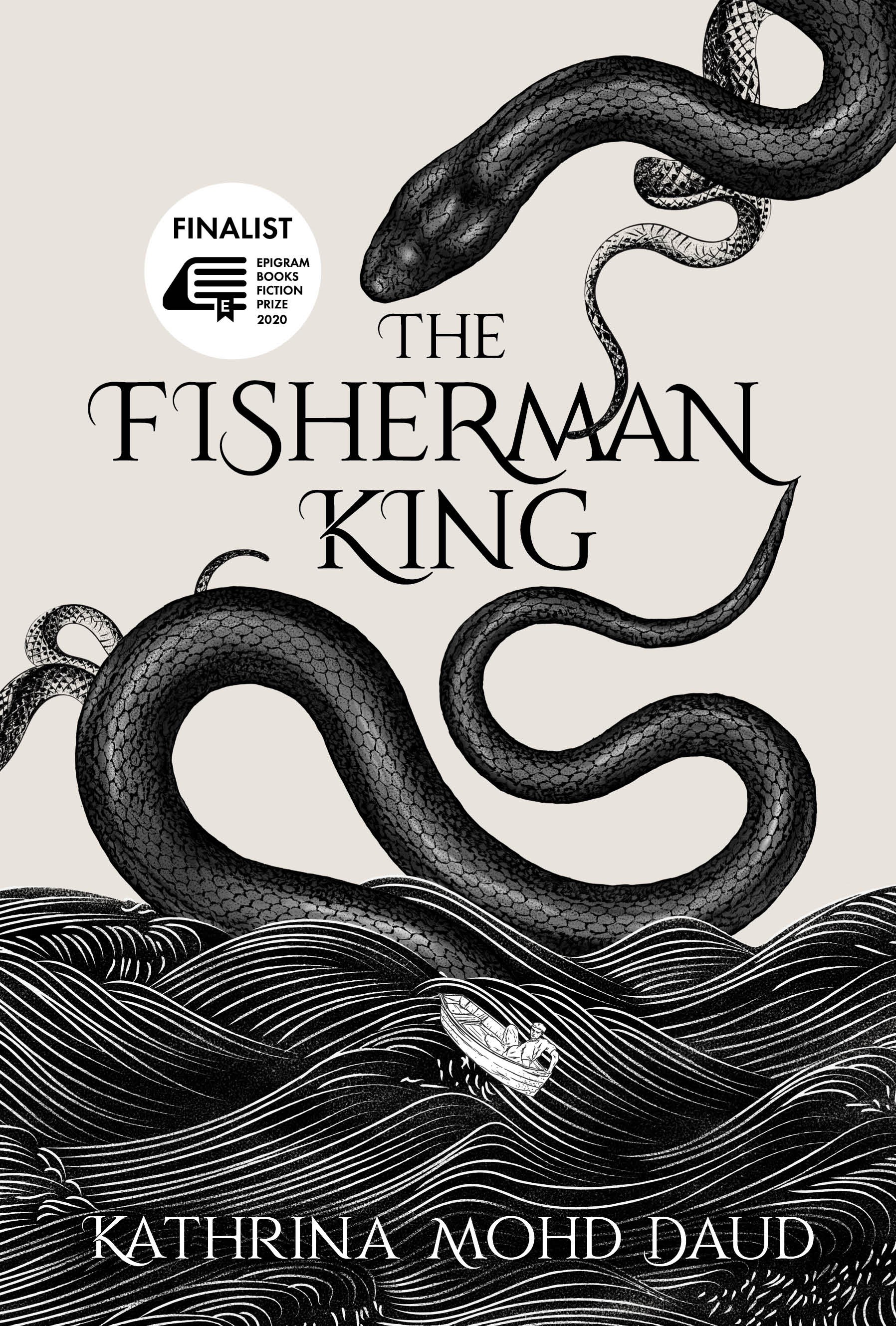
The Fisherman King
Set in Brunei, The Fisherman King blends folklore, fantasy, and national history into a story about ancestry, destiny, and the search for identity. Lisan, a fisherman raised in a traditional water village, has always believed he is descended from Brunei’s royal family. After leaving his wife, Bhatia, and disappearing for eight years, he returns, claiming that he can finally prove his royal lineage.
As Lisan’s mysterious past begins to unravel, the narrative shifts between his present-day quest and events from six centuries earlier, when a forbidden relationship between two royal children set in motion a chain of events threatening both a king and a god. The two storylines gradually converge, revealing connections between personal ambition, historical memory, and the fate of the kingdom.
Drawing on Bruneian folklore and maritime traditions, Daud creates an atmospheric tale of magic, sacrifice, and buried secrets. Beneath its fantastical elements, the novel explores the desire to understand one’s origins and the consequences of pursuing an inheritance that may come at a profound personal cost.
Brunei
2020
About this theme
- Books
- 196
- Countries
- 72
Countries with this theme
Afghanistan
Asia
Albania
Europe
Algeria
Africa
Argentina
South America
Azerbaijan
Asia
Barbados
North America
Belgium
Europe
Bosnia and Herzegovina
Europe
Botswana
Africa
Brazil
South America
Brunei
Asia
Bulgaria
Europe
Canada
North America
Chile
South America
China
Asia
Congo, Democratic Republic
Africa
Croatia
Europe
Cuba
North America
Cyprus
Asia
Czech Republic
Europe
Denmark
Europe
Djibouti
Africa
Dominica
North America
Dominican Republic
North America
Ecuador
South America
Egypt
Africa
France
Europe
Germany
Europe
Ghana
Africa
Greece
Europe
Guatemala
North America
Iceland
Europe
India
Asia
Indonesia
Asia
Iran
Asia
Ireland
Europe
Italy
Europe
Jamaica
North America
Japan
Asia
Kazakhstan
Asia
Kenya
Africa
Kuwait
Asia
Kyrgyzstan
Asia
Lebanon
Asia
Libya
Africa
Luxembourg
Europe
Mexico
North America
Morocco
Africa
Netherlands
Europe
New Zealand
Oceania
Nigeria
Africa
North Macedonia
Europe
Norway
Europe
Pakistan
Asia
Palestine
Asia
Panama
North America
Russia
Europe
Rwanda
Africa
Singapore
Asia
Slovenia
Europe
Somalia
Africa
South Korea
Asia
Sudan
Africa
Sweden
Europe
Taiwan
Asia
Tanzania
Africa
Türkiye
Asia
Ukraine
Europe
United Kingdom
Europe
United States
North America
Uzbekistan
Asia
Zimbabwe
Africa