Poetry
All countries
Austria
Azerbaijan
Bosnia and Herzegovina
Djibouti
El Salvador
India
Lebanon
Morocco
Pakistan
Palestine
Portugal
Russia
Sweden
Uzbekistan
1
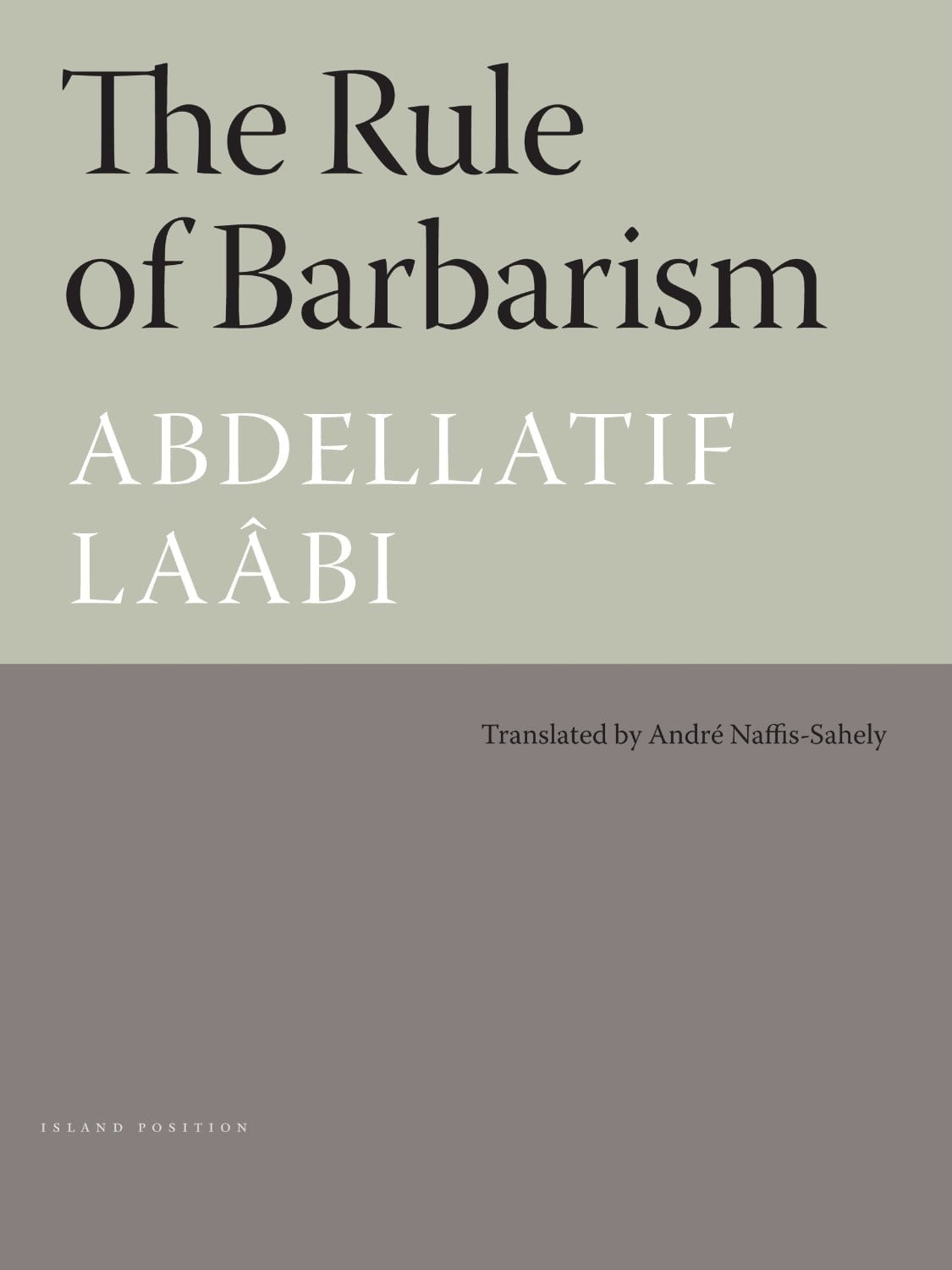
The Rule of Barbarism
Written during his imprisonment for political dissent in Morocco, The Rule of Barbarism is a searing poetic confrontation with oppression, cruelty, and the violence embedded in human society. First published in 1976, this landmark work captures the consciousness of a society trapped between its colonial past and the brutal realities of dictatorship. Through urgent, often unsettling poetry, Abdellatif Laâbi explores the psychological and moral consequences of living under authoritarian power, where fear threatens to destroy both individual freedom and collective hope. Yet his vision extends beyond political condemnation. Laâbi also examines the capacity for barbarism within every human being, questioning how victims of cruelty might resist becoming perpetrators themselves. Anger, despair, tenderness, and compassion coexist throughout the collection, creating a powerful meditation on the struggle to preserve humanity in inhuman conditions. Written from the experience of imprisonment, The Rule of Barbarism transforms personal suffering into a universal appeal for justice, empathy, and liberation.
Morocco
2012
2
The Prophet
The Prophet is a book of 26 poetic essays written in English in 1923 by the Lebanese-American artist, philosopher and writer Khalil Gibran. In the book, the prophet Almustafa who has lived in the foreign city of Orphalese for 12 years is about to board a ship which will carry him home. He is stopped by a group of people, with whom he discusses many issues of life and the human condition. The book is divided into chapters dealing with love, marriage, children, giving, eating and drinking, work, joy and sorrow, houses, clothes, buying and selling, crime and punishment, laws, freedom, reason and passion, pain, self-knowledge, teaching, friendship, talking, time, good and evil, prayer, pleasure, beauty, religion, and death.
Lebanon
2007
3
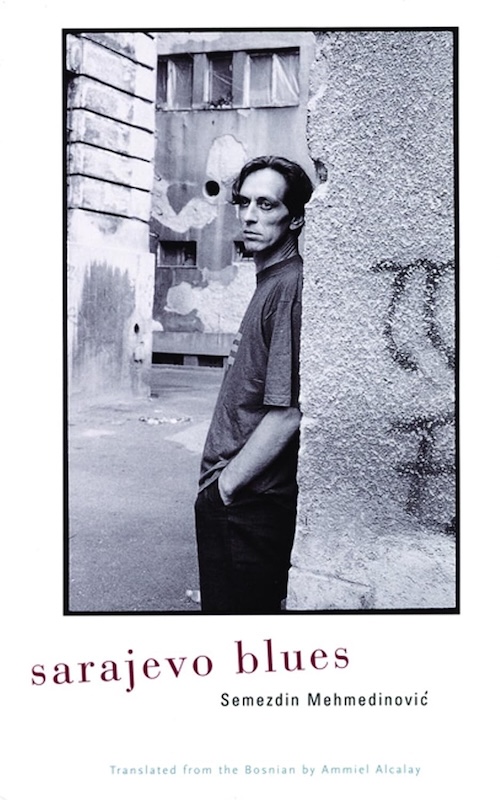
Sarajevo Blues
Sarajevo Blues is a collection of prose poems, fragments, and brief reflections written during the siege of Sarajevo in the Bosnian War. Combining personal observation with documentary detail, Semezdin Mehmedinović captures the daily reality of living in a city under bombardment, where ordinary activities become acts of survival and the boundaries between private life and public catastrophe begin to dissolve.
Rather than presenting a conventional narrative, the book offers an intimate, fragmented account of war through images of empty streets, sudden violence, disrupted routines, and the emotional strain of uncertainty. Mehmedinović’s restrained, lyrical writing resists grand explanations, focusing instead on the human cost of conflict and the persistence of memory. Both a literary response to historical tragedy and a meditation on displacement, fear, and endurance, Sarajevo Blues gives voice to the experience of civilians whose lives are transformed by war.
Bosnia and Herzegovina
1992
4
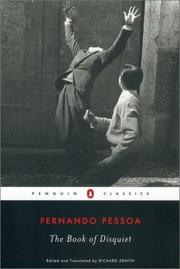
The Book of Disquiet
The Book of Disquiet is a fragmentary, deeply introspective work attributed to Bernardo Soares, an assistant bookkeeper living a quiet, unremarkable life in Lisbon. Through a series of diary-like reflections, philosophical meditations, and poetic observations, Soares examines his inner world, revealing a profound sense of alienation from society and an ongoing struggle to understand his own existence. Ordinary experiences, from walking through Lisbon’s streets to sitting at his desk, become starting points for reflections on dreams, identity, time, and the distance between the self and the world.
Rather than following a conventional narrative, Fernando Pessoa’s work unfolds as an intimate record of consciousness, capturing the contradictions and uncertainties of being human. The narrator finds both refuge and imprisonment in his imagination, often preferring the richness of dreams to the demands of reality. Blurring the boundaries between autobiography, fiction, and philosophy, The Book of Disquiet is a haunting meditation on loneliness, the fragmented nature of identity, and the quiet beauty of an uneventful life.
Note: Although Pessoa began writing the fragments decades earlier, the book was first published posthumously in Portuguese in 1982.
Portugal
1982
5
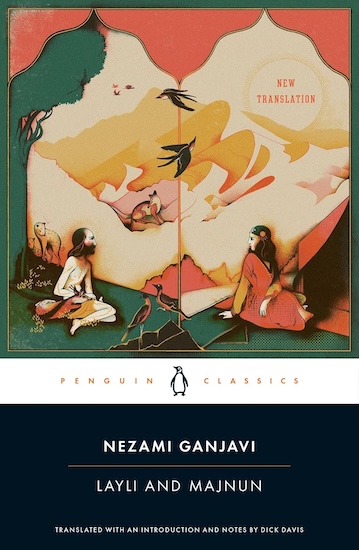
Layli and Majnun
Qays falls passionately in love with Layli, but when their families forbid their union, his devotion drives him beyond the boundaries of reason. Known as Majnun, or “the madman,” he wanders the wilderness, pouring his longing into poetry while Layli is forced into a marriage with another man. Though separated by society, tradition, and circumstance, their love becomes an all-consuming force that transcends earthly possession. Written in the twelfth century, this celebrated Persian romance transforms a tragic love story into a meditation on desire, spiritual devotion, and the painful distance between the heart and the world that seeks to control it.
Azerbaijan
1188