Non-Fiction
All countries
Albania
Algeria
Belarus
Bhutan
Bosnia and Herzegovina
Botswana
Burkina Faso
Cambodia
China
Congo, Democratic Republic
Cuba
Cyprus
Egypt
France
Ghana
India
Iran
Ireland
Jamaica
Japan
Pakistan
Palestine
Russia
Taiwan
Tanzania
Türkiye
Turkmenistan
Ukraine
United Kingdom
United States
Yemen
Zambia
1
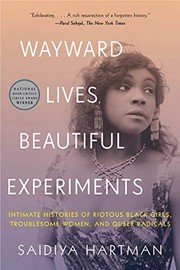
Wayward Lives, Beautiful Experiments
At the dawn of the twentieth century, black women in the US were carving out new ways of living. The first generations born after emancipation, their struggle was to live as if they really were free.
These women refused to labour like slaves. Wrestling with the question of freedom, they invented forms of love and solidarity outside convention and law. These were the pioneers of free love, common-law and transient marriages, queer identities, and single motherhood - all deemed scandalous, even pathological, at the dawn of the twentieth century, though they set the pattern for the world to come.
In Wayward Lives, Beautiful Experiments, Saidiya Hartman deploys both radical scholarship and profound literary intelligence to examine the transformation of intimate life that they instigated. With visionary intensity, she conjures their worlds, their dilemmas, their defiant brilliance.
United States
2020
2
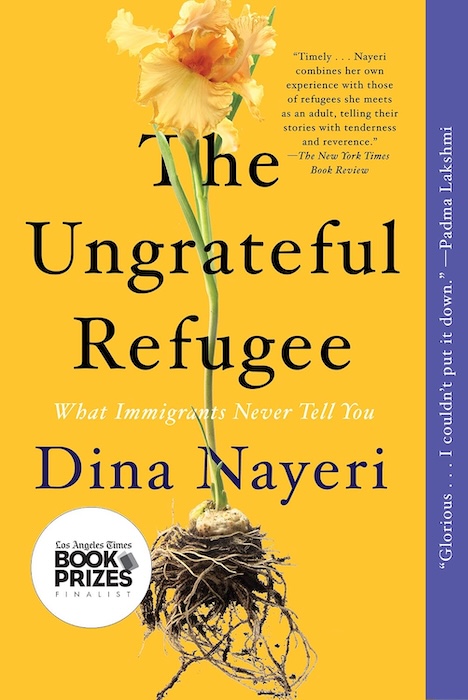
The Ungrateful Refugee
In The Ungrateful Refugee, Iranian-born writer Dina Nayeri combines her own story of displacement with the experiences of refugees and asylum seekers navigating unfamiliar countries and complicated immigration systems. At the age of eight, Nayeri fled Iran with her mother and brother after her mother converted to Christianity and faced persecution. The family spent time in a refugee camp in Italy before eventually receiving asylum in the United States.
Drawing on these experiences, Nayeri examines the emotional and psychological costs of leaving one’s homeland, rebuilding a life, and trying to belong in a new society. She also shares the stories of other displaced people, revealing the difficult choices they face when seeking protection and the pressure to prove that their suffering is genuine.
At the heart of the book is a challenge to the expectation that refugees must demonstrate constant gratitude to the countries that accept them. Nayeri questions the idea of the “good refugee” who assimilates without complaint, arguing that displaced people should not have to erase their identities or experiences to deserve safety and dignity.
Iran
2019
3
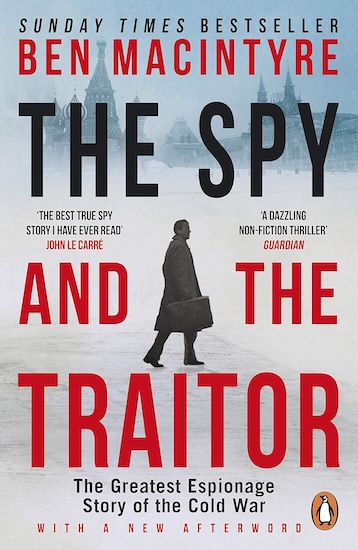
The Spy and the Traitor
In 1985, a seemingly ordinary man walks through the streets of Moscow carrying a plastic shopping bag. Hidden in plain sight, he is Oleg Gordievsky, a senior KGB officer who has secretly been working for British intelligence for more than a decade. As one of Britain’s most valuable spies inside the Soviet Union, he has passed on critical information about Soviet intelligence operations, helping the West understand the Kremlin’s intentions during the final years of the Cold War.
But Gordievsky’s double life becomes increasingly dangerous. While MI6 struggles to protect its most important source, the CIA grows suspicious and launches its own investigation to identify the mysterious British informant. Unknown to Gordievsky, the hunt for him leads to Aldrich Ames, a CIA officer secretly betraying American intelligence to the Soviets. When Gordievsky is recalled to Moscow, he faces interrogation, surveillance, and the possibility of execution. His only hope lies in an extraordinary escape plan that must unfold under the watchful eyes of the KGB.
Drawing on extensive research and previously undisclosed details, Ben Macintyre reconstructs one of the Cold War’s most remarkable espionage stories. The Spy and the Traitor explores loyalty, ideological conviction, betrayal, and the extraordinary courage required to risk everything for one’s beliefs.
Russia
United Kingdom
2018
4
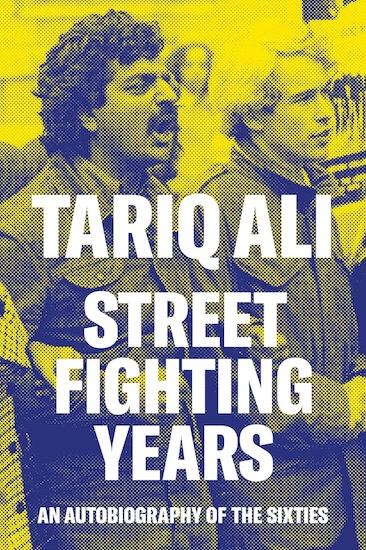
Street Fighting Years
In Street Fighting Years, Tariq Ali recounts his transformation from a young Pakistani student into one of the most prominent radical activists of the 1960s. Moving between London, Paris, Prague, Hanoi, and other centres of political upheaval, Ali offers a personal account of a decade defined by student revolts, anti-war demonstrations, revolutionary movements, and challenges to established political authority.
Through his encounters with figures such as Malcolm X, Bertrand Russell, Che Guevara, and Mick Jagger, Ali captures the energy and contradictions of a generation determined to reshape society. He reflects on the Vietnam War, the suppression of the Prague Spring, the rise of the international protest movement, and the growing opposition to Western imperialism. Blending autobiography with political history, the book explores the hopes, disagreements, and disappointments of activists who believed that collective action could transform the world. It is both a portrait of a turbulent era and a reflection on the personal costs of political commitment.
Pakistan
United Kingdom
2018
5
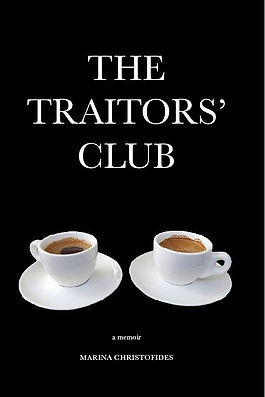
The Traitors' Club
In Cyprus, even ordering a coffee can become a political statement. In The Traitors’ Club, Marina Christofides recounts the experiences of a group of friends from both sides of the island’s division who refuse to define themselves solely as Greek Cypriots or Turkish Cypriots. Instead, they choose to identify as Cypriots, united by their belief that people from both communities can live together in peace.
Gathering over coffee in an Ottoman courtyard in divided Nicosia, the friends share stories that are often funny, sometimes harrowing, and always deeply personal. Their conversations reveal the lasting effects of British colonial rule, intercommunal violence, the 1974 Turkish invasion, and the partition of Cyprus. Through their memories, the political history of the island becomes an intimate story of families, friendships, displacement, and the struggle to coexist.
The group calls itself the Traitors’ Club because, in a society shaped by competing national loyalties, friendship across the divide can be viewed as an act of betrayal. Yet their willingness to listen to one another challenges the divisions that politicians and historical conflicts have reinforced.
Moving between memories of an idyllic childhood, the trauma of fleeing during wartime, and the everyday realities of living in a divided country, Christofides offers a personal perspective on the Cyprus conflict. The memoir celebrates the courage of ordinary people who refuse to let political boundaries determine whom they can love, trust, or call their own.
Cyprus
2017
6
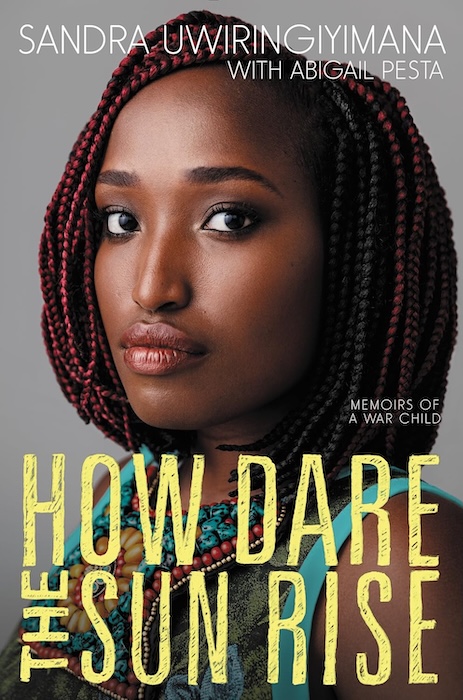
How Dare the Sun Rise
How Dare the Sun Rise is the powerful memoir of Sandra Uwiringiyimana, who recounts her childhood as a member of the Banyamulenge, a persecuted ethnic minority in the Democratic Republic of the Congo. When Sandra was ten years old, her family was living in a refugee camp in Burundi after fleeing violence in their homeland. In 2004, the camp was attacked by armed assailants, and Sandra witnessed the deaths of her mother and six-year-old sister. She narrowly escaped with her own life.
After the massacre, Sandra and her surviving family members eventually resettled in the United States, hoping to find safety and a fresh start. However, adjusting to a new country brought its own challenges, including racism, isolation, and the struggle to find a sense of belonging.
Co-written with journalist Abigail Pesta, this memoir explores trauma, displacement, identity, and resilience. Through her journey from a war-torn childhood to becoming an advocate for refugees and human rights, Sandra reflects on the power of storytelling to confront injustice and reclaim one’s voice.
Congo, Democratic Republic
2017
7
The Empire Must Die
The Empire Must Die: Russia’s Revolutionary Collapse, 1900–1917 reconstructs the political and cultural upheavals that preceded the fall of the Russian Empire. Through the lives of writers, artists, politicians, revolutionaries, and members of the imperial family, Mikhail Zygar traces a society caught between the possibility of reform and the persistence of authoritarian power. The book explores Russia’s brief flourishing of liberal ideas, the growing dissatisfaction with the monarchy, and the pressures of the First World War that helped bring the old order to collapse. Drawing on historical research and vivid character portraits, Zygar presents the revolution not as an inevitable event but as the outcome of decisions, rivalries, and missed opportunities that transformed the country’s future.
Russia
2017
8
Inside the Battle of Algiers
In this memoir, Algerian revolutionary Zohra Drif recounts her experiences during Algeria’s struggle for independence from French colonial rule in the 1950s and early 1960s. A young woman studying law in Algiers, Drif joins the National Liberation Front (FLN) and becomes involved in its armed resistance alongside other women who challenge both colonial authority and traditional expectations of women’s roles in society.
Through personal recollections, she describes the political tensions, underground operations, arrests, and difficult choices that shaped the independence movement. Her account also explores the place of women in revolutionary struggle and the moral complexities of political violence. Offering a firsthand perspective on one of the defining conflicts of modern Algerian history, the memoir examines the sacrifices, convictions, and contradictions involved in fighting for national liberation.
Algeria
2017
9
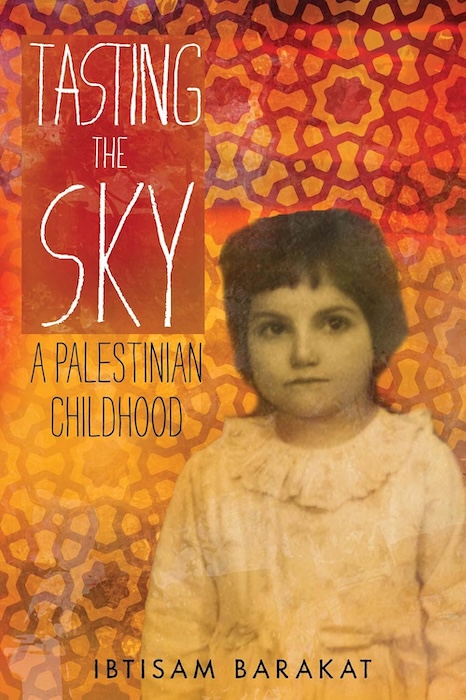
Tasting the Sky
Tasting the Sky: A Palestinian Childhood is a memoir recounting Ibtisam Barakat’s childhood during and after the 1967 Six-Day War. Growing up in Ramallah in the occupied West Bank, Barakat experiences the fear and confusion of war as her family flees their home, leaving behind the familiar world of her early years. Through the eyes of a young girl, she describes the uncertainty of displacement, the separation of families, and the emotional challenges of growing up amid political conflict. Despite the hardship surrounding her, Barakat discovers refuge in language, reading, and education, gradually finding ways to understand and express her experiences. Written in lyrical, accessible prose, the memoir captures how a child makes sense of violence and loss while holding on to curiosity and hope. It offers an intimate perspective on Palestinian history, exploring the relationship between memory, identity, language, and belonging, and demonstrating how storytelling can become a means of survival and self-discovery.
Palestine
2016
10
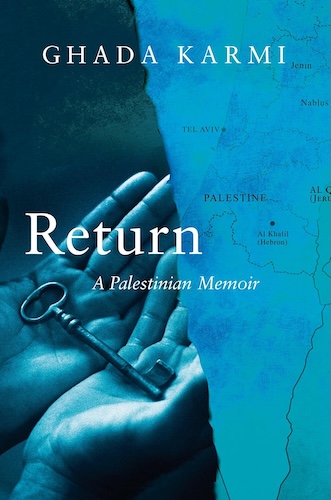
Return: A Palestinian Memoir
What happens when you finally return to the homeland you were forced to leave as a child—and discover that it no longer feels like home? More than fifty years after her family fled Jerusalem during the 1948 Nakba, Palestinian-British doctor and writer Ghada Karmi returns to Palestine, hoping to contribute to the struggle for peace and Palestinian statehood. Working with the Palestinian Authority in Ramallah, she encounters the realities of occupation, military restrictions, political bureaucracy, and a homeland transformed beyond recognition. As she revisits places connected to her childhood and confronts the loss of her family home, Karmi wrestles with a deeply personal question: can exile ever truly end? An intimate memoir of displacement and belonging, Return explores the painful distance between the homeland preserved in memory and the reality of returning to it.
Palestine
2015
11
In Other Words
In Other Words is a memoir about Jhumpa Lahiri’s decision to learn Italian and her determination to express herself through a language that is not her own. Although she grew up speaking English and Bengali, Lahiri develops a deep fascination with Italian and eventually moves to Rome with her family to immerse herself in the language. Written originally in Italian and published with an English translation, the book reflects on the vulnerability, frustration, and freedom involved in learning to communicate in unfamiliar words. Through personal anecdotes, literary reflections, and metaphors, Lahiri compares language learning to migration, describing the experience of becoming an outsider in a place where she longs to belong. The memoir explores creativity, cultural identity, and the relationship between language and selfhood, revealing how adopting a new language can create space for reinvention and a different understanding of oneself.
India
2015
12
Novelist As a Vocation
Novelist as a Vocation offers Haruki Murakami’s reflections on the craft of writing, the life of a novelist, and the habits that sustain a long creative career. Drawing on his own experiences, Murakami discusses how he became a writer, the importance of originality, and the discipline required to transform ideas into finished novels. He considers the relationship between imagination and reality, explaining how writers develop distinctive voices and create fictional worlds that feel convincing to readers.
Beyond practical advice, Murakami reflects on literary recognition, criticism, education, and the pressures of the publishing industry. He questions conventional ideas about literary talent and argues that persistence, curiosity, and a willingness to work consistently are essential to creative development. The book also reveals aspects of Murakami’s personal philosophy, including his commitment to routine, physical exercise, and independent thinking. Part memoir and part meditation on artistic practice, it offers insight into how a novelist builds a sustainable relationship with writing while protecting the freedom to follow an individual creative vision.
United Kingdom
2015