Non-Fiction
All countries
Albania
Algeria
Belarus
Bhutan
Bosnia and Herzegovina
Botswana
Burkina Faso
Cambodia
China
Congo, Democratic Republic
Cuba
Cyprus
Egypt
France
Ghana
India
Iran
Ireland
Jamaica
Japan
Pakistan
Palestine
Russia
Taiwan
Tanzania
Türkiye
Turkmenistan
Ukraine
United Kingdom
United States
Yemen
Zambia
1
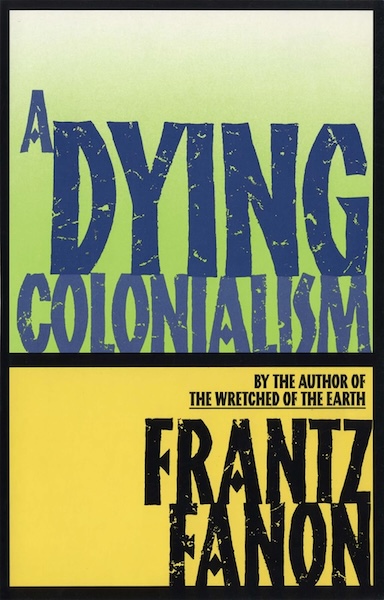
Dying Colonialism
How does a people’s struggle for freedom transform not only a nation, but also the everyday lives of its people?
In A Dying Colonialism, Frantz Fanon examines the Algerian Revolution against French colonial rule, revealing how the fight for independence reshaped Algerian society from within. Through the changing roles of women, the influence of radio, the use of medicine, and transformations in family life, Fanon explores how ordinary cultural practices became intertwined with political resistance.
Practices once dismissed or misunderstood by colonial authorities took on new meanings as Algerians challenged the structures imposed upon them. Clothing, language, technology, and social relationships became part of a wider struggle over identity and power. Fanon shows that decolonisation is not simply a political event: it reaches into the most intimate aspects of how people live, communicate, and understand themselves.
Based on his experience of the Algerian liberation movement, this influential work reveals colonialism as a system that attempts to control both institutions and everyday life. It also shows how resistance can transform a society in unexpected ways.
Algeria
1959
2
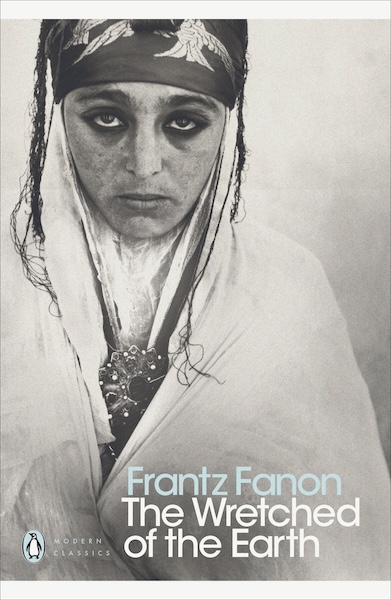
The Wretched of the Earth
What happens to a people when their land, culture, and identity are shaped by colonial rule—and what does it take to become free?
In The Wretched of the Earth, psychiatrist and revolutionary thinker Frantz Fanon examines the psychological, cultural, and political consequences of colonialism. Writing against the backdrop of Algeria’s struggle for independence from France, Fanon explores how colonial systems dehumanise the oppressed, reshape their sense of self, and create conditions for resistance.
Fanon confronts the role of violence in revolutionary movements while also warning that independence alone does not guarantee liberation. New national elites can reproduce the inequalities of colonial rule, leaving ordinary people excluded from the freedom they fought to achieve. He argues for a deeper transformation: one that challenges inherited hierarchies and creates a new society grounded in human dignity.
Passionate, provocative, and influential, The Wretched of the Earth remains a foundational work of anti-colonial thought. It asks readers to consider not only how colonial power is dismantled, but also what kind of world should replace it.
Algeria
1961
3
Inside the Battle of Algiers
In this memoir, Algerian revolutionary Zohra Drif recounts her experiences during Algeria’s struggle for independence from French colonial rule in the 1950s and early 1960s. A young woman studying law in Algiers, Drif joins the National Liberation Front (FLN) and becomes involved in its armed resistance alongside other women who challenge both colonial authority and traditional expectations of women’s roles in society.
Through personal recollections, she describes the political tensions, underground operations, arrests, and difficult choices that shaped the independence movement. Her account also explores the place of women in revolutionary struggle and the moral complexities of political violence. Offering a firsthand perspective on one of the defining conflicts of modern Algerian history, the memoir examines the sacrifices, convictions, and contradictions involved in fighting for national liberation.
Algeria
2017