Historical Fiction
All countries
Afghanistan
Albania
Algeria
Angola
Antigua and Barbuda
Argentina
Armenia
Australia
Austria
Azerbaijan
Bangladesh
Barbados
Belize
Benin
Bosnia and Herzegovina
Brazil
Bulgaria
Burundi
Canada
Chile
China
Congo, Democratic Republic
Côte d’Ivoire (Ivory Coast)
Croatia
Cuba
Cyprus
Denmark
Djibouti
Dominica
Dominican Republic
Egypt
El Salvador
Ethiopia
Fiji
France
Georgia
Germany
Ghana
Greece
Guatemala
Hungary
Iceland
India
Indonesia
Iran
Iraq
Ireland
Italy
Jamaica
Japan
Kazakhstan
Kenya
Kuwait
Latvia
Lebanon
Libya
Madagascar
Malaysia
Mexico
Moldova
Morocco
Myanmar
Netherlands
Nigeria
North Korea
Oman
Pakistan
Palestine
Philippines
Poland
Portugal
Puerto Rico
Romania
Rwanda
Saudi Arabia
Senegal
Singapore
Slovenia
South Africa
South Korea
Spain
Sri Lanka
Sudan
Sweden
Switzerland
Syria
Taiwan
Tanzania
Thailand
Türkiye
Turkmenistan
Uganda
Ukraine
United Arab Emirates
United Kingdom
United States
Uruguay
Uzbekistan
Vietnam
Yemen
Zambia
Zimbabwe
1
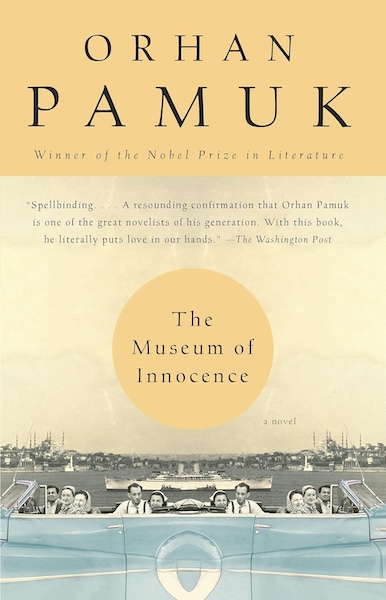
The Museum of Innocence
Istanbul, 1975. Kemal, the privileged son of a wealthy family, is preparing to marry Sibel, a woman who belongs to his own sophisticated social circle. But a chance encounter with Füsun, a beautiful young shop assistant and distant relative, sets his carefully ordered life on an unexpected course. Their passionate affair soon becomes complicated by social conventions, class divisions, and the expectations placed on women in a rapidly modernising Turkey.
When Füsun disappears from his life, Kemal begins collecting objects connected to her: earrings, hair clips, cigarette butts, and countless other seemingly insignificant things. Each item becomes a vessel for memory, allowing him to preserve moments that time would otherwise erase. Over the years, his collection grows into an extraordinary personal museum, reflecting both his devotion and his inability to let go.
Spanning decades of Istanbul’s social and cultural transformation, The Museum of Innocence is a richly layered exploration of love, obsession, memory, and longing. Nobel Prize-winning author Orhan Pamuk transforms ordinary objects into fragments of a vanished world, asking whether preserving the past can bring happiness—or merely keep us imprisoned within it.
Türkiye
2008
2
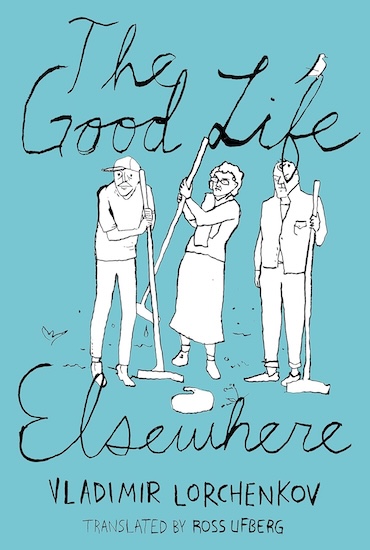
The Good Life Elsewhere
Set in the Moldovan village of Larga in the years following the collapse of the Soviet Union, The Good Life Elsewhere follows a community of villagers desperate to escape poverty and build better lives in Italy. Convinced that prosperity awaits them in Western Europe, the villagers devise increasingly absurd and improbable schemes to cross the border, despite repeated obstacles and the near impossibility of obtaining visas.
Among them are an Orthodox priest whose wife has emigrated to Italy, a resourceful mechanic who dreams of transforming his tractor into a vehicle capable of travelling by air and sea, and villagers who embark on an enormous, misguided crusade towards their imagined promised land. Even local politicians become entangled in the collective obsession with escape, revealing a society where hope and desperation often override common sense.
Blending absurdist humour, political satire, and tragedy, Lorchenkov portrays a country caught between its Soviet past and an uncertain future. Italy becomes more than a destination: it represents the promise of dignity, opportunity, and freedom from a life that seems impossible to change. Yet the villagers’ increasingly desperate attempts expose the harsh realities of migration, economic inequality, corruption, and the idealisation of life abroad. Beneath its comic extravagance, the novel offers a poignant portrait of people searching for a better future when home no longer seems to offer one.
Moldova
2008
3
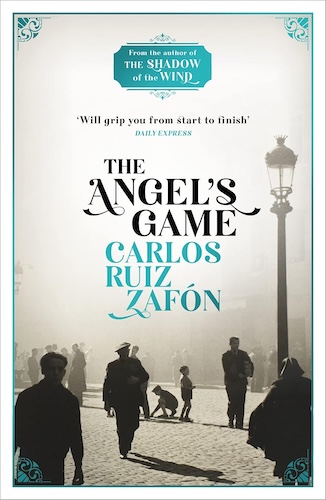
The Angel’s Game
In the dark, atmospheric streets of 1920s Barcelona, David Martín makes his living writing sensational crime stories under a pseudonym. Haunted by a troubled childhood and an impossible love, he finds refuge in literature and in a decaying mansion whose sinister history gradually begins to consume him. When a mysterious French publisher named Andreas Corelli offers him an extraordinary sum of money to write a book unlike any other, David accepts, believing the commission could transform his life.
But as he begins his work, unsettling connections emerge between the book he is writing, the secrets hidden within his mansion, and the strange events unfolding around him. What initially appears to be a dream opportunity becomes an increasingly dangerous mystery, blurring the boundaries between fiction and reality, faith and deception, and creation and destruction.
Returning to the shadowy literary universe of the Cemetery of Forgotten Books, Zafón crafts a Gothic thriller filled with secret passages, forbidden knowledge, obsessive love, and supernatural menace. Beneath its intricate mysteries lies a meditation on the power of storytelling and the price of artistic ambition. The Angel’s Game asks whether a writer can truly control the stories he creates—or whether some stories have the power to control their creators.
Spain
2008
4
The Palace of Illusions
The Palace of Illusions retells the ancient Indian epic Mahabharata from the perspective of Panchaali, also known as Draupadi, the princess who becomes the wife of the five Pandava brothers. Born from fire and raised amid royal expectations, Panchaali is intelligent, passionate, and determined to influence her own destiny in a world governed by men, duty, and political ambition. As her husbands fight to reclaim their kingdom, she becomes entangled in rivalries, betrayals, and the devastating conflict that eventually leads to war. The novel offers a fresh interpretation of familiar events by foregrounding Panchaali’s inner life, desires, and frustrations. Divakaruni explores gender, power, fate, and the consequences of pride, questioning how women experience and influence histories traditionally told through the deeds of male heroes
India
2008
5
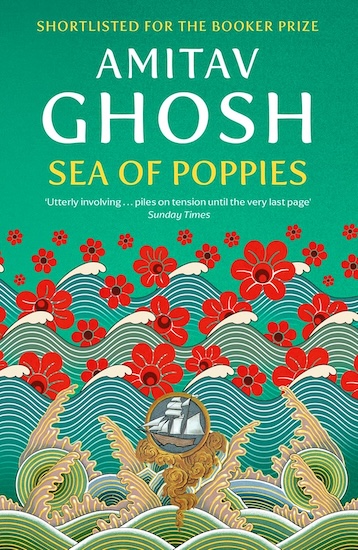
Sea of Poppies
Set in 1838, shortly before the First Opium War, Sea of Poppies follows a diverse group of characters whose lives converge aboard the Ibis, a former slave ship sailing from India to Mauritius. Among them are Deeti, a village woman escaping an oppressive marriage; Kalua, a low-caste ox-cart driver; Neel Rattan Halder, a wealthy landowner facing ruin; and Zachary Reid, an American sailor navigating questions of race and identity. As they journey across the Indian Ocean, these individuals find themselves bound together by circumstances shaped by colonialism, the opium trade, caste discrimination, and economic exploitation. Through their intertwined stories, Amitav Ghosh brings to life a turbulent period in Indian history, revealing how imperial ambitions transform ordinary lives. Blending historical detail, adventure, and rich linguistic diversity, the novel explores displacement, social inequality, and the universal desire for freedom and belonging.
India
2008
6

Sworn Virgin
Sworn Virgin follows Hana Doda, a young Albanian woman who chooses to live as a man under the traditional institution of the sworn virgin. In the isolated mountain communities of northern Albania, women who take this oath may assume male social roles, dress as men, and enjoy freedoms otherwise denied to them, provided they renounce marriage and sexual relationships. Hana makes this choice to escape an arranged marriage and gain control over her future. Years later, she leaves Albania and travels to the United States, where she must reconsider the identity she has constructed and the possibilities available to her in a different society. Dones explores gender, autonomy, tradition, and displacement, revealing the psychological costs of living according to restrictive social codes. The novel asks whether freedom can be achieved through rejecting one identity or whether genuine independence requires creating a new one.
Albania
2007
7
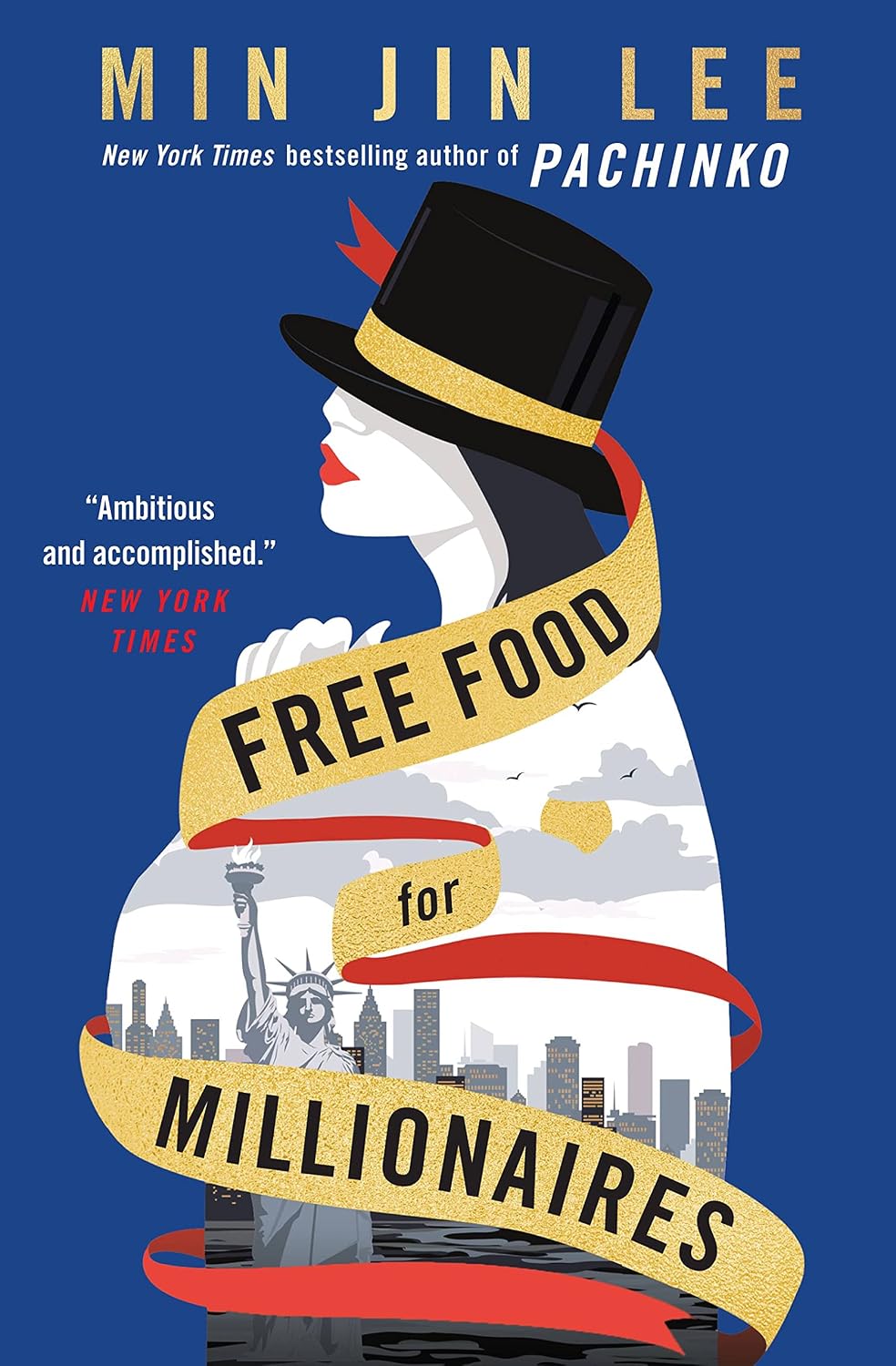
Free Food for Millionaires
Free Food for Millionaires follows Casey Han, a young Korean American woman who graduates from Princeton University and attempts to establish herself in New York City. Raised by immigrant parents with traditional expectations, Casey longs for independence, financial security, and entry into the glamorous world of Manhattan’s elite. Yet her expensive tastes, mounting debts, and complicated romantic relationships threaten to undermine her ambitions. As she navigates professional setbacks and social pressures, Casey struggles to reconcile her desire for personal freedom with the values instilled in her by her family. Through her experiences and those of the people around her, Lee examines class inequality, cultural assimilation, gender expectations, and the pursuit of success. The novel offers a portrait of immigrant life in which ambition can create opportunities while also deepening the conflict between inherited traditions and individual desires.
South Korea
2007
8
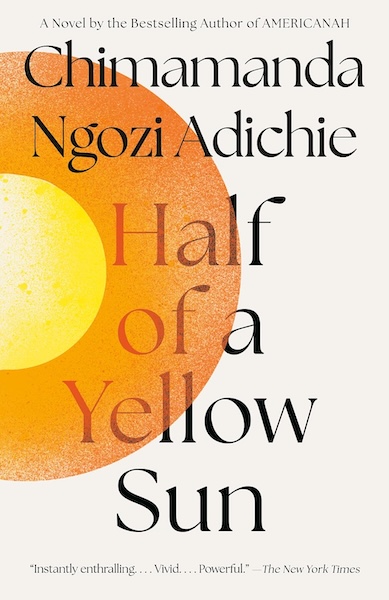
Half of a Yellow Sun
Half of a Yellow Sun is set in Nigeria during the 1960s, as the country moves from independence toward the devastating Biafran War. The novel follows three interconnected characters: Ugwu, a young houseboy who enters the service of a university professor; Olanna, the professor’s educated and politically engaged partner; and Richard, a British writer fascinated by Igbo culture who becomes involved with Olanna’s twin sister, Kainene. Through their experiences, Adichie portrays a society filled with intellectual ambition, political hope, and personal relationships that are gradually torn apart by ethnic tensions and conflict.
As the war intensifies and the independent state of Biafra struggles to survive, the characters face displacement, hunger, violence, and profound moral dilemmas. Their private lives become inseparable from the wider tragedy unfolding around them. Blending intimate storytelling with historical detail, the novel examines colonial legacies, ethnic identity, loyalty, and the devastating human cost of war. The title refers to the half-sun symbol on Biafra’s flag, representing a nation whose hopes for independence were ultimately shattered by conflict.
Nigeria
2007
9
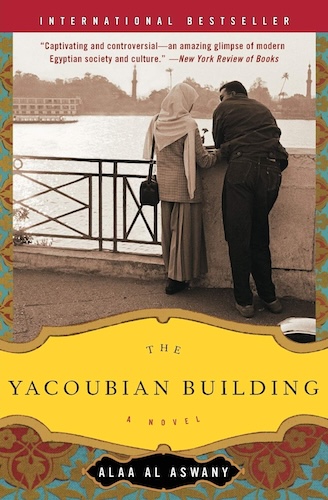
The Yacoubian Building
Behind the elegant façade of a once-grand Cairo apartment building lies a society fractured by corruption, poverty, and unfulfilled dreams. Its residents include a disillusioned journalist, a young man whose ambition to become a police officer is crushed by class prejudice, a wealthy businessman pursuing forbidden pleasures, and an ageing aristocrat haunted by a vanished past. As their lives intersect, the building becomes a microcosm of modern Egypt, exposing the hypocrisies of its ruling class and the quiet desperation of those struggling to escape their circumstances. Bold and provocative, The Yacoubian Building offers an unforgettable portrait of a nation caught between tradition, repression, and the desire for change.
Egypt
2006
10
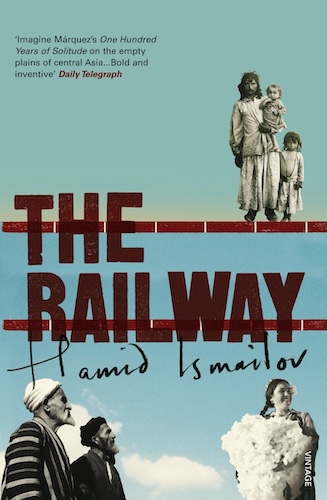
The Railway
In the fictional Uzbek town of Gilas, situated along the ancient Silk Road, a railway station becomes the centre of an extraordinary tapestry of human lives. Spanning much of the twentieth century, The Railway follows a diverse community of Uzbeks, Russians, Persians, Jews, Koreans, Tatars, and other ethnic groups whose lives intersect amid the upheavals of modern Central Asian history. Among its colourful inhabitants are an alcoholic intellectual, a Russian Orthodox priest, a formidable police chief, and an elderly moneylender. Through their stories, Hamid Ismailov captures a society caught between tradition and modernity, religious beliefs and revolutionary ideology, and local loyalties and outside influences. The arrival of the railway represents both opportunity and disruption, connecting this isolated community to a rapidly changing world while transforming its social structures. Blending humour, folklore, philosophical reflection, and historical observation, Ismailov creates a richly layered portrait of a multicultural society confronting the consequences of imperial expansion and Soviet rule. The novel offers a distinctive perspective on Central Asia’s complex cultural heritage and the profound changes that shaped the region during the twentieth century.
Uzbekistan
2006
11
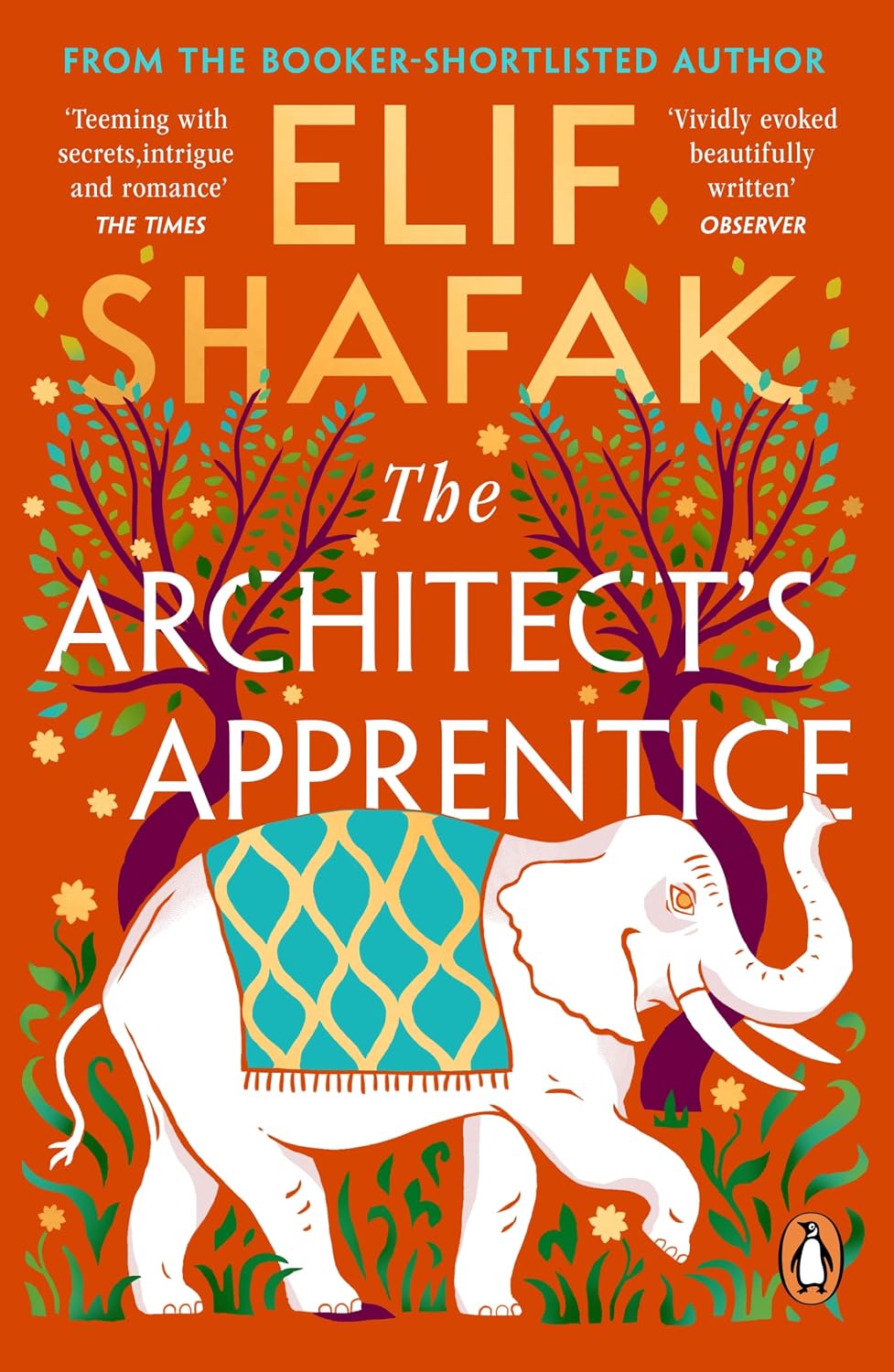
Architect's Apprentice
Set in the sixteenth-century Ottoman Empire, The Architect’s Apprentice follows Jahan, a twelve-year-old boy who arrives in Istanbul with Chota, an extraordinary white elephant intended for the sultan’s menagerie. As Jahan becomes involved in palace life, he encounters the celebrated imperial architect Mimar Sinan, who eventually takes him under his wing. Jahan enters a world of magnificent buildings, political intrigue, artistic ambition, and dangerous rivalries among the architect’s apprentices. As he grows older, his experiences expose him to the contradictions of an empire where beauty and intellectual achievement coexist with cruelty, jealousy, and the struggle for power. Shafak combines historical detail with an imaginative coming-of-age story, exploring loyalty, creativity, and the desire to find one’s place in the world. The novel celebrates architecture as both an artistic achievement and a lasting expression of human imagination.
Türkiye
2006
12
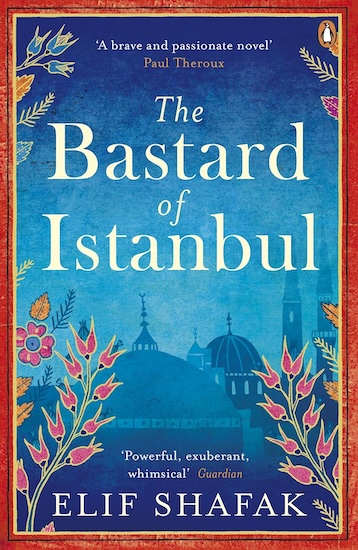
The Bastard of Istanbul
The Bastard of Istanbul centres on two young women whose lives connect through a complicated family history shaped by Turkish and Armenian experiences. Asya Kazancı grows up in Istanbul in a household dominated by women, surrounded by family secrets and conflicting interpretations of the past. Meanwhile, Armanoush, an Armenian American teenager, travels secretly to Istanbul in search of her cultural roots and a better understanding of her family’s history. When the two meet, their friendship brings buried memories and long-suppressed truths to the surface, particularly those connected to the Armenian genocide and its legacy. Through humour, food, family relationships, and competing memories, Shafak examines the relationship between personal identity and collective history. The novel explores how silence and denial can shape generations, while asking whether individuals can build meaningful connections across cultural and historical divisions.
Türkiye
2006