Historical Fiction
All countries
Afghanistan
Albania
Algeria
Angola
Antigua and Barbuda
Argentina
Armenia
Australia
Austria
Azerbaijan
Bangladesh
Barbados
Belize
Benin
Bosnia and Herzegovina
Brazil
Bulgaria
Burundi
Canada
Chile
China
Congo, Democratic Republic
Côte d’Ivoire (Ivory Coast)
Croatia
Cuba
Cyprus
Denmark
Djibouti
Dominica
Dominican Republic
Egypt
El Salvador
Ethiopia
Fiji
France
Georgia
Germany
Ghana
Greece
Guatemala
Hungary
Iceland
India
Indonesia
Iran
Iraq
Ireland
Italy
Jamaica
Japan
Kazakhstan
Kenya
Kuwait
Latvia
Lebanon
Liberia
Libya
Madagascar
Malaysia
Mali
Mexico
Moldova
Morocco
Mozambique
Myanmar
Netherlands
Nigeria
North Korea
Oman
Pakistan
Palestine
Philippines
Poland
Portugal
Puerto Rico
Romania
Rwanda
Saudi Arabia
Senegal
Sierra Leone
Singapore
Slovenia
South Africa
South Korea
Spain
Sri Lanka
Sudan
Sweden
Switzerland
Syria
Taiwan
Tanzania
Thailand
Tunisia
Türkiye
Turkmenistan
Uganda
Ukraine
United Arab Emirates
United Kingdom
United States
Uruguay
Uzbekistan
Vietnam
Yemen
Zambia
Zimbabwe
1
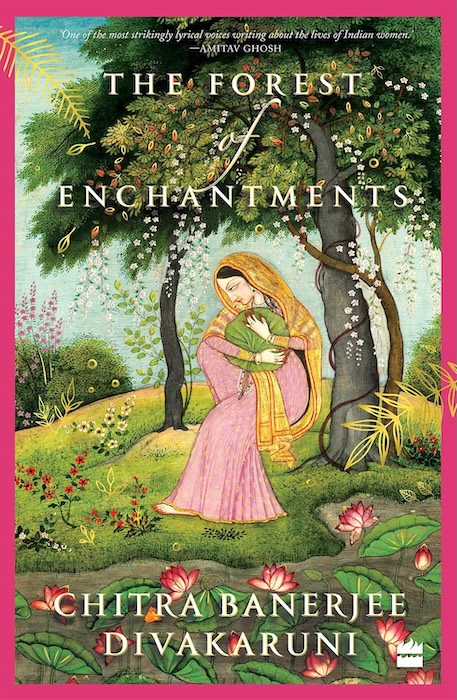
Forest of Enchantments
The Forest of Enchantments reimagines the ancient Indian epic Ramayana through the perspective of Sita, the heroine whose experiences have often been overshadowed by those of the male characters. From her early life and marriage to Prince Rama to their exile in the forest, Sita’s story unfolds as a journey marked by love, sacrifice, and difficult choices. After she is abducted by the demon king Ravana and eventually reunited with Rama, she faces further trials that challenge her dignity and independence. Divakaruni also brings attention to other women in the epic, including Kaikeyi, Surpanakha, and Mandodari, exploring the complicated motivations behind their actions. By giving these women their own voices, the novel questions traditional ideas about duty, honour, and obedience. It offers a feminist interpretation of a foundational Indian epic, examining women’s autonomy and their struggle to define themselves within a world governed by patriarchal expectations.
India
2019
2
The Beekeeper of Aleppo
The Beekeeper of Aleppo follows Nuri, a beekeeper, and his wife, Afra, an artist, as their peaceful life in Syria is destroyed by war. After suffering devastating personal losses, the couple are forced to leave their home and embark on a dangerous journey towards Britain in search of safety. Afra has lost her sight following a traumatic experience, while Nuri struggles with his own grief and the responsibility of protecting them both. As they travel through unfamiliar countries and refugee camps, their physical journey becomes intertwined with the emotional struggle to recover from trauma. Through their experiences, Lefteri explores displacement, loss, resilience, and the psychological consequences of conflict. The novel offers an intimate portrait of refugees whose lives have been transformed by circumstances beyond their control.
Syria
2019
3
Stationery Shop
Set in Tehran in 1953, The Stationery Shop tells the story of Roya, a young woman who finds refuge in a charming stationery shop filled with books, poetry, and the promise of new possibilities. There she meets Bahman, an idealistic young man who shares her love of literature and dreams of political change. Their romance develops against the backdrop of growing political unrest in Iran, culminating in the coup that overthrows Prime Minister Mohammad Mosaddegh. On the day they plan to meet and begin their future together, a series of events separates them, leaving Roya with unanswered questions for decades. Years later, an unexpected encounter offers the possibility of discovering the truth about their separation. Kamali explores love, memory, political upheaval, and the lasting consequences of misunderstandings that shape entire lives.
Iran
2019
4
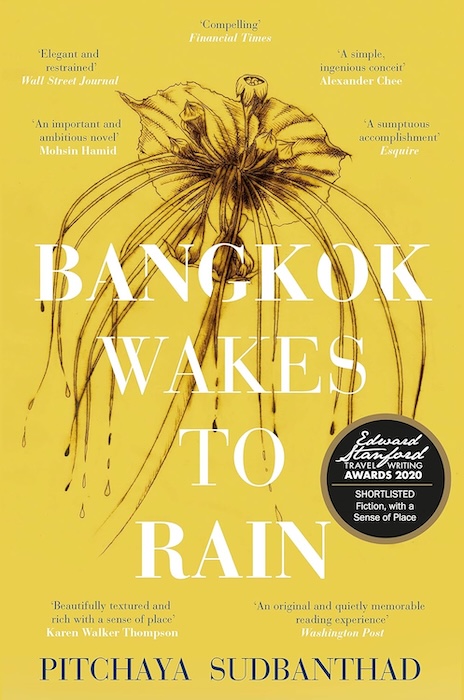
Bangkok Wakes to Rain
Bangkok Wakes to Rain weaves together the lives of people connected to a single house in Bangkok across different periods of Thai history. From a nineteenth-century missionary confronting unfamiliar beliefs to a contemporary musician navigating relationships and personal uncertainty, the novel explores how individual lives are shaped by a city constantly transformed by time, migration, and environmental change. As Bangkok expands and modernizes, recurring floods and rising waters reflect the city’s vulnerability to climate change and its complicated relationship with the natural world. Through interconnected stories that move between past, present, and imagined futures, Pitchaya Sudbanthad examines memory, colonial influence, cultural identity, and the impermanence of human existence. The novel presents Bangkok as a living, evolving character, revealing how personal histories and collective memories remain intertwined with the places people call home.
Thailand
2019
5
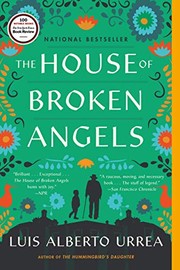
The House of Broken Angels
In The House of Broken Angels, Luis Alberto Urrea tells the story of the De La Cruz family as they gather in San Diego to celebrate the seventy-first birthday of patriarch Big Angel and the final days of their beloved matriarch, Mamá América. Over one emotionally charged weekend, siblings, children, grandchildren, and extended relatives come together, bringing unresolved conflicts, old memories, and complicated relationships to the surface. As Big Angel reflects on his life, he confronts his Mexican heritage, his experiences as an immigrant, and the legacy he will leave behind. Blending humor, grief, and tenderness, Urrea portrays the complexities of Mexican American identity and the bonds that hold families together across generations. The novel celebrates the resilience of immigrant communities while exploring mortality, belonging, cultural heritage, and the enduring power of family love.
United States
2019
6
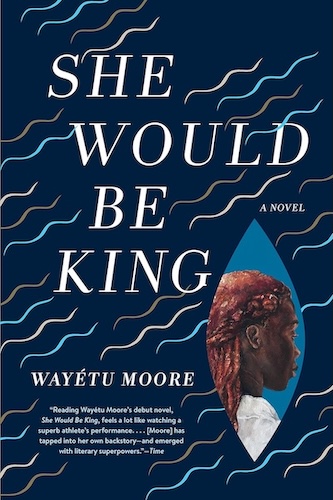
She Would Be King
In the nineteenth century, as Liberia emerges as a new nation, three extraordinary individuals from different parts of the African diaspora find their lives intertwined. Gbessa, a young woman from a West African village, is exiled after being accused of witchcraft. Left to die in the wilderness, she survives a deadly snakebite and discovers she possesses an unusual gift: immortality. June Dey, born into slavery on a plantation in Virginia, has extraordinary physical strength that he struggles to control. Norman Aragon, the son of a British coloniser and a Jamaican Maroon woman, can disappear from sight whenever the earth calls him.
Their journeys eventually bring them to Monrovia, where former enslaved people from America are attempting to establish a new society alongside Liberia's indigenous communities. As tensions rise between settlers, local populations, and European powers, the three must decide how to use their extraordinary abilities to protect their new homeland.
Blending magical realism, African folklore, and historical fiction, She Would Be King reimagines the founding of Liberia through stories of displacement, resistance, identity, and the complicated legacies of colonialism.
Liberia
Jamaica
United States
2018
7

Ædnan: An Epic
Spanning a century of Sámi history, Ædnan tells the story of two Indigenous families whose lives are transformed by colonialism, forced assimilation, and the struggle to preserve their cultural identity. In the early twentieth century, new national borders disrupt traditional reindeer-herding routes, tearing families away from the land and ways of life that have sustained them for generations. Decades later, their descendants confront the consequences of discrimination and cultural erasure, searching for ways to reclaim their language, heritage, and belonging. Written in haunting, lyrical verse, Axelsson’s epic weaves together intimate family memories and the broader history of a people whose existence has been threatened but never extinguished. The title, Ædnan, means land or earth in Northern Sámi, reflecting the profound connection between territory, ancestry, and identity. This is a powerful story of dispossession, resistance, and the enduring bond between a people and their homeland.
Sweden
2018
8
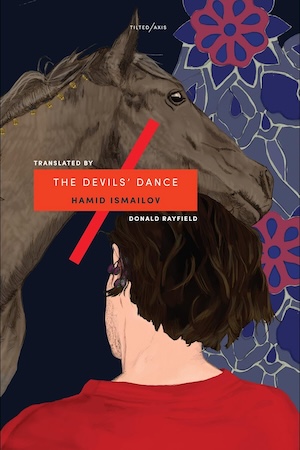
The Devils' Dance
In 1937, during Stalin’s Great Terror, the celebrated Uzbek writer Abdulla Qodiriy is arrested by the Soviet secret police and imprisoned in Tashkent. Facing brutal interrogations and the constant threat of execution, he seeks refuge in his imagination, attempting to reconstruct the historical novel he was writing before his arrest. His unfinished work tells the story of Oyxon, a nineteenth-century enslaved girl who rises to prominence in the courts of Central Asian khans, only to become entangled in a dangerous world of political rivalries, forced marriages, and imperial intrigue. As Qodiriy develops Oyxon’s story in his mind, the boundaries between his fictional world and his own terrifying circumstances begin to dissolve. Their experiences mirror one another, connecting the struggles of a woman fighting for agency in a patriarchal society with those of a writer facing persecution under a repressive regime. Rich in Uzbek poetry, folklore, and historical detail, Hamid Ismailov’s novel is both a tribute to Central Asian literary traditions and a powerful meditation on artistic freedom, cultural identity, and the devastating consequences of political oppression.
Uzbekistan
2018
9
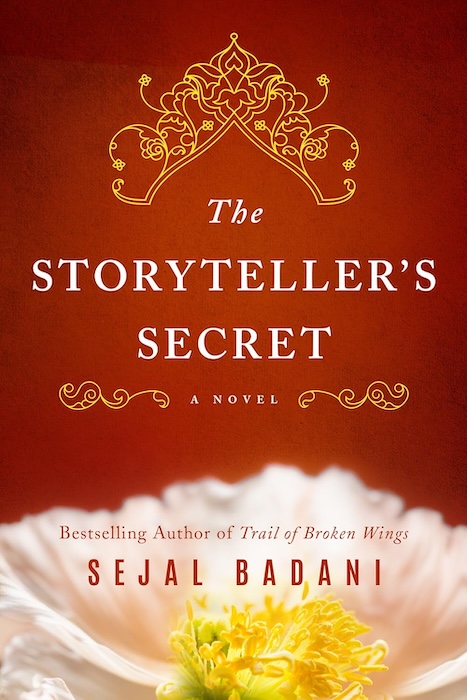
The Storyteller's Secret
The Storyteller’s Secret follows Jaya, an Indian American journalist whose personal life begins to unravel after she experiences a painful miscarriage and the breakdown of her marriage. Seeking answers and a fresh perspective, she travels to India to reconnect with her family’s roots. There, she meets Ravi, her grandmother’s former servant, who shares the story of Amisha, Jaya’s grandmother, and the difficult choices that shaped her life in a small Indian village during the 1930s. Amisha was a gifted storyteller whose aspirations extended beyond the traditional roles available to women, but her ambitions were constrained by social expectations and a marriage that offered little freedom. As Jaya uncovers her grandmother’s past, she begins to understand her own struggles differently. Badani explores family secrets, women’s independence, cultural traditions, and the healing power of understanding previous generations.
India
2018
10
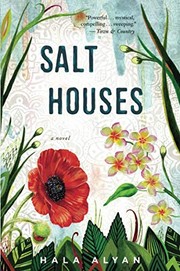
Salt Houses
Salt Houses follows several generations of the Palestinian Yacoub family as political upheaval repeatedly forces them to leave their homes and rebuild their lives elsewhere. Beginning in Nablus in the 1960s, the story traces the family’s experiences through the Six-Day War, the displacement caused by regional conflicts, and the subsequent lives of their descendants across the Middle East, Europe, and the United States. Each generation inherits a complicated relationship with Palestine, balancing memories of a lost homeland with the practical demands of creating a future in unfamiliar places. As family members develop different ideas about belonging, identity, and home, their relationships are shaped by both shared history and personal choices. Alyan explores the intergenerational effects of displacement, revealing how exile can become part of family identity even for those who have never experienced their ancestral homeland themselves.
Palestine
2018
11
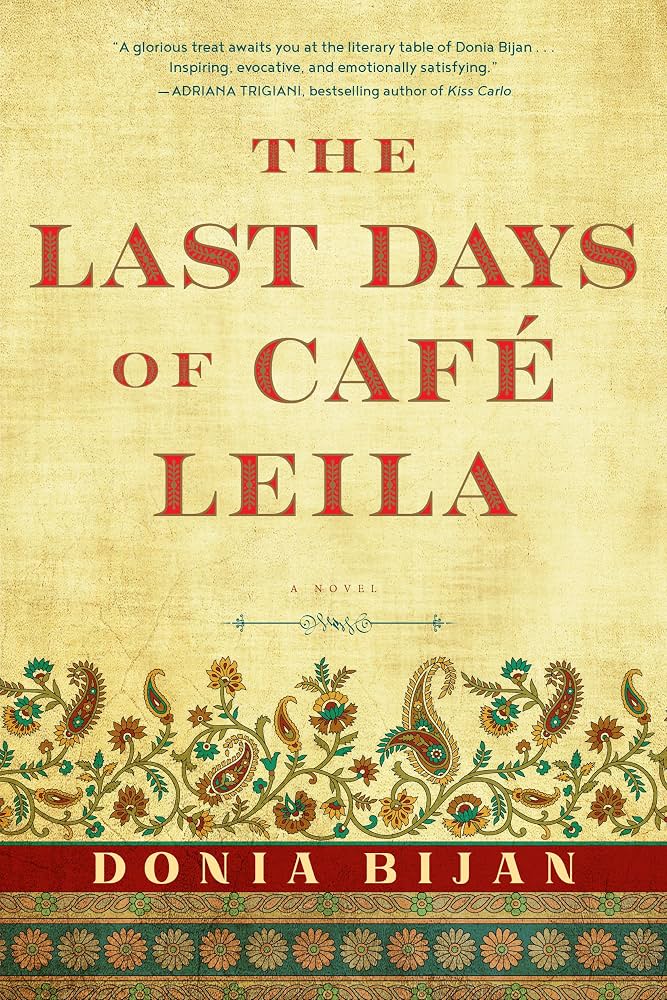
Last Days of Café Leila
The Last Days of Café Leila follows Noor, an Iranian-American woman who returns to Tehran with her young daughter, Lily, after years of living in the United States. She comes back to the family café, a beloved gathering place run by her father, Zod, whose cooking and hospitality have long brought people together. Although Noor hopes to find comfort and reconnect with her roots, returning home forces her to confront painful memories, unresolved family tensions, and the choices that led her to leave Iran.
As Noor and her father attempt to rebuild their relationship, the café becomes a symbol of belonging, cultural memory, and the traditions that bind generations together. Through food, family stories, and the changing atmosphere of Tehran, Donia Bijan explores the complexities of immigration, identity, and the meaning of home. The novel also examines the tensions between personal freedom and cultural expectations, revealing how family bonds can endure despite distance and disappointment. Warm and reflective, it celebrates the power of shared meals and inherited traditions to reconnect people with their past.
Iran
2018
12
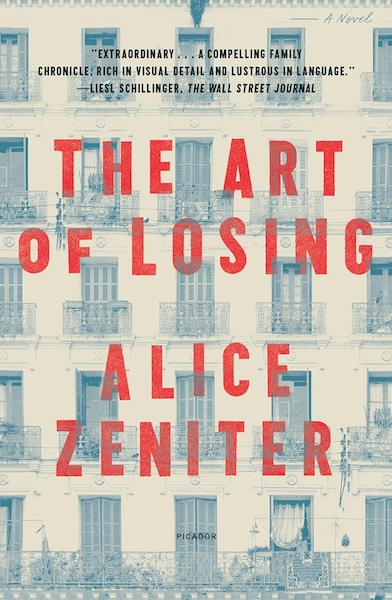
Art of Losing
Some families inherit houses, photographs, and heirlooms. Others inherit silences.
When Naïma, a young French woman of Algerian descent, begins exploring her family history, she discovers how little she knows about the country her grandparents left behind. Her grandfather, Ali, once owned land in Algeria but fled to France after the Algerian War of Independence. Her father, Hamid, grew up determined to become French, leaving painful memories and unanswered questions buried in the past.
Spanning three generations and seven decades, The Art of Losing follows a family shaped by colonialism, displacement, and the struggle to belong. As Naïma begins uncovering the truth about her ancestors, she must confront a history that is both deeply personal and politically complicated. What does it mean to inherit a past you never experienced? And can you claim an identity when the stories that might explain it have been lost?
Moving between Algeria and France, Alice Zeniter explores the invisible burdens passed from parents to children: the languages forgotten, the memories suppressed, and the connections that survive despite distance. Winner of the 2022 International Dublin Literary Award, this sweeping family saga is a powerful meditation on exile, belonging, and the stories we need to understand ourselves.
Algeria
France
2017