Historical Fiction
All countries
Afghanistan
Albania
Algeria
Angola
Antigua and Barbuda
Argentina
Armenia
Australia
Austria
Azerbaijan
Bangladesh
Barbados
Belize
Benin
Bosnia and Herzegovina
Brazil
Bulgaria
Burundi
Canada
Chile
China
Congo, Democratic Republic
Côte d’Ivoire (Ivory Coast)
Croatia
Cuba
Cyprus
Denmark
Djibouti
Dominica
Dominican Republic
Egypt
El Salvador
Ethiopia
Fiji
France
Georgia
Germany
Ghana
Greece
Guatemala
Hungary
Iceland
India
Indonesia
Iran
Iraq
Ireland
Italy
Jamaica
Japan
Kazakhstan
Kenya
Kuwait
Latvia
Lebanon
Liberia
Libya
Madagascar
Malaysia
Mali
Mexico
Moldova
Morocco
Mozambique
Myanmar
Netherlands
Nigeria
North Korea
Oman
Pakistan
Palestine
Philippines
Poland
Portugal
Puerto Rico
Romania
Rwanda
Saudi Arabia
Senegal
Sierra Leone
Singapore
Slovenia
South Africa
South Korea
Spain
Sri Lanka
Sudan
Sweden
Switzerland
Syria
Taiwan
Tanzania
Thailand
Tunisia
Türkiye
Turkmenistan
Uganda
Ukraine
United Arab Emirates
United Kingdom
United States
Uruguay
Uzbekistan
Vietnam
Yemen
Zambia
Zimbabwe
1
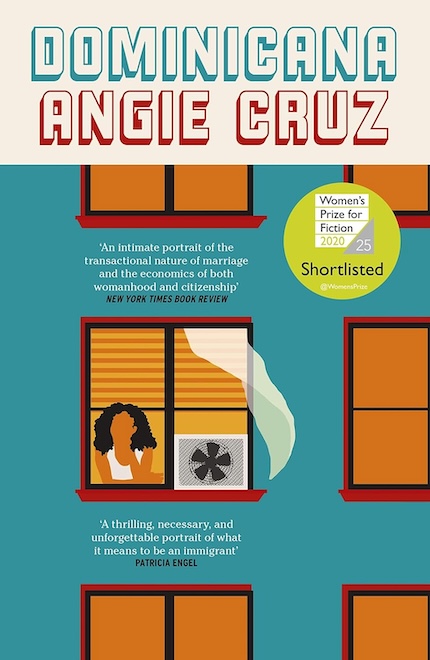
Dominicana
Fifteen-year-old Ana Canción has never dreamed of leaving the Dominican countryside, but when Juan Ruiz, a man twice her age, offers to marry her and take her to New York City, her family sees an opportunity for a better future. On New Year’s Day in 1965, Ana leaves behind everything she knows and arrives in Washington Heights, where she finds herself trapped in an unhappy marriage with a controlling and unfaithful husband. Lonely and struggling to adapt to life in a new country, she begins to imagine a future beyond the narrow role expected of her.
When Juan returns to the Dominican Republic amid growing political turmoil, Ana discovers new freedoms through English lessons, friendships, and an unexpected romantic connection with his younger brother, César. But her growing independence clashes with her family’s hopes and the sacrifices expected of her. Set against the backdrop of the Dominican Civil War and the Dominican immigrant community in New York, Dominicana is a moving coming-of-age story about migration, womanhood, and the courage to claim a life of one’s own.
Dominican Republic
United States
2019
2
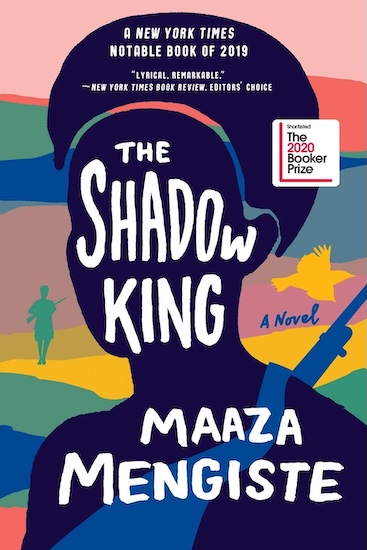
The Shadow King
Ethiopia, 1935. As Mussolini’s Italian army prepares to invade, Hirut, a recently orphaned young woman, struggles to survive in the household of Kidane, an officer in Emperor Haile Selassie’s army. When war erupts, Hirut and other Ethiopian women refuse to remain on the sidelines, limited to nursing the wounded and burying the dead. They want to fight for their country, but their courage must overcome not only the invading army but also the expectations of a society that rarely recognises women’s strength.
When the emperor is forced into exile, Hirut devises an extraordinary plan to restore hope: she helps disguise a humble peasant as the emperor and becomes his personal guard. Meanwhile, Ettore, a Jewish Italian photographer serving with the invading forces, struggles with his own conscience as he witnesses the brutality of the occupation. Moving between the perspectives of soldiers, civilians, and women on the battlefield, The Shadow King reclaims a neglected chapter of Ethiopian history. It is a powerful exploration of resistance, sacrifice, and the women whose contributions to war have too often been erased.
Ethiopia
2019
3
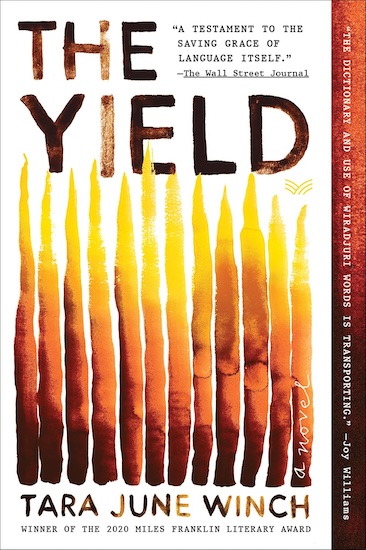
The Yield
In The Yield, Tara June Winch tells the story of Albert Gondiwindi, an elderly Wiradjuri man determined to preserve his people’s language and cultural knowledge before he dies. When Albert passes away, his granddaughter August returns to her family’s home in rural New South Wales after spending ten years in England. Her homecoming brings her face-to-face with painful memories, including the disappearance of her older sister, Jedda, and the colonial history that has shaped her family’s life.
August soon discovers that their ancestral home, Prosperous House, is threatened by a mining company seeking to take over the surrounding land. Determined to protect her family’s heritage, she searches for the dictionary Albert was compiling, a collection of Wiradjuri words and stories that preserves generations of knowledge. His work becomes a vital link to the past, helping August reconnect with her identity and understand the experiences of her ancestors.
The novel unfolds through three interwoven narratives: August’s return, Albert’s dictionary, and the historical account of a missionary whose actions reveal the destructive effects of colonial intervention. Through these different perspectives, Winch explores the connections between language, land, memory, and belonging. The Yield is both a powerful examination of Indigenous dispossession and a celebration of cultural survival, showing how reclaiming language and storytelling can help restore what history has attempted to erase.
Australia
2019
4
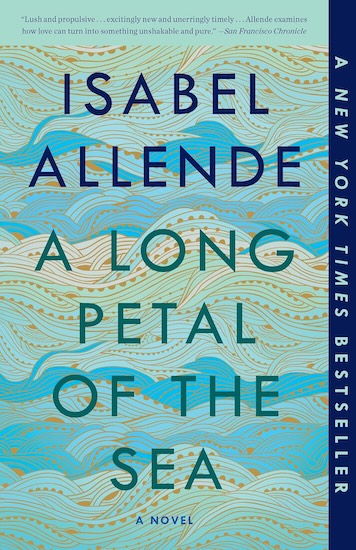
A Long Petal of the Sea
Beginning during the Spanish Civil War, A Long Petal of the Sea follows two people whose lives are transformed by war and exile. Victor Dalmau, a young doctor, becomes caught in the conflict when Franco’s forces defeat the Republican side. Alongside Roser Bruguera, a pregnant widow and gifted pianist, he is forced to flee Spain. To survive, they enter into a marriage neither originally desired and join thousands of Spanish refugees seeking safety abroad.
Their journey takes them aboard the SS Winnipeg, a ship chartered by Chilean poet Pablo Neruda to transport refugees to South America. In Chile, Victor and Roser build a new life while navigating political tensions, cultural differences, and the challenges of starting over in an unfamiliar country. As decades pass, their adopted homeland experiences its own political upheavals, forcing them to confront once again the relationship between belonging, exile, and home.
Spanning generations and continents, Allende’s novel explores how displacement reshapes identity, family, and personal loyalties. Through Victor and Roser’s experiences, she examines the courage required to rebuild a life after losing everything and the enduring hope that one day it may be possible to return home.
Spain
Chile
2019
5
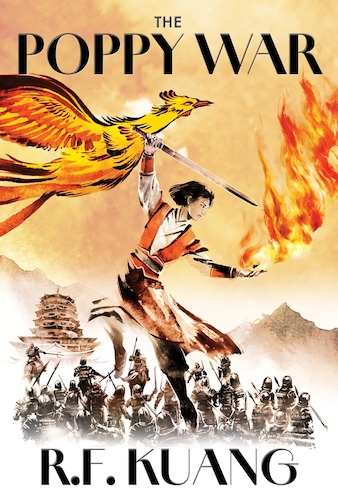
The Poppy War
An orphan from a poor southern province. An elite military academy. A power that could destroy an empire.
When Rin unexpectedly earns a place at Sinegard, the Nikara Empire’s most prestigious military academy, she believes she has finally escaped a future of poverty and forced marriage. But prejudice, relentless training, and the discovery of her extraordinary shamanic abilities soon push her into a world far more dangerous than she imagined. As war threatens to engulf the empire, Rin discovers that the gods are real—and that the power they offer comes at a terrible price. Inspired by twentieth-century Chinese history, particularly the Second Sino-Japanese War, this dark and uncompromising fantasy explores the brutal realities of warfare, the seduction of vengeance, and the devastating consequences of power. Rin must decide what she is willing to sacrifice to protect her people—and what remains of her humanity when survival demands unimaginable choices.
China
2019
6
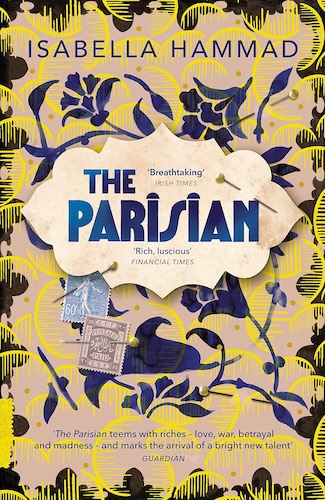
The Parisian
A young Palestinian man leaves home to study in France, believing the world is full of possibilities. But as war reshapes Europe and colonial rule transforms his homeland, Midhat Kamal discovers that belonging is far more complicated than he imagined. Beginning in 1914, this sweeping historical novel follows Midhat from the salons of Montpellier and Paris to Nablus, where British rule and rising nationalist movements challenge everything he thought he knew. Torn between cultures, romantic ideals, and conflicting loyalties, he must find his place in a world on the brink of transformation. Rich in historical detail and intimate human drama, The Parisian explores how personal lives become entangled with the making of nations—and how the past continues to shape the present.
Palestine
2019
7
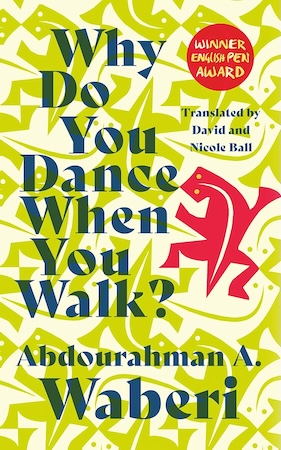
Why Do You Dance When You Walk
One morning in Paris, eight-year-old Béa asks her father, Aden, a deceptively simple question: “Papa, why do you dance when you walk?” Her curiosity about his unusual gait prompts him to revisit the childhood experiences that shaped his life, taking readers from contemporary France to Djibouti during the years leading up to independence.
Growing up in a poor neighbourhood marked by dust, heat, and hardship, Aden was a bright but physically vulnerable child. After contracting polio at the age of seven, he was left with a weakened leg that made him stand out among his peers. His childhood becomes a story of illness, loneliness, and resilience, shaped by his complicated relationship with his mother, his beloved grandmother, and the colourful characters who inhabit his neighbourhood.
Through Aden’s memories, Waberi evokes a world on the threshold of political independence while exploring the intimate realities of growing up in a society shaped by colonialism. The novel is also a meditation on parenthood: as Aden answers his daughter’s questions, he reflects on how the wounds of childhood influence the stories we tell our own children.
Poetic and deeply personal, this short novel explores disability, family, memory, and the transformative power of storytelling. It asks how we learn to live with our scars—and how even the most difficult experiences can become part of the dance of being alive.
Djibouti
2019
8
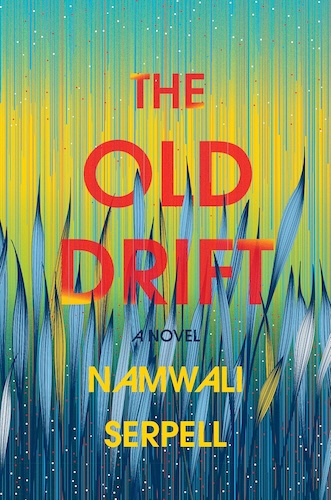
The Old Drift
Beginning in 1904, near the magnificent Victoria Falls, The Old Drift follows three families whose lives become entangled across more than a century of Zambian history. It begins with a seemingly minor incident involving Percy M. Clark, a British settler, an Italian hotelier, and an African busboy—a mistake whose consequences ripple through generations. As the story unfolds, the families experience colonial rule, the struggle for independence, political upheaval, and the uncertainties of a rapidly changing modern world. Their histories are filled with forbidden love, betrayals, extraordinary ambitions, and unexpected connections. Serpell combines historical fiction with magical realism, folklore, romance, and science fiction, even imagining a future shaped by technological innovation and surveillance. The narrative itself is unconventional, narrated in part by a collective chorus of mosquitoes observing humanity’s follies. Ambitious, inventive, and richly layered, The Old Drift is both a multigenerational family saga and a meditation on how the past continues to shape the future of a nation. Through its interwoven lives, the novel explores the lasting legacies of colonialism, the complexity of national identity, and the unintended consequences of human actions.
Zambia
2019
9
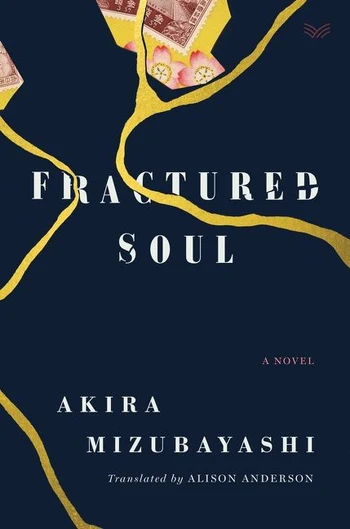
Fractured Soul
Tokyo, 1938. During a private musical gathering, military police burst in and arrest Yu, a Japanese musician whose love of Western classical music has drawn suspicion. His young son, Rei, witnesses the destruction of his father’s violin and the sudden collapse of their family. With the help of a compassionate stranger, Rei escapes to France, carrying the fragments of the broken instrument. Decades later, now living in Paris as a violin maker, he dedicates himself to restoring damaged instruments—but the wounds of his childhood remain unresolved. When a young violinist unexpectedly reconnects him with his past, the broken violin becomes a symbol of memory, loss, and the possibility of healing. Moving between Japan and France, Fractured Soul explores the enduring power of music to transcend political violence and bring people together across generations. It is a poignant story about what war destroys, what art preserves, and how beauty can emerge from the deepest suffering.
Japan
2019
10
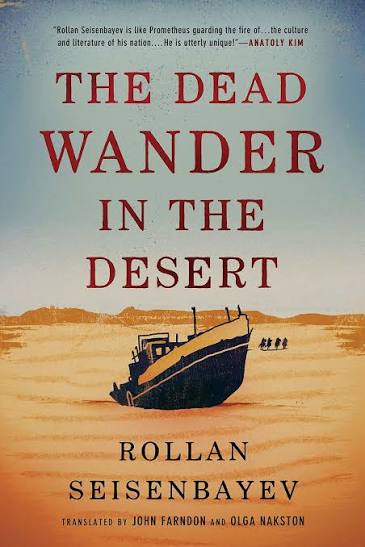
The Dead Wander in the Desert
Set on the vast steppes of Soviet Kazakhstan during the final decades of the USSR, The Dead Wander in the Desert tells the story of a community whose existence is threatened by the ecological destruction of the Aral Sea. Nasyr, an elderly fisherman who becomes a village mullah, watches as the waters that once sustained his people recede, leaving behind a barren landscape and a vanishing way of life. His son, Kakharman, challenges the authorities responsible for diverting the rivers that feed the sea to support ambitious agricultural projects, particularly cotton cultivation. But his struggle against the Soviet bureaucracy seems almost impossible.
Through the lives of a Kazakh family and their neighbors, Seisenbayev explores the devastating consequences of environmental mismanagement, political oppression, and the pursuit of progress at any cost. Blending social history, philosophical reflection, and the rhythms of traditional storytelling, the novel also recalls the wider tragedies endured by the Kazakh people under Soviet rule. Both an elegy for a disappearing world and a warning about humanity’s relationship with nature, it gives a deeply personal dimension to one of the twentieth century’s greatest environmental catastrophes.
Kazakhstan
2019
11
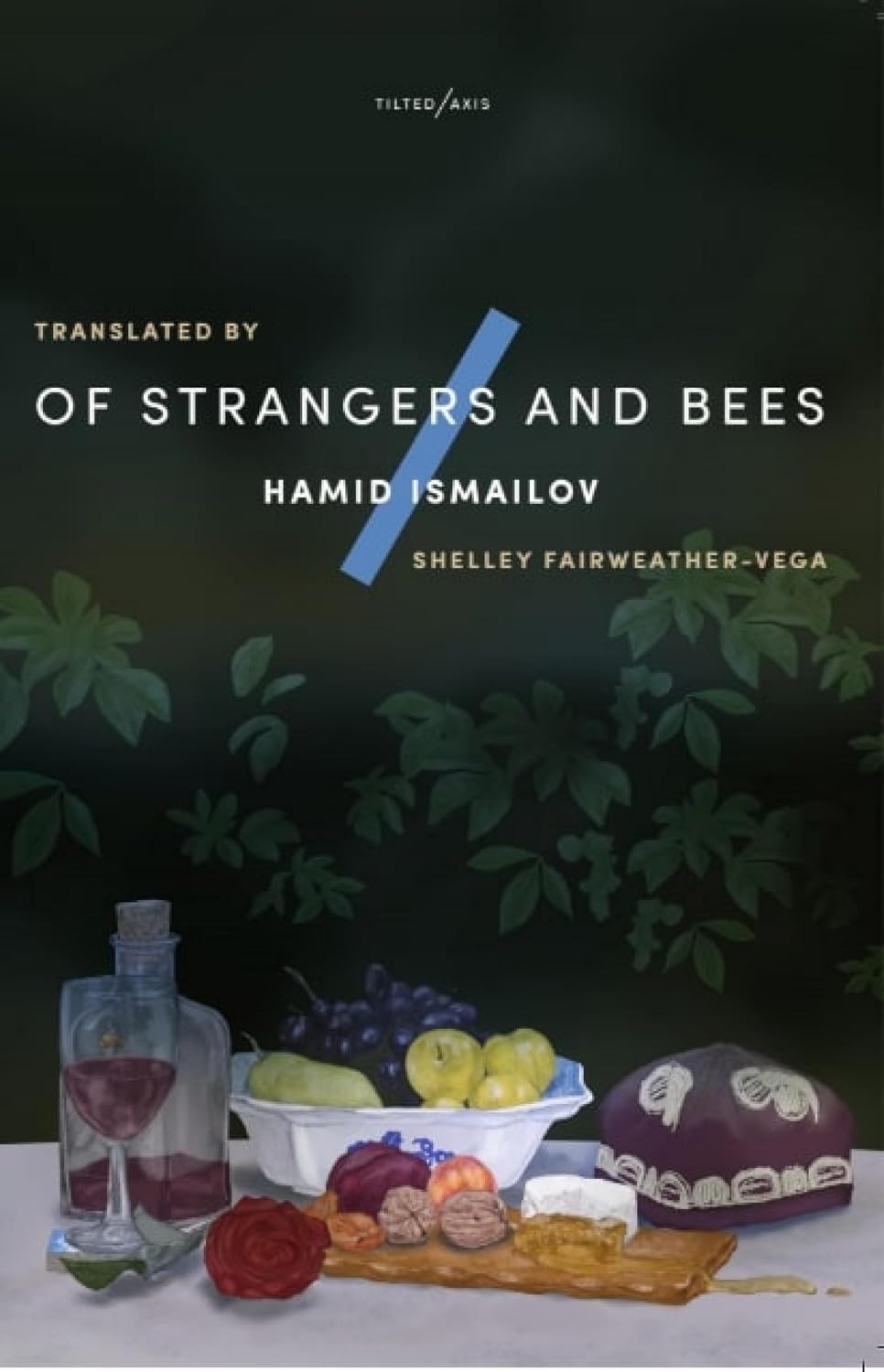
Of Strangers and Bees
In Of Strangers and Bees, Uzbek writer Hamid Ismailov weaves together the experiences of a contemporary exile and the extraordinary life of Avicenna, the celebrated medieval philosopher, physician, and polymath. The novel follows Sheikhov, an Uzbek writer living far from his homeland, who awakens from a troubling dream convinced that Avicenna continues to wander the world in different incarnations. Their journeys echo one another across centuries and cultures, moving through Ottoman Turkey, medieval Germany, and Renaissance Italy.
Blending historical fiction, philosophical reflection, traditional storytelling, and Sufi mysticism, Ismailov explores the meaning of belonging and the loneliness of life in exile. The novel also draws on Hayy ibn Yaqzan, a landmark work of medieval Islamic philosophy concerned with knowledge, reason, and spiritual awakening. Through layered narratives and allegorical episodes, Ismailov considers how people search for truth and wisdom while negotiating the boundaries between cultures, histories, and identities. The result is an imaginative meditation on displacement, intellectual freedom, and the enduring human quest for understanding.
Uzbekistan
2019
12
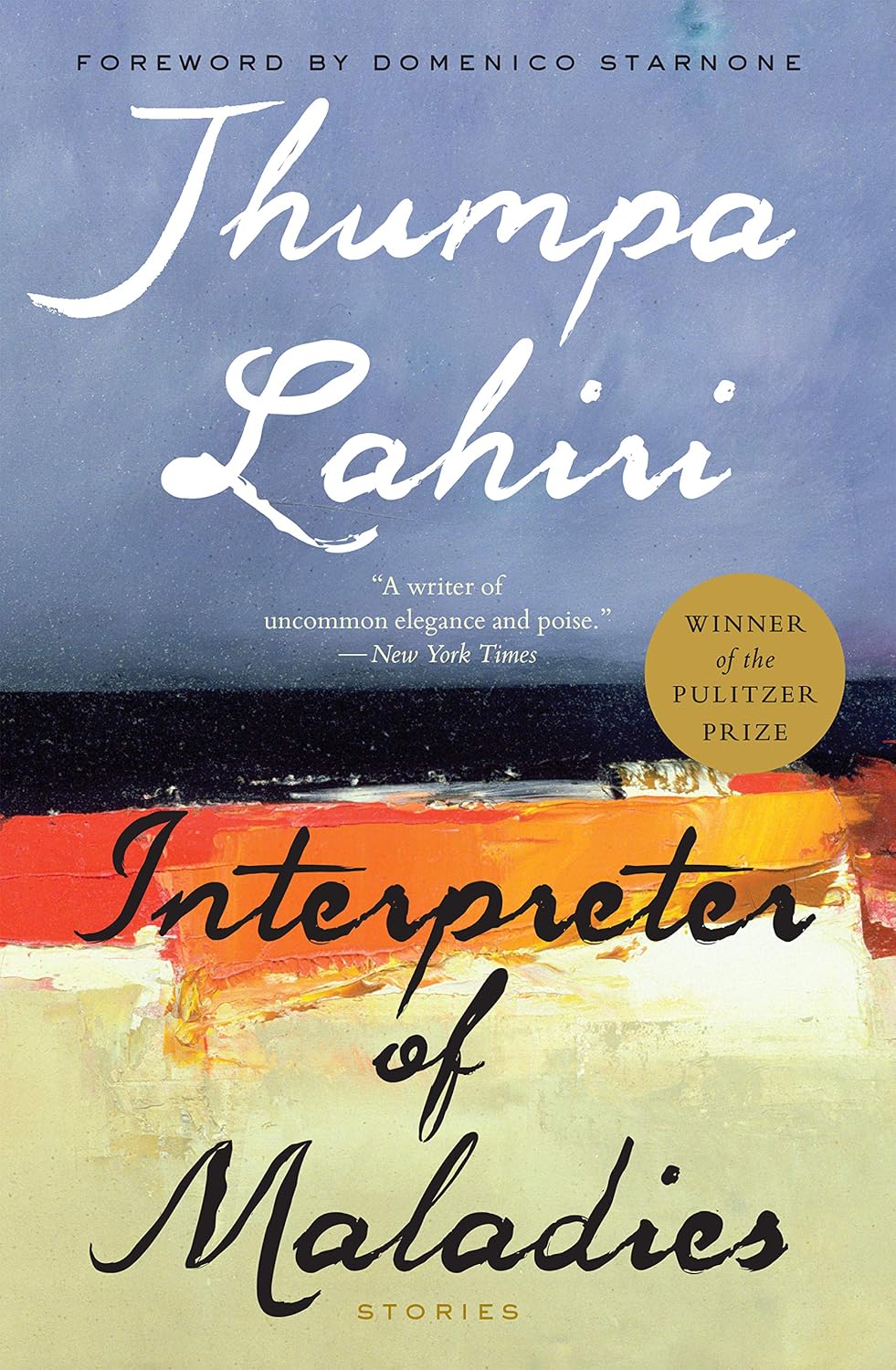
Interpreter of Maladies
Interpreter of Maladies is a collection of nine short stories exploring the lives of Indian and Indian American characters navigating love, cultural displacement, family obligations, and loneliness. In the title story, an Indian tour guide who works as an interpreter for a doctor becomes the confidant of an American woman of Indian origin, whose personal revelations challenge his understanding of intimacy and connection. Other stories portray arranged marriages, strained relationships between parents and children, and the emotional difficulties of living between cultures. Lahiri pays close attention to ordinary moments when misunderstandings, unspoken desires, and private disappointments reveal deeper struggles. Her characters often appear caught between the expectations of their heritage and the realities of their present lives. The collection explores belonging, communication, and the quiet emotional distances that can separate people who seem intimately connected.
India
2019