Historical Fiction
All countries
Afghanistan
Albania
Algeria
Angola
Antigua and Barbuda
Argentina
Armenia
Australia
Austria
Azerbaijan
Bangladesh
Barbados
Belize
Benin
Bosnia and Herzegovina
Brazil
Bulgaria
Burundi
Canada
Chile
China
Congo, Democratic Republic
Côte d’Ivoire (Ivory Coast)
Croatia
Cuba
Cyprus
Denmark
Djibouti
Dominica
Dominican Republic
Egypt
El Salvador
Ethiopia
Fiji
France
Georgia
Germany
Ghana
Greece
Guatemala
Hungary
Iceland
India
Indonesia
Iran
Iraq
Ireland
Italy
Jamaica
Japan
Kazakhstan
Kenya
Kuwait
Latvia
Lebanon
Liberia
Libya
Madagascar
Malaysia
Mali
Mexico
Moldova
Morocco
Mozambique
Myanmar
Netherlands
Nigeria
North Korea
Oman
Pakistan
Palestine
Philippines
Poland
Portugal
Puerto Rico
Romania
Rwanda
Saudi Arabia
Senegal
Sierra Leone
Singapore
Slovenia
South Africa
South Korea
Spain
Sri Lanka
Sudan
Sweden
Switzerland
Syria
Taiwan
Tanzania
Thailand
Tunisia
Türkiye
Turkmenistan
Uganda
Ukraine
United Arab Emirates
United Kingdom
United States
Uruguay
Uzbekistan
Vietnam
Yemen
Zambia
Zimbabwe
1
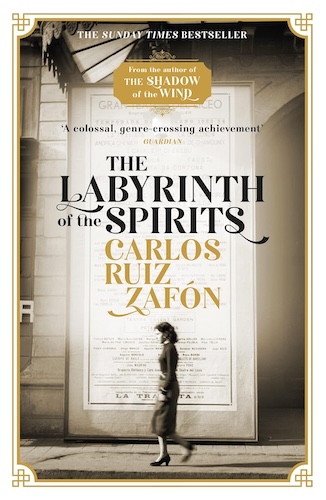
The Labyrinth of the Spirits
In post-war Barcelona, where the shadows of Francisco Franco’s dictatorship linger over everyday life, a young investigator named Alicia Gris is drawn into a dangerous mystery involving one of Spain’s most powerful political figures. Working for a secretive government agency, Alicia is tasked with locating a missing minister, but what begins as a straightforward investigation soon reveals a far-reaching conspiracy involving political corruption, kidnapping, and murder.
As Alicia follows the trail of clues, her investigation brings her into contact with the Sempere family, whose lives have been intertwined with the mysteries of the Cemetery of Forgotten Books for decades. Daniel Sempere, still haunted by questions surrounding his mother’s death, finds himself drawn into a final confrontation with the secrets that have shaped his family. Together, Alicia and Daniel uncover a disturbing history of violence, betrayal, and buried truths.
The fourth and final novel in Zafón’s Cemetery of Forgotten Books series, The Labyrinth of the Spirits brings together characters and mysteries from the previous books in an intricate literary puzzle. Combining Gothic atmosphere, historical fiction, suspense, and a profound love of books, Zafón creates a sweeping portrait of a city haunted by its past. At its heart, the novel explores how literature preserves memory, how authoritarian power attempts to control truth, and how courage and friendship can help people emerge from the darkest chapters of history.
Spain
2016
2
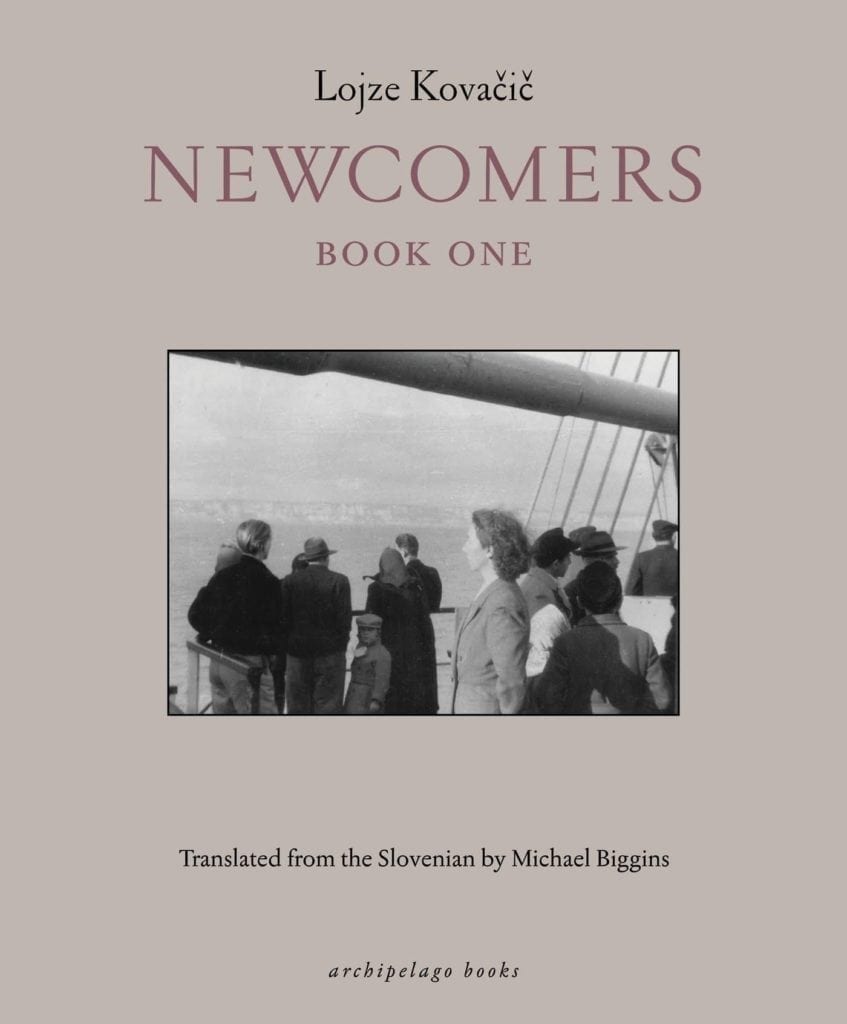
Newcomers: Book One
The first volume of this three-part autobiographical series begins in 1938 with the expulsion of the Kovačič family from their home in Switzerland, eventually leading to their settlement in the father’s home country of Slovenia. Before leaving their home, the ten-year-old son of the family imagines his father’s country as one of beauty and fairytales, but as they make their way to the land of their exile, the family realizes that any efforts to make this place a home will be in vain. Confronted by misery, hunger, and hostility, the young boy refuses to learn Slovenian and falls silent, his surroundings becoming a social, cultural, and mental abyss.
Narrated by the boy with uncanny naiveté, the novel follows his family’s journey in a fragmented mosaic of memories. Some are innocent and tender, while others are miserable and ruthless, resulting in a profound and heart-wrenching description of a period torn apart by conflict, reflected in the author’s powerful and innovative command of language.
Slovenia
2016
3
The Tale of Aypi
On the shores of the Caspian Sea, in a small fishing village in Soviet Turkmenistan, the inhabitants face the threat of losing their ancestral home. The authorities have ordered the community to relocate so that their land can be redeveloped, while a ban on fishing threatens the villagers’ traditional way of life. Most residents reluctantly accept their fate, but Araz, a stubborn and principled fisherman, refuses to surrender the place where his family has lived for generations. As he challenges the authorities, his resistance exposes the fear, conformity, and quiet compromises that allow injustice to flourish. Woven into the contemporary struggle is the haunting legend of Aypi, a beautiful young woman who was unjustly executed centuries earlier. Her restless spirit returns to seek vengeance, linking the village’s buried past with its present crisis. Blending political allegory, folklore, and supernatural elements, Ak Welsapar’s novel explores freedom, cultural identity, and humanity’s enduring connection to the land. It is also a powerful reflection on the consequences of authoritarian rule and the courage required to resist it.
Turkmenistan
2016
4
Small Country
Set in Burundi in the early 1990s, Petit pays follows Gabriel, a ten-year-old boy growing up in Bujumbura, the country’s capital. Living with his French father, Rwandan mother, and younger sister, Gabriel enjoys an idyllic childhood filled with adventures with his friends, bicycle rides, and the simple pleasures of everyday life. But as his parents’ relationship begins to unravel, political tensions intensify, and the approaching civil war threatens the peaceful world he has always known.
Through Gabriel’s innocent yet increasingly troubled perspective, Gaël Faye portrays the devastating impact of conflict on childhood, family, and belonging. As violence spreads through Burundi and the 1994 genocide against the Tutsi unfolds in neighbouring Rwanda, Gabriel is forced to confront his own mixed heritage and the painful realities of a divided society.
Blending nostalgia with the brutality of history, the novel explores the loss of innocence, the fragility of home, and the lasting scars of displacement. Inspired by the author’s own experiences, Petit pays is a moving reflection on childhood interrupted by violence and the struggle to preserve one’s identity amid historical upheaval.
Burundi
2016
5
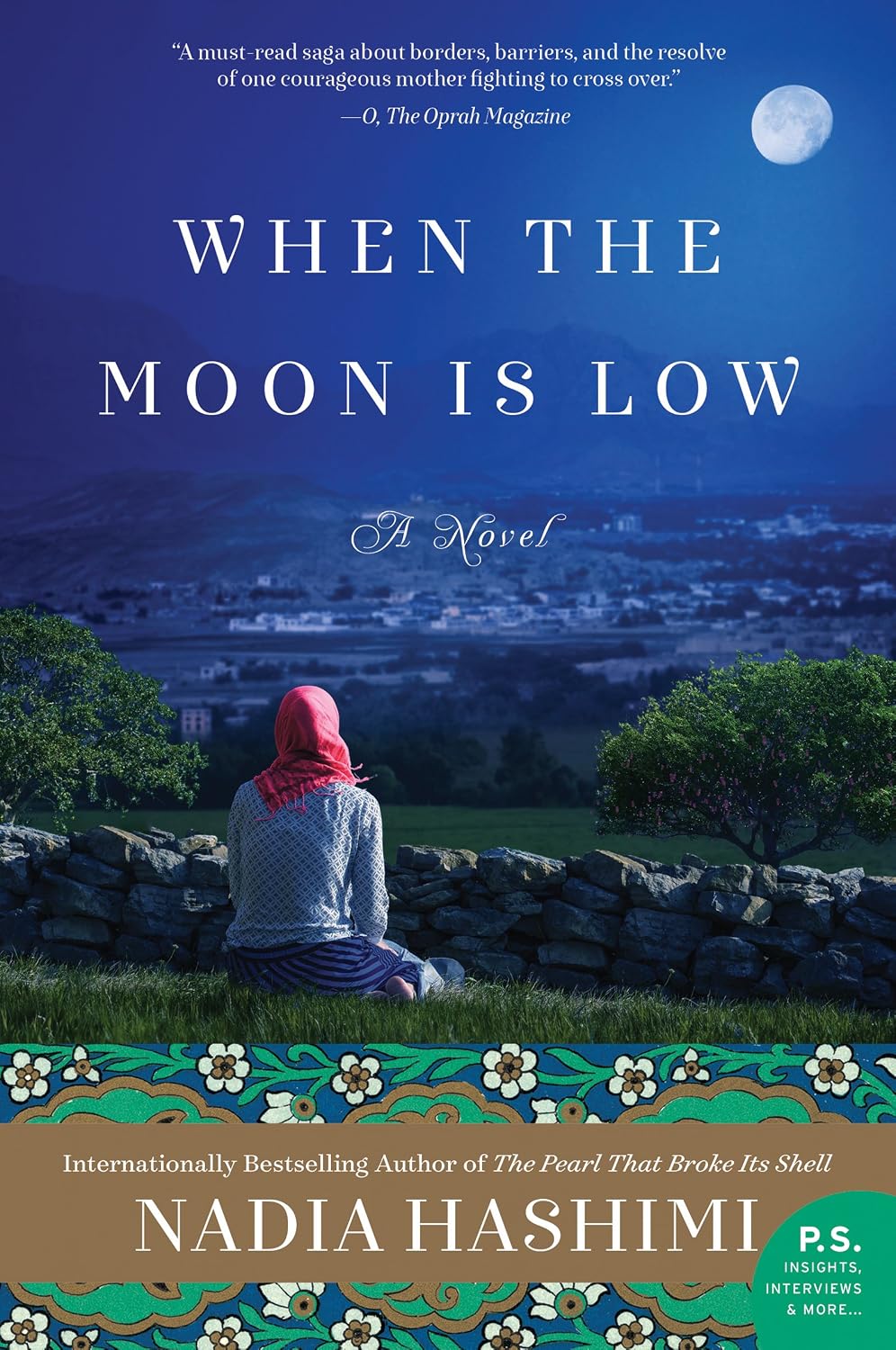
When the Moon Is Low
When the Moon Is Low follows Fereiba, an educated Afghan woman whose relatively secure life is shattered when her husband becomes a victim of political violence. Left to care for her three children, she decides to flee Afghanistan as the country’s instability and insecurity intensify. Their journey towards Europe exposes them to dangerous border crossings, exploitation, separation, and the uncertainty faced by refugees seeking safety. When circumstances force Fereiba and her teenage son, Saleem, onto different paths, both must find the strength to survive in unfamiliar environments. Moving between their experiences, Hashimi portrays the human cost of displacement and the difficult choices families make when their homes are no longer safe. The novel explores motherhood, resilience, and the search for freedom, highlighting the courage required to rebuild a life when everything familiar has been lost.
Afghanistan
2016
6
A House Without Windows: A Novel
A House Without Windows follows Zeba, an Afghan woman accused of murdering her husband, Kamal. Arrested and imprisoned while awaiting trial, she finds herself in a women’s detention centre in Kabul, where she encounters other women whose lives have been shaped by violence, coercion, and restrictive social expectations. Zeba’s children struggle to understand their mother’s arrest, while Yusuf, an Afghan-born lawyer raised in the United States, returns to Afghanistan and becomes involved in her defence. As the investigation unfolds, the novel reveals the complicated circumstances surrounding the death and the challenges of establishing justice in a society where women’s voices are often dismissed. Through Zeba’s story and those of her fellow prisoners, Hashimi examines domestic abuse, gender inequality, and the courage required to seek justice in a system that frequently fails vulnerable women.
Afghanistan
2016
7
Time of White Horses
Set in Palestine, before the creation of the state of Israel, this lyrical and deftly written novel spans three generations living in the small village of Hadiya. Reaching back into the late nineteenth and early twentieth centuries, the immense history of this period is brought into focus by the very human stories of Hajj Mahmoud, his son Khaled, and grandson Naji. As the cruel hand of history hovers above them, their destinies are shaped by outside forces - first the crumbling Ottoman Empire, then the British Mandate, and finally the Nakba. Nasrallah's elegant and epic tale is one of both suffering and survival, heart-break and hope.
Palestine
2016
8
Stork Mountain
Stork Mountain follows a young Bulgarian-American man who returns to his ancestral village in Bulgaria after the disappearance of his grandfather, a former communist official. Hoping to uncover the truth about his family’s past, he becomes immersed in the history and traditions of a rural community near the Turkish border, where generations have lived through political upheaval, shifting national identities, and religious tensions.
As he investigates his grandfather’s life, the narrator encounters stories of forbidden love, ancient rituals, and the complicated legacy of Bulgaria’s communist era. The village’s inhabitants preserve memories and customs that seem increasingly distant from the modern world, while the narrator struggles to reconcile his American upbringing with the homeland he has inherited through family history. Miroslav Penkov blends folklore, historical fiction, and contemporary storytelling to explore belonging, migration, and the ways personal identity is shaped by collective memory. The novel reveals how the past continues to influence the present, even when its stories have been forgotten, distorted, or deliberately concealed.
Bulgaria
2016
9
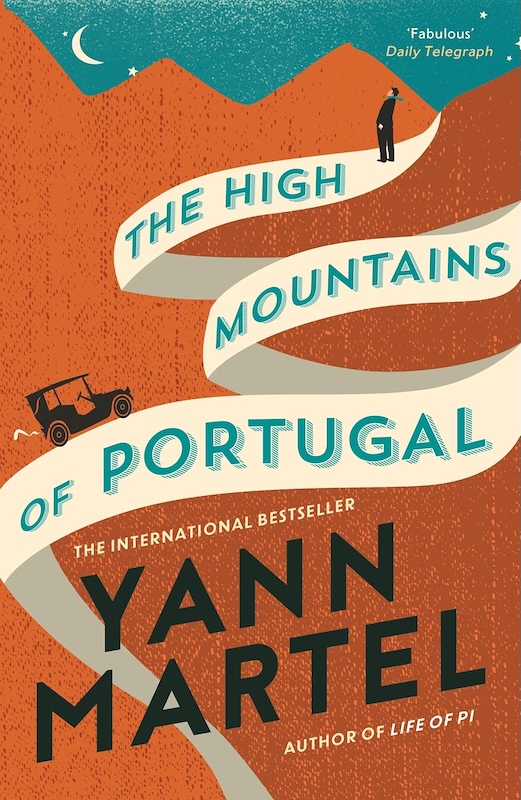
The High Mountains of Portugal
The High Mountains of Portugal weaves together three interconnected stories spanning nearly a century, exploring grief, faith, and the mysteries of human existence. In 1904, a young Portuguese archivist named Tomás discovers an ancient religious artifact and embarks on a journey through the countryside in search of its meaning. Thirty-five years later, a Portuguese pathologist confronts a personal tragedy that challenges his understanding of love and belief. In the final story, a Canadian senator living in contemporary Portugal finds himself drawn into an unexpected relationship with a chimpanzee, prompting him to reconsider the boundaries between humans and animals. Through these unusual narratives, Yann Martel explores the ways people respond to loss and search for meaning in a world that resists easy explanations. Blending philosophical reflection, historical fiction, and elements of the surreal, the novel examines faith, mortality, love, and humanity’s connection to the natural world.
Portugal
2016
10
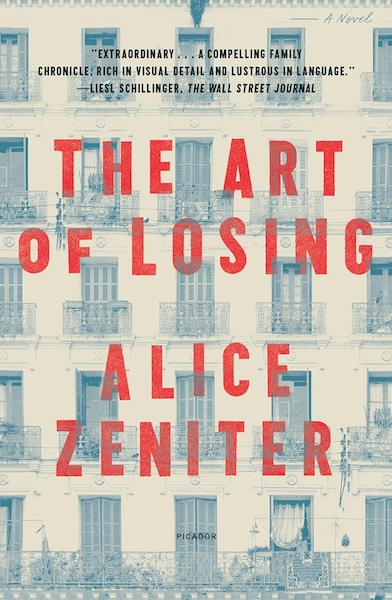
Art of Losing
Some families inherit houses, photographs, and heirlooms. Others inherit silences.
When Naïma, a young French woman of Algerian descent, begins exploring her family history, she discovers how little she knows about the country her grandparents left behind. Her grandfather, Ali, once owned land in Algeria but fled to France after the Algerian War of Independence. Her father, Hamid, grew up determined to become French, leaving painful memories and unanswered questions buried in the past.
Spanning three generations and seven decades, The Art of Losing follows a family shaped by colonialism, displacement, and the struggle to belong. As Naïma begins uncovering the truth about her ancestors, she must confront a history that is both deeply personal and politically complicated. What does it mean to inherit a past you never experienced? And can you claim an identity when the stories that might explain it have been lost?
Moving between Algeria and France, Alice Zeniter explores the invisible burdens passed from parents to children: the languages forgotten, the memories suppressed, and the connections that survive despite distance. Winner of the 2022 International Dublin Literary Award, this sweeping family saga is a powerful meditation on exile, belonging, and the stories we need to understand ourselves.
Algeria
France
2017
11
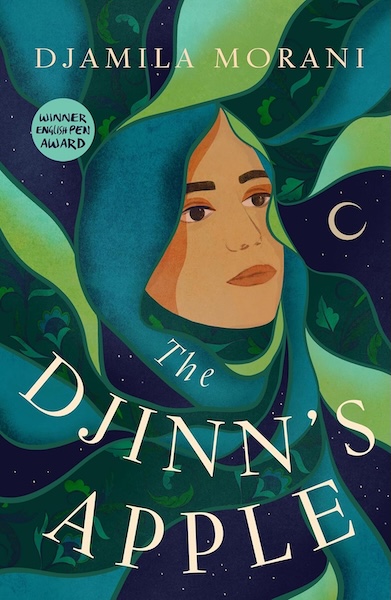
The Djinn's Apple
In the golden age of Baghdad, a young girl must transform her grief into the strength to uncover a deadly secret.
Twelve-year-old Nardeen Baramika dreams of becoming a doctor, an extraordinary ambition for a girl living in the Abbasid Caliphate. But when armed men storm her family home, she escapes while the rest of her family are murdered. Suddenly alone, Nardeen discovers that their deaths may be connected to a mysterious manuscript—and a powerful man determined to keep its secrets hidden.
Taken under the protection of a respected medical scholar, Nardeen begins studying medicine while secretly pursuing justice for her family. As she navigates a world of political intrigue, dangerous alliances, and shifting loyalties, she must decide whom she can trust and how far she is willing to go for revenge.
Blending historical mystery with the atmosphere of medieval Baghdad, The Djinn’s Apple follows a determined young heroine who refuses to let tragedy dictate her future. It explores knowledge, ambition, and the courage required to challenge the expectations imposed on women. Originally written in Arabic, the novel was translated into English by Sawad Hussain.
Iraq
2017
12
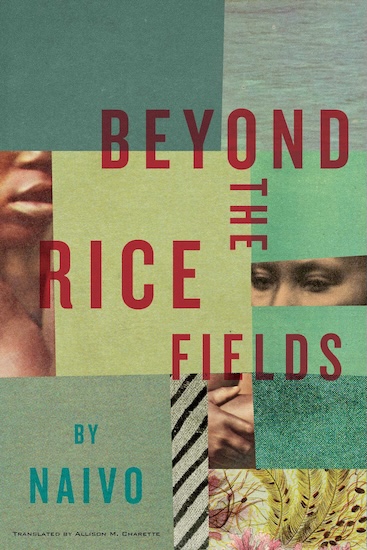
Beyond the Rice Fields
Nineteenth-century Madagascar is a kingdom on the brink of profound transformation. Tsito, a young boy enslaved after the destruction of his village, is taken to live in Sahasoa, where he develops a close bond with Fara, the daughter of his new master. As they grow older, their lives diverge: Tsito dreams of freedom, while Fara struggles with her family’s secrets and the restrictions placed upon her future. Their world is transformed by the arrival of British Christian missionaries and French industrialists, whose influence intensifies existing political and cultural tensions. As religious persecution and brutal royal purges spread across the kingdom, Tsito and Fara find themselves caught in a violent struggle over faith, power, and belonging. Through their intertwined stories, Naivo explores the legacy of slavery, the collision between Malagasy traditions and European influence, and the devastating consequences of political and religious intolerance.
Madagascar
2017