Historical Fiction
All countries
Afghanistan
Albania
Algeria
Angola
Antigua and Barbuda
Argentina
Armenia
Australia
Austria
Azerbaijan
Bangladesh
Barbados
Belize
Benin
Bosnia and Herzegovina
Brazil
Bulgaria
Burundi
Canada
Chile
China
Congo, Democratic Republic
Côte d’Ivoire (Ivory Coast)
Croatia
Cuba
Cyprus
Denmark
Djibouti
Dominica
Dominican Republic
Egypt
El Salvador
Ethiopia
Fiji
France
Georgia
Germany
Ghana
Greece
Guatemala
Hungary
Iceland
India
Indonesia
Iran
Iraq
Ireland
Italy
Jamaica
Japan
Kazakhstan
Kenya
Kuwait
Latvia
Lebanon
Libya
Madagascar
Malaysia
Mexico
Moldova
Morocco
Myanmar
Netherlands
Nigeria
North Korea
Oman
Pakistan
Palestine
Philippines
Poland
Portugal
Puerto Rico
Romania
Rwanda
Saudi Arabia
Senegal
Singapore
Slovenia
South Africa
South Korea
Spain
Sri Lanka
Sudan
Sweden
Switzerland
Syria
Taiwan
Tanzania
Thailand
Türkiye
Turkmenistan
Uganda
Ukraine
United Arab Emirates
United Kingdom
United States
Uruguay
Uzbekistan
Vietnam
Yemen
Zambia
Zimbabwe
1
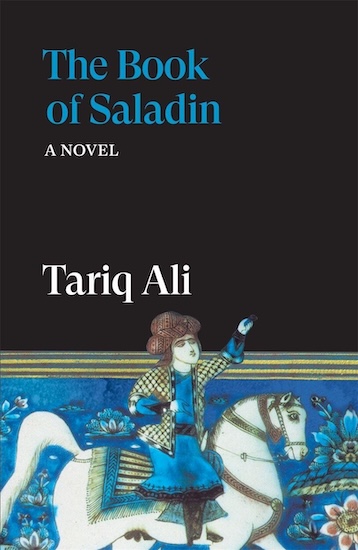
The Book of Saladin (The Islam Quintet)
Set in the twelfth century, The Book of Saladin reimagines the life of Salah al-Din, better known as Saladin, the Kurdish Muslim ruler who united Egypt and Syria and recaptured Jerusalem from the Crusaders in 1187.
The novel takes the form of Saladin’s fictional memoir, dictated to Ibn Yakub, a Jewish scribe tasked with recording the Sultan’s life and achievements. To create a fuller portrait of his subject, Ibn Yakub interviews Saladin’s wives, servants, and companions, revealing the private relationships and personal ambitions behind the public image of a celebrated military leader.
As Saladin rises to power and prepares to reclaim Jerusalem, the narrative explores the political rivalries, religious tensions, and fragile alliances that shape his world. Alongside military campaigns and diplomatic intrigue, the novel delves into the intimate lives of the royal household, including a passionate relationship between Saladin’s favoured wife, Jamila, and another woman in the harem, Halima.
Ali presents a complex portrait of medieval Muslim society, challenging simplified accounts of the Crusades and exploring the contradictions between political ideals and personal desires. Questions of faith, power, loyalty, sexuality, and cultural coexistence run throughout the story, connecting the struggles of the medieval world with conflicts that continue to resonate today.
Egypt
Palestine
Syria
2026
2
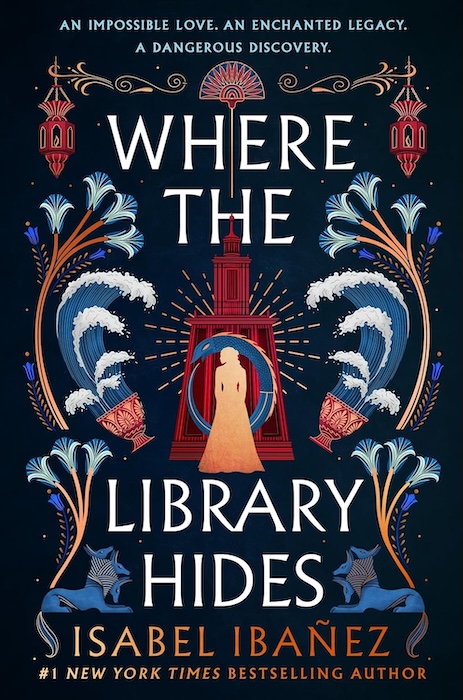
Where the Library Hides
In this sequel to What the River Knows, Inez Olivera continues to navigate the dangerous world she encountered in Egypt. Still reeling from betrayal and the murder of her cousin Elvira, Inez faces new threats involving her inheritance, her family’s secrets, and the mysterious forces surrounding her investigation. Her uncle presents her with an ultimatum that could determine her future: marriage to Whitford Hayes, a former British soldier whose true intentions remain uncertain. Although their relationship is marked by distrust and unresolved attraction, the two must confront the dangers surrounding them. Set against the atmosphere of nineteenth-century Egypt, the novel combines historical adventure, romance, and supernatural mystery. Inez must decide whom she can trust as she seeks answers and fights to retain control over her own destiny.
Egypt
2024
3
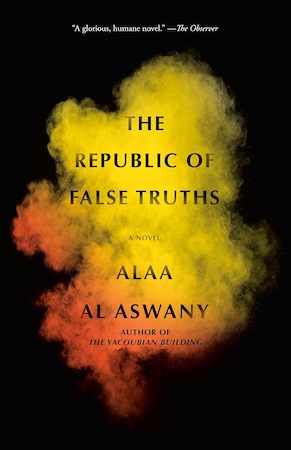
The Republic of False Truths
Cairo, 2011. After decades under a repressive regime, tensions are rising in the city streets. No one is out of reach of the revolution. There is General Alwany, a high-ranking member of the government's security agency, a pious man who loves his family yet won't hesitate to torture enemies of the state; Asma, a young teacher who chafes against the brazen corruption at her school; Ashraf, an out-of-work actor who is having an affair with his maid and who gets pulled into Tahrir Square through a chance encounter; Nourhan, a television personality who loyally defends those in power; and many more.
As these lives collide, a new generation finds a voice, love blossoms across class divides, and the revolution gains strength. Even the general finds himself at a crossroads as his own daughter joins the protests. Yet the old regime will not give up without a fight.
With an unforgettably vivid cast of characters and a heart-pounding narrative banned across much of the region, Alaa Al Aswany gives us a deeply human portrait of the Egyptian Revolution, and an impassioned retelling of his country's turbulent recent history.
Egypt
2022
4
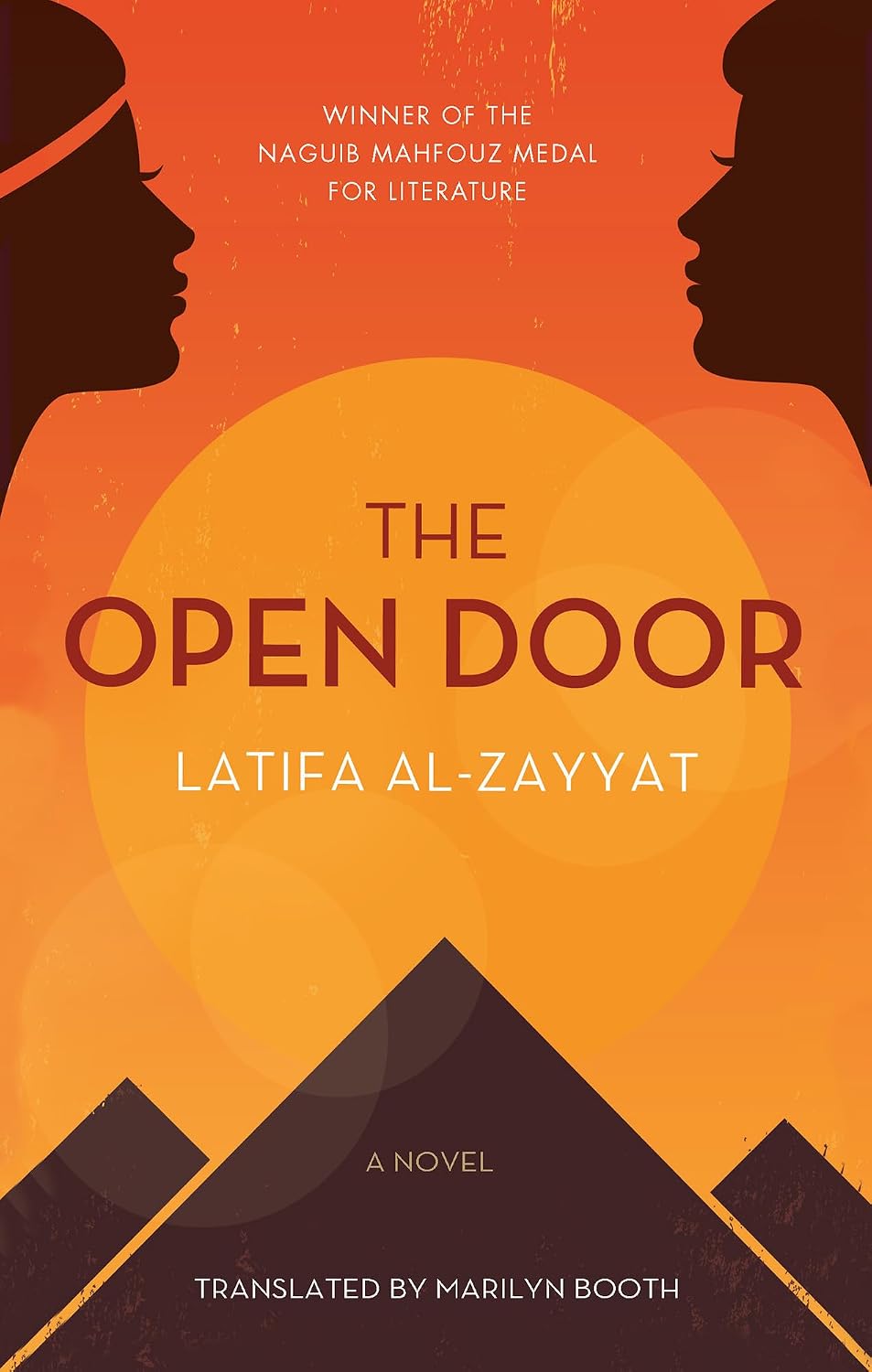
Open Door
Open Door is an autobiographical account by Latifa, an Afghan woman who describes her experiences growing up in Kabul under Taliban rule. Before the Taliban seized power, she enjoyed a relatively modern upbringing, attending school and imagining a future shaped by education and independence. As the regime tightened its control over everyday life, however, women and girls were increasingly deprived of basic freedoms, including the right to study, work, and move freely in public.
Through personal memories and reflections, Latifa recounts the fear, restrictions, and uncertainty that came to define life under the regime. Her story reveals how political oppression reaches into the most intimate aspects of family life, education, and personal identity. It also highlights the resilience of Afghan women who continued to seek knowledge and dignity despite severe constraints. Both a personal testimony and a broader reflection on human rights, Open Door explores the struggle for freedom in a society where women’s autonomy is systematically denied.
Egypt
2017
5
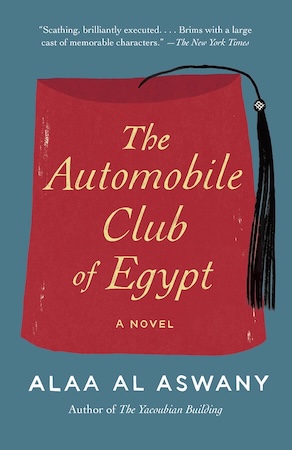
The Automobile Club of Egypt
When Egypt’s 2011 revolution brings millions into the streets demanding dignity, justice, and freedom, a diverse cast of Egyptians finds itself swept into a historic struggle. There are idealistic young activists, ambitious politicians, wealthy businessmen, religious conservatives, and ordinary citizens hoping for a better future. Yet as the revolution unfolds, the forces of money, military power, and religious authority begin to undermine its promises. Personal ambitions collide with political ideals, and those who once stood together discover how easily truth can be manipulated to preserve power. Through interconnected lives, Alaa Al Aswany captures the hope and disillusionment of a nation fighting to determine its future, exposing the mechanisms through which authoritarianism survives even when a revolution appears to have succeeded.
Egypt
2016
6
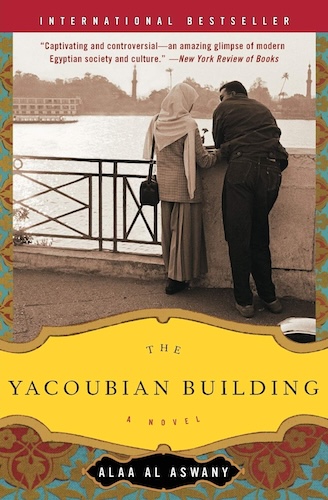
The Yacoubian Building
Behind the elegant façade of a once-grand Cairo apartment building lies a society fractured by corruption, poverty, and unfulfilled dreams. Its residents include a disillusioned journalist, a young man whose ambition to become a police officer is crushed by class prejudice, a wealthy businessman pursuing forbidden pleasures, and an ageing aristocrat haunted by a vanished past. As their lives intersect, the building becomes a microcosm of modern Egypt, exposing the hypocrisies of its ruling class and the quiet desperation of those struggling to escape their circumstances. Bold and provocative, The Yacoubian Building offers an unforgettable portrait of a nation caught between tradition, repression, and the desire for change.
Egypt
2006
7
The Map of Love
The Map of Love weaves together two love stories separated by a century, exploring the connections between personal relationships and political history in Egypt. In 1997, American journalist Isabel Parkman travels to Egypt with a mysterious collection of letters, diaries, and photographs belonging to her great-grandmother, Anna Winterbourne. The documents reveal Anna’s journey to Egypt in 1900, where she falls in love with Sharif al-Baroudi, an Egyptian nationalist and aristocrat. As Isabel and her Egyptian-American lover, Omar, investigate their ancestors’ story, they uncover a history shaped by British colonial rule, cultural misunderstandings, and the struggle for Egyptian independence. Moving between past and present, Ahdaf Soueif explores love across cultural boundaries, the legacy of colonialism, and the complexities of identity and belonging. The novel reveals how intimate relationships can illuminate the broader forces that shape nations and generations.
Egypt
1999