Fiction
All countries
Afghanistan
Albania
Antigua and Barbuda
Argentina
Armenia
Australia
Austria
Azerbaijan
Bahamas
Bahrain
Bangladesh
Barbados
Belarus
Belgium
Belize
Bhutan
Bosnia and Herzegovina
Brazil
Brunei
Bulgaria
Cabo Verde
Canada
Central African Republic
Chile
China
Congo, Democratic Republic
Croatia
Cuba
Czech Republic
Denmark
Djibouti
Dominica
Dominican Republic
Ecuador
Egypt
Fiji
Finland
France
Georgia
Germany
Greece
Hungary
Iceland
India
Indonesia
Iran
Iraq
Ireland
Italy
Jamaica
Japan
Jordan
Kazakhstan
Kenya
Kuwait
Kyrgyzstan
Lebanon
Libya
Malaysia
Mexico
Morocco
Netherlands
New Zealand
Nigeria
Norway
Oman
Pakistan
Palestine
Panama
Peru
Philippines
Poland
Portugal
Romania
Russia
Saudi Arabia
Senegal
Singapore
Slovenia
Somalia
South Korea
Spain
Sri Lanka
Sudan
Sweden
Switzerland
Syria
Taiwan
Tanzania
Thailand
Türkiye
Turkmenistan
Ukraine
United Arab Emirates
United Kingdom
United States
Uzbekistan
Yemen
Zambia
1
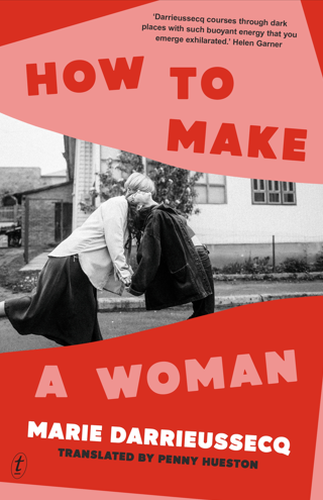
How to Make a Woman
How to Make a Woman follows Rose and Solange, two lifelong friends growing up in a small village in the French Basque Country during the 1980s. Although they share a childhood, their lives begin to diverge dramatically as they enter adulthood. Rose, thoughtful and conventional, moves to Bordeaux to study psychology while maintaining her relationship with her childhood sweetheart, Christian. Solange, rebellious and restless, becomes pregnant at fifteen and eventually leaves her familiar surroundings to pursue a career as an actress.
As their paths take them through Bordeaux, Paris, London, and Hollywood, the two women confront the expectations imposed on them by society, the demands of relationships, and the challenges of defining themselves on their own terms. Their friendship endures despite their differences, revealing how women can remain connected even as their lives move in opposite directions.
With wit and emotional precision, Darrieussecq explores female friendship, sexuality, motherhood, ambition, and the social forces that shape women’s identities. The novel offers a nuanced portrait of growing up and becoming oneself in a world that continually tries to define what a woman should be.
France
2026
2
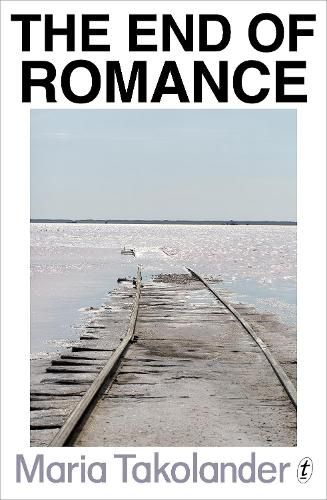
The End of Romance
Set in a dystopian future devastated by environmental collapse, The End of Romance follows a mother and her son as they struggle to survive in a world where nature has become hostile and human society is crumbling. Thorn-bearing plants dominate the landscape, toxic fogs make life increasingly dangerous, and communities face relentless hardship. While some people attempt to survive independently, others remain trapped within increasingly authoritarian systems.
The woman’s son attends a military school, like all boys his age. When he reaches sixteen, he will be sent to a distant planet known as the Promised Land to fight in a colonising war presented as humanity’s only hope for survival. Determined to protect her child, his mother begins questioning the world she has accepted. Her encounter with a mysterious young man who has somehow escaped conscription offers a possible route to sanctuary.
Combining dystopian fiction with unsettling social commentary, Takolander explores motherhood, sacrifice, environmental destruction, and the myths societies create to justify violence. The novel asks what it means to remain human when survival demands extraordinary moral compromises.
Australia
2026
3
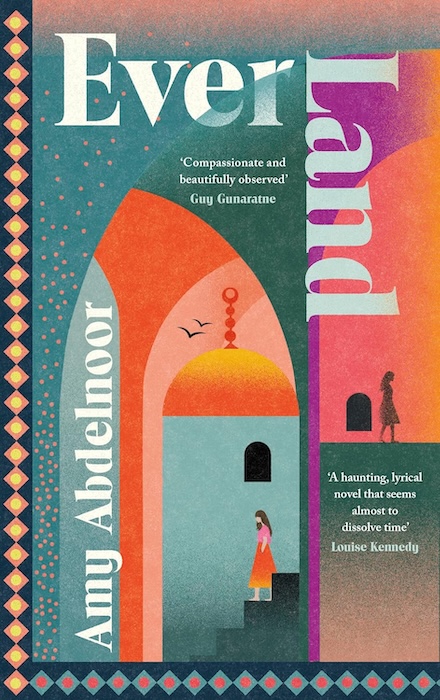
Ever Land
Set in Israel and Palestine in 2000, Ever Land follows two teenage girls whose lives become intertwined across time. Dinah, a Jewish teenager from London, moves to Israel with her family after the death of her beloved father. Struggling to adjust to her new surroundings, she feels increasingly disconnected from the life she has been forced to leave behind.
Meanwhile, Safa, a fourteen-year-old Palestinian girl killed during the Six-Day War in 1967, remains trapped in a mysterious limbo she calls the In-Between. Unable to move on without discovering what happened to her younger sister, Nur, Safa watches Dinah settle into the very house where she once lived. When an opportunity to find Nur emerges decades after Safa’s death, she realizes that Dinah may be the key to uncovering the truth.
Moving between past and present, Abdelnoor explores displacement, historical memory, belonging, and the human connections that cross political and cultural divisions. Through the contrasting experiences of two young women, the novel examines how history shapes identity and how confronting the past can open possibilities for understanding and compassion.
Palestine
2026
4

Rimini
Set during the summer of 1983, Rimini brings together the lives of seven people in the bustling seaside resort on Italy’s Adriatic coast. At the center is Marco Bauer, a young journalist sent from Rome to manage his newspaper’s summer edition. Hoping to establish his reputation, he becomes involved in a story that leads him into a world of political corruption, professional rivalries, and unexpected relationships.
Around him, other lives unfold: a German woman searches for her missing younger sister, two aspiring filmmakers struggle to finance their ambitions, a lonely musician seeks connection among the coastal nightclubs, and a struggling hotel owner faces financial ruin. Their stories intersect against a backdrop of crowded beaches, neon lights, discos, and the restless energy of Italy in the 1980s.
With vivid characters and a cinematic atmosphere, Tondelli transforms Rimini into a portrait of contemporary Italian society, exposing the tensions beneath its image of carefree summer pleasures. The novel explores ambition, desire, loneliness, and the pursuit of happiness in a world increasingly shaped by money, spectacle, and fleeting connections.
Italy
2026
5
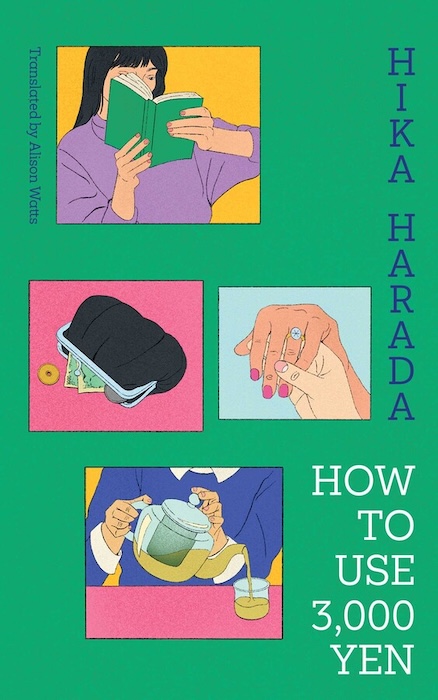
How To Use 3,000 Yen
How to Use 3,000 Yen follows three generations of women in the Mikuriya family as they navigate the financial and emotional challenges of everyday life. At the heart of the story is Miho, a young woman beginning her independent life and learning to manage her money. Her experiences connect with those of her older sister, Maho, their mother, Tomoko, and their grandmother, Kotoko, each of whom faces different questions about financial security, family responsibilities, and the future.
For the women of the Mikuriya family, money is more than a practical concern: it reflects their hopes, fears, relationships, and ideas about happiness. As they encounter unexpected expenses and major life changes, each must reconsider what it means to save wisely and live well.
With warmth and gentle humor, Hika Harada explores the relationship between money and personal freedom, showing how financial decisions shape the lives of women across generations. The novel offers a thoughtful portrait of contemporary Japanese society, where economic pressures intersect with family expectations and the desire for independence.
Japan
2026
6
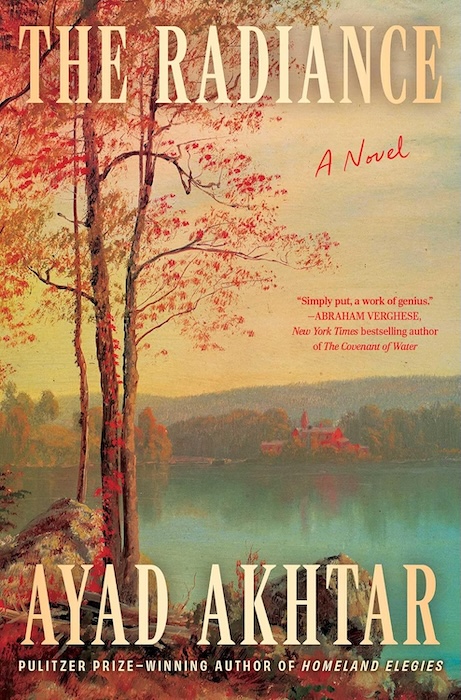
The Radiance
The Radiance is a literary novel that explores spiritual awakening, personal identity, and the search for meaning in a fractured contemporary world. The story follows a writer whose life is transformed by a near-fatal hit-and-run accident on a country road. As he struggles to understand what happened, he experiences an unsettling spiritual awakening that blurs the boundary between revelation and madness.
Drawn toward a brilliant colleague at a university, the narrator becomes entangled in an intense relationship and a scandal that threatens to destroy them both. As the investigation into his accident unfolds, buried family secrets emerge, forcing him to confront questions about memory, faith, desire, and his own understanding of reality.
Moving between rural America and Europe, and exploring the intersections of Islam and Christianity, Akhtar examines the tensions between personal belief and public life. Blending psychological suspense with philosophical reflection, the novel asks whether moments of profound disruption can reveal something meaningful about existence, even when the truth remains uncertain.
United States
2026
7
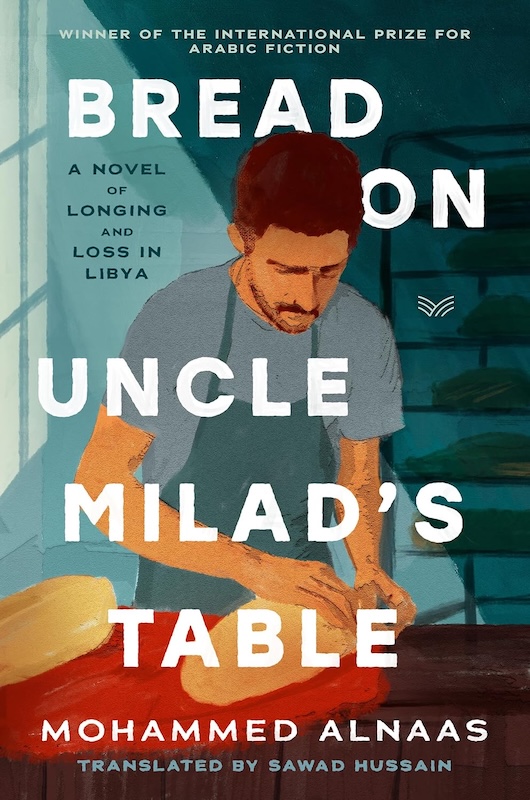
Bread on Uncle Milad's Table
Bread on Uncle Milad’s Table follows Milad al-Usta, a sensitive young man growing up in a Libyan village where masculinity is defined by rigid social expectations. Raised in a family of bakers, Milad learns to love the craft of making bread, but his father continually reminds him that he must become a man according to society’s standards. Despite his efforts to conform, Milad struggles to embody the toughness and authority expected of him.
After marrying his childhood sweetheart, Zainab, Milad finally embraces a different way of living. He takes responsibility for the household and domestic chores while Zainab becomes the family’s breadwinner. Although the arrangement brings them happiness, their unconventional roles attract ridicule and disapproval from the community.
Set against the social and political realities of modern Libya, the novel explores masculinity, gender roles, love, and the pressure to conform. Through Milad’s story, Alnaas questions the social conventions that determine how men and women should live, celebrating the individual’s struggle to define a meaningful life on their own terms. The novel won the 2022 International Prize for Arabic Fiction.
Libya
2026
8
We Were Forbidden
We Were Forbidden is a collection of three previously untranslated stories exploring defiance, oppression, and the struggle for personal freedom. In The Ardennes Forest, a woman and her fellow survivors wander through a mysterious woodland after an unexplained war, forbidden from leaving its boundaries or stopping their endless march. In The Outcast, a teenage girl attending a French school in 1940s Casablanca is punished for questioning the beliefs and political ideas she is expected to accept. In The Broom Cupboard, a young woman trapped in a loveless marriage begins to question the expectations governing her intimate life and imagine alternatives to her circumstances.
Although the stories unfold in very different settings, each portrays a woman confronting rules imposed by external authorities or social conventions. Through unsettling scenarios, psychological insight, and understated prose, Harpman examines how obedience becomes ingrained and how individuals begin to resist it. The collection explores the tension between conformity and independence, revealing the quiet but powerful ways people challenge the boundaries placed around their lives.
Belgium
2026
9
Ghost-Eye
In Ghost-Eye, Amitav Ghosh weaves together reincarnation, family secrets, and environmental concerns across two generations. In 1969 Calcutta, three-year-old Varsha Gupta begins describing memories of a previous life, including a different mother and a home beside a river. Her unusual claims lead her family to Dr. Shoma Bose, a psychiatrist investigating cases of apparent reincarnation. Decades later, Varsha’s case file attracts the attention of environmental activists, drawing Shoma’s nephew Dinu into a search that brings buried memories and unexpected connections to light. Moving between India and contemporary Brooklyn, the novel blends magical realism, mystery, and ecological fiction to explore the relationship between human identity, memory, and the natural world. It raises questions about how lives are interconnected and how humanity’s relationship with the environment shapes both personal histories and collective futures.
India
2026
10
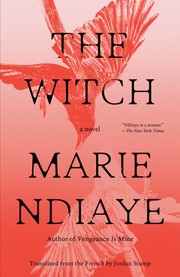
The Witch
In The Witch, Marie NDiaye tells the story of Lucie, a woman who discovers that she possesses magical powers inherited from her mother. Living in a seemingly ordinary French suburb, Lucie struggles to pass her knowledge of witchcraft on to her twin daughters while navigating an unhappy marriage and an increasingly unstable family life. As her daughters begin to develop their own powers and assert their independence, Lucie’s sense of control over her family and identity begins to unravel. Blending dark humor, psychological tension, and elements of the supernatural, NDiaye explores motherhood, female power, and the complexities of family relationships. The novel offers a subtle, unsettling examination of the desire to control others and the difficulty of understanding those closest to us.
France
2026
11
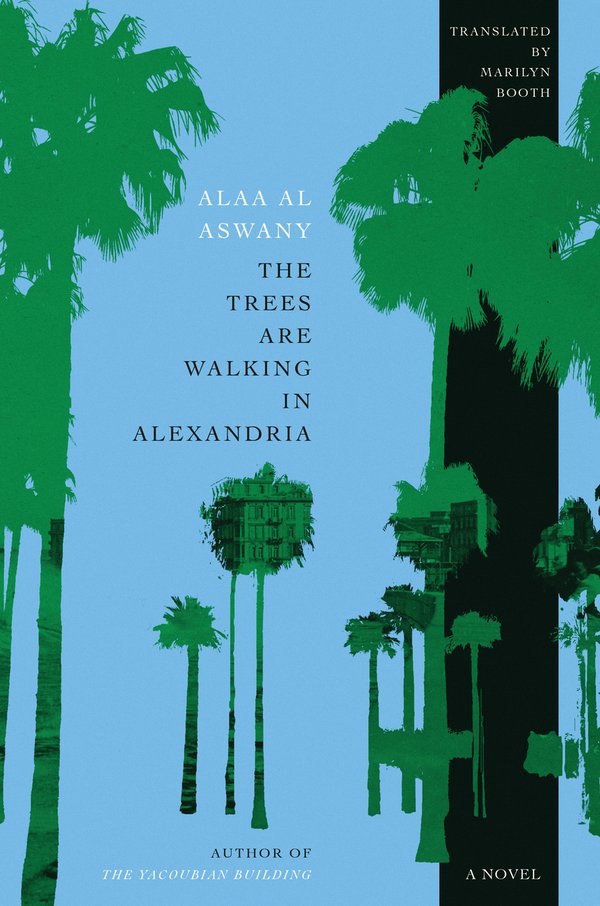
The Trees Are Walking in Alexandria
Alexandria, 1964. Under President Gamal Abdel Nasser, Egypt is undergoing a political transformation that threatens the city’s cosmopolitan spirit. At the elegant waterfront restaurant Artinos, a diverse circle of friends gathers each evening to discuss art, love, justice, and the future of their country. Among them are Lyda, the restaurant’s owner; Carlo, a charismatic Italian bartender; Anas, a painter; Abbas, a liberal lawyer; and Chantal, the owner of Alexandria’s most popular French bookshop. United by their affection for the city they call home, they struggle to reconcile their ideals with a regime that increasingly demands obedience and suppresses individual freedoms. As businesses are nationalised, suspicions deepen, and political pressure intensifies, their friendships and convictions face an unprecedented test. Through the intertwined lives of these characters, Alaa Al Aswany captures the twilight of a multicultural world, exploring how authoritarianism transforms society and how ordinary people navigate the painful collision between personal loyalties and political power.
Egypt
2027
12
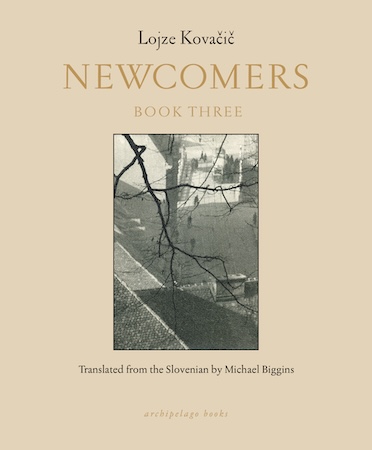
Newcomers: Book Three
The war is ending, but for Bubi and his family, peace brings a new set of uncertainties. In Ljubljana, the arrival of communist rule transforms everyday life, leaving people to navigate shifting loyalties, political suspicion, poverty, and the demands of a society being rebuilt from the ground up. Bubi fears that his family’s German-speaking background will make them targets under the new regime. As he witnesses show trials, homelessness, and the upheaval of postwar life, he begins to question the ideals shaping the world around him. At the same time, his interest in art and literature deepens, offering him a way to understand a society caught between collective ambition and individual freedom. In this final volume of his autobiographical masterpiece, Lojze Kovačič captures the contradictions of a country emerging from war, where hope and oppression coexist and the search for belonging remains unresolved.
Slovenia
2027