Fiction
All countries
Afghanistan
Albania
Antigua and Barbuda
Argentina
Armenia
Australia
Austria
Azerbaijan
Bahamas
Bahrain
Bangladesh
Barbados
Belarus
Belgium
Belize
Bhutan
Bosnia and Herzegovina
Brazil
Brunei
Bulgaria
Cabo Verde
Canada
Central African Republic
Chile
China
Congo, Democratic Republic
Croatia
Cuba
Czech Republic
Denmark
Djibouti
Dominica
Dominican Republic
Ecuador
Egypt
Fiji
Finland
France
Georgia
Germany
Greece
Hungary
Iceland
India
Indonesia
Iran
Iraq
Ireland
Italy
Jamaica
Japan
Jordan
Kazakhstan
Kenya
Kuwait
Kyrgyzstan
Lebanon
Libya
Malaysia
Mexico
Morocco
Netherlands
New Zealand
Nigeria
Norway
Oman
Pakistan
Palestine
Panama
Peru
Philippines
Poland
Portugal
Romania
Russia
Saudi Arabia
Senegal
Singapore
Slovenia
Somalia
South Korea
Spain
Sri Lanka
Sudan
Sweden
Switzerland
Syria
Taiwan
Tanzania
Thailand
Türkiye
Turkmenistan
Ukraine
United Arab Emirates
United Kingdom
United States
Uzbekistan
Yemen
Zambia
1
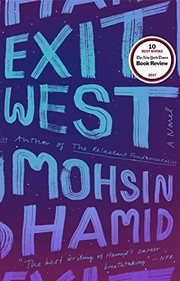
Exit West: A Novel
Exit West follows Nadia and Saeed, two young people who fall in love in an unnamed country descending into civil war. As violence spreads through their city, everyday life becomes increasingly dangerous, and the couple begins searching for a way to escape. They hear rumours of mysterious doors that can transport people to distant countries, offering a possible route to safety. After passing through one of these doors, Nadia and Saeed find themselves navigating the uncertainties of refugee life in unfamiliar places, including Greece, London, and California. Their relationship changes as they adapt to new communities and confront the emotional costs of displacement. Blending realism with speculative fiction, Hamid explores migration, borders, belonging, and the resilience required to build a future after leaving home. The novel also asks how movement across borders transforms individuals and societies.
Pakistan
2017
2
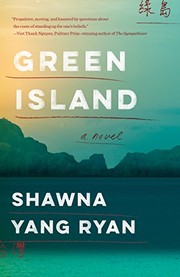
Green Island
Green Island follows several generations of a Taiwanese family whose lives are transformed by political repression and the legacy of the February 28 Incident of 1947. The story begins when Dr. Tsai, a young physician, is arrested by Chinese Nationalist authorities after the uprising in Taiwan. His eventual return to his family does not restore their former life; instead, fear, suspicion, and silence become part of their everyday existence. Years later, his youngest daughter grows up carrying the emotional consequences of her father’s experiences and eventually confronts difficult choices of her own. Moving between Taiwan and the United States, the novel examines how political violence enters private life and shapes family relationships across generations. It explores survival, complicity, memory, and the moral compromises people make to protect those they love.
Taiwan
2017
3
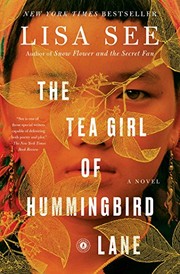
The Tea Girl of Hummingbird Lane
Set in the mountains of Yunnan, China, The Tea Girl of Hummingbird Lane follows Li-yan, a young woman from the Akha ethnic community whose life is shaped by centuries-old traditions surrounding tea cultivation, marriage, and family. When Li-yan gives birth to a daughter outside marriage, she makes the painful decision to leave her baby near an orphanage rather than follow a tradition that threatens the child’s life. The girl, Haley, is adopted by an American family and grows up far from her biological roots. As the years pass, both mother and daughter struggle with questions about their identities and origins. Connected by their shared heritage and the ancient tea trade, their stories explore motherhood, cultural change, adoption, and the enduring bonds between generations.
China
2017
4
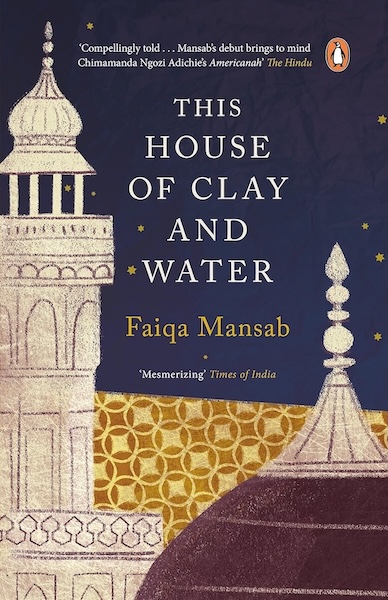
This House of Clay and Water
This House of Clay and Water follows two women whose lives intersect in contemporary Lahore, where social expectations, religious traditions, and personal desires shape the choices available to them. Nida is the wife of a police officer, living a life of privilege that conceals profound loneliness and dissatisfaction. When she encounters Bhanggi, a transgender woman living on the margins of society, an unexpected friendship develops between them. Their connection challenges the boundaries imposed by class, gender, and respectability.
Through their intertwined stories, Faiqa Mansab explores the search for belonging in a society where people who defy conventional expectations often face exclusion and violence. The novel also follows Sasha, a young man whose own emotional struggles become entangled with the women’s lives, adding further complexity to the story’s exploration of love and identity. Against the backdrop of Lahore’s vibrant yet deeply divided social landscape, the novel examines faith, desire, gender, and the human need for acceptance. It asks whether genuine connection can survive in a world determined to categorise people and dictate how they should live.
Pakistan
2017
5
Four Minutes
Four Minutes explores the lives of people who exist on the margins of society in post-communist Bulgaria, focusing on loneliness, trauma, and the struggle to be seen and understood. At its centre is Leah, a woman who grew up in an orphanage marked by neglect and abuse. Now in her thirties, she continues to grapple with the wounds of her childhood while trying to build a meaningful life. When she volunteers at an orphanage, she forms a bond with Dara, a nine-year-old girl who has stopped speaking following her father’s murder. Leah hopes to adopt her, but prejudice and bureaucracy stand in her way.
Interwoven with Leah’s story are nine shorter portraits of other marginalised people, including Roma women and children, refugees, and survivors of abuse. Each section is designed to be read in approximately four minutes, reflecting the idea that a brief moment of genuine attention can foster empathy. Through these interconnected stories, Nataliya Deleva examines abandonment, exclusion, and the human need for connection, asking what it takes to truly see another person.
Bulgaria
2017
6

A Girl Returned
A Girl Returned follows a thirteen-year-old girl who is suddenly sent back to the family she barely remembers after being raised by a couple she believed were her parents. Without explanation, she finds herself living with her biological family in a crowded apartment in a poor rural community in southern Italy. Surrounded by unfamiliar siblings and a mother who feels like a stranger, she struggles to understand why she was given away and why she has now been returned.
As she adjusts to her new circumstances, the girl develops a complicated relationship with her younger sister, Adriana, whose boldness and resourcefulness offer both companionship and conflict. Through the protagonist’s perspective, Donatella Di Pietrantonio explores the emotional consequences of abandonment, the divisions between social classes, and the meaning of motherhood and belonging. Written in a restrained, powerful style, the novel captures the vulnerability of adolescence and the lasting impact of secrets within families. It asks whether family is defined by blood, love, or the people who choose to stay.
Italy
2017
7
We Were the Lucky Ones
We Were the Lucky Ones is a historical novel inspired by the true story of the Kurc family, a Polish Jewish family separated by the Second World War. When Nazi Germany invades Poland, the family members are scattered across continents, each facing different dangers as they struggle to survive the Holocaust. From forced labor camps and occupied cities to resistance movements and refugee journeys, their experiences reveal the extraordinary lengths people will go to protect themselves and reunite with those they love. Despite persecution, loss, and uncertainty, the Kurcs maintain hope that they will one day find one another again. Drawing on her own family history, Georgia Hunter explores resilience, sacrifice, and the enduring bonds of family in the face of unimaginable adversity. The novel offers a moving portrait of survival and the determination to preserve love and humanity during one of history’s darkest periods.
Poland
2017
8
That Other Me
In mid-1990s Dubai, the secrets of a wealthy Emirati family threaten to destroy the lives of those bound by its name. Majed Naseemy, a powerful businessman, has built his reputation on wealth and respectability while concealing betrayals that haunt him. In Cairo, his niece Mariam pursues an education and dreams of escaping his control, until an unexpected romance threatens to derail her plans. Meanwhile, Dalal, Majed’s rebellious daughter from a secret second marriage, dreams of becoming a singer—a career that could bring her fame but disgrace her family in the eyes of society. As both young women challenge the authority imposed upon them, buried resentments and family secrets begin to surface. Moving between the glittering worlds of Dubai and Cairo, That Other Me explores the tensions between tradition and independence, the price of social respectability, and the courage it takes for women to claim ownership of their lives.
United Arab Emirates
2016
9

The Labyrinth of the Spirits
In post-war Barcelona, where the shadows of Francisco Franco’s dictatorship linger over everyday life, a young investigator named Alicia Gris is drawn into a dangerous mystery involving one of Spain’s most powerful political figures. Working for a secretive government agency, Alicia is tasked with locating a missing minister, but what begins as a straightforward investigation soon reveals a far-reaching conspiracy involving political corruption, kidnapping, and murder.
As Alicia follows the trail of clues, her investigation brings her into contact with the Sempere family, whose lives have been intertwined with the mysteries of the Cemetery of Forgotten Books for decades. Daniel Sempere, still haunted by questions surrounding his mother’s death, finds himself drawn into a final confrontation with the secrets that have shaped his family. Together, Alicia and Daniel uncover a disturbing history of violence, betrayal, and buried truths.
The fourth and final novel in Zafón’s Cemetery of Forgotten Books series, The Labyrinth of the Spirits brings together characters and mysteries from the previous books in an intricate literary puzzle. Combining Gothic atmosphere, historical fiction, suspense, and a profound love of books, Zafón creates a sweeping portrait of a city haunted by its past. At its heart, the novel explores how literature preserves memory, how authoritarian power attempts to control truth, and how courage and friendship can help people emerge from the darkest chapters of history.
Spain
2016
10
Newcomers: Book One
The first volume of this three-part autobiographical series begins in 1938 with the expulsion of the Kovačič family from their home in Switzerland, eventually leading to their settlement in the father’s home country of Slovenia. Before leaving their home, the ten-year-old son of the family imagines his father’s country as one of beauty and fairytales, but as they make their way to the land of their exile, the family realizes that any efforts to make this place a home will be in vain. Confronted by misery, hunger, and hostility, the young boy refuses to learn Slovenian and falls silent, his surroundings becoming a social, cultural, and mental abyss.
Narrated by the boy with uncanny naiveté, the novel follows his family’s journey in a fragmented mosaic of memories. Some are innocent and tender, while others are miserable and ruthless, resulting in a profound and heart-wrenching description of a period torn apart by conflict, reflected in the author’s powerful and innovative command of language.
Slovenia
2016
11
The Tale of Aypi
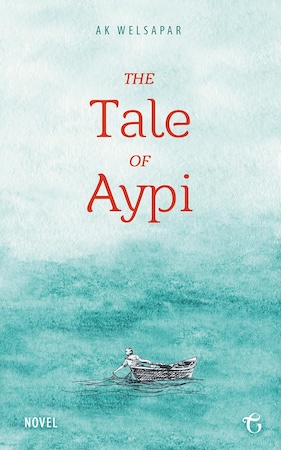
On the shores of the Caspian Sea, in a small fishing village in Soviet Turkmenistan, the inhabitants face the threat of losing their ancestral home. The authorities have ordered the community to relocate so that their land can be redeveloped, while a ban on fishing threatens the villagers’ traditional way of life. Most residents reluctantly accept their fate, but Araz, a stubborn and principled fisherman, refuses to surrender the place where his family has lived for generations. As he challenges the authorities, his resistance exposes the fear, conformity, and quiet compromises that allow injustice to flourish. Woven into the contemporary struggle is the haunting legend of Aypi, a beautiful young woman who was unjustly executed centuries earlier. Her restless spirit returns to seek vengeance, linking the village’s buried past with its present crisis. Blending political allegory, folklore, and supernatural elements, Ak Welsapar’s novel explores freedom, cultural identity, and humanity’s enduring connection to the land. It is also a powerful reflection on the consequences of authoritarian rule and the courage required to resist it.
Turkmenistan
2016
12
Here Comes the Sun
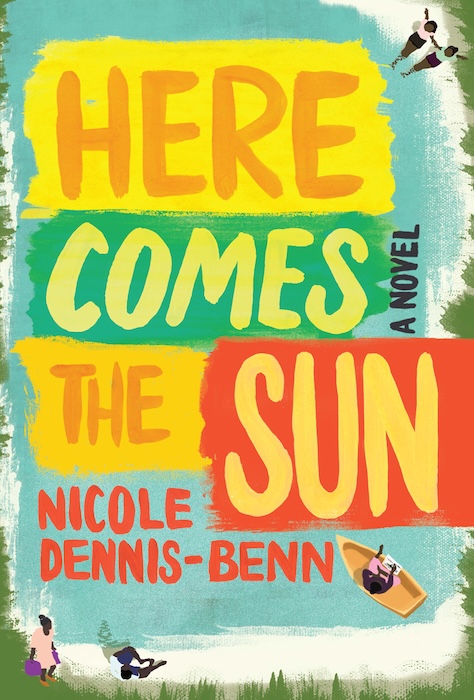
Set in Montego Bay, Jamaica, Here Comes the Sun follows three women from the same family as they struggle to survive in a society shaped by poverty, social inequality, and the pressures of tourism. Margot works at a luxury resort and secretly takes on sex work to pay for her younger sister Thandi’s education, hoping to give her a future beyond the hardships they have known. Their mother, Delores, is equally determined to secure the family’s financial stability, while Thandi struggles with expectations about beauty, class, and success.
When plans for a new hotel threaten their community, the women must confront difficult truths about their desires, relationships, and sacrifices. Beneath Jamaica’s image as a tropical paradise, Dennis-Benn reveals a more complicated reality of exploitation, colourism, homophobia, and the lingering effects of colonialism. The novel is a powerful exploration of identity, belonging, and the price of pursuing a better life.
Jamaica
2016