Fiction
All countries
Afghanistan
Albania
Antigua and Barbuda
Argentina
Armenia
Australia
Austria
Azerbaijan
Bahamas
Bahrain
Bangladesh
Barbados
Belarus
Belgium
Belize
Bhutan
Bosnia and Herzegovina
Brazil
Brunei
Bulgaria
Cabo Verde
Canada
Central African Republic
Chile
China
Congo, Democratic Republic
Croatia
Cuba
Czech Republic
Denmark
Djibouti
Dominica
Dominican Republic
Ecuador
Egypt
Fiji
Finland
France
Georgia
Germany
Greece
Hungary
Iceland
India
Indonesia
Iran
Iraq
Ireland
Italy
Jamaica
Japan
Jordan
Kazakhstan
Kenya
Kuwait
Kyrgyzstan
Lebanon
Libya
Malaysia
Mexico
Morocco
Netherlands
New Zealand
Nigeria
Norway
Oman
Pakistan
Palestine
Panama
Peru
Philippines
Poland
Portugal
Romania
Russia
Saudi Arabia
Senegal
Singapore
Slovenia
Somalia
South Korea
Spain
Sri Lanka
Sudan
Sweden
Switzerland
Syria
Taiwan
Tanzania
Thailand
Türkiye
Turkmenistan
Ukraine
United Arab Emirates
United Kingdom
United States
Uzbekistan
Yemen
Zambia
1
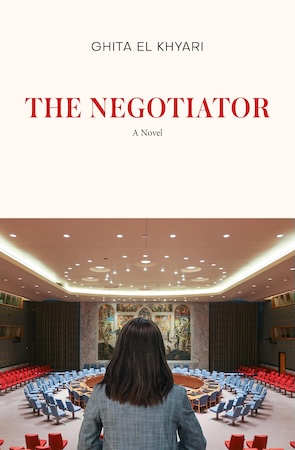
The Negotiator: A Woman at the Heart of the UN
Alya, a 45-year-old United Nations diplomat, is finally given the assignment she has spent years working towards: leading peace negotiations on Syria from Geneva. Experienced, determined, and deeply committed to diplomacy, she knows that success depends on patience, careful preparation, and the ability to find common ground between opposing sides. But when she meets Alexei, her Russian counterpart, professional collaboration becomes entangled with personal feelings. Then Russia invades Ukraine, transforming the geopolitical landscape and threatening everything Alya has built, both professionally and privately. As diplomatic tensions intensify, she must confront the contradictions between her ideals and the political realities of the institution she serves. Drawing on the author’s experience inside the United Nations, this novel explores the hidden complexities of international diplomacy, the compromises required to pursue peace, and the personal sacrifices women make while navigating positions of power. It is also an intimate portrait of a woman reconsidering her identity and ambitions at midlife, asking what remains of the self when professional responsibilities and personal desires collide.
Morocco
2026
2
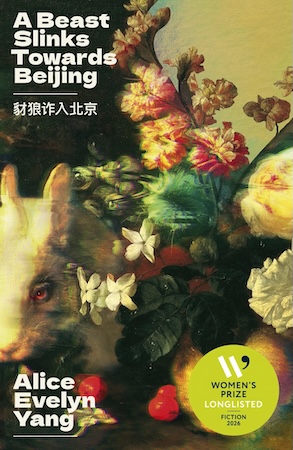
A Beast Slinks Towards Beijing
Spanning three generations and moving between Japanese-occupied Manchuria, the Cultural Revolution, and contemporary America, A Beast Slinks Towards Beijing is a dark, magical-realist family saga about inherited trauma, historical violence, and the stories families carry across generations.
Twenty-five-year-old Qianze has not seen her father, Weihong, since he abandoned her on the night of her fourteenth birthday. Eleven years later, he reappears at her childhood home in Virginia, aged beyond recognition and struggling with dementia and alcoholism. Haunted by a half-forgotten prophecy, he begins recounting his past, including his violent experiences as a Red Guard during the Cultural Revolution and the hardships endured by his mother under Japanese occupation. As Qianze listens, she discovers a family history far more disturbing than she imagined. Strange visions begin to invade her everyday life: fox spirits follow her through the city, and a terrifying mythical creature stalks her nightmares.
Blending Chinese and Japanese folklore with historical fiction and supernatural horror, Yang explores how colonialism, political violence, and family secrets shape successive generations. The novel asks whether understanding the past can offer a path toward forgiveness—or whether some histories continue to haunt the living.
China
2026
3

Electric Shamans at the Festival of the Sun
Set in a near-future Ecuador, Electric Shamans at the Festival of the Sun follows Noa and her best friend, Nicole, as they leave the violence and decay of Guayaquil behind to attend Solar Noise, an experimental music festival held in the remote Andean highlands near an active volcano. Amid psychedelic music, ritualistic dances, and a gathering of young people searching for transcendence, the festival becomes a space where the boundaries between the physical and spiritual worlds begin to dissolve.
Noa has a personal reason for making the journey: she hopes to find her father, who abandoned her when she was a child. But after arriving at the festival, she begins experiencing strange transformations, speaking in a voice that seems not to belong to her. As Nicole tries to understand what is happening to her friend, both young women confront their histories of abandonment, violence, and emotional pain.
Blending speculative fiction, psychological horror, Andean mythology, and experimental music culture, Ojeda explores the search for belonging and the relationship between trauma, identity, and transcendence. The novel’s hallucinatory atmosphere evokes a world where ancient spiritual traditions collide with futuristic subcultures, offering a haunting meditation on the desire to escape the past and imagine a different future.
Ecuador
2026
4
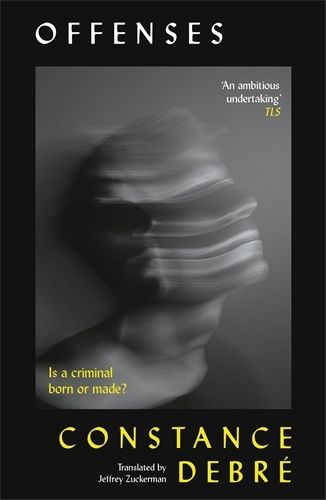
Offenses
Based on a real murder case, Offenses examines the relationship between crime, poverty, and justice in contemporary France. In a housing estate outside Paris, a nineteen-year-old man stabs his elderly neighbour ten times to settle a €450 drug debt. The crime appears senseless in its brutality, but Constance Debré looks beyond the immediate act to examine the social conditions surrounding both the perpetrator and his victim.
Drawing on her experience as a criminal defence lawyer, Debré explores the boundaries between individual responsibility and collective failure. The young man’s circumstances, the victim’s vulnerability, and the environment in which they live become part of a wider portrait of a society divided by class and opportunity. Written in Debré’s characteristic spare, unsentimental prose, the novella questions whether justice can truly be separated from the inequalities that shape people’s lives. Rather than offering easy explanations or moral resolutions, it confronts readers with uncomfortable questions about guilt, punishment, and the possibility of escaping the circumstances into which one is born.
France
2026
5
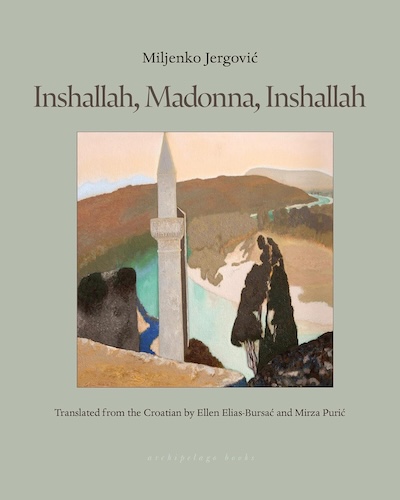
Inshallah, Madonna, Inshallah
In Inshallah, Madonna, Inshallah, Croatian-Bosnian writer Miljenko Jergović draws on the rich oral traditions, folk songs, and legends of Bosnia to create a collection of nineteen stories in which ordinary lives take on the dimensions of myth. Inspired by the music that filled the streets, cafés, and homes of Sarajevo during the author’s childhood, the stories imagine the extraordinary events and forgotten histories that might lie behind traditional songs.
Jergović’s characters inhabit a world where miracles seem possible, fate shapes human destinies, and misfortune can transform individuals into enduring legends. Christians and Muslims share a landscape marked by centuries of cultural exchange, imperial domination, and conflict. Their stories are sometimes comic, sometimes brutal, but always deeply connected to the collective memory of the region.
Moving between folklore, historical imagination, and intimate portraits of human experience, Jergović explores how communities preserve their identities through storytelling. The collection offers a vivid literary portrait of the Balkans, revealing how individual lives become part of a larger cultural inheritance that survives across generations.
Bosnia and Herzegovina
2026
6
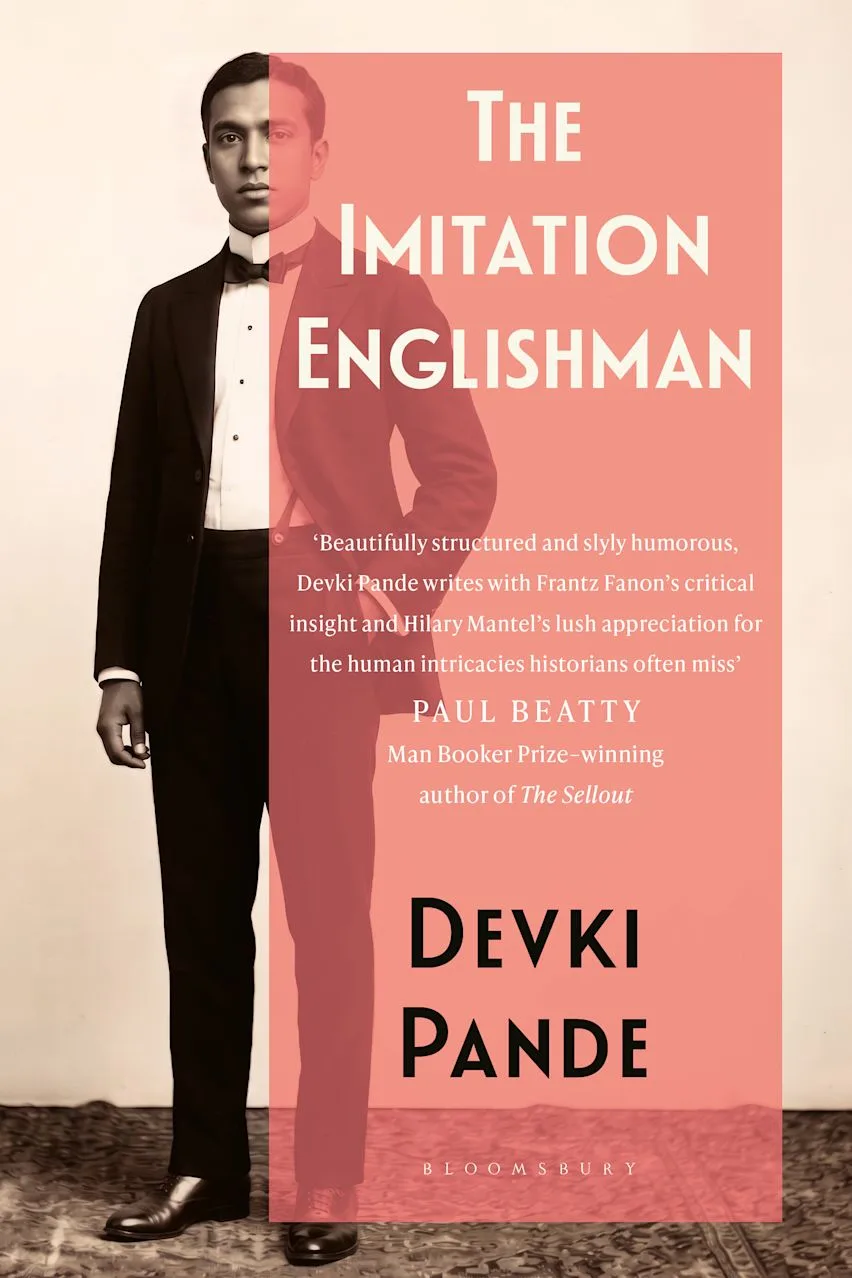
The Imitation Englishman
In 1916, as the First World War reshapes the world, Madhusudan Chandra Joshi, a young Indian clerk from the Himalayan town of Almora, travels to Heidelberg to study law and secure a better future. His plans take an unexpected turn when he meets Amir Farooqui, a mysterious revolutionary who draws him into the Hindu–German Conspiracy, an international effort by Indian nationalists in exile to overthrow British colonial rule. As the war makes Germany increasingly dangerous for Indian students and activists, the two men embark on separate journeys: Madhusudan heads to London to continue his education, while Amir travels to San Francisco to reconnect with fellow revolutionaries. In London, Madhusudan encounters the racism and inequalities underpinning the British Empire, forcing him to question his ambitions and his understanding of identity. Moving between India, Europe, and America, Devki Pande’s historical novel explores the complicated relationship between colonialism, education, belonging, and resistance. Inspired by the author’s own family history, it is a story of political awakening, personal transformation, and the search for freedom in an unequal world.
India
2026
7
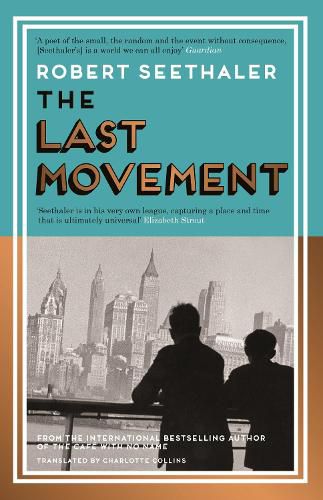
The Last Movement
In the spring of 1911, the celebrated composer and conductor Gustav Mahler boards a ship in New York, beginning his final journey back to Europe. Gravely ill and aware that his life is drawing to a close, he spends much of the voyage wrapped in blankets on deck, watching the vast ocean and revisiting memories of the past. His thoughts move between the musical triumphs that made him famous, the summers he spent in the mountains, the devastating death of his young daughter Maria, and his complicated relationship with his wife, Alma. Once the great love of his life, Alma has fallen for the young architect Walter Gropius, leaving Mahler struggling with jealousy, regret, and the painful realisation that love cannot be commanded. Through fleeting memories and quiet moments of reflection, Robert Seethaler creates an intimate portrait of a brilliant artist confronting mortality. Poignant and restrained, the novel meditates on love, loss, artistic ambition, and what remains when a life approaches its final note.
Austria
2026
8
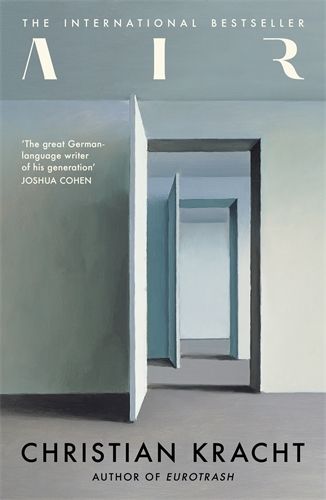
Air
In a remote Scottish town on the Orkney Islands, Paul, a Swiss interior designer, lives a quiet, carefully ordered life devoted to aesthetics and precision. His routine is disrupted when he receives an unusual commission from a prestigious design magazine: he must travel to Norway to paint a vast data centre in the perfect shade of white. But the journey takes an unexpected turn, and Paul mysteriously disappears from his familiar reality. Elsewhere, in a strange, myth-haunted world, a young girl named Ildr discovers an injured stranger whom she initially mistakes for an animal. As she helps him recover, the two embark on a dangerous journey through an unfamiliar landscape, pursued by the soldiers of a ruthless duke. Blurring the boundaries between fantasy, reality, and dreams, Christian Kracht’s enigmatic novel explores the fragility of modern civilisation and the possibility of escaping its constraints. With precise, atmospheric prose, Air invites readers into a world where time, identity, and existence itself become uncertain.
Switzerland
2026
9
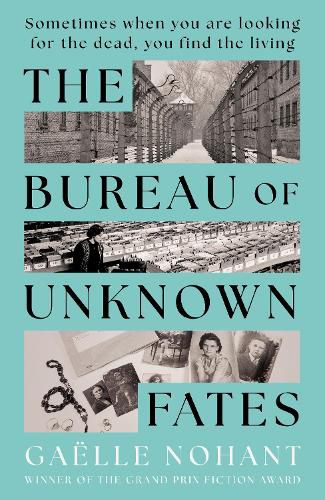
The Bureau of Unknown Fates
In the aftermath of the Second World War, the Allies establish the International Tracing Service in Bad Arolsen, Germany, to investigate Nazi crimes and help families discover the fates of millions of missing and displaced people. In 1990, Irène, a young Frenchwoman who has moved to Germany after marrying a German man, begins working at the institution. Meticulous and deeply committed to her work, she gradually becomes absorbed in the stories preserved within its archives. Years later, she is entrusted with returning thousands of personal belongings confiscated from concentration camp prisoners. A cloth doll, a medallion, and an embroidered handkerchief become clues to the identities of their former owners and the families they left behind. As Irène follows these traces across Europe, she uncovers stories of persecution, complicity, survival, and loss, while confronting the troubling silences surrounding Germany’s wartime past. Weaving together individual lives and collective memory, Gaëlle Nohant’s moving historical novel explores the enduring consequences of the Holocaust and the power of remembrance to restore dignity to those history has nearly erased.
France
2026
10
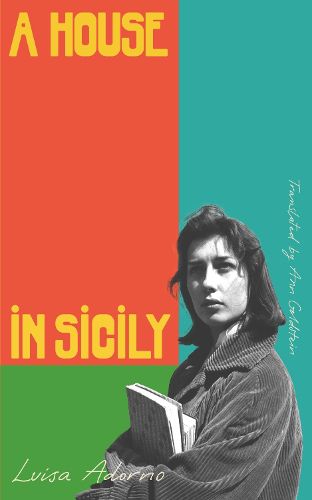
A House in Sicily
Set in postwar Japan in 1959, Twilight in Musashino begins with the discovery of a young Japanese flight attendant strangled on the icy banks of a river. As Detective Fujisawa investigates the murder, his attention turns to a foreign priest and the Guglielmo Church, a charitable Christian mission with an unsettling connection to the victim. What initially appears to be a straightforward criminal investigation gradually reveals a tangled web involving narcotics, postwar relief operations, and international diplomacy. The deeper Fujisawa digs, the more he encounters powerful institutions determined to protect their reputations and conceal uncomfortable truths. Blending meticulous police work with an incisive examination of social power, Seicho Matsumoto constructs a slow-burning mystery in which the pursuit of justice collides with political influence and institutional silence. The novel offers a compelling portrait of a society negotiating its identity in the aftermath of war, exposing the tensions between public morality and private corruption.
Italy
2026
11
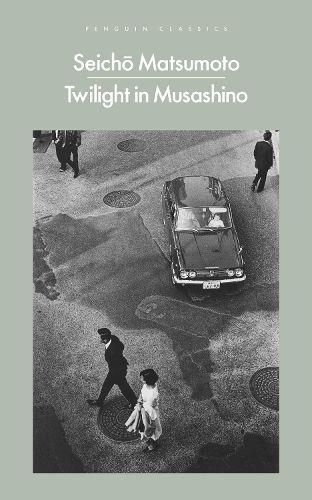
Twilight in Musashino
Set in postwar Japan in 1959, Twilight in Musashino begins with the discovery of a young Japanese flight attendant strangled on the icy banks of a river. As Detective Fujisawa investigates the murder, his attention turns to a foreign priest and the Guglielmo Church, a charitable Christian mission with an unsettling connection to the victim. What initially appears to be a straightforward criminal investigation gradually reveals a tangled web involving narcotics, postwar relief operations, and international diplomacy. The deeper Fujisawa digs, the more he encounters powerful institutions determined to protect their reputations and conceal uncomfortable truths. Blending meticulous police work with an incisive examination of social power, Seicho Matsumoto constructs a slow-burning mystery in which the pursuit of justice collides with political influence and institutional silence. The novel offers a compelling portrait of a society negotiating its identity in the aftermath of war, exposing the tensions between public morality and private corruption.
Japan
2026
12

My Third Life
Linda once had a life filled with work, family, friendships, and familiar routines. But after the devastating death of her seventeen-year-old daughter, Sonja, and her own cancer diagnosis, everything she once relied on begins to fall apart. Leaving her husband, Richard, and her life in Leipzig behind, Linda retreats to an old farmhouse in the Saxon countryside, where she attempts to live quietly, far removed from the world and its expectations. Her days revolve around tending the garden and caring for the house, but solitude cannot entirely protect her from grief. An unexpected connection with her neighbour, Natascha, and Natascha’s spirited young daughter, Nine, gradually opens a door to renewed human connection. With restrained, perceptive prose, Daniela Krien explores bereavement, motherhood, resilience, and the possibility of beginning again after profound loss. My Third Life is a moving reflection on how life can change irrevocably while still leaving room for hope.
Germany
2026