Fiction
All countries
Afghanistan
Albania
Antigua and Barbuda
Argentina
Armenia
Australia
Austria
Azerbaijan
Bahamas
Bahrain
Bangladesh
Barbados
Belarus
Belgium
Belize
Bhutan
Bosnia and Herzegovina
Brazil
Brunei
Bulgaria
Cabo Verde
Canada
Central African Republic
Chile
China
Congo, Democratic Republic
Croatia
Cuba
Czech Republic
Denmark
Djibouti
Dominica
Dominican Republic
Ecuador
Egypt
Fiji
Finland
France
Georgia
Germany
Greece
Hungary
Iceland
India
Indonesia
Iran
Iraq
Ireland
Italy
Jamaica
Japan
Jordan
Kazakhstan
Kenya
Kuwait
Kyrgyzstan
Lebanon
Libya
Malaysia
Mexico
Morocco
Netherlands
New Zealand
Nigeria
Norway
Oman
Pakistan
Palestine
Panama
Peru
Philippines
Poland
Portugal
Romania
Russia
Saudi Arabia
Senegal
Singapore
Slovenia
Somalia
South Korea
Spain
Sri Lanka
Sudan
Sweden
Switzerland
Syria
Taiwan
Tanzania
Thailand
Türkiye
Turkmenistan
Ukraine
United Arab Emirates
United Kingdom
United States
Uzbekistan
Yemen
Zambia
1
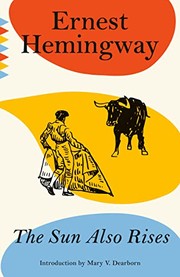
Sun Also Rises
The Sun Also Rises follows a group of American and British expatriates living in Europe after the First World War. Its narrator, Jake Barnes, is a journalist whose war injury has left him unable to pursue a conventional romantic relationship with Lady Brett Ashley, a charismatic woman whose independence and restlessness affect everyone around her. Their circle travels from Paris to the Spanish countryside, where fishing trips and the festivities of Pamplona’s bullfighting season offer temporary escape from emotional uncertainty. Beneath the characters’ drinking, flirtation, and restless movement lies a profound sense of disillusionment. Hemingway captures a generation struggling to find meaning after war, exploring unfulfilled desire, damaged masculinity, and the loneliness that can persist even among friends.
United States
1926
2
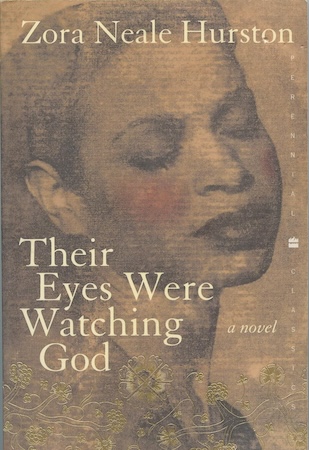
Their Eyes Were Watching God
Set in the early twentieth-century American South, Their Eyes Were Watching God follows Janie Crawford, an African American woman searching for love, independence, and a life she can call her own. Returning to her hometown of Eatonville, Florida, after a long absence, Janie faces the curiosity and judgment of her neighbours. Through a conversation with her friend Pheoby, she begins to recount the experiences that have shaped her.
Raised by her grandmother, who dreams of securing her future through marriage, Janie enters a series of relationships that teach her painful lessons about power, gender, and self-worth. Her first two marriages offer security and social status but leave little room for her voice or desires. It is only when she meets Tea Cake, a younger man who introduces her to a world of spontaneity, friendship, and adventure, that she begins to experience a more expansive kind of love.
Hurston’s novel is a landmark of African American literature, celebrated for its rich use of Black Southern dialect, folklore, and storytelling traditions. Through Janie’s journey, it explores the intersections of race, gender, class, and personal freedom, ultimately affirming a woman’s right to define herself beyond the expectations of others.
United States
1937
3

Best of Everything
The Best of Everything follows five young women working in a New York publishing company during the late 1950s as they navigate professional ambition, romance, and the expectations placed on women in postwar America. Caroline Bender dreams of building a meaningful career, while her colleagues struggle with relationships, financial insecurity, and the pressure to find suitable husbands. Their experiences reveal a world in which women are encouraged to pursue independence but are still judged by their marital status and appearance. As the characters encounter workplace discrimination, emotional disappointments, and difficult personal choices, they begin to question what success and happiness really mean. Jaffe offers an unvarnished portrait of women’s lives in a rapidly changing society, exploring the conflict between individual aspirations and conventional expectations. The novel examines gender inequality, ambition, and the price women are often expected to pay for trying to have both a career and a fulfilling personal life.
United States
1958
4
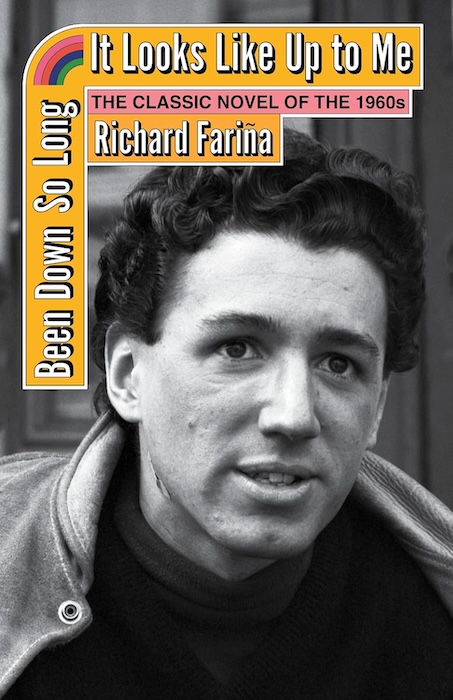
Been Down So Long It Looks Like Up to Me
Set against the restless spirit of the late 1950s and early 1960s, Been Down So Long It Looks Like Up to Me follows Gnossos Pappadopoulis, a rebellious college student navigating university life, romantic entanglements, psychedelic experiences, and his own search for meaning. Moving between a fictional university in upstate New York, the American West, and revolutionary Cuba, Gnossos challenges authority and conventional morality with irreverent humor and anarchic energy.
Drawing on Richard Fariña’s own experiences as a student and traveler, the novel captures the countercultural impulses that would help define the 1960s. Its unconventional narrative combines satire, absurdity, and philosophical reflection to question academic institutions, social expectations, and established ideas of success and respectability. Both a campus novel and a picaresque adventure, it portrays a young man attempting to find his place in a world he distrusts. Published just two days before Fariña’s death in a motorcycle accident, the novel became a cult classic of American counterculture.
United States
1966
5
Blood Meridian
Set in the American Southwest and northern Mexico during the 1840s, Blood Meridian follows a nameless teenager known as the Kid as he joins a violent band of scalp hunters operating along the frontier. The group, led by the ruthless Captain Glanton and accompanied by the enigmatic Judge Holden, travels through landscapes marked by poverty, conflict, and brutality. Their journey exposes the violence underpinning territorial expansion and the mythology of the American West. McCarthy’s stark, biblical prose transforms the frontier into a world where cruelty seems almost elemental and human life is treated as expendable. The novel challenges romantic ideas of conquest and civilisation, exploring violence as both a historical force and a disturbing aspect of human existence.
United States
1985
6
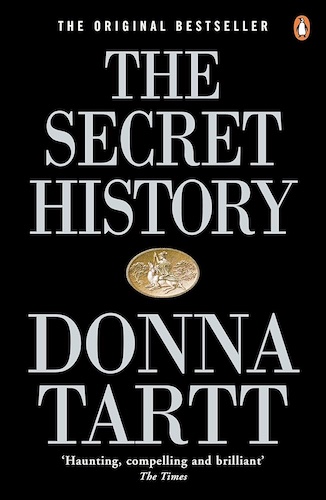
The Secret History
At an elite Vermont college, a tight-knit group of classics students becomes consumed by beauty, intellectual obsession, and the darker side of ancient philosophy. When their pursuit of an extraordinary experience leads to murder, their carefully constructed world begins to unravel. An atmospheric psychological novel about guilt, privilege, and the dangerous allure of belonging.
United States
1992
7
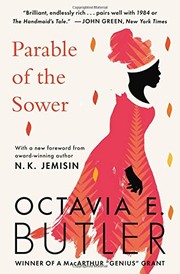
Parable of the Sower
In 2025, with the world descending into madness and anarchy, one woman begins a fateful journey toward a better future.
Lauren Olamina and her family live in one of the only safe neighborhoods remaining on the outskirts of Los Angeles. Behind the walls of their defended enclave, Lauren’s father, a preacher, and a handful of other citizens try to salvage what remains of a culture that has been destroyed by drugs, disease, war, and chronic water shortages. While her father tries to lead people on the righteous path, Lauren struggles with hyperempathy, a condition that makes her extraordinarily sensitive to the pain of others.
When fire destroys their compound, Lauren’s family is killed and she is forced out into a world that is fraught with danger. With a handful of other refugees, Lauren must make her way north to safety, along the way conceiving a revolutionary idea that may mean salvation for all mankind.
United States
1993
8
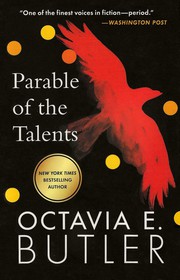
Parable of the Talents
Set in a dystopian America in the early twenty-first century, Parable of the Talents continues the story of Lauren Olamina, founder of the Earthseed movement, which teaches that humanity’s destiny is to shape change and eventually travel beyond Earth. As Lauren works to build a community based on cooperation, equality, and spiritual transformation, a Christian fundamentalist government rises to power, bringing persecution and violence. The novel is narrated partly through the perspective of Lauren’s estranged daughter, who struggles to understand her mother’s beliefs and legacy. Through their intertwined stories, Octavia E. Butler examines religious extremism, authoritarianism, racial injustice, and the struggle to preserve freedom in a society shaped by fear. The novel offers a powerful reflection on the dangers of political fanaticism and the resilience required to imagine a different future.
United States
1998
9
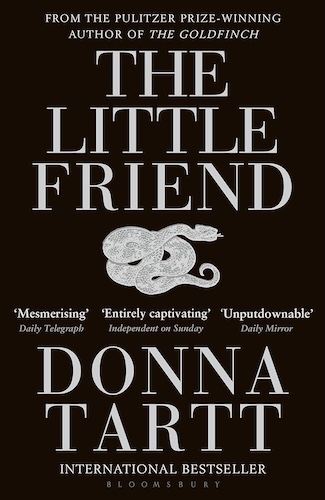
The Little Friend
In the sweltering American South, twelve-year-old Harriet Dufresnes becomes determined to solve the mysterious murder of her older brother, Robin, who was killed when she was still a baby. Driven by grief, imagination, and a fierce sense of justice, she ventures into a world of family secrets, dangerous people, and unsettling discoveries. A dark Southern Gothic novel about childhood, vengeance, and the stories we tell ourselves to make sense of loss.
United States
2002
10
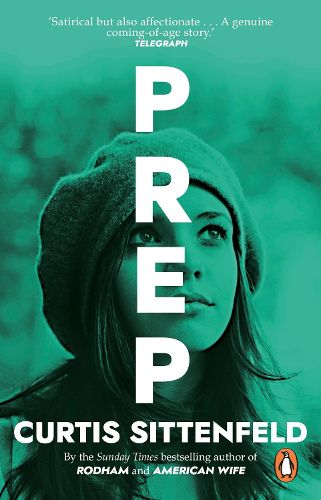
Prep
Curtis Sittenfeld is an American novelist and short-story writer born in Cincinnati, Ohio, in 1975. She studied English at Stanford University and later attended the creative writing program at the University of Iowa. Before becoming a full-time writer, she worked as a journalist and editor.
Sittenfeld made her literary debut with Prep (2005), a coming-of-age novel about a middle-class teenager navigating the social hierarchies of an elite American boarding school. The book became a bestseller and established her reputation for perceptive portrayals of class, identity, ambition, and the complexities of adolescence. Her subsequent novels include American Wife (2008), a fictionalized account inspired by former First Lady Laura Bush; Sisterland (2013); Eligible (2016), a contemporary retelling of Jane Austen’s Pride and Prejudice; and Rodham (2020), an alternative-history novel imagining a different life for Hillary Rodham Clinton.
Sittenfeld has also published the short-story collections You Think It, I’ll Say It (2018) and Help Yourself (2025). Her fiction often examines social expectations, relationships, privilege, and the private thoughts people conceal behind their public identities. Her work has appeared in publications including The New Yorker and The Atlantic.
United States
2005
11
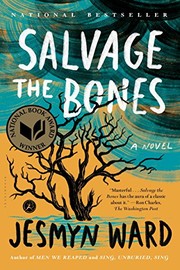
Salvage the Bones
Set in rural Mississippi in the days leading up to Hurricane Katrina, Salvage the Bones follows fifteen-year-old Esch Batiste and her three brothers as they navigate poverty, family tensions, and the looming threat of a devastating storm. Living with their father in a neglected community, the siblings struggle to prepare for the hurricane while confronting their own emotional and personal challenges. Esch, who is pregnant and quietly in love with her brother’s friend, finds parallels between her experiences and the mythological story of Medea. As the storm approaches, the family must rely on one another to survive. Through vivid storytelling and lyrical prose, Jesmyn Ward explores the bonds of family, the resilience of marginalized communities, and the enduring power of love amid hardship. The novel portrays the devastating intersection of poverty, race, and environmental disaster while celebrating the strength of those who endure.
United States
2012
12

The Goldfinch
After a devastating accident kills his mother, thirteen-year-old Theo Decker finds himself clinging to a small, captivating painting that connects him to her. As he grows older, the artwork draws him into a world of wealth, deception, and the criminal art trade. Winner of the 2014 Pulitzer Prize for Fiction, this sweeping novel explores grief, obsession, and the mysterious ways beauty can shape a life.
United States
2013