Fiction
All countries
Afghanistan
Albania
Antigua and Barbuda
Argentina
Armenia
Australia
Austria
Azerbaijan
Bahamas
Bahrain
Bangladesh
Barbados
Belarus
Belgium
Belize
Bhutan
Bosnia and Herzegovina
Brazil
Brunei
Bulgaria
Cabo Verde
Canada
Central African Republic
Chile
China
Congo, Democratic Republic
Croatia
Cuba
Czech Republic
Denmark
Djibouti
Dominica
Dominican Republic
Ecuador
Egypt
Fiji
Finland
France
Georgia
Germany
Greece
Hungary
Iceland
India
Indonesia
Iran
Iraq
Ireland
Italy
Jamaica
Japan
Jordan
Kazakhstan
Kenya
Kuwait
Kyrgyzstan
Lebanon
Libya
Malaysia
Mexico
Morocco
Netherlands
New Zealand
Nigeria
Norway
Oman
Pakistan
Palestine
Panama
Peru
Philippines
Poland
Portugal
Romania
Russia
Saudi Arabia
Senegal
Singapore
Slovenia
Somalia
South Korea
Spain
Sri Lanka
Sudan
Sweden
Switzerland
Syria
Taiwan
Tanzania
Thailand
Türkiye
Turkmenistan
Ukraine
United Arab Emirates
United Kingdom
United States
Uzbekistan
Yemen
Zambia
1
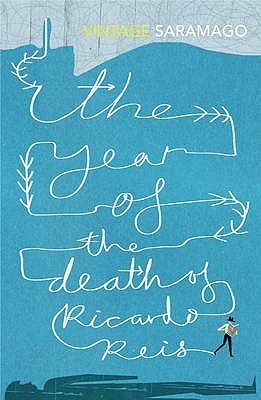
The Year of the Death of Ricardo Reis
Set in Lisbon in 1936, The Year of the Death of Ricardo Reis follows Ricardo Reis, a doctor and poet who returns to Portugal after sixteen years in Brazil, having learned of the death of the poet Fernando Pessoa. Reis is one of Pessoa’s fictional literary alter egos, brought to life by Saramago as a character who must navigate a world increasingly shaped by political turmoil.
Staying in a Lisbon hotel, Reis spends his days wandering the city, reading newspapers, writing poetry, and becoming involved with two women: Lídia, a hotel maid, and Marcenda, a young woman with a paralysed left hand. He is also visited by the ghost of Pessoa, with whom he discusses literature, life, and death.
Beyond Reis’s private existence, Portugal is living under António de Oliveira Salazar’s authoritarian regime, while fascism is spreading across Europe and the Spanish Civil War is approaching. Through Reis’s detached observations, Saramago examines the tension between individual contemplation and historical responsibility. Blending philosophical reflection, political commentary, and the uncanny, the novel explores mortality, isolation, and the difficulty of remaining a passive observer in a world marked by injustice.
Portugal
1984
2
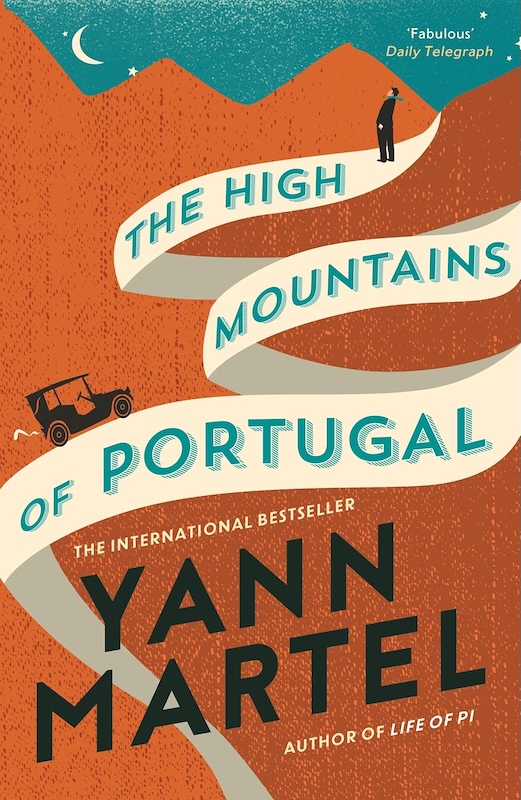
The High Mountains of Portugal
The High Mountains of Portugal weaves together three interconnected stories spanning nearly a century, exploring grief, faith, and the mysteries of human existence. In 1904, a young Portuguese archivist named Tomás discovers an ancient religious artifact and embarks on a journey through the countryside in search of its meaning. Thirty-five years later, a Portuguese pathologist confronts a personal tragedy that challenges his understanding of love and belief. In the final story, a Canadian senator living in contemporary Portugal finds himself drawn into an unexpected relationship with a chimpanzee, prompting him to reconsider the boundaries between humans and animals. Through these unusual narratives, Yann Martel explores the ways people respond to loss and search for meaning in a world that resists easy explanations. Blending philosophical reflection, historical fiction, and elements of the surreal, the novel examines faith, mortality, love, and humanity’s connection to the natural world.
Portugal
2016