Fiction
All countries
Afghanistan
Albania
Antigua and Barbuda
Argentina
Armenia
Australia
Austria
Azerbaijan
Bahamas
Bahrain
Bangladesh
Barbados
Belarus
Belgium
Belize
Bhutan
Bosnia and Herzegovina
Brazil
Brunei
Bulgaria
Cabo Verde
Canada
Central African Republic
Chile
China
Congo, Democratic Republic
Croatia
Cuba
Czech Republic
Denmark
Djibouti
Dominica
Dominican Republic
Ecuador
Egypt
Fiji
Finland
France
Georgia
Germany
Greece
Hungary
Iceland
India
Indonesia
Iran
Iraq
Ireland
Italy
Jamaica
Japan
Jordan
Kazakhstan
Kenya
Kuwait
Kyrgyzstan
Lebanon
Libya
Malaysia
Mexico
Morocco
Netherlands
New Zealand
Nigeria
Norway
Oman
Pakistan
Palestine
Panama
Peru
Philippines
Poland
Portugal
Romania
Russia
Saudi Arabia
Senegal
Singapore
Slovenia
Somalia
South Korea
Spain
Sri Lanka
Sudan
Sweden
Switzerland
Syria
Taiwan
Tanzania
Thailand
Türkiye
Turkmenistan
Ukraine
United Arab Emirates
United Kingdom
United States
Uzbekistan
Yemen
Zambia
1
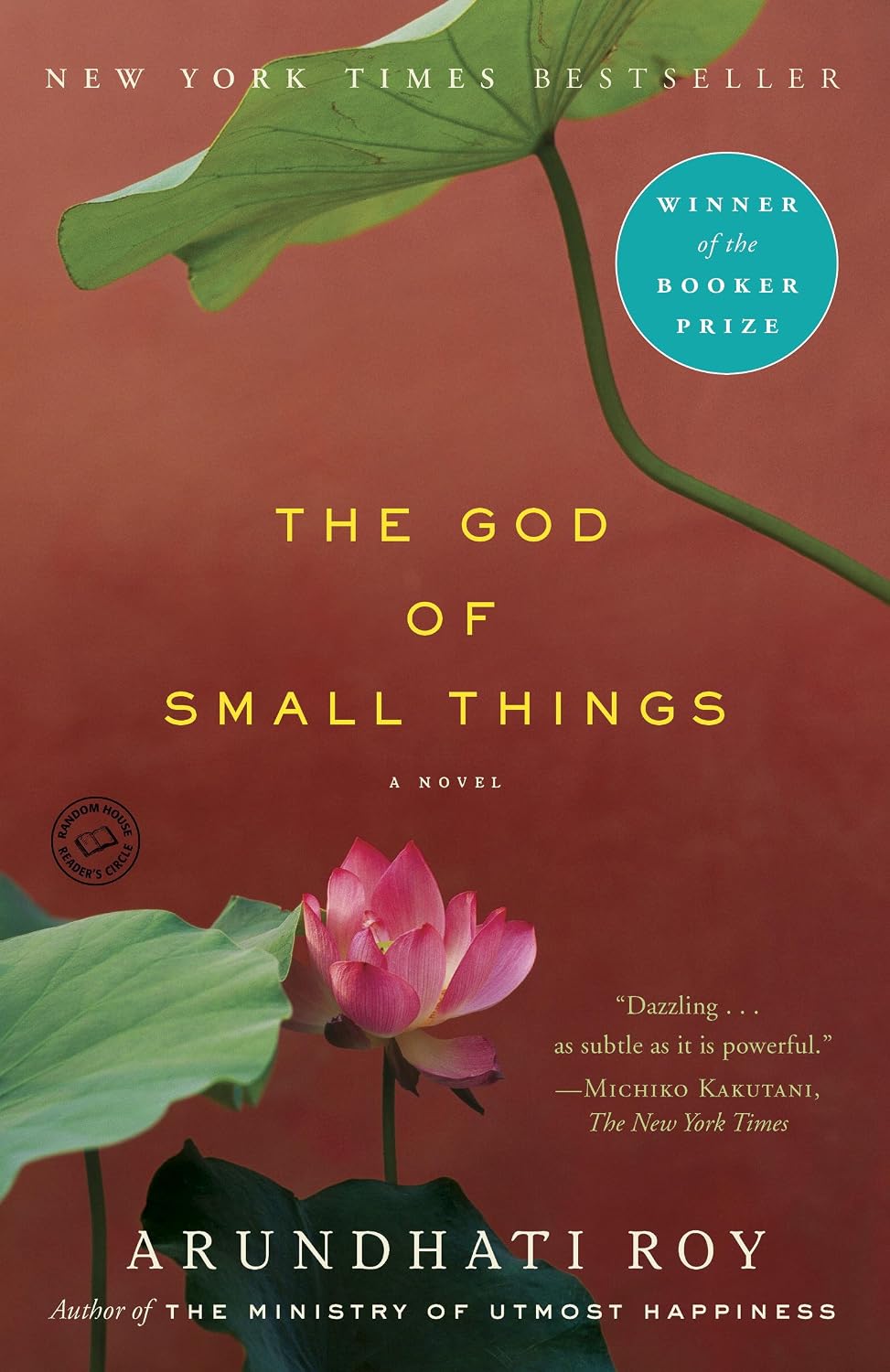
The God of Small Things
Set in Kerala, southern India, The God of Small Things tells the story of fraternal twins Estha and Rahel, whose childhood is shattered by a series of tragic events that permanently alter their family. Through a nonlinear narrative that moves between their childhood in 1969 and their reunion as adults, the novel explores the consequences of forbidden love, social prejudice, and deeply rooted cultural expectations. When their cousin Sophie Mol visits from England, an unexpected tragedy exposes the family’s hidden tensions and the cruelty of the social hierarchies governing their lives. At the centre of the story is Ammu, the twins’ mother, whose relationship with Velutha, a man from an oppressed caste, challenges the rigid boundaries of Indian society. Roy’s lyrical prose captures the beauty of childhood perception alongside the devastating effects of discrimination, silence, and loss. The novel examines how seemingly small moments can shape entire lives, revealing the profound consequences of breaking society’s unwritten rules.
India
1997
2

Our City That Year
An Indian city descends into communal violence, and the boundaries between neighbours, friends, and enemies begin to collapse. As religious extremism spreads and fear silences public life, three intellectuals struggle to make sense of the unfolding catastrophe. Shruti, a writer, finds herself unable to put the horrors into words; Hanif, an academic whose secular beliefs isolate him, watches his world shrink; and Sharad confronts the growing distance between himself and his childhood friend. Meanwhile, an unnamed narrator attempts to record what others might prefer to forget. Inspired by the political and social tensions surrounding the destruction of the Babri Mosque in 1992, Our City That Year is a haunting exploration of religious nationalism, fractured communities, and the responsibility of bearing witness when silence becomes complicity.
India
1998
3

Madras on Rainy Days
At nineteen, Layla is caught between two worlds: the conservative Muslim upbringing her Indian immigrant parents have given her and the independence she has discovered growing up in America. When her parents arrange her marriage to Sameer, a man she barely knows, she reluctantly travels to Hyderabad, hoping to find a sense of belonging in the traditions she has spent years resisting. Amid elaborate wedding rituals, family expectations, and rising Hindu-Muslim tensions, Layla begins to question everything she thought she understood about love, faith, and womanhood. Madras on Rainy Days is a compelling exploration of female independence, cultural identity, and the secrets that lie beneath the surface of family life.
India
2005
4

Sea of Poppies
Set in 1838, shortly before the First Opium War, Sea of Poppies follows a diverse group of characters whose lives converge aboard the Ibis, a former slave ship sailing from India to Mauritius. Among them are Deeti, a village woman escaping an oppressive marriage; Kalua, a low-caste ox-cart driver; Neel Rattan Halder, a wealthy landowner facing ruin; and Zachary Reid, an American sailor navigating questions of race and identity. As they journey across the Indian Ocean, these individuals find themselves bound together by circumstances shaped by colonialism, the opium trade, caste discrimination, and economic exploitation. Through their intertwined stories, Amitav Ghosh brings to life a turbulent period in Indian history, revealing how imperial ambitions transform ordinary lives. Blending historical detail, adventure, and rich linguistic diversity, the novel explores displacement, social inequality, and the universal desire for freedom and belonging.
India
2008
5

Unaccustomed Earth
Unaccustomed Earth is a collection of eight stories examining the experiences of Bengali families living in the United States and the complex relationships between generations. The first section focuses on individuals negotiating marriage, parenthood, grief, and cultural expectations as they attempt to build lives far from their ancestral homeland. The final three stories follow Hema and Kaushik, two Bengali Americans whose lives intersect during childhood and again in adulthood, revealing how family decisions and personal losses shape their futures. Lahiri explores the tensions between parental expectations and individual freedom, particularly as younger generations grow up with different ideas about identity, love, and belonging. Through subtle portrayals of everyday life, the collection reveals how family bonds can offer both security and constraint, and how people carry the influence of their upbringing long after they believe they have moved beyond it.
India
2009
6
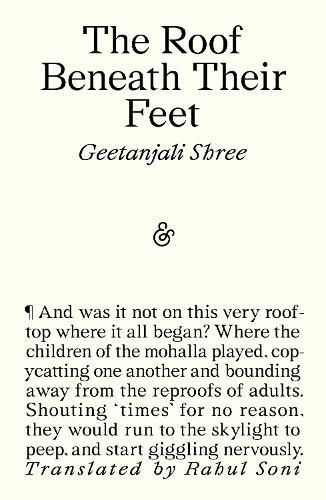
The Roof Beneath Their Feet
In a close-knit residential complex in India, the rooftops of Laburnum House offer a rare refuge from the expectations and restrictions of everyday life. Chachcho, trapped in a lonely marriage, finds companionship in Lalna, a woman abandoned by her husband whom she takes into her home. Their intense and unconventional bond soon becomes the subject of neighbourhood gossip, as their closeness challenges accepted ideas about marriage, female desire and respectability. Years later, following Chachcho’s death, Lalna returns, prompting Chachcho’s nephew, Bitva, to revisit family memories and question the story of his own origins. Moving between perspectives and shifting recollections, Geetanjali Shree creates an intricate portrait of women’s lives, hidden desires and the stories families tell to protect themselves. The rooftop becomes a powerful symbol of freedom—a space where women can escape the watchful eyes of society and imagine lives beyond its boundaries.
India
2013
7
The Lowland
The Lowland tells the story of two brothers, Subhash and Udayan, who grow up together in Calcutta but choose dramatically different paths as adults. During the 1960s, Udayan becomes involved in the Naxalite movement, a radical communist uprising that challenges India’s political and social order. Subhash, by contrast, leaves for the United States to pursue an academic career. When political violence destroys Udayan’s future, Subhash returns to India and makes a decision that binds him to his brother’s family for decades. The consequences of this choice unfold across generations, affecting relationships, marriages, and the identity of Udayan’s daughter, Bela. Lahiri explores guilt, loyalty, political conviction, and the lasting consequences of family secrets, showing how a single act can shape the lives of people who were never responsible for it.
India
2013
8

The Widows of Malabar Hill
Set in Bombay in 1921, The Widows of Malabar Hill introduces Perveen Mistry, one of India’s first female lawyers. Educated in England and working in her father’s legal practice, Perveen encounters an unusual inheritance case involving three Muslim widows who live in seclusion and communicate with the outside world through male representatives. When she discovers inconsistencies in the documents governing their late husband’s estate, she begins to suspect that the women may be vulnerable to manipulation or exploitation. Her investigation becomes more dangerous when a murder draws her deeper into the case. Alongside the mystery, Perveen’s own experiences reveal the limitations placed on women in colonial Indian society, particularly in matters of marriage, education, and professional independence. Massey combines historical detail with a compelling detective story, exploring women’s rights, religious traditions, and the pursuit of justice in a changing society.
India
2018
9

The Storyteller's Secret
The Storyteller’s Secret follows Jaya, an Indian American journalist whose personal life begins to unravel after she experiences a painful miscarriage and the breakdown of her marriage. Seeking answers and a fresh perspective, she travels to India to reconnect with her family’s roots. There, she meets Ravi, her grandmother’s former servant, who shares the story of Amisha, Jaya’s grandmother, and the difficult choices that shaped her life in a small Indian village during the 1930s. Amisha was a gifted storyteller whose aspirations extended beyond the traditional roles available to women, but her ambitions were constrained by social expectations and a marriage that offered little freedom. As Jaya uncovers her grandmother’s past, she begins to understand her own struggles differently. Badani explores family secrets, women’s independence, cultural traditions, and the healing power of understanding previous generations.
India
2018
10
The Namesake
The Namesake follows the Ganguli family as they move from Calcutta to the United States in search of a new life. Their son, Gogol, grows up caught between his Bengali heritage and the American culture in which he was raised. Named after the Russian writer Nikolai Gogol for personal reasons connected to his father’s past, he comes to resent the unusual name that distinguishes him from his peers. As he grows older, Gogol struggles with romantic relationships, family expectations, and the challenge of defining himself independently of his parents’ experiences. Following the family’s journey across several decades, Lahiri explores migration, cultural adaptation, and the complicated relationship between parents and children. The novel examines how names, memories, and inherited traditions shape identity, revealing that belonging is rarely a simple choice between two cultures.
India
2019
11
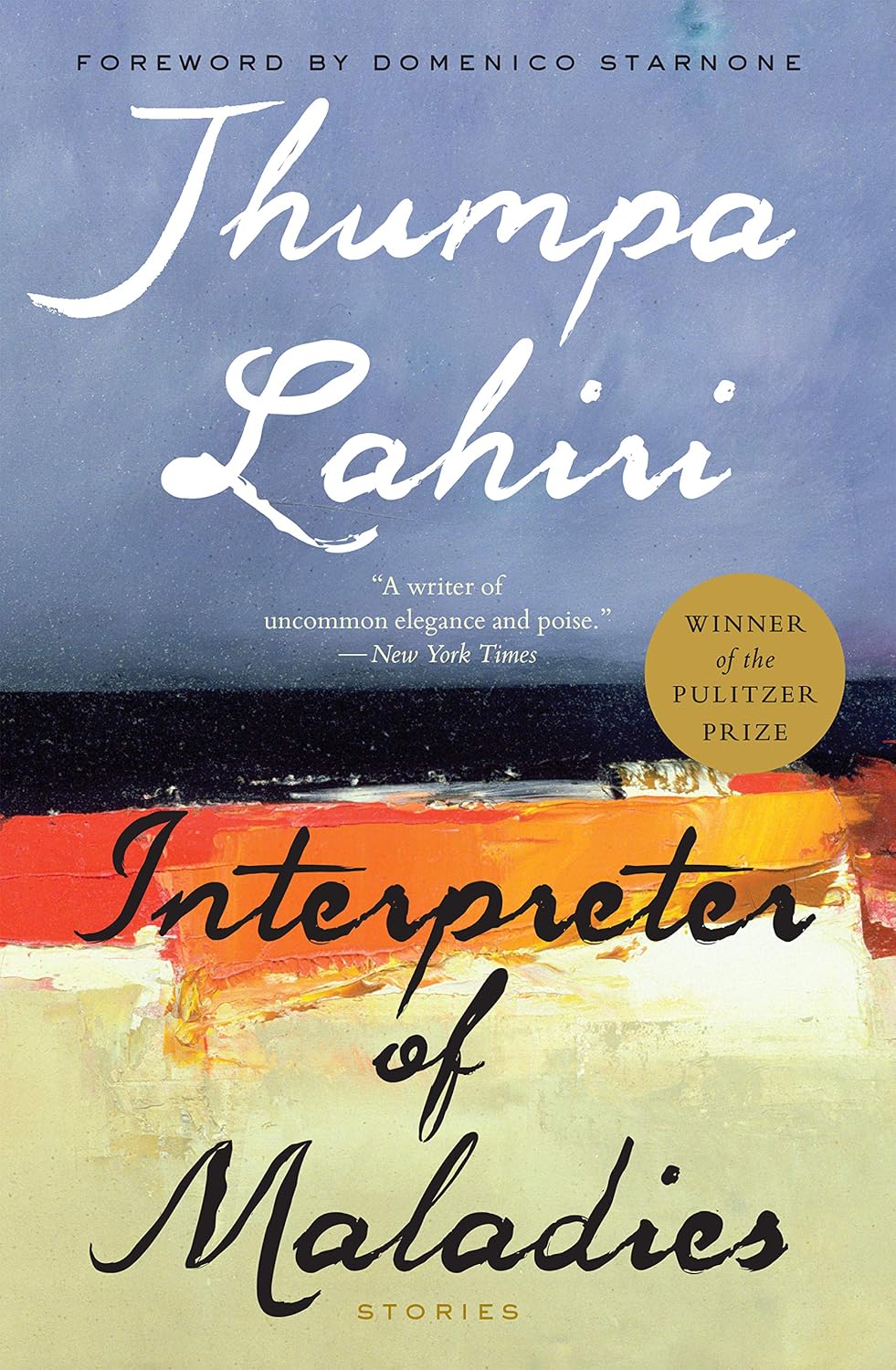
Interpreter of Maladies
Interpreter of Maladies is a collection of nine short stories exploring the lives of Indian and Indian American characters navigating love, cultural displacement, family obligations, and loneliness. In the title story, an Indian tour guide who works as an interpreter for a doctor becomes the confidant of an American woman of Indian origin, whose personal revelations challenge his understanding of intimacy and connection. Other stories portray arranged marriages, strained relationships between parents and children, and the emotional difficulties of living between cultures. Lahiri pays close attention to ordinary moments when misunderstandings, unspoken desires, and private disappointments reveal deeper struggles. Her characters often appear caught between the expectations of their heritage and the realities of their present lives. The collection explores belonging, communication, and the quiet emotional distances that can separate people who seem intimately connected.
India
2019
12
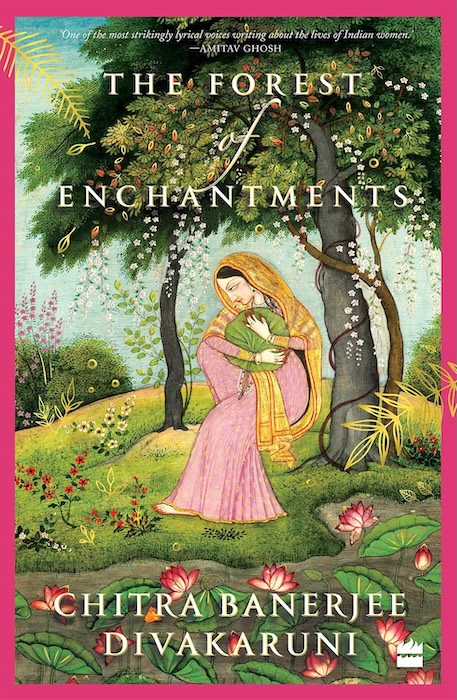
Forest of Enchantments
The Forest of Enchantments reimagines the ancient Indian epic Ramayana through the perspective of Sita, the heroine whose experiences have often been overshadowed by those of the male characters. From her early life and marriage to Prince Rama to their exile in the forest, Sita’s story unfolds as a journey marked by love, sacrifice, and difficult choices. After she is abducted by the demon king Ravana and eventually reunited with Rama, she faces further trials that challenge her dignity and independence. Divakaruni also brings attention to other women in the epic, including Kaikeyi, Surpanakha, and Mandodari, exploring the complicated motivations behind their actions. By giving these women their own voices, the novel questions traditional ideas about duty, honour, and obedience. It offers a feminist interpretation of a foundational Indian epic, examining women’s autonomy and their struggle to define themselves within a world governed by patriarchal expectations.
India
2019