Fiction
All countries
Afghanistan
Albania
Antigua and Barbuda
Argentina
Armenia
Australia
Austria
Azerbaijan
Bahamas
Bahrain
Bangladesh
Barbados
Belarus
Belgium
Belize
Bhutan
Bosnia and Herzegovina
Brazil
Brunei
Bulgaria
Cabo Verde
Canada
Central African Republic
Chile
China
Congo, Democratic Republic
Croatia
Cuba
Czech Republic
Denmark
Djibouti
Dominica
Dominican Republic
Ecuador
Egypt
Fiji
Finland
France
Georgia
Germany
Greece
Hungary
Iceland
India
Indonesia
Iran
Iraq
Ireland
Italy
Jamaica
Japan
Jordan
Kazakhstan
Kenya
Kuwait
Kyrgyzstan
Lebanon
Libya
Malaysia
Mexico
Morocco
Netherlands
New Zealand
Nigeria
Norway
Oman
Pakistan
Palestine
Panama
Peru
Philippines
Poland
Portugal
Romania
Russia
Saudi Arabia
Senegal
Singapore
Slovenia
Somalia
South Korea
Spain
Sri Lanka
Sudan
Sweden
Switzerland
Syria
Taiwan
Tanzania
Thailand
Türkiye
Turkmenistan
Ukraine
United Arab Emirates
United Kingdom
United States
Uzbekistan
Yemen
Zambia
1
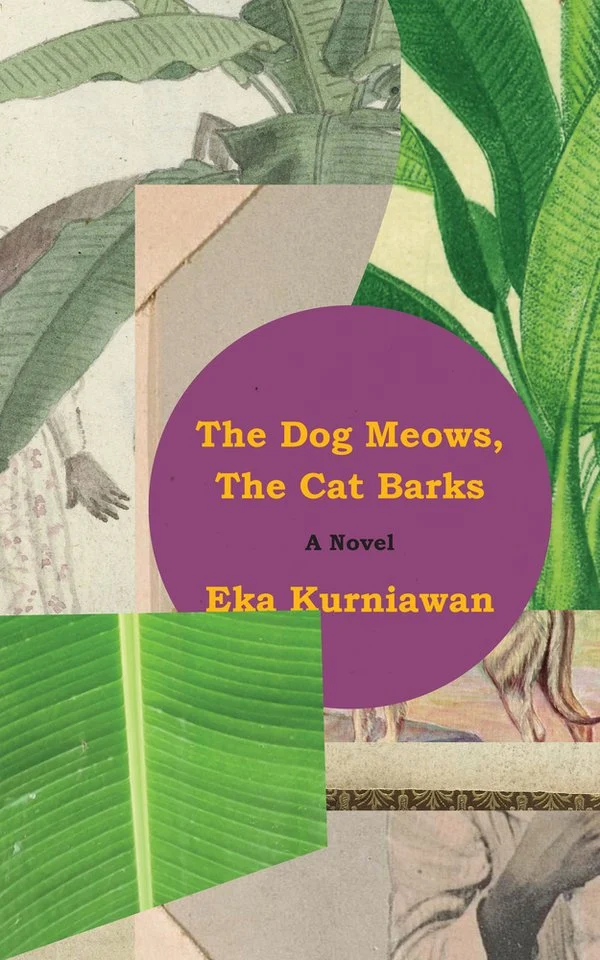
The Dog Meows, the Cat Barks
Sato Reang enjoys a carefree childhood in a small Javanese town, playing football, fighting crickets, and getting into mischief with his friends. But everything changes when his devout father decides that Sato must become a properly religious boy. Expected to pray regularly, attend the mosque, and follow strict rules of Islamic piety, Sato feels increasingly trapped by a life he never chose. As he grows older, his frustration turns into rebellion: he skips prayers, drinks, steals, and begins setting fires. Yet his defiance is not simply a desire to misbehave; it is an attempt to reclaim ownership of his own life. His relationship with Jamal, a deeply pious boy forced into his company, becomes central to his struggle against the authority imposed upon him. Blending dark humour, absurdity, and psychological insight, Eka Kurniawan explores the tensions between faith and freedom, obedience and individuality. Beneath its mischievous surface lies a darker question: when control becomes oppressive, can rebellion offer genuine liberation, or does it create new forms of destruction?
Indonesia
2026
2
Beauty Is a Wound
In Beauty Is a Wound, Eka Kurniawan tells the extraordinary story of Dewi Ayu, a beautiful Indonesian woman who rises from the dead after twenty-one years in her grave. Set against the turbulent history of Indonesia, from Dutch colonial rule through the Japanese occupation and the political violence that followed independence, the novel follows Dewi Ayu and her four daughters as their lives become entangled in cycles of violence, desire, and revenge. Combining magical realism, dark humor, folklore, and historical fiction, Kurniawan explores the lasting consequences of colonialism, the brutality of war, and the oppression of women in a patriarchal society. Through grotesque imagery and fantastical events, the novel reveals how personal tragedies reflect a nation’s traumatic past, examining the ways violence and historical injustice shape generations of families.
Indonesia
2002
3
Olenka
Olenka is a modern Indonesian novel by Budi Darma that explores obsession, loneliness, and the elusive nature of human relationships. The story follows Fanton Drummond, an Indonesian man living in an American city, who becomes fascinated by a mysterious woman named Olenka. His attraction develops into an increasingly complicated psychological pursuit as he attempts to understand her personality, her past, and her motivations. However, Olenka remains difficult to comprehend, resisting the idealised image Fanton constructs of her. Through fragmented encounters, introspection, and philosophical reflections, Darma examines the distance between reality and imagination, questioning whether we can ever truly understand another person. Blending psychological fiction with existential themes, the novel explores alienation, desire, and the instability of personal identity, while reflecting on the absurdities and uncertainties of modern life.
Indonesia
1983