Fiction
All countries
Afghanistan
Albania
Antigua and Barbuda
Argentina
Armenia
Australia
Austria
Azerbaijan
Bahamas
Bahrain
Bangladesh
Barbados
Belarus
Belgium
Belize
Bhutan
Bosnia and Herzegovina
Brazil
Brunei
Bulgaria
Cabo Verde
Canada
Central African Republic
Chile
China
Congo, Democratic Republic
Croatia
Cuba
Czech Republic
Denmark
Djibouti
Dominica
Dominican Republic
Ecuador
Egypt
Fiji
Finland
France
Georgia
Germany
Greece
Hungary
Iceland
India
Indonesia
Iran
Iraq
Ireland
Italy
Jamaica
Japan
Jordan
Kazakhstan
Kenya
Kuwait
Kyrgyzstan
Lebanon
Libya
Malaysia
Mexico
Morocco
Netherlands
New Zealand
Nigeria
Norway
Oman
Pakistan
Palestine
Panama
Peru
Philippines
Poland
Portugal
Romania
Russia
Saudi Arabia
Senegal
Singapore
Slovenia
Somalia
South Korea
Spain
Sri Lanka
Sudan
Sweden
Switzerland
Syria
Taiwan
Tanzania
Thailand
Türkiye
Turkmenistan
Ukraine
United Arab Emirates
United Kingdom
United States
Uzbekistan
Yemen
Zambia
1

My Third Life
Linda once had a life filled with work, family, friendships, and familiar routines. But after the devastating death of her seventeen-year-old daughter, Sonja, and her own cancer diagnosis, everything she once relied on begins to fall apart. Leaving her husband, Richard, and her life in Leipzig behind, Linda retreats to an old farmhouse in the Saxon countryside, where she attempts to live quietly, far removed from the world and its expectations. Her days revolve around tending the garden and caring for the house, but solitude cannot entirely protect her from grief. An unexpected connection with her neighbour, Natascha, and Natascha’s spirited young daughter, Nine, gradually opens a door to renewed human connection. With restrained, perceptive prose, Daniela Krien explores bereavement, motherhood, resilience, and the possibility of beginning again after profound loss. My Third Life is a moving reflection on how life can change irrevocably while still leaving room for hope.
Germany
2026
2
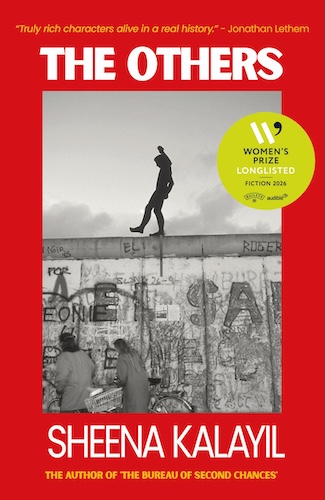
The Others
As the Berlin Wall teeters on the brink of collapse in 1989, three young people from different worlds find their lives unexpectedly intertwined. Armando, a factory worker from Mozambique; Lolita, a medical student from India; and Theo, an aspiring writer from East Germany, navigate love, secrets, and political uncertainty as the world around them transforms. Through their intertwined stories, Sheena Kalayil explores the often-overlooked lives of migrants and foreign workers caught between cultures, borders, and competing visions of freedom.
Germany
2025
3

Good Girl
In Berlin’s underground techno scene, nineteen-year-old Nila is searching for freedom, belonging, and a voice of her own. Born in Germany to Afghan refugee parents, she moves between her family’s expectations and the city’s intoxicating nightlife, trying to escape the weight of her past and imagine a different future. When she meets Marlowe, an older American writer whose fading literary fame opens the door to a world of artistic possibility, Nila becomes drawn into a relationship that challenges her independence. Meanwhile, beneath Berlin’s cosmopolitan surface, racism and unresolved historical tensions threaten the fragile worlds she inhabits. Sensual, restless, and deeply perceptive, Good Girl explores the contradictions of growing up between cultures—and the messy, liberating struggle to decide who you want to become.
Germany
2025
4
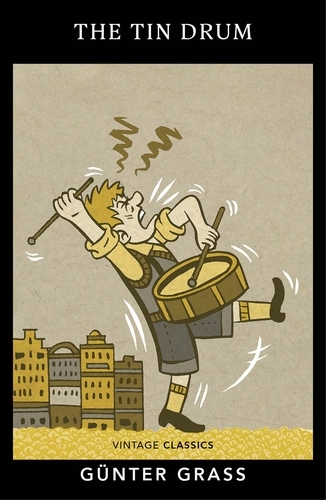
The Tin Drum
The Tin Drum is narrated by Oskar Matzerath, who recounts his life from a mental institution while reflecting on the turbulent history of Germany before, during, and after the Second World War. Born in Danzig in 1924, Oskar decides at the age of three to stop growing, using his small stature and tin drum to distance himself from the adult world. He also possesses a piercing scream capable of shattering glass. Through his strange perspective, the novel depicts the rise of Nazism, the violence of war, and the moral compromises of ordinary people. Grass combines grotesque humour, fantasy, and historical realism to challenge conventional narratives of innocence and responsibility. Oskar’s unreliable account exposes the contradictions of a society that participated in or tolerated fascism, examining collective guilt, denial, and the difficulty of confronting a traumatic national past.
Germany
1959
5

All Quiet on the Western Front
All Quiet on the Western Front follows Paul Bäumer, a young German soldier who enlists in the First World War alongside his school friends after being encouraged by patriotic teachers. Once at the front, the young men discover that the heroic ideals used to recruit them bear little resemblance to the reality of trench warfare. Constant bombardment, hunger, exhaustion, and the loss of comrades gradually destroy their innocence and their faith in the society that sent them to fight. When Paul returns home on leave, he finds himself unable to reconnect with civilians who cannot understand his experiences. Remarque portrays war as a force that damages not only bodies but also the emotional and moral foundations of a generation. The novel explores trauma, disillusionment, and the devastating distance between military rhetoric and the human cost of conflict.
Germany
1929
6
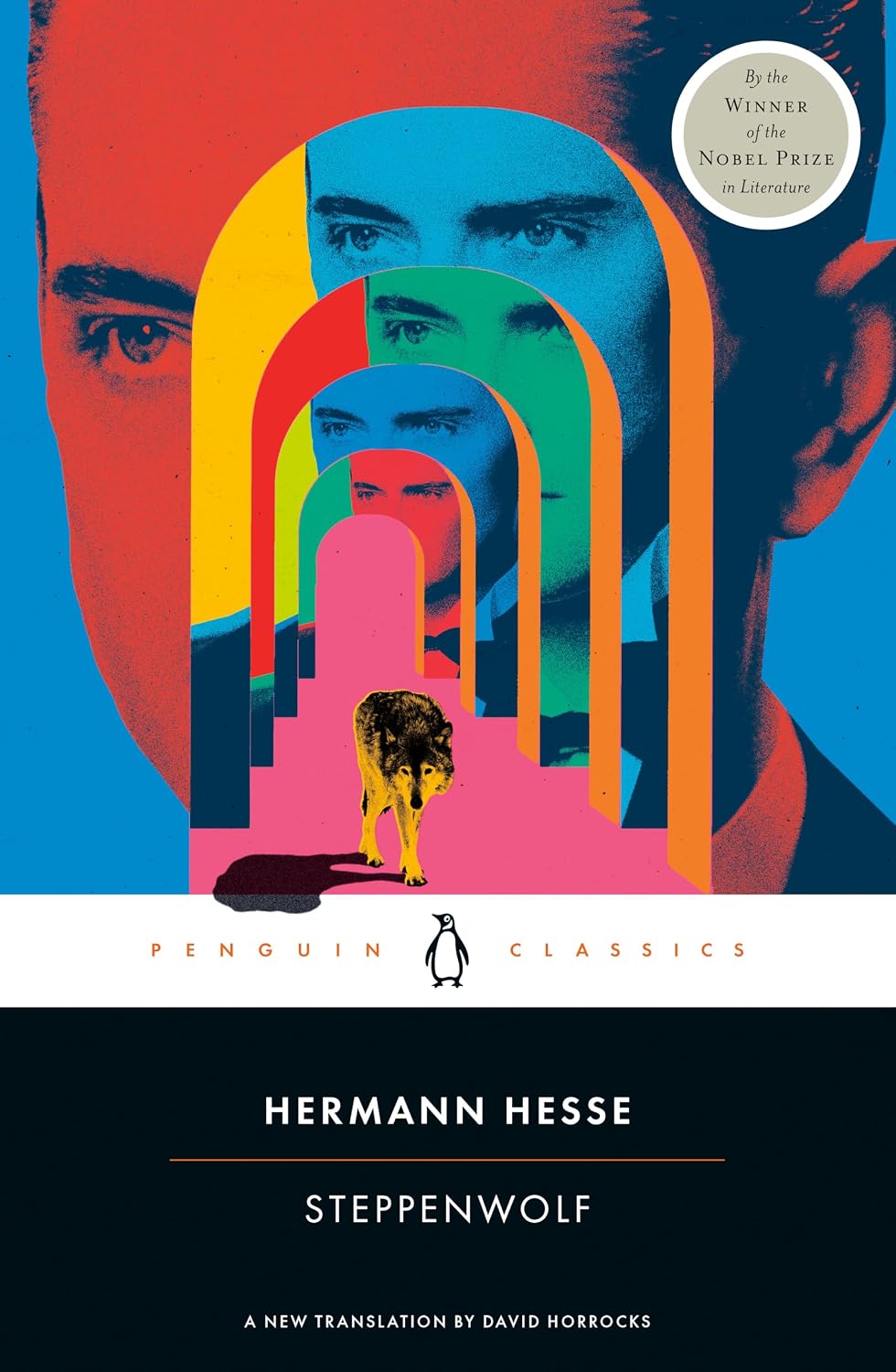
Steppenwolf
Steppenwolf follows Harry Haller, a middle-aged intellectual who feels profoundly alienated from bourgeois society and believes himself divided between two opposing natures: the civilised human being and the solitary wolf. Disillusioned with conventional life, Harry becomes increasingly withdrawn and struggles with thoughts of despair. His encounter with Hermine, a lively and unconventional woman, introduces him to new experiences, including music, dancing, and forms of pleasure he has long rejected. Through these encounters, he begins to question his rigid understanding of identity and the assumption that human beings can be divided into simple opposing parts. Hesse blends psychological exploration with surreal and philosophical episodes to examine loneliness, social conformity, and the possibility of personal transformation. The novel asks whether people can learn to embrace the contradictions within themselves rather than remain imprisoned by a fixed image of who they are.
Germany
1927
7
The Magic Mountain
The Magic Mountain follows Hans Castorp, a young German engineer who visits his cousin at a tuberculosis sanatorium in the Swiss Alps. Initially intending to stay for only three weeks, Hans becomes absorbed in the institution’s unusual atmosphere and eventually remains there for seven years. Removed from the routines of ordinary society, he encounters patients and intellectuals whose conversations explore competing ideas about politics, philosophy, science, love, and human progress. The sanatorium becomes a miniature version of pre-war Europe, where debates about rationalism, humanism, nationalism, and radical ideology reveal the tensions shaping the continent. Through Hans’s gradual transformation, Mann examines the relationship between time, illness, and intellectual development. The novel explores the attraction of isolation and the difficulty of understanding a society approaching catastrophe, ultimately reflecting on the cultural and moral crises that preceded the First World War.
Germany
1924
8
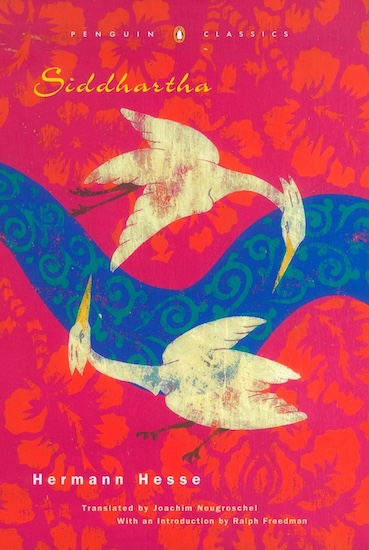
Siddhartha
Siddhartha follows a young man in ancient India who leaves his privileged life in search of spiritual understanding. Dissatisfied with the religious teachings and ascetic practices available to him, Siddhartha travels with his friend Govinda and eventually encounters the Buddha. Although he respects the Buddha’s wisdom, Siddhartha believes that enlightenment cannot simply be learned from another person. He therefore pursues his own experiences, exploring sensual pleasure, wealth, love, and the suffering that accompanies attachment. After years of disillusionment, he finds guidance in the quiet presence of a ferryman and begins to understand the interconnectedness of existence. Hesse draws on Indian religious and philosophical traditions to explore self-discovery, desire, and the limitations of intellectual knowledge. The novel suggests that wisdom emerges not through rigid doctrine but through attentive experience, acceptance, and an understanding of life’s constantly changing nature.
Germany
1922