Classics
All countries
Antigua and Barbuda
Argentina
Armenia
Australia
Austria
Azerbaijan
Bangladesh
Barbados
Belgium
Bosnia and Herzegovina
Brazil
Chile
China
Colombia
Czech Republic
Denmark
Dominica
Dominican Republic
Egypt
Finland
France
Germany
Greece
Hungary
Iceland
India
Indonesia
Iran
Ireland
Italy
Japan
Kenya
Kyrgyzstan
Lebanon
Lithuania
Mexico
Netherlands
Norway
Pakistan
Palestine
Peru
Portugal
Romania
Russia
Saudi Arabia
Spain
Sudan
Sweden
Switzerland
Taiwan
Türkiye
Ukraine
United Kingdom
United States
1
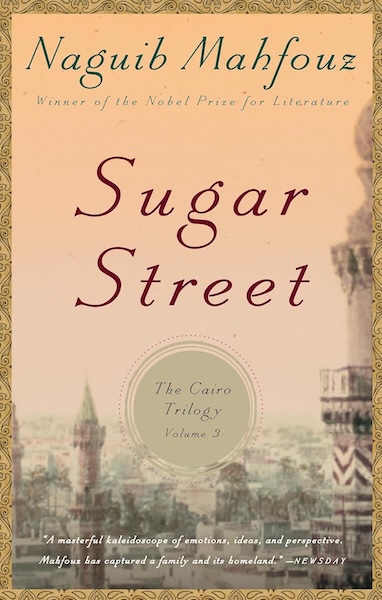
Sugar Street
Sugar Street is the final novel in Naguib Mahfouz’s Cairo Trilogy, following the al-Sayyid family into the 1930s and the political and social changes that reshape Egypt. As the country moves toward greater independence, a new generation emerges with different ideas about religion, politics, and personal freedom. The family patriarch, Ahmad Abd al-Jawad, is now ageing, while his children and grandchildren navigate a world increasingly distant from the traditions that once governed their lives.
The novel focuses on the consequences of these generational shifts, particularly as family members become involved in competing political movements and question established beliefs. Kamal, now a teacher, struggles with disillusionment and the loss of the ideals that once shaped his youth. Through the family’s experiences, Mahfouz examines the rise of nationalism, the appeal of secular thought, and the tensions between religious conservatism and modernity. Set against the lively streets and changing social landscape of Cairo, Sugar Street explores how political transformation influences private lives and how each generation must negotiate the relationship between inherited traditions and an uncertain future.
Egypt
1957
2
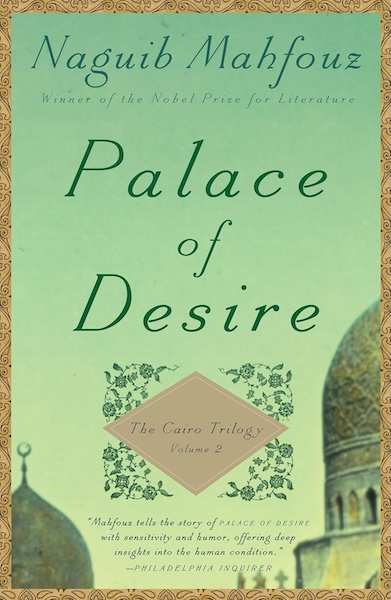
Palace of Desire
Palace of Desire is the second novel in Naguib Mahfouz’s Cairo Trilogy, continuing the story of the al-Sayyid family in Cairo during the 1920s. As Egypt experiences political change and growing demands for independence, the family faces its own transformations. Ahmad Abd al-Jawad, once the unquestioned authority in his household, grows older while continuing to struggle with his desire for pleasure and control. Meanwhile, his children enter adulthood, developing beliefs, ambitions, and relationships that increasingly challenge the traditions imposed upon them.
The novel focuses particularly on the younger generation’s changing attitudes toward religion, politics, love, and personal freedom. Kamal, the youngest son, becomes increasingly absorbed in philosophy and literature, questioning the religious certainties of his upbringing and struggling with unrequited love. Through the family’s experiences, Mahfouz explores the tension between inherited values and modern ideas, revealing how political upheaval and cultural transformation reshape intimate relationships. Rich in psychological detail, Palace of Desire portrays a society caught between tradition and modernity, where the search for independence often comes at the cost of family harmony.
Egypt
1957
3
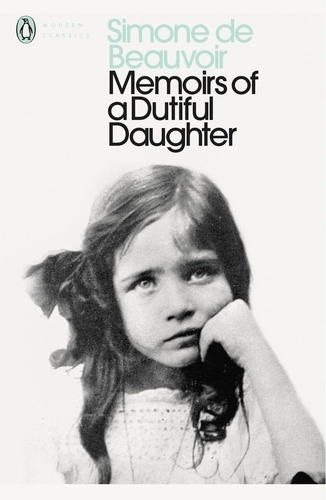
Memoirs of a Dutiful Daughter
Growing up in a respectable Parisian family, Simone de Beauvoir is taught to be a devout Catholic, an obedient daughter, and a woman destined for marriage. But as she discovers philosophy, literature, and the pleasure of independent thought, the beliefs that once defined her world begin to crumble. Questioning religion, challenging social conventions, and resisting her family’s expectations, she gradually realises that intellectual freedom comes at a price. Her journey towards independence is also a story of loneliness, friendship, and the painful discovery that the people we love can become obstacles to our becoming ourselves. Intimate and thought-provoking, this memoir captures the moment a young woman begins to break free from the life society has chosen for her.
France
1958
4

Best of Everything
The Best of Everything follows five young women working in a New York publishing company during the late 1950s as they navigate professional ambition, romance, and the expectations placed on women in postwar America. Caroline Bender dreams of building a meaningful career, while her colleagues struggle with relationships, financial insecurity, and the pressure to find suitable husbands. Their experiences reveal a world in which women are encouraged to pursue independence but are still judged by their marital status and appearance. As the characters encounter workplace discrimination, emotional disappointments, and difficult personal choices, they begin to question what success and happiness really mean. Jaffe offers an unvarnished portrait of women’s lives in a rapidly changing society, exploring the conflict between individual aspirations and conventional expectations. The novel examines gender inequality, ambition, and the price women are often expected to pay for trying to have both a career and a fulfilling personal life.
United States
1958
5

Gabriela, Clove and Cinnamon
Set in the coastal Brazilian town of Ilhéus in the 1920s, Gabriela, Clove and Cinnamon follows Gabriela, a beautiful and carefree young woman who arrives in town during a period of economic transformation driven by the cocoa trade. She becomes a cook in the bar of Nacib, a Syrian immigrant who falls in love with her and eventually marries her. However, Gabriela’s independent spirit and sensual nature clash with the conservative social expectations of marriage and respectability. Against the backdrop of political rivalries, changing gender roles, and the decline of traditional power structures, Jorge Amado portrays a society caught between old customs and modern aspirations. Blending romance, humor, and social satire, the novel explores desire, freedom, and the struggle of women to live beyond the constraints imposed by patriarchal traditions. Through its vivid characters and colorful setting, the book celebrates Brazilian culture and the transformative power of social change.
Brazil
1958
6
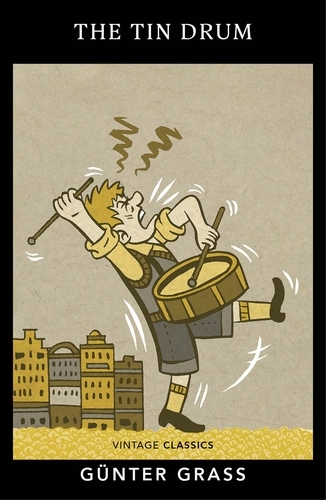
The Tin Drum
The Tin Drum is narrated by Oskar Matzerath, who recounts his life from a mental institution while reflecting on the turbulent history of Germany before, during, and after the Second World War. Born in Danzig in 1924, Oskar decides at the age of three to stop growing, using his small stature and tin drum to distance himself from the adult world. He also possesses a piercing scream capable of shattering glass. Through his strange perspective, the novel depicts the rise of Nazism, the violence of war, and the moral compromises of ordinary people. Grass combines grotesque humour, fantasy, and historical realism to challenge conventional narratives of innocence and responsibility. Oskar’s unreliable account exposes the contradictions of a society that participated in or tolerated fascism, examining collective guilt, denial, and the difficulty of confronting a traumatic national past.
Germany
1959
7
The Vet’s Daughter
Description:
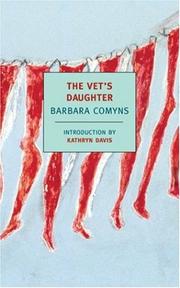
The Vet’s Daughter is a dark, surreal novel about Alice Rowlands, a young woman growing up in a troubled London household dominated by her cruel father, a veterinary surgeon, and her fragile, dying mother. Isolated and emotionally neglected, Alice struggles to escape her father’s oppressive control while witnessing the suffering that surrounds her. After her mother’s death, her circumstances become increasingly desperate, and the novel gradually moves from grim domestic realism into the grotesque and supernatural. Alice discovers an extraordinary ability that transforms her from a powerless victim into someone capable of astonishing feats, though this new power brings its own unsettling consequences. Through strange imagery, black humour, and fairy-tale-like elements, Comyns explores abuse, repression, female vulnerability, and the longing for liberation. The novel’s unsettling atmosphere highlights how an ordinary world can become deeply disturbing when viewed through the eyes of someone denied love, safety, and independence.
United Kingdom
1959
8

Jamila
Set in a Kyrgyz village during the Second World War, Jamila tells the story of a young woman whose husband is away serving at the front. Jamila lives with her husband’s family and helps transport grain alongside her teenage brother-in-law, Seit, who narrates the story. Their daily journeys bring them into contact with Daniyar, a quiet, solitary soldier whose deep love of music gradually reveals a sensitive inner world.
As Seit observes the growing connection between Jamila and Daniyar, he begins to understand that love cannot always be contained by social expectations or family obligations. Their relationship challenges the conventions of rural life, where duty and reputation often take precedence over individual happiness. Through vivid descriptions of the Kyrgyz landscape and the rhythms of village life, Aitmatov explores emotional freedom, artistic expression, and the courage required to choose one’s own path. The novella is also a coming-of-age story for Seit, whose discovery of love and beauty transforms his understanding of the world.
Kyrgyzstan
1960
9
To Kill a Mockingbird
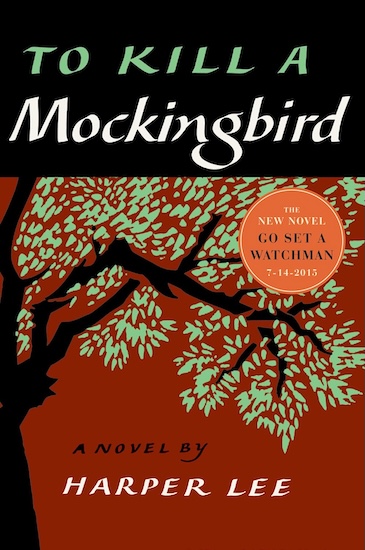
Set in the fictional town of Maycomb, Alabama, during the Great Depression, To Kill a Mockingbird is narrated by Scout Finch, a young girl growing up in a deeply segregated society. Her father, Atticus Finch, is a lawyer who agrees to defend Tom Robinson, a Black man falsely accused of assaulting a white woman. As Scout and her brother Jem observe the trial and its consequences, they encounter the realities of racial prejudice, social inequality, and moral courage. Their experiences challenge their childhood assumptions about justice and human goodness. Through Scout’s developing understanding of the world, Harper Lee examines the conflict between personal conscience and social convention, showing how prejudice can distort even the most fundamental principles of fairness.
United States
1960
10
The Death of Artemio Cruz
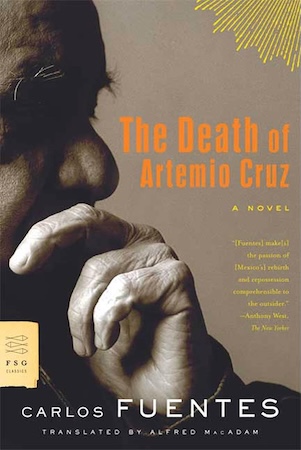
On his deathbed, Artemio Cruz, a wealthy and powerful Mexican businessman, looks back over a life built on ambition, betrayal, and corruption. Once a young soldier fighting in the Mexican Revolution, he began with ideals of justice and freedom. But as the years passed, he traded those ideals for wealth and influence, exploiting the very people the revolution had promised to liberate.
Through fragmented memories spanning several decades, Fuentes reconstructs Cruz’s rise from a young revolutionary to a ruthless political and economic power broker. His recollections reveal lost love, compromised loyalties, and the personal sacrifices behind his success. As his body fails, he must confront the gulf between the man he once hoped to become and the man he has made himself.
Experimenting with shifting perspectives and a nonlinear narrative, Fuentes transforms one man’s final hours into a sweeping portrait of twentieth-century Mexico. The novel exposes how revolutions can betray their promises, how power corrupts, and how personal ambition can become inseparable from a nation’s troubled history. Both a psychological reckoning and a fierce political critique, The Death of Artemio Cruz asks what remains of a person’s ideals when the pursuit of power has consumed everything else.
Mexico
1962
11

Men in the Sun and Other Palestinian Stories
Men in the Sun and Other Palestinian Stories brings together some of Ghassan Kanafani’s most powerful works of fiction, exploring the lives of Palestinians displaced by the creation of Israel in 1948 and the subsequent loss of their homes and homeland. The collection’s central novella, Men in the Sun, follows three Palestinian men of different generations who attempt to escape the poverty and desperation of refugee life by travelling illegally from Iraq to Kuwait in search of work. Entrusting their fate to a smuggler, they place their hopes in the possibility of a better future, only to confront the devastating consequences of their journey.
Through stories of exile, poverty, political oppression, and shattered aspirations, Kanafani portrays the psychological and material realities of displacement. His characters struggle not only with survival but also with questions of identity, dignity, and collective responsibility. Written with stark realism and symbolic depth, the collection examines the human cost of dispossession and the longing for a place to call home. It remains a significant work of Palestinian literature, giving voice to the experiences of a people shaped by exile and resistance.
Palestine
1962
12
Bomarzo
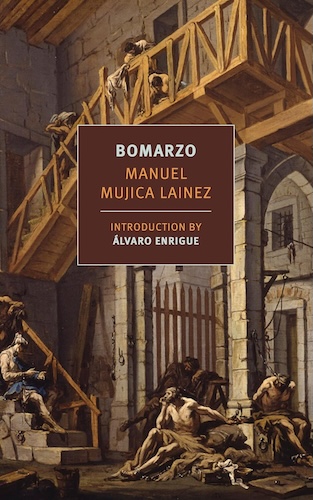
Set in Renaissance Italy, Bomarzo tells the story of Pier Francesco Orsini, a physically deformed nobleman who becomes the Duke of Bomarzo. Intelligent, sensitive, and deeply conscious of his appearance, he grows up surrounded by cruelty, political intrigue, and family rivalries. Determined to overcome his vulnerabilities and secure his place in a world obsessed with power and beauty, he navigates the dangerous world of Renaissance aristocracy. Narrated from beyond the grave, his story blends historical events with fantasy, philosophical reflection, and dark humor. Through Orsini’s life and his creation of the extraordinary Garden of Monsters, Manuel Mujica Lainez explores mortality, ambition, identity, and humanity’s enduring desire to defy death.
Argentina
1962