Books from Pakistan
Suggest a book
All genres
Historical Fiction
Literary Fiction
Fantasy
Romance
Horror
Thriller
Non-Fiction
Mystery
Memoir
Classics
History
Sci-Fi
Contemporary Fiction
Science Fiction
Fiction
Poetry
Essays
Family Saga
Magical Realism
Family Drama
Dark Academia
Psychological Fiction
Dark Comedy
Political Writing
Feminist Fiction
Satire
Campus Fiction
Cultural Studies
Biography
Philosophy
Comedy
Drama
Young Adult
Gothic
Dystopia
Crime
Children's Books
Short Stories
Mythology
Cozy
Retellings
Humour
Adventure
All themes
Love & Passion
Adventure & Journey
Identity & Belonging
War & Conflict
Freedom & Resistance
Family & Heritage
Nature & Landscape
Society & Class
Spirituality & Faith
Solitude & Exile
Coming of Age
Revolution & Change
Friendship
History
Immigration
Myths and Retellings
Colonialism
Women & Society
Mental Health
Motherhood
1
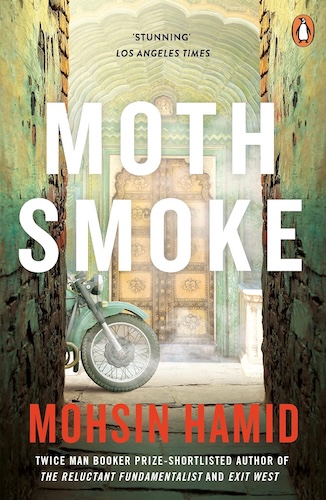
Moth Smoke
Set in Lahore during the sweltering summer of 1998, against the backdrop of Pakistan’s first nuclear tests, Moth Smoke follows Darashikoh “Daru” Shezad, a young banker whose carefully constructed life begins to collapse after he loses his job. Suddenly unable to maintain his place among the city’s privileged elite, Daru watches as his childhood friend Ozi returns from America with a wealthy lifestyle, a beautiful wife, and a future that seems increasingly out of reach. Daru becomes obsessed with Ozi’s wife, Mumtaz, a restless woman who secretly works as an investigative journalist, and their attraction draws him into a dangerous spiral of drugs, crime, and self-destruction. Told through shifting perspectives, courtroom testimonies, and the voices of those who know him, the novel gradually reveals the contradictions of its troubled protagonist. Beyond Daru’s personal downfall, Hamid paints a vivid portrait of a society divided by wealth, corruption, and inherited privilege. Like moths drawn irresistibly toward a flame, the characters pursue desires that may ultimately destroy them. Moth Smoke is a sharp, darkly humorous exploration of ambition, inequality, and moral collapse in a rapidly changing Pakistan.
2000
2
The Reluctant Fundamentalist
The Reluctant Fundamentalist follows Changez, a young Pakistani man who achieves professional success in New York after graduating from Princeton University. Recruited by an elite financial firm, he embraces the promise of the American dream and begins a relationship with Erica, a wealthy American woman struggling with grief. However, the attacks of September 11, 2001, transform the way Changez experiences life in the United States. Increasingly aware of the suspicion and hostility directed towards him because of his Pakistani identity, he begins to question his professional ambitions and his place in American society. Years later, he recounts his experiences to an American visitor in Lahore, leaving the reader uncertain about the encounter’s true nature. Hamid explores belonging, nationalism, prejudice, and the psychological consequences of living between cultures in a world divided by political fear.
2007
3
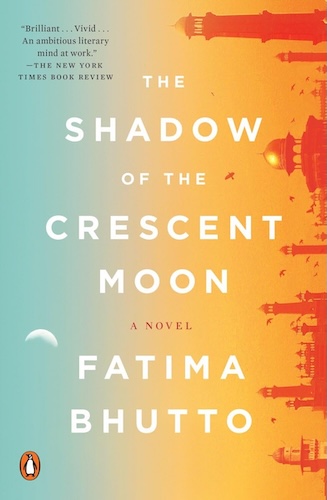
The Shadow of the Crescent Moon
In Mir Ali, a small town in Pakistan’s tribal region near the Afghan border, three brothers gather for breakfast on a rain-soaked Friday morning. Their lives have been shaped by years of conflict, political oppression, and personal loss, but each has chosen a different path. Aman Erum, the eldest, has returned from America after pursuing wealth and opportunity abroad. Sikandar, a doctor, dedicates himself to treating the wounded while struggling with the grief that has devastated his family. Hayat, the youngest, remains committed to his father’s revolutionary ideals and dreams of liberating their town from oppression. As the brothers go about their day, their lives intersect with those of two women whose experiences reveal the devastating consequences of violence and the difficult choices people make to survive. Set against the backdrop of the war in Afghanistan and the conflict spilling into Pakistan, The Shadow of the Crescent Moon explores family loyalty, political resistance, love, and the struggle to preserve one’s humanity in a world consumed by violence.
2013
4
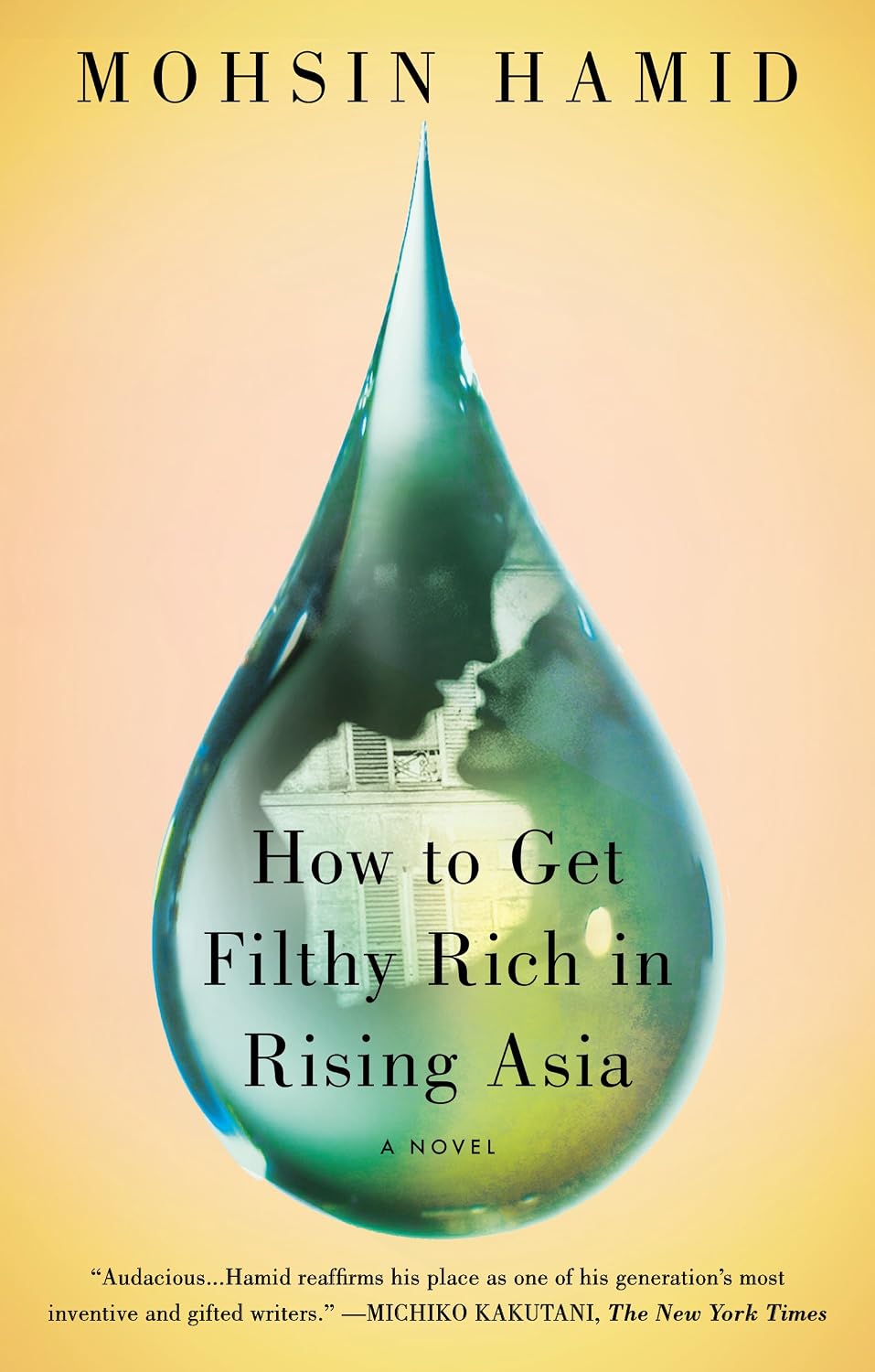
How to Get Filthy Rich in Rising Asia
Told in the second person, as though the reader is the protagonist, Mohsin Hamid’s inventive novel follows an unnamed boy’s extraordinary journey from rural poverty to immense wealth in a rapidly transforming South Asian city. Structured like a self-help manual, each chapter offers a rule for achieving financial success, from leaving the village to exploiting opportunities in the marketplace. As the protagonist moves into the city, he builds a business selling bottled water, turning a basic necessity into the foundation of his growing empire. Yet wealth brings neither complete security nor lasting fulfilment. Throughout his rise, he remains connected to a woman he first met as a teenager, whose own life follows a different but equally turbulent path. Against a backdrop of urbanisation, corruption, consumerism, and widening inequality, Hamid examines the costs of ambition in a society where almost everything has a price. Witty, romantic, and sharply observant, How to Get Filthy Rich in Rising Asia is both a satire of self-help culture and a moving reflection on love, mortality, and the elusive meaning of success.
2013
5
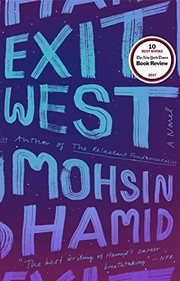
Exit West: A Novel
Exit West follows Nadia and Saeed, two young people who fall in love in an unnamed country descending into civil war. As violence spreads through their city, everyday life becomes increasingly dangerous, and the couple begins searching for a way to escape. They hear rumours of mysterious doors that can transport people to distant countries, offering a possible route to safety. After passing through one of these doors, Nadia and Saeed find themselves navigating the uncertainties of refugee life in unfamiliar places, including Greece, London, and California. Their relationship changes as they adapt to new communities and confront the emotional costs of displacement. Blending realism with speculative fiction, Hamid explores migration, borders, belonging, and the resilience required to build a future after leaving home. The novel also asks how movement across borders transforms individuals and societies.
2017
6
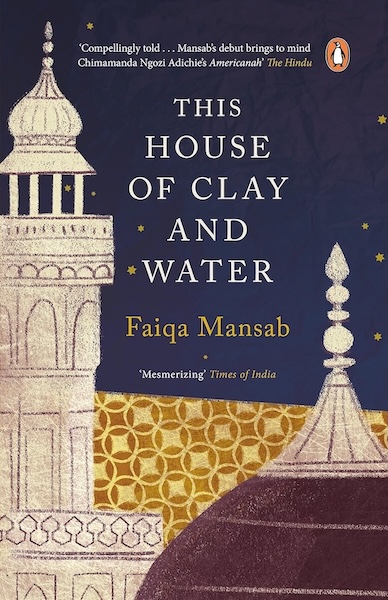
This House of Clay and Water
This House of Clay and Water follows two women whose lives intersect in contemporary Lahore, where social expectations, religious traditions, and personal desires shape the choices available to them. Nida is the wife of a police officer, living a life of privilege that conceals profound loneliness and dissatisfaction. When she encounters Bhanggi, a transgender woman living on the margins of society, an unexpected friendship develops between them. Their connection challenges the boundaries imposed by class, gender, and respectability.
Through their intertwined stories, Faiqa Mansab explores the search for belonging in a society where people who defy conventional expectations often face exclusion and violence. The novel also follows Sasha, a young man whose own emotional struggles become entangled with the women’s lives, adding further complexity to the story’s exploration of love and identity. Against the backdrop of Lahore’s vibrant yet deeply divided social landscape, the novel examines faith, desire, gender, and the human need for acceptance. It asks whether genuine connection can survive in a world determined to categorise people and dictate how they should live.
2017
7
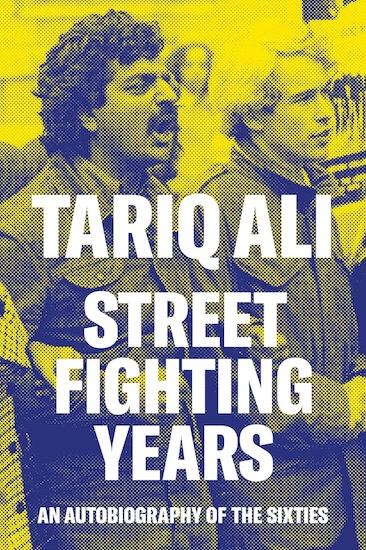
Street Fighting Years
In Street Fighting Years, Tariq Ali recounts his transformation from a young Pakistani student into one of the most prominent radical activists of the 1960s. Moving between London, Paris, Prague, Hanoi, and other centres of political upheaval, Ali offers a personal account of a decade defined by student revolts, anti-war demonstrations, revolutionary movements, and challenges to established political authority.
Through his encounters with figures such as Malcolm X, Bertrand Russell, Che Guevara, and Mick Jagger, Ali captures the energy and contradictions of a generation determined to reshape society. He reflects on the Vietnam War, the suppression of the Prague Spring, the rise of the international protest movement, and the growing opposition to Western imperialism. Blending autobiography with political history, the book explores the hopes, disagreements, and disappointments of activists who believed that collective action could transform the world. It is both a portrait of a turbulent era and a reflection on the personal costs of political commitment.
2018
8
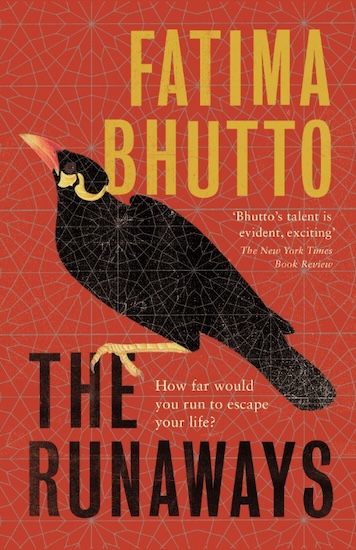
The Runaways
Three young people from vastly different backgrounds find themselves drawn toward radicalism in a world where the promise of belonging can become a dangerous obsession.
Anita Rose grows up in one of Karachi’s poorest neighbourhoods, dreaming of escaping poverty and discovering a world beyond the limits of her circumstances. When an elderly neighbour introduces her to literature and political ideas, she begins imagining a different future for herself. Monty Ahmed, the privileged son of a wealthy Pakistani businessman, has everything money can buy but struggles to find meaning in his comfortable existence. Meanwhile, Sunny Jamil grows up in Portsmouth, England, feeling alienated from both British society and his family’s expectations. When his charismatic cousin Oz returns from Syria, Sunny discovers a sense of purpose that he has long been missing.
As their lives converge, each protagonist is drawn into the orbit of an extremist movement operating across national borders. Their individual searches for identity, love, and belonging lead them toward choices with devastating consequences. Moving between Karachi, London, Portsmouth, and the deserts of Iraq, The Runaways explores youth radicalization, social inequality, cultural alienation, and the powerful human desire to feel part of something larger than oneself.
2018
9
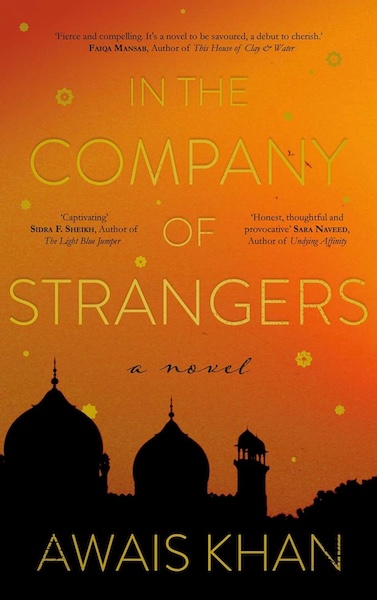
In the Company of Strangers
In the Company of Strangers follows Mona, a forty-one-year-old woman living in Lahore’s wealthy social circles. Despite her financial comfort and privileged lifestyle, she feels trapped in a loveless marriage to a cruel businessman and longs for genuine affection and independence. Seeking an escape from her emotional isolation, she reconnects with an old friend, Meera, who introduces her to a world of glamorous parties, secret affairs, and drugs. There, Mona meets Ali, a younger man whose troubled past and difficult circumstances conceal a deep emotional vulnerability.
As Mona and Ali fall into a forbidden relationship, their attempts to find happiness threaten to unravel their carefully maintained public lives. Against the backdrop of contemporary Pakistan, Awais Khan explores the contradictions of a society where wealth and status coexist with rigid social expectations and hidden suffering. The novel examines class inequality, gender roles, loneliness, and the price of personal freedom, revealing how the desire to escape one form of confinement can lead to unexpected and devastating consequences.
2019
10
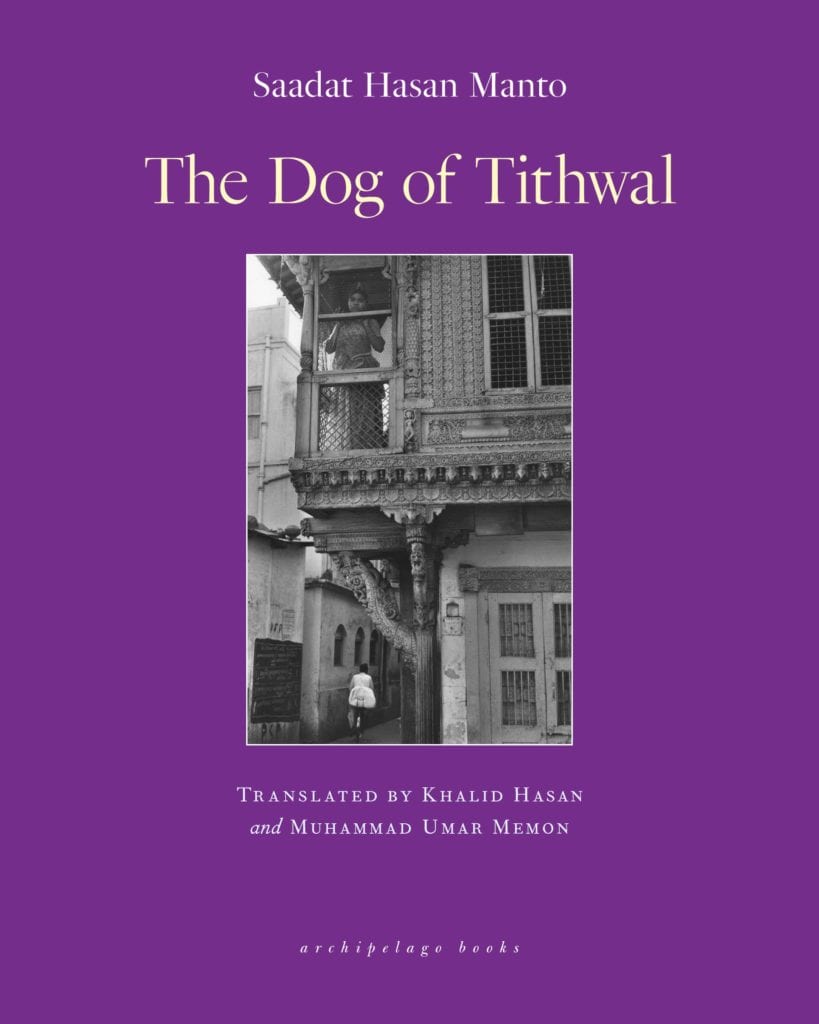
The Dog of Tithwal
On the mountainous border between India and Pakistan, two groups of soldiers face each other in a tense military standoff. Their routine is interrupted by the arrival of a stray dog, an innocent creature that wanders between the opposing camps. The soldiers begin to claim the dog as their own, giving it names and interpreting its movements as signs of loyalty or betrayal. What begins as a seemingly harmless game gradually turns sinister, exposing the absurdity of nationalism and the cruelty of a conflict in which even an animal cannot remain neutral. With biting irony and devastating simplicity, Saadat Hasan Manto transforms this brief encounter into a powerful allegory of Partition and the violence produced by artificial divisions. The story asks what happens to humanity when political identity becomes more important than compassion—and when the innocent are made to pay for the hostility of others.
2021
11
No Honour
No Honour follows sixteen-year-old Abida, who lives in a small Pakistani village governed by strict traditions and expectations surrounding family honour. Determined to choose whom she loves and build a life of her own, Abida challenges the conventions that control women’s lives. When her choices place her in grave danger, she escapes to Lahore with the help of her devoted father, Jamil, who risks everything to protect her.
As Jamil searches for his missing daughter, both are drawn into a world where the threats facing vulnerable women extend far beyond their village. Moving between rural Pakistan and the crowded streets of Lahore, Awais Khan explores the devastating consequences of honour-based violence, forced conformity, and gender inequality. The novel also examines the complicated relationship between parents and children, particularly the courage required to challenge deeply rooted cultural expectations. Through Abida’s struggle for survival and independence, No Honour becomes a powerful story about love, resilience, and the right to determine one’s own future.
2021
12
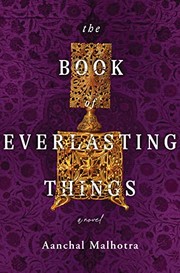
The Book of Everlasting Things
Set in Lahore during the final years of British rule in India, The Book of Everlasting Things tells the story of Samir Vij, a Hindu perfumer, and Firdaus Khan, a Muslim calligrapher. Their shared appreciation for beauty, craftsmanship, and traditional arts develops into a deep love as they imagine a future together. However, the Partition of India in 1947 transforms their world, dividing communities and forcing them onto opposite sides of a newly created border. Samir becomes an Indian citizen, while Firdaus becomes Pakistani, making their relationship increasingly difficult to sustain. Spanning decades and continents, the novel explores the ways political upheaval reshapes private lives and cultural traditions. Through the evocative worlds of perfume-making and calligraphy, Malhotra examines love, memory, belonging, and the enduring power of art to preserve what history threatens to destroy.
2022