Pakistan

Asia
Pakistan
28
books
18
authors

Books from Pakistan

1
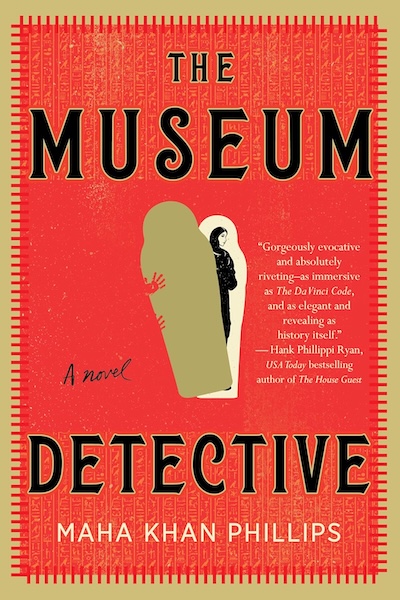
The Museum Detective
A mysterious mummy discovered in a remote Pakistani desert could rewrite history. But the closer archaeologist Gul Delani gets to the truth, the more dangerous her investigation becomes. Gul is a respected museum curator and one of Pakistan’s leading experts on ancient civilisations. For three years, she has also been haunted by the disappearance of her teenage niece, Mahnaz. When police summon Gul to examine a seemingly authentic mummy discovered during a drug raid, she hopes the unexpected assignment will offer a welcome distraction. Instead, the extraordinary artefact—with symbols linking it to the ancient Persian city of Persepolis—draws her into a world of antiquities smuggling, corruption, and powerful hidden interests. As the mummy disappears and threats close in, Gul begins to suspect that the archaeological mystery and her niece’s disappearance may be connected. Determined to uncover the truth, she must navigate Karachi’s criminal underworld while confronting painful questions about her own family. Blending archaeological intrigue with a gripping modern-day mystery, The Museum Detective explores the connections between history, power, and justice—and the lengths one woman will go to uncover what others want buried. Inspired by a real-life antiquities scandal in Pakistan, it launches a crime series featuring a compelling heroine.
2025
2
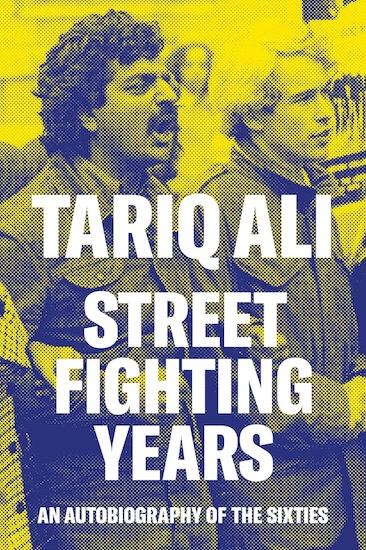
Street Fighting Years
In Street Fighting Years, Tariq Ali recounts his transformation from a young Pakistani student into one of the most prominent radical activists of the 1960s. Moving between London, Paris, Prague, Hanoi, and other centres of political upheaval, Ali offers a personal account of a decade defined by student revolts, anti-war demonstrations, revolutionary movements, and challenges to established political authority. Through his encounters with figures such as Malcolm X, Bertrand Russell, Che Guevara, and Mick Jagger, Ali captures the energy and contradictions of a generation determined to reshape society. He reflects on the Vietnam War, the suppression of the Prague Spring, the rise of the international protest movement, and the growing opposition to Western imperialism. Blending autobiography with political history, the book explores the hopes, disagreements, and disappointments of activists who believed that collective action could transform the world. It is both a portrait of a turbulent era and a reflection on the personal costs of political commitment.
2018
3
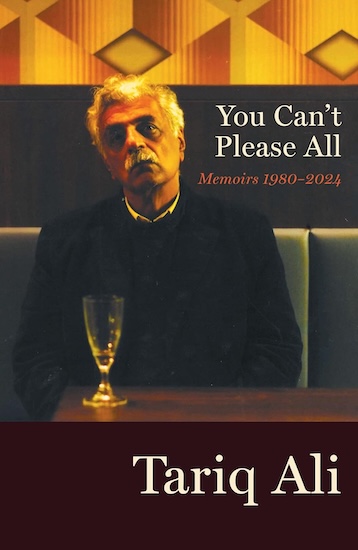
You Can’t Please All
In You Can’t Please All, Tariq Ali reflects on more than four decades of political activism, intellectual debate, and cultural life, continuing the story begun in his earlier memoir, Street Fighting Years. Moving between continents and pivotal historical moments, Ali recounts witnessing the collapse of the Soviet Union, meeting political figures such as Hugo Chávez, and campaigning against the wars in Iraq and Afghanistan as a prominent critic of Western foreign policy. Combining personal recollections, political commentary, anecdotes, and reflections on literature, theatre, and film, the memoir also offers intimate portraits of influential writers, activists, and friends, including Edward Said and Benazir Bhutto. Ali explores the relationship between personal convictions and public life, tracing the changing fortunes of the political left from the aftermath of the revolutionary movements of the 1960s to the conflicts and ideological struggles of the twenty-first century. The book also looks back at his family’s experiences in the early years of Pakistan, connecting his personal history with the broader political forces that shaped his life.
2024
4
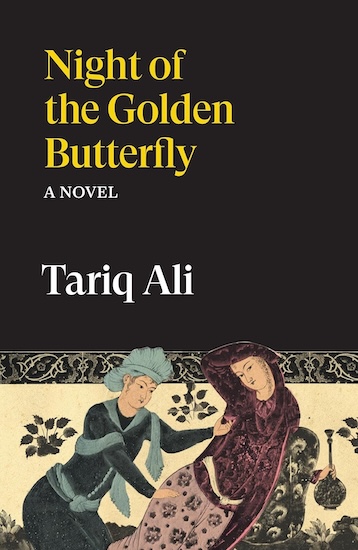
Night of the Golden Butterfly (The Islam Quintet)
Moving between Lahore, London, Paris, and Beijing, Tariq Ali’s Night of the Golden Butterfly explores friendship, love, political disillusionment, and the changing identity of Pakistan. The story follows Dara, a writer living in London, who is asked by his old friend Mohammed Aflatun—nicknamed Plato, an eccentric and gifted painter—to write the story of his life. As Dara reconnects with people from his past, old romances and long-buried memories resurface, revealing the complicated relationships that bind their lives together. Alongside this contemporary narrative, the novel reaches back into Chinese-Muslim history through the family of Jindie, Dara’s first love. Blending satire, personal recollection, and historical storytelling, Ali examines the tensions between East and West, the effects of political power and religious fundamentalism, and the struggles of a society confronting its own contradictions. The novel is the fifth and final volume of The Islam Quintet.
2026
5
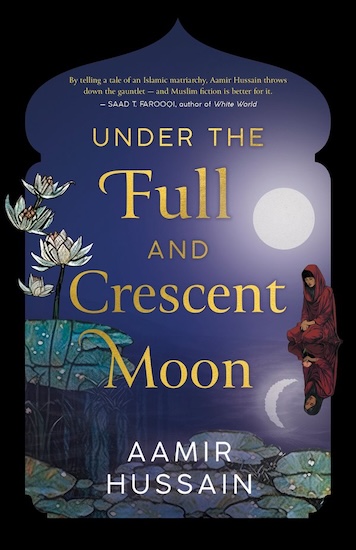
Under the Full and Crescent Moon
Set during the Islamic Golden Age, Under the Full and Crescent Moon imagines a fictional Muslim city governed by women, where religious scholarship, social equality, and community leadership have developed within a distinctive matriarchal society. Khadija, the intelligent but sheltered daughter of the city’s leading Islamic jurist, has spent much of her life immersed in books and religious scholarship. When her father appoints her as his assistant and scribe, she steps beyond the familiar walls of her home and discovers a wider world of friendships, female mentorship, and intellectual possibility. Under the guidance of influential women, including Imam Fatima and the Circle of Mothers, Khadija begins to understand her own potential. But the city’s relative peace is threatened when religious hardliners attempt to undermine its traditions and restrict the rights of women and religious minorities. Khadija must draw on her knowledge of Islamic law and her growing confidence to challenge those who seek to reshape her society through intolerance. Combining historical imagination with questions about faith, justice, and power, the novel explores women’s leadership and the ways religious teachings can be interpreted and used to protect or undermine social freedoms. At its heart, it is a coming-of-age story about a young woman discovering that knowledge can be a powerful instrument of change.
2025

Famous authors from Pakistan

About Pakistan

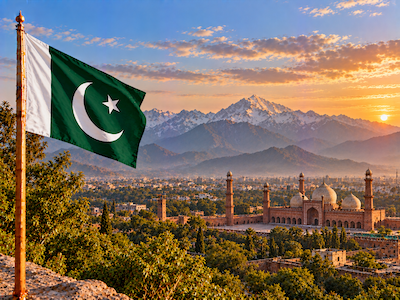
Pakistan is a country in South Asia, stretching from the towering peaks of the Karakoram, Himalayas, and Hindu Kush to the fertile Indus River plains, arid deserts, and Arabian Sea coastline. Its landscapes range from snow-covered mountains in the north to the agricultural heartlands of Punjab and the dramatic deserts of Sindh and Balochistan. Islamabad, Lahore, and Karachi are important political, cultural, and literary centers. Pakistan’s cultural identity reflects a rich mixture of South Asian, Persian, Central Asian, and Islamic influences, expressed through its languages, architecture, music, and traditions.

Region
Asia
Literary Context

Pakistan has a rich literary heritage shaped by Urdu and Persian poetry, Sufi traditions, regional storytelling, folk epics, and oral literature. Poetry holds a particularly important place in cultural life, with forms such as the ghazal and nazm exploring love, spirituality, social justice, politics, and personal longing. Regional languages—including Punjabi, Sindhi, Pashto, Balochi, and Saraiki—also sustain distinctive literary traditions rooted in local histories and oral storytelling. Among the country’s most influential literary figures are Allama Muhammad Iqbal, whose philosophical poetry explores identity and spiritual renewal; Faiz Ahmed Faiz, celebrated for combining lyricism with themes of freedom and social justice; and Saadat Hasan Manto, whose short stories portray the human consequences of the 1947 Partition. Other important writers include Bano Qudsia, Intizar Husain, Kishwar Naheed, and Mohammed Hanif. Contemporary Pakistani literature frequently explores Partition, migration, gender, class, religious identity, political power, family, and the tensions between tradition and modernity. Its multilingual character offers a wide range of perspectives on life in Pakistan and the wider South Asian diaspora.

Asia