Books from Pakistan
Suggest a book
All genres
Historical Fiction
Literary Fiction
Fantasy
Romance
Horror
Thriller
Non-Fiction
Mystery
Memoir
Classics
History
Sci-Fi
Contemporary Fiction
Science Fiction
Fiction
Poetry
Essays
Family Saga
Magical Realism
Family Drama
Dark Academia
Psychological Fiction
Dark Comedy
Political Writing
Feminist Fiction
Satire
Campus Fiction
Cultural Studies
Biography
Philosophy
Comedy
Drama
Young Adult
Gothic
Dystopia
Crime
Children's Books
Short Stories
Mythology
Cozy
Retellings
Humour
Adventure
All themes
Love & Passion
Adventure & Journey
Identity & Belonging
War & Conflict
Freedom & Resistance
Family & Heritage
Nature & Landscape
Society & Class
Spirituality & Faith
Solitude & Exile
Coming of Age
Revolution & Change
Friendship
History
Immigration
Myths and Retellings
Colonialism
Women & Society
Mental Health
Motherhood
1
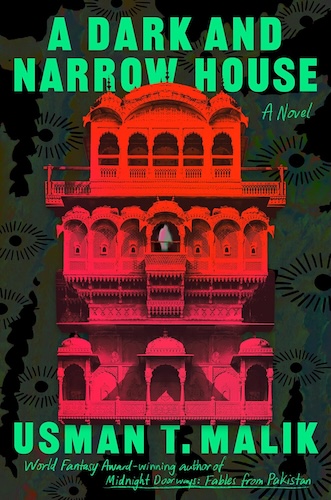
A Dark and Narrow House
When a mysterious, deadly plague sweeps across the world, a group of friends seeks refuge in a luxurious countryside mansion near the Pakistan–India border. But the haveli conceals an ancient darkness, and when they uncover a sealed chest hidden in a nearby cave, they unleash a primordial force that turns their sanctuary into a nightmare. Trapped inside the sprawling estate, the friends begin to unravel under the influence of its sinister magic, confronting buried traumas, personal demons, and the stories they tell themselves to survive. Drawing on South Asian and Middle Eastern folklore, this atmospheric dark fantasy explores memory, fear, and the terrifying power of the past.
2027
2
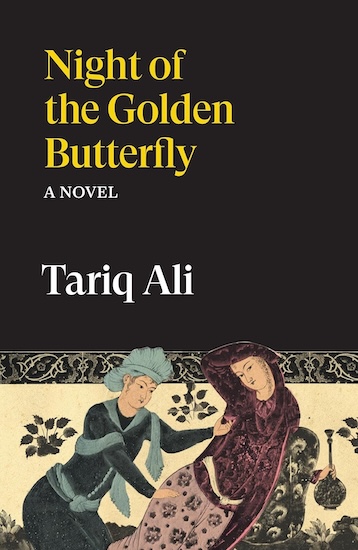
Night of the Golden Butterfly (The Islam Quintet)
Moving between Lahore, London, Paris, and Beijing, Tariq Ali’s Night of the Golden Butterfly explores friendship, love, political disillusionment, and the changing identity of Pakistan. The story follows Dara, a writer living in London, who is asked by his old friend Mohammed Aflatun—nicknamed Plato, an eccentric and gifted painter—to write the story of his life. As Dara reconnects with people from his past, old romances and long-buried memories resurface, revealing the complicated relationships that bind their lives together.
Alongside this contemporary narrative, the novel reaches back into Chinese-Muslim history through the family of Jindie, Dara’s first love. Blending satire, personal recollection, and historical storytelling, Ali examines the tensions between East and West, the effects of political power and religious fundamentalism, and the struggles of a society confronting its own contradictions. The novel is the fifth and final volume of The Islam Quintet.
2026
3
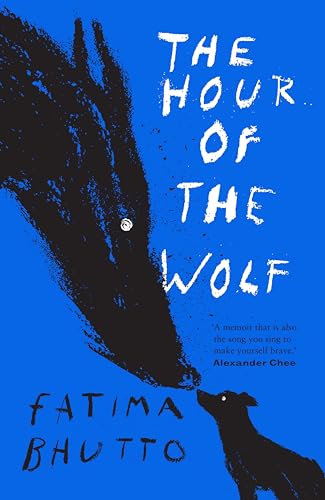
The Hour of the Wolf
After losing her father to political violence as a teenager, Fatima Bhutto grows up longing for the security and happiness of a family of her own. Years later, she falls in love with a charismatic man who seems to offer everything she has dreamed of. But what begins as an intoxicating romance gradually becomes a decade-long relationship marked by manipulation, emotional cruelty, and control. As her world narrows, Bhutto begins to question her own judgment and the future she has spent years waiting for. During the isolation of the 2020 pandemic, she retreats to the English countryside with her fiercely loyal Jack Russell terrier, Coco. Through the companionship of her dog, the restorative power of nature, and reflections on literature, mythology, art, and astronomy, she begins to find the courage to reclaim her life. Intimate and unflinching, The Hour of the Wolf is a memoir about grief, coercive relationships, loneliness, and the unexpected forms of love that help us find our way back to ourselves.
2026
4
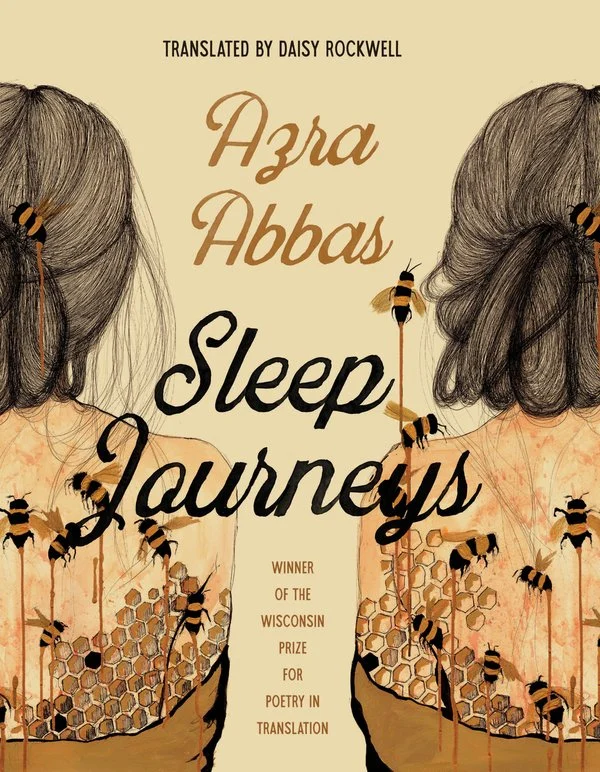
Sleep Journeys
First published in 1981, Sleep Journeys is a groundbreaking long-form prose poem that explores the hidden landscapes of a woman’s inner life. Moving through the shifting territory between sleep and wakefulness, dreams and reality, Azra Abbas examines faith, female desire, sexuality, and the subconscious with startling intimacy. Divided into three cantos, the work unfolds through recurring images, fragmented thoughts, and poetic repetitions rather than a conventional narrative. Its seemingly simple language conceals a complex emotional world in which private fantasies and suppressed desires emerge alongside questions of identity, spirituality, and the constraints placed on women. When Abbas first published the poem, her experimental approach challenged established expectations of Urdu poetry, particularly its traditional forms and conventions. The result is both intimate and radical: a work that gives voice to thoughts and desires rarely expressed openly, transforming the private experience of a woman into a profound meditation on consciousness and freedom. More than four decades after its original publication, Sleep Journeys remains a landmark of modern Urdu feminist literature.
2026
5
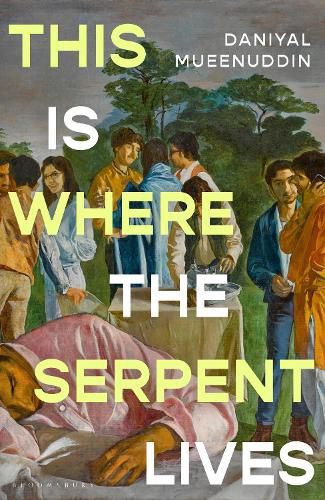
This is Where the Serpent Lives
Spanning six decades, This Is Where the Serpent Lives is an expansive portrait of contemporary Pakistan, where wealth, privilege and inherited social hierarchies shape the destinies of generations. At its centre is Yazid, an orphan who rises from poverty on the streets of Rawalpindi to become a trusted chauffeur in the household of a powerful landowning family. Around him, the lives of aristocrats, servants, ambitious farmers and young lovers intersect across Pakistan’s chaotic cities and feudal countryside. Saqib, the son of a poor gardener, receives an opportunity to manage a new agricultural enterprise, but his determination to improve his position leads him into dangerous territory. Meanwhile, rivalries, romantic entanglements and political corruption threaten the fragile order maintained by the wealthy elite. Through a richly interconnected cast of characters, Mueenuddin examines the price of ambition and the ways class, money and power perpetuate inequality. The novel offers an intimate, unsparing view of a society caught between changing aspirations and deeply entrenched traditions.
2026
6
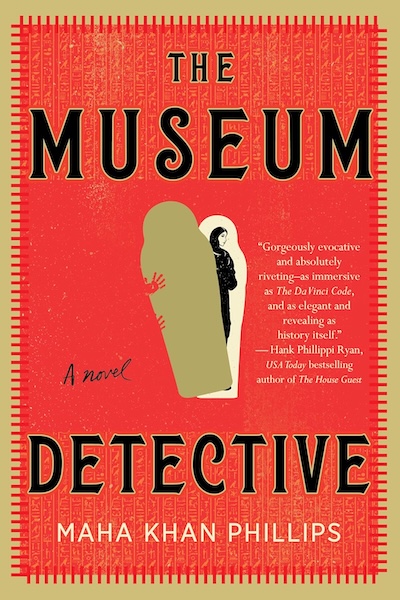
The Museum Detective
A mysterious mummy discovered in a remote Pakistani desert could rewrite history. But the closer archaeologist Gul Delani gets to the truth, the more dangerous her investigation becomes.
Gul is a respected museum curator and one of Pakistan’s leading experts on ancient civilisations. For three years, she has also been haunted by the disappearance of her teenage niece, Mahnaz. When police summon Gul to examine a seemingly authentic mummy discovered during a drug raid, she hopes the unexpected assignment will offer a welcome distraction. Instead, the extraordinary artefact—with symbols linking it to the ancient Persian city of Persepolis—draws her into a world of antiquities smuggling, corruption, and powerful hidden interests.
As the mummy disappears and threats close in, Gul begins to suspect that the archaeological mystery and her niece’s disappearance may be connected. Determined to uncover the truth, she must navigate Karachi’s criminal underworld while confronting painful questions about her own family.
Blending archaeological intrigue with a gripping modern-day mystery, The Museum Detective explores the connections between history, power, and justice—and the lengths one woman will go to uncover what others want buried. Inspired by a real-life antiquities scandal in Pakistan, it launches a crime series featuring a compelling heroine.
2025
7
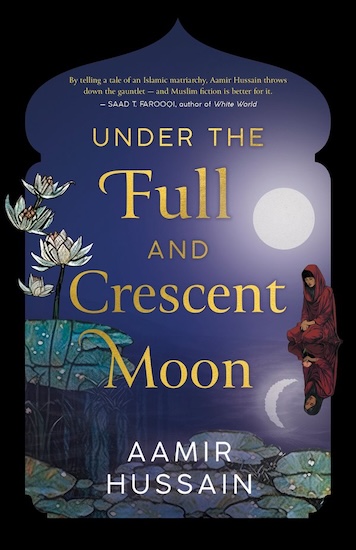
Under the Full and Crescent Moon
Set during the Islamic Golden Age, Under the Full and Crescent Moon imagines a fictional Muslim city governed by women, where religious scholarship, social equality, and community leadership have developed within a distinctive matriarchal society.
Khadija, the intelligent but sheltered daughter of the city’s leading Islamic jurist, has spent much of her life immersed in books and religious scholarship. When her father appoints her as his assistant and scribe, she steps beyond the familiar walls of her home and discovers a wider world of friendships, female mentorship, and intellectual possibility. Under the guidance of influential women, including Imam Fatima and the Circle of Mothers, Khadija begins to understand her own potential.
But the city’s relative peace is threatened when religious hardliners attempt to undermine its traditions and restrict the rights of women and religious minorities. Khadija must draw on her knowledge of Islamic law and her growing confidence to challenge those who seek to reshape her society through intolerance.
Combining historical imagination with questions about faith, justice, and power, the novel explores women’s leadership and the ways religious teachings can be interpreted and used to protect or undermine social freedoms. At its heart, it is a coming-of-age story about a young woman discovering that knowledge can be a powerful instrument of change.
2025
8
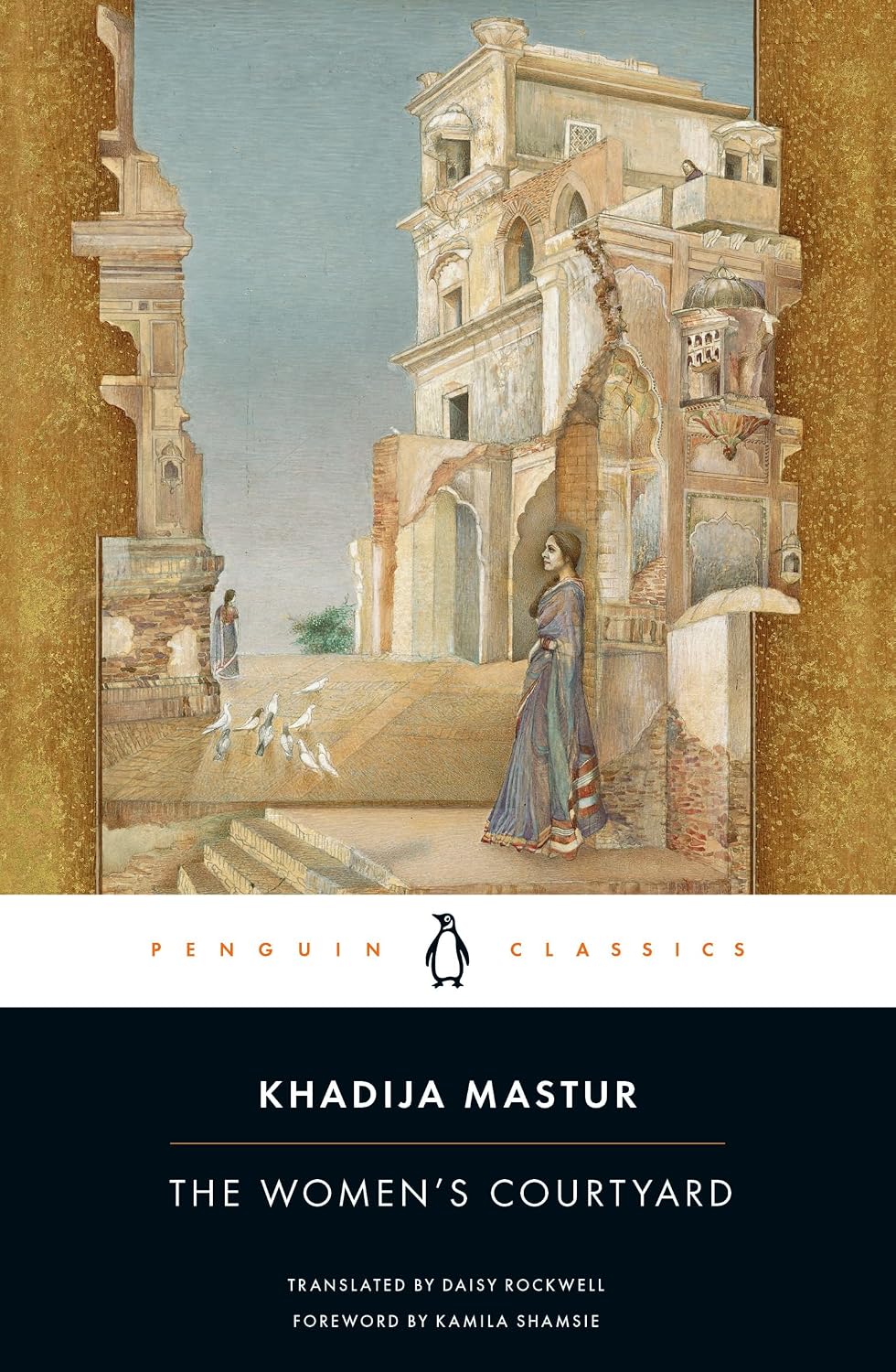
The Women's Courtyard
The Women’s Courtyard follows Aliya, a young Muslim girl growing up in an extended family in the years surrounding the Partition of British India. Much of the family’s life unfolds within the secluded courtyard of their home, where women manage domestic responsibilities, negotiate relationships, and respond to the political changes taking place beyond their walls. While the men become absorbed in the struggle for independence, the women face mounting financial difficulties and the consequences of decisions made largely without their participation. Aliya, meanwhile, longs for an education and a future that extends beyond the limits imposed on her. Through the everyday experiences of the household, Mastur presents a distinctive perspective on a period usually narrated through political leaders and public events. The novel explores gender inequality, family obligations, and women’s quiet determination to claim greater control over their lives.
2025
9
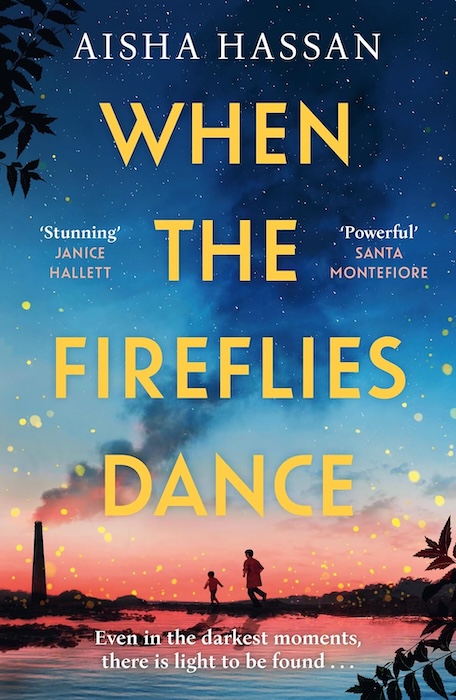
When the Fireflies Dance
When the Fireflies Dance tells the story of Lalloo, a young boy growing up in poverty near Lahore, Pakistan, where his family is trapped in a system of bonded labour at a brick kiln. After witnessing the brutal murder of his brother, Lalloo struggles to overcome the trauma of that night while confronting the exploitation and violence that govern his family’s existence. His parents and sisters remain trapped in a cycle of debt, forced to work endlessly under oppressive conditions. Determined to change their circumstances, Lalloo must find the courage to confront his past and seek a different future. Inspired by the realities of bonded labour in South Asia, Hassan explores injustice, family loyalty, and the human cost of exploitation. The novel portrays the resilience required to challenge an oppressive system and the hope that can survive even in the darkest circumstances.
2025
10
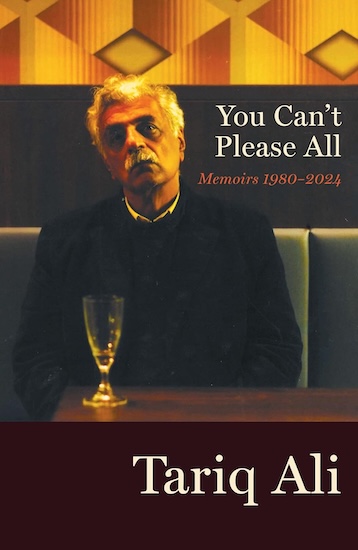
You Can’t Please All
In You Can’t Please All, Tariq Ali reflects on more than four decades of political activism, intellectual debate, and cultural life, continuing the story begun in his earlier memoir, Street Fighting Years. Moving between continents and pivotal historical moments, Ali recounts witnessing the collapse of the Soviet Union, meeting political figures such as Hugo Chávez, and campaigning against the wars in Iraq and Afghanistan as a prominent critic of Western foreign policy.
Combining personal recollections, political commentary, anecdotes, and reflections on literature, theatre, and film, the memoir also offers intimate portraits of influential writers, activists, and friends, including Edward Said and Benazir Bhutto. Ali explores the relationship between personal convictions and public life, tracing the changing fortunes of the political left from the aftermath of the revolutionary movements of the 1960s to the conflicts and ideological struggles of the twenty-first century. The book also looks back at his family’s experiences in the early years of Pakistan, connecting his personal history with the broader political forces that shaped his life.
2024
11
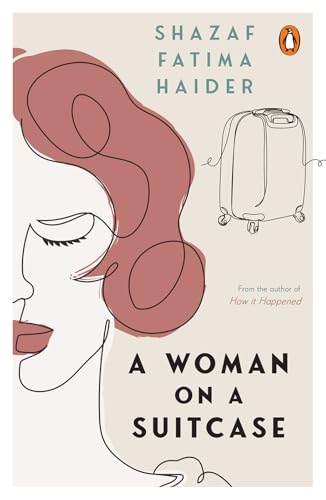
A Woman on a Suitcase
Newly married Seema Hyderi has been thrown out of her husband’s home for the third time in just ten months. Sitting on her suitcase outside her in-laws’ house, she faces a life-changing decision: return to her husband and submit to his demands, or walk away from her marriage and reclaim her independence. What follows is a journey from Karachi to London and back, taking Seema through complicated family relationships, manipulative matchmakers, unspoken expectations, and the uncomfortable realities of married life. As she confronts the pressures imposed on women to preserve their marriages at any cost, Seema begins to question what happiness, freedom, and love truly mean. Blending sharp humour with emotional depth, Shazaf Fatima Haider’s novel offers an incisive look at marriage, domestic control, and the courage it takes to choose a different life within a society where a woman’s reputation is often tied to her relationship status.
2024
12
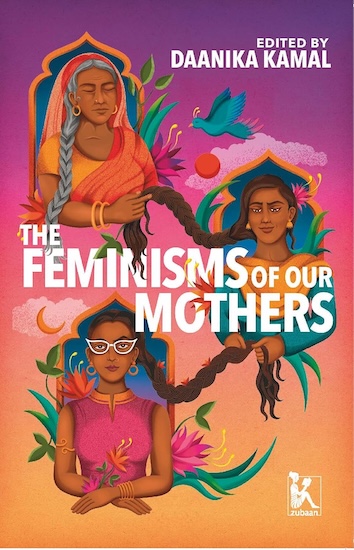
The Feminisms Of Our Mothers
What did feminism mean to our mothers—and how does their understanding of womanhood shape the lives of their daughters? In this moving collection of essays, women from Pakistan reflect on their mothers’ experiences of marriage, motherhood, tradition, resistance, and independence. Some mothers marched for women’s emancipation in the 1980s; others challenged social expectations through quieter, everyday acts of self-determination. Their daughters inherit both the freedoms they fought for and the limitations they could not escape. Exploring the tensions between generations, cultural expectations, and evolving ideas of feminism, this collection offers a nuanced portrait of Pakistani women’s lives and the complicated love that binds mothers and daughters.
2024