Books from Morocco
Suggest a book
All genres
Historical Fiction
Literary Fiction
Fantasy
Romance
Horror
Thriller
Non-Fiction
Mystery
Memoir
Classics
History
Sci-Fi
Contemporary Fiction
Science Fiction
Fiction
Poetry
Essays
Family Saga
Magical Realism
Family Drama
Dark Academia
Psychological Fiction
Dark Comedy
Political Writing
Feminist Fiction
Satire
Campus Fiction
Cultural Studies
Biography
Philosophy
Comedy
Drama
Young Adult
Gothic
Dystopia
Crime
Children's Books
Short Stories
Mythology
Cozy
Retellings
Humour
Adventure
All themes
Love & Passion
Adventure & Journey
Identity & Belonging
War & Conflict
Freedom & Resistance
Family & Heritage
Nature & Landscape
Society & Class
Spirituality & Faith
Solitude & Exile
Coming of Age
Revolution & Change
Friendship
History
Immigration
Myths and Retellings
Colonialism
Women & Society
Mental Health
Motherhood
1
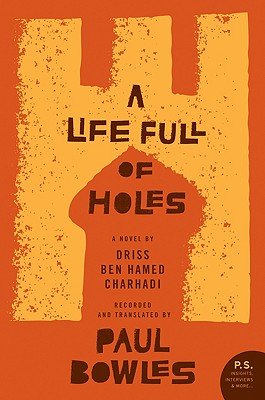
A Life Full of Holes
Set in Morocco during the mid-twentieth century, A Life Full of Holes follows Ahmed, a poor boy growing up in a society marked by poverty, inequality, and the lingering effects of colonialism. After his father disappears from his life and his mother remarries, Ahmed finds himself unwanted in his own home. Forced to fend for himself from an early age, he moves between jobs as a shepherd, labourer, baker’s assistant, and house servant, struggling to secure food, shelter, and a little dignity.
As Ahmed grows older, his experiences expose him to exploitation, police brutality, betrayal, and the harsh realities of life on the margins of Moroccan society. His journey is not a conventional story of triumph over adversity; instead, it presents survival as a daily struggle in a world where opportunities are scarce and power belongs to those who can exploit others.
The book is particularly distinctive because of its origins. Larbi Layachi dictated his life story in Moroccan Arabic to American writer Paul Bowles, who recorded and translated it into English. First published under the pseudonym Driss ben Hamed Charhadi, the narrative blurs the boundaries between autobiography and fiction, offering an intimate perspective on lives rarely represented in Western literature.
Through Ahmed’s experiences, the book explores childhood hardship, social exclusion, and the struggle to preserve one’s humanity in difficult circumstances. Its direct, unembellished storytelling gives readers a vivid portrait of everyday life in Morocco during a period of profound social and historical change.
1964
2
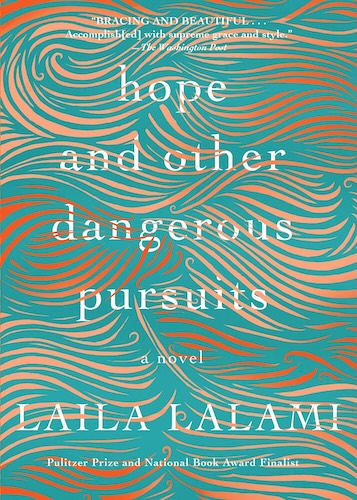
Hope and Other Dangerous Pursuits
Hope and Other Dangerous Pursuits follows four Moroccan migrants who attempt to cross the Strait of Gibraltar in a small inflatable boat, hoping to reach Spain and build better lives in Europe. Each has a different reason for leaving Morocco: unemployment, family responsibilities, personal dissatisfaction, or the desire to escape restrictive social expectations. Their dangerous journey ends with their interception by Spanish authorities, and the novel then traces the experiences that led each character to risk everything for an uncertain future.
Through interwoven narratives, Laila Lalami explores the economic inequalities, political frustrations, and social pressures that motivate migration. She reveals the difficult realities facing those who remain in Morocco, as well as the hopes and compromises of those who leave. The novel challenges simplistic ideas about immigration by presenting its characters as complex individuals with conflicting desires, private struggles, and understandable ambitions. Moving between Morocco and Spain, it examines belonging, identity, family, and the uncertain promise of a better life, asking what freedom means when the pursuit of opportunity requires risking everything.
2005
3
The Rule of Barbarism
Written during his imprisonment for political dissent in Morocco, The Rule of Barbarism is a searing poetic confrontation with oppression, cruelty, and the violence embedded in human society. First published in 1976, this landmark work captures the consciousness of a society trapped between its colonial past and the brutal realities of dictatorship. Through urgent, often unsettling poetry, Abdellatif Laâbi explores the psychological and moral consequences of living under authoritarian power, where fear threatens to destroy both individual freedom and collective hope. Yet his vision extends beyond political condemnation. Laâbi also examines the capacity for barbarism within every human being, questioning how victims of cruelty might resist becoming perpetrators themselves. Anger, despair, tenderness, and compassion coexist throughout the collection, creating a powerful meditation on the struggle to preserve humanity in inhuman conditions. Written from the experience of imprisonment, The Rule of Barbarism transforms personal suffering into a universal appeal for justice, empathy, and liberation.
2012
4
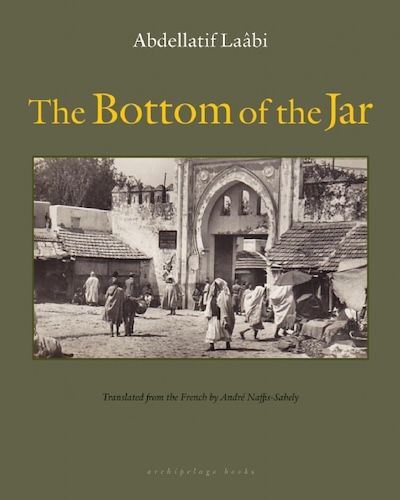
The Bottom of the Jar
Set in Fez during the 1950s, as Morocco struggles to free itself from French colonial rule, The Bottom of the Jar is a richly textured portrait of childhood, family, and a city on the threshold of transformation. Through the eyes of a young boy discovering the world around him, Abdellatif Laâbi evokes the bustling streets of the old medina, the colourful characters who inhabit them, and the intimate dramas unfolding behind closed doors. At the centre of this world is the boy’s family: a generous father, a formidable mother whose passionate prayers and sharp wit fill their home, and an eccentric uncle whose love of hashish and storytelling turns him into a kind of Homer after dark. Humorous, tender, and occasionally heartbreaking, the novel captures the contradictions of a society caught between inherited traditions and the promise of independence. Drawing on the author’s own childhood, it celebrates the imagination and resilience of ordinary people while exploring how political change reshapes private lives.
2013
5
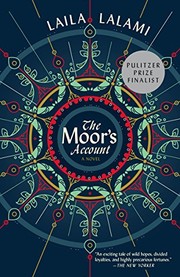
The Moor's Account
The Moor’s Account is a historical novel that reimagines the story of Mustafa al-Zamori, a Moroccan man enslaved by Spanish conquistadors who became one of the first Africans to explore the Americas. In 1527, Mustafa joins an expedition led by Pánfilo de Narváez, which sets out to claim territory in what is now Florida for the Spanish Crown. When the expedition collapses under the pressures of disease, starvation, and conflict with Indigenous communities, Mustafa becomes one of only four survivors.
As he travels across unfamiliar lands, his role gradually changes from enslaved servant to healer, interpreter, and storyteller. Through his imagined memoir, Lalami challenges the traditional historical narratives that privilege European voices while overlooking the experiences of those who were enslaved or marginalized. The novel explores identity, cultural encounters, survival, and the power of storytelling to reclaim histories that might otherwise be forgotten.
2014
6
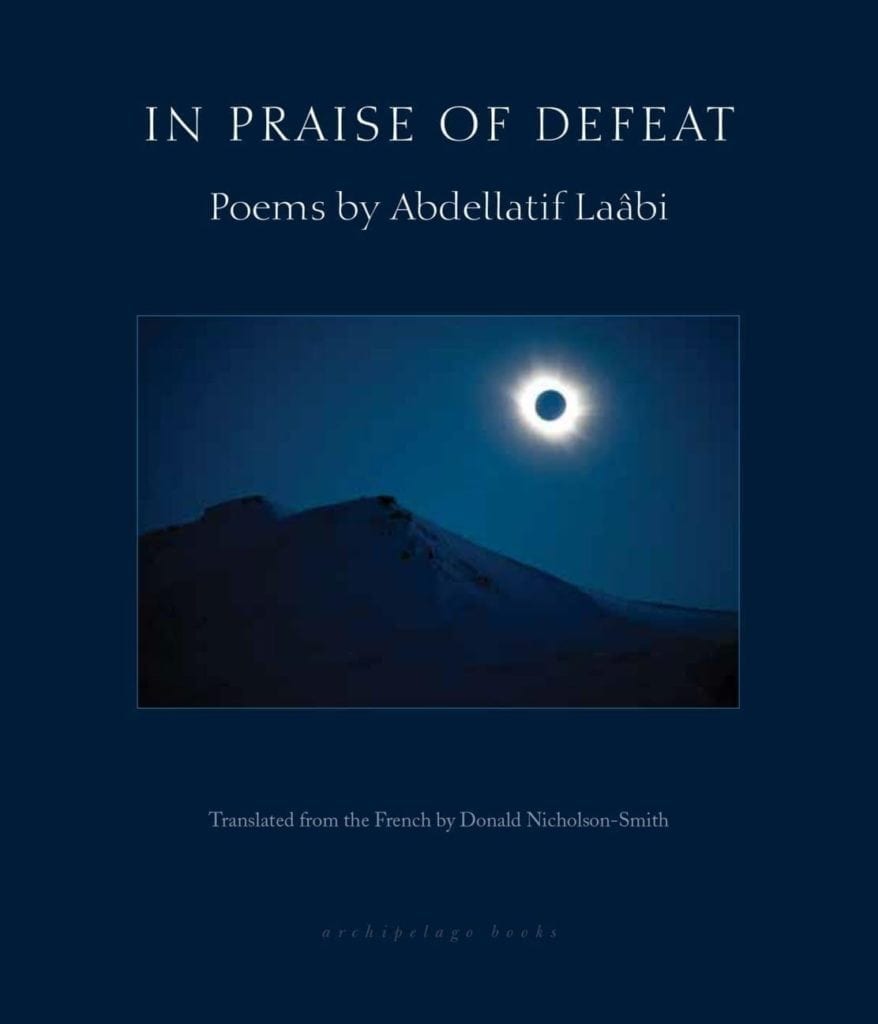
In Praise of Defeat
Spanning six decades of writing, In Praise of Defeat is a powerful collection tracing the evolution of one of Morocco’s most important contemporary poets. Through poems shaped by political imprisonment, exile, love, and the struggle for human dignity, Abdellatif Laâbi confronts the brutality of authoritarian power while insisting on the possibility of hope. His early works carry the urgency of protest, bearing witness to censorship, torture, and the silencing of dissent. Later poems become more intimate and reflective, exploring tenderness, family, spirituality, and the fragile beauty of everyday existence. Yet resistance remains at the heart of his work: for Laâbi, poetry is not an escape from reality but a way of confronting it without surrendering one’s humanity. Moving between anguish and joy, political defiance and personal vulnerability, these poems celebrate the courage to continue creating even in the face of defeat. The collection ultimately suggests that failure need not mean surrender—and that preserving one’s capacity to love, imagine, and speak freely is itself a form of victory.
2017
7
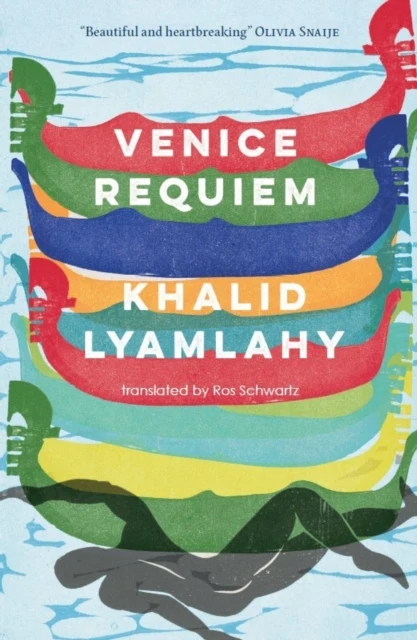
Venice Requiem
On a cold January day in 2017, a young Gambian refugee named Pateh Sabally drowns in Venice’s Grand Canal while tourists and passers-by watch. Some even hurl insults at him. Horrified by this tragedy, a young writer sets out to reconstruct Pateh’s final days and understand the circumstances that led to his death. Moving through Venice’s literary history, from Thomas Mann to Marcel Proust, the narrator confronts an uncomfortable question: what does it mean to celebrate beauty and culture while turning away from human suffering? Blending fiction, investigation, and literary reflection, Khalid Lyamlahy offers a powerful meditation on migration, racism, indifference, and the moral responsibility of witnessing another person’s pain. Venice Requiem is both a tribute to a forgotten life and an indictment of a society that too often fails to recognise the humanity of those on its margins.
2023
8
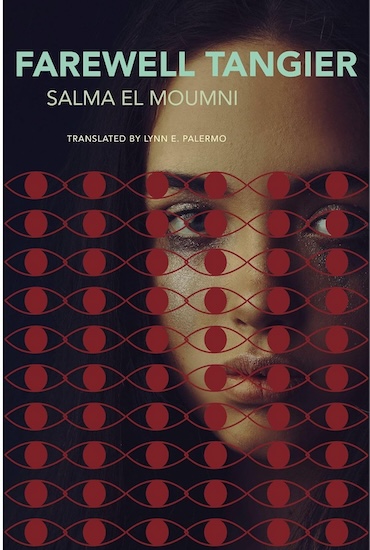
Farewell Tangier
Growing up in Tangier, Alia is constantly subjected to the unwanted attention of men who scrutinize her body, follow her, and invade her space. Desperate to understand the gaze that makes her feel both exposed and ashamed, she begins taking intimate photographs of herself in the privacy of her bedroom. When the images appear online without her consent, Alia faces the threat of punishment and is forced to flee to Lyon, France. But leaving Morocco cannot erase the shame, fear, and cultural expectations she carries with her. Intimate and unsettling, this powerful novel examines the policing of women’s bodies, sexual identity, and the complicated search for freedom between two cultures.
2026
9
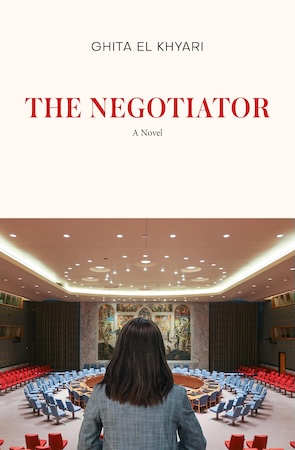
The Negotiator: A Woman at the Heart of the UN
Alya, a 45-year-old United Nations diplomat, is finally given the assignment she has spent years working towards: leading peace negotiations on Syria from Geneva. Experienced, determined, and deeply committed to diplomacy, she knows that success depends on patience, careful preparation, and the ability to find common ground between opposing sides. But when she meets Alexei, her Russian counterpart, professional collaboration becomes entangled with personal feelings. Then Russia invades Ukraine, transforming the geopolitical landscape and threatening everything Alya has built, both professionally and privately. As diplomatic tensions intensify, she must confront the contradictions between her ideals and the political realities of the institution she serves. Drawing on the author’s experience inside the United Nations, this novel explores the hidden complexities of international diplomacy, the compromises required to pursue peace, and the personal sacrifices women make while navigating positions of power. It is also an intimate portrait of a woman reconsidering her identity and ambitions at midlife, asking what remains of the self when professional responsibilities and personal desires collide.
2026