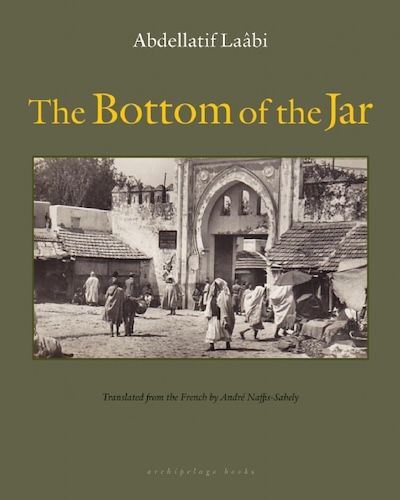
The Bottom of the Jar
Summary
Set in Fez during the 1950s, as Morocco struggles to free itself from French colonial rule, The Bottom of the Jar is a richly textured portrait of childhood, family, and a city on the threshold of transformation. Through the eyes of a young boy discovering the world around him, Abdellatif Laâbi evokes the bustling streets of the old medina, the colourful characters who inhabit them, and the intimate dramas unfolding behind closed doors. At the centre of this world is the boy’s family: a generous father, a formidable mother whose passionate prayers and sharp wit fill their home, and an eccentric uncle whose love of hashish and storytelling turns him into a kind of Homer after dark. Humorous, tender, and occasionally heartbreaking, the novel captures the contradictions of a society caught between inherited traditions and the promise of independence. Drawing on the author’s own childhood, it celebrates the imagination and resilience of ordinary people while exploring how political change reshapes private lives.
Reviews
Login to leave a review.
No reviews yet. Be the first!
You might also like



- Published
- 2013
- Author
- Abdellatif Laâbi