Abdellatif Laâbi

Abdellatif Laâbi

Morocco

About

Abdellatif Laâbi (born 1942) is a Moroccan poet, novelist, translator, and political activist whose work has made him a leading voice in Francophone North African literature. Born in Fez, Morocco, he became involved in the country’s cultural and political movements during the 1960s. In 1966, he co-founded Souffles, an influential literary journal that challenged colonial legacies and advocated radical cultural renewal. The Moroccan authorities banned the journal in 1972, and Laâbi was imprisoned for his political beliefs. He spent eight years in prison, where he endured torture and continued to write. Released in 1980, he later went into exile in France. His writing combines political resistance with reflections on love, memory, spirituality, and human solidarity. Among his many honours, he received the Prix Goncourt de la poésie in 2009 and the Grand Prix de la Francophonie in 2011. His work remains a testament to literature’s power to resist oppression and defend human dignity.

Books on TheBookRoads
1
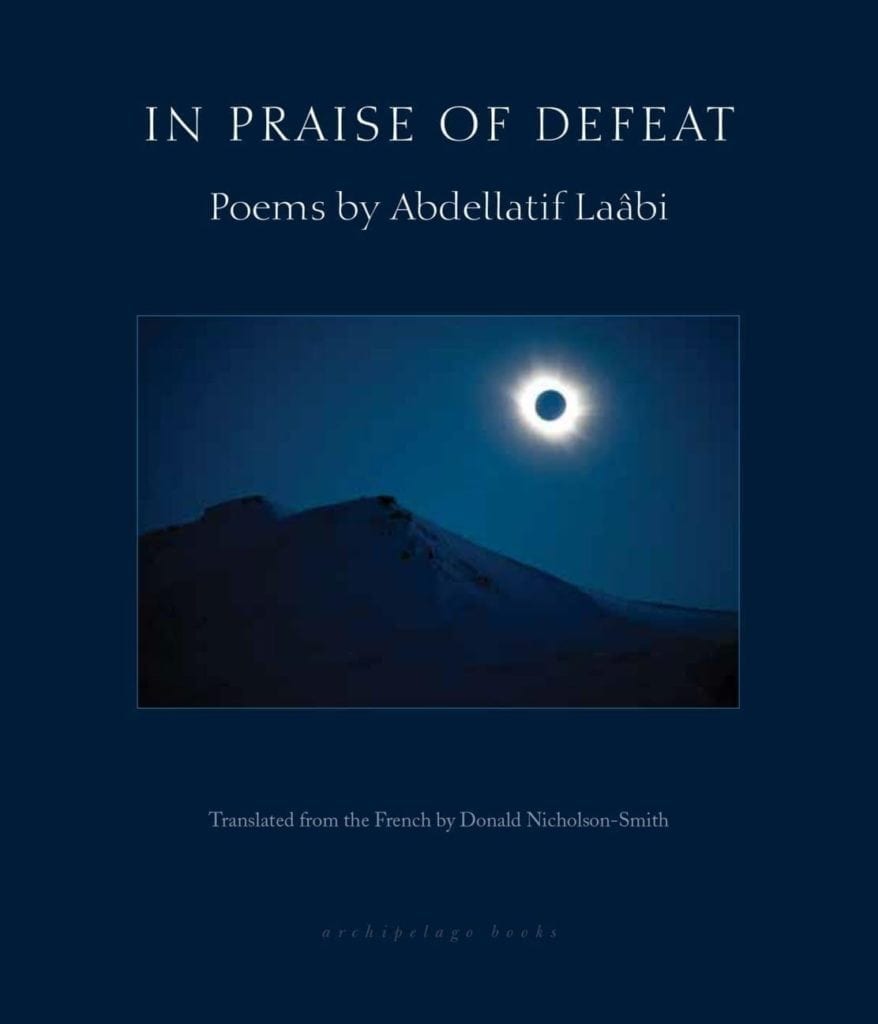
In Praise of Defeat
In Praise of Defeat
Spanning six decades of writing, In Praise of Defeat is a powerful collection tracing the evolution of one of Morocco’s most important contemporary poets. Through poems shaped by political imprisonment, exile, love, and the struggle for human dignity, Abdellatif Laâbi confronts the brutality of authoritarian power while insisting on the possibility of hope. His early works carry the urgency of protest, bearing witness to censorship, torture, and the silencing of dissent. Later poems become more intimate and reflective, exploring tenderness, family, spirituality, and the fragile beauty of everyday existence. Yet resistance remains at the heart of his work: for Laâbi, poetry is not an escape from reality but a way of confronting it without surrendering one’s humanity. Moving between anguish and joy, political defiance and personal vulnerability, these poems celebrate the courage to continue creating even in the face of defeat. The collection ultimately suggests that failure need not mean surrender—and that preserving one’s capacity to love, imagine, and speak freely is itself a form of victory.
2017 Morocco
2
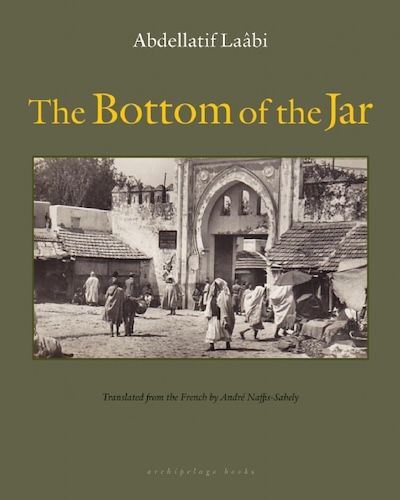
The Bottom of the Jar
Set in Fez during the 1950s, as Morocco struggles to free itself from French colonial rule, The Bottom of the Jar is a richly textured portrait of childhood, family, and a city on the threshold of transformation. Through the eyes of a young boy discovering the world around him, Abdellatif Laâbi evokes the bustling streets of the old medina, the colourful characters who inhabit them, and the intimate dramas unfolding behind closed doors. At the centre of this world is the boy’s family: a generous father, a formidable mother whose passionate prayers and sharp wit fill their home, and an eccentric uncle whose love of hashish and storytelling turns him into a kind of Homer after dark. Humorous, tender, and occasionally heartbreaking, the novel captures the contradictions of a society caught between inherited traditions and the promise of independence. Drawing on the author’s own childhood, it celebrates the imagination and resilience of ordinary people while exploring how political change reshapes private lives.
2013 Morocco
3
The Rule of Barbarism
Written during his imprisonment for political dissent in Morocco, The Rule of Barbarism is a searing poetic confrontation with oppression, cruelty, and the violence embedded in human society. First published in 1976, this landmark work captures the consciousness of a society trapped between its colonial past and the brutal realities of dictatorship. Through urgent, often unsettling poetry, Abdellatif Laâbi explores the psychological and moral consequences of living under authoritarian power, where fear threatens to destroy both individual freedom and collective hope. Yet his vision extends beyond political condemnation. Laâbi also examines the capacity for barbarism within every human being, questioning how victims of cruelty might resist becoming perpetrators themselves. Anger, despair, tenderness, and compassion coexist throughout the collection, creating a powerful meditation on the struggle to preserve humanity in inhuman conditions. Written from the experience of imprisonment, The Rule of Barbarism transforms personal suffering into a universal appeal for justice, empathy, and liberation.
2012 Morocco