Books from Austria
Suggest a book
All genres
Historical Fiction
Literary Fiction
Fantasy
Romance
Horror
Thriller
Non-Fiction
Mystery
Memoir
Classics
History
Sci-Fi
Contemporary Fiction
Science Fiction
Fiction
Poetry
Essays
Family Saga
Magical Realism
Family Drama
Dark Academia
Psychological Fiction
Dark Comedy
Political Writing
Feminist Fiction
Satire
Campus Fiction
Cultural Studies
Biography
Philosophy
Comedy
Drama
Young Adult
Gothic
Dystopia
Crime
Children's Books
Short Stories
Mythology
Cozy
Retellings
Humour
Adventure
All themes
Love & Passion
Adventure & Journey
Identity & Belonging
War & Conflict
Freedom & Resistance
Family & Heritage
Nature & Landscape
Society & Class
Spirituality & Faith
Solitude & Exile
Coming of Age
Revolution & Change
Friendship
History
Immigration
Myths and Retellings
Colonialism
Women & Society
Mental Health
Motherhood
1
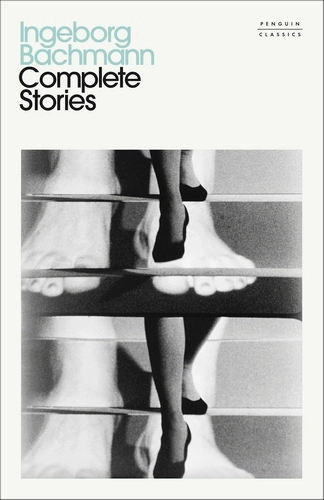
Complete Stories
What if the most intimate relationships in our lives were also where power, violence, and oppression began? Ingeborg Bachmann’s Complete Stories brings together the short fiction of one of the most important German-language writers of the twentieth century. Across stories set in Vienna, Rome, Paris, and beyond, Bachmann portrays women and men caught in relationships shaped by obsession, shame, silence, and unequal power. Lovers struggle to communicate, women confront the invisible restrictions imposed by patriarchal society, and ordinary lives reveal the lingering wounds of European fascism. With lyrical precision and psychological intensity, Bachmann explores the limits of language and the difficulty of telling the truth about ourselves and others. Both intimate and political, these stories reveal how history’s deepest structures of domination can persist in private life, long after the events that created them have passed.
2026
2
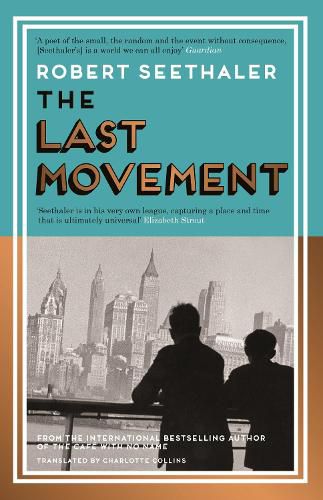
The Last Movement
In the spring of 1911, the celebrated composer and conductor Gustav Mahler boards a ship in New York, beginning his final journey back to Europe. Gravely ill and aware that his life is drawing to a close, he spends much of the voyage wrapped in blankets on deck, watching the vast ocean and revisiting memories of the past. His thoughts move between the musical triumphs that made him famous, the summers he spent in the mountains, the devastating death of his young daughter Maria, and his complicated relationship with his wife, Alma. Once the great love of his life, Alma has fallen for the young architect Walter Gropius, leaving Mahler struggling with jealousy, regret, and the painful realisation that love cannot be commanded. Through fleeting memories and quiet moments of reflection, Robert Seethaler creates an intimate portrait of a brilliant artist confronting mortality. Poignant and restrained, the novel meditates on love, loss, artistic ambition, and what remains when a life approaches its final note.
2026
3
The Dark Interval
Gleaned from Rainer Maria Rilke's voluminous, never-before-translated letters to bereaved friends and acquaintances, The Dark Interval is a profound vision of the mourning process and a meditation on death's place in our lives. Following the format of Letters to a Young Poet, this book arranges Rilke's letters into an uninterrupted sequence, showcasing the full range of the great author's thoughts on death and dying, as well as his sensitive and moving expressions of consolation and condolence. Presented with care and authority by master translator Ulrich Baer, The Dark Interval is a literary treasure, an indispensable resource for anyone searching for solace, comfort, and meaning in a time of grief.
2018
4
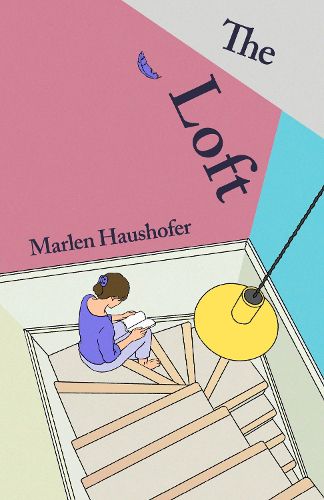
The Loft
In The Loft, an Austrian housewife finds refuge from her monotonous domestic life in an attic where she draws birds, insects and other creatures. Her marriage to Hubert, a dissatisfied lawyer, has settled into emotional distance, while her grown-up children have left home. Although her days appear ordinary, the narrator carries memories of a disturbing episode from twenty years earlier, when a sudden loss of hearing led her husband to send her to a remote cottage to recover. One day, mysterious packages arrive containing extracts from her old diary, forcing her to confront an experience she has tried to forget. As the past intrudes upon her carefully ordered present, the boundaries between memory, repression and self-understanding begin to shift. With quiet psychological intensity, Haushofer examines the loneliness hidden within conventional family life, the constraints placed on women, and the private spaces people create to preserve their individuality. The attic becomes both a sanctuary and a symbol of the narrator’s struggle to understand herself beyond the roles imposed upon her.
2011
5
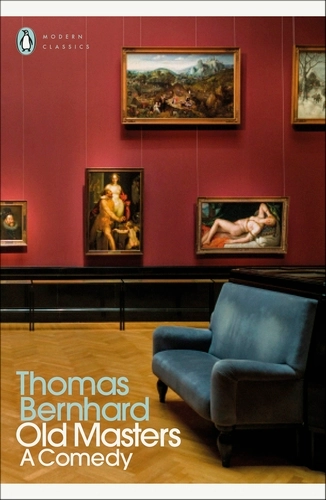
Old Masters: A Comedy
For more than thirty years, music critic Reger has returned to the same bench in Vienna’s Kunsthistorisches Museum to contemplate a painting by Tintoretto. But he is not there simply to admire art: he studies masterpieces in search of their imperfections, convinced that nothing created by human hands can be truly flawless. Through his friend Atzbacher, we encounter Reger’s fiercely critical mind, his grief over the death of his wife, and his contempt for the hypocrisies of Austrian society. Over the course of a single day, art becomes the starting point for a merciless examination of culture, philosophy, nationalism, and the absurdities of human existence. Darkly comic and deliberately provocative, Bernhard’s novel challenges the reverence we attach to great artists and celebrated institutions, suggesting that sometimes the only honest response to perfection is to question it.
1985
6
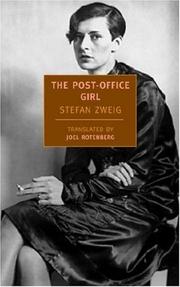
The Post-Office Girl
Set in Austria after the First World War, The Post-Office Girl follows Christine Hoflehner, a young woman working in a small post office in a provincial town. Trapped in poverty and burdened by the responsibility of caring for her sick mother, Christine leads a life marked by exhaustion and limited possibilities. Her circumstances change unexpectedly when she receives an invitation to visit her wealthy aunt in Switzerland, where she experiences luxury, freedom, and a world previously beyond her imagination. However, her brief escape exposes the deep divisions between social classes and makes returning to her former life almost unbearable. When Christine encounters Ferdinand, a disillusioned war veteran, they begin to imagine a different future together. Zweig portrays the psychological consequences of poverty, the fragility of hope, and the crushing effects of social inequality in a society struggling to recover from war.
1982
7
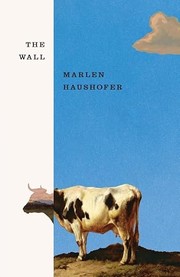
The Wall
The Wall follows an unnamed woman who becomes inexplicably isolated in the Austrian countryside after an invisible, impenetrable wall suddenly separates her from the rest of the world. On the other side, all human life appears to have vanished. Trapped in a remote mountain valley with only a dog, a cow, and a few other animals for company, she must learn to survive without any hope of rescue.
As the seasons pass, the woman develops routines to secure food, gather firewood, and care for her animals. Her solitary existence forces her to confront the essentials of life while reflecting on her former identity, human relationships, and the society she has left behind. The natural world becomes both her refuge and her greatest challenge, offering moments of beauty alongside hunger, exhaustion, and danger.
Through its restrained, diary-like narration, Haushofer explores isolation, survival, freedom, and humanity’s relationship with nature. The novel also questions the assumptions of modern civilization, revealing how solitude can transform a person’s understanding of herself and the world.
1963
8
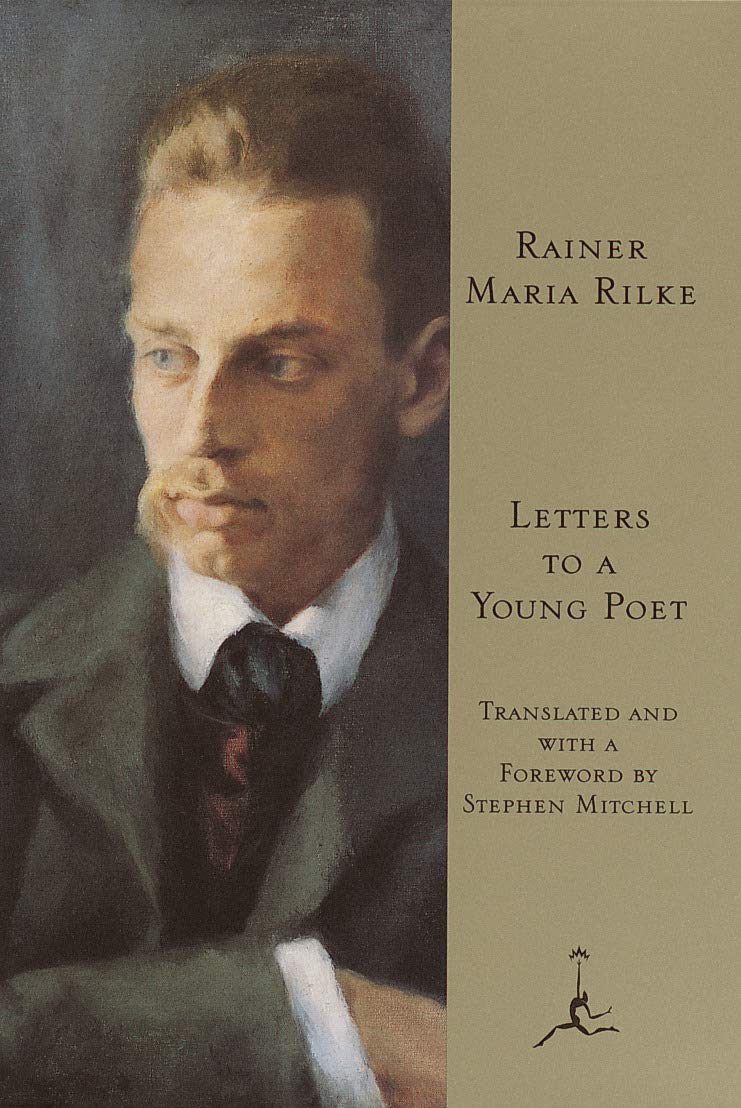
Letters to a Young Poet
Letters to a Young Poet is a collection of ten letters written by Rainer Maria Rilke to Franz Xaver Kappus, a young aspiring poet who sought his advice on writing and life. Composed between 1903 and 1908, the letters offer reflections on creativity, self-discovery, love, loneliness, and the challenges of becoming one’s own person. Rather than providing practical instructions on how to write poetry, Rilke encourages the young writer to look inward, trust his own experiences, and resist the pressure to seek validation from others.
At the heart of the collection is the idea that solitude can be a source of personal growth and artistic insight. Rilke also explores the complexity of love, describing it as a demanding process that requires two individuals to develop their independence rather than lose themselves in one another. Blending philosophical reflection with intimate advice, the letters offer a timeless meditation on patience, uncertainty, and the courage to live authentically.
Note: The letters were first published in book form in 1929, after Rilke’s death. He was born in Prague, then part of Austria-Hungary, in 1875.
1929