Society & Class
Examinations of class, power, and the structures we live within.
All countries
Austria
Bangladesh
Belarus
Benin
Bhutan
Bosnia and Herzegovina
Brazil
Bulgaria
Burundi
Cabo Verde
Cameroon
Chile
China
Congo, Democratic Republic
Costa Rica
Côte d’Ivoire (Ivory Coast)
Czech Republic
Denmark
Dominican Republic
Egypt
Fiji
France
Georgia
Germany
Ghana
Greece
India
Iraq
Ireland
Italy
Jamaica
Japan
Jordan
Kuwait
Lithuania
Mexico
Morocco
Nigeria
Pakistan
Palestine
Russia
Saudi Arabia
Senegal
South Africa
South Korea
Spain
Sudan
Sweden
Türkiye
Ukraine
United Kingdom
United States
Uzbekistan
Zambia
1
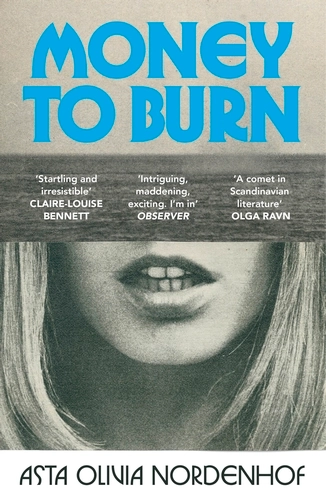
Money to Burn
Maggie and Kurt live in an old farmhouse in Nyborg, Denmark, struggling to maintain their marriage after their only daughter leaves home. Although they share a life, they seem unable to reach one another, trapped in a relationship shaped by longing, disappointment, and painful silences. As their story unfolds, the novel explores the circumstances that brought them together and the forces that have gradually shaped their lives. Their personal history intersects with one of Scandinavia’s most devastating tragedies: the 1990 fire aboard the passenger ferry Scandinavian Star, which killed 159 people. The disaster, later linked to insurance fraud, becomes a lens through which Nordenhof examines the relationship between private suffering and wider economic systems. Moving between intimate family drama and a broader critique of capitalism, the novel asks whether love can survive in a world where money determines so much of human existence. With fragmented storytelling and emotionally intense prose, Nordenhof explores how economic inequality, gender, and violence shape intimate relationships. Money to Burn is the first instalment in the Scandinavian Star series, an ambitious literary project connecting individual lives with the consequences of greed and exploitation.
Denmark
2020
2
Minor Detail
Minor Detail by Palestinian writer Adania Shibli is a haunting novel that connects a crime committed in the Negev desert in 1949 with a contemporary woman’s search for the truth decades later. The first part recounts the abduction, rape, and murder of a young Bedouin woman by Israeli soldiers shortly after the 1948 war, presenting the events through a detached, almost clinical narrative that emphasizes the brutality of the act and the victim’s anonymity. In the second part, a Palestinian woman in Ramallah becomes obsessed with a seemingly minor detail: the exact date of the crime. Determined to investigate, she travels across checkpoints and restricted territories, confronting the physical and psychological barriers that shape life under occupation. Through spare prose and a carefully controlled structure, Shibli explores violence, historical erasure, memory, and the unequal power to tell stories. The novel asks how forgotten suffering can be recovered and what it means to seek truth in a landscape where history remains deeply contested.
Palestine
2020
3
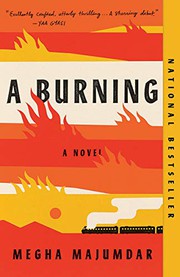
A Burning
In A Burning, Megha Majumdar tells the story of three people whose lives become entangled after a terrorist attack on a train in India. Jivan, a young Muslim woman from a poor neighborhood, is arrested after posting a critical comment about the government’s response to the tragedy. As she awaits trial, two people who could help her pursue their own ambitions: Lovely, a hijra and aspiring actress who once received kindness from Jivan, and PT Sir, her former physical education teacher, who becomes involved in politics. As the legal system fails Jivan, the others face choices that reveal the costs of ambition, social conformity, and self-preservation. Through these intersecting lives, Majumdar examines religious discrimination, corruption, class inequality, and the fragility of justice in contemporary India. The novel offers a tense and compelling portrait of how political power and public opinion can determine the fate of vulnerable individuals.
India
2020
4
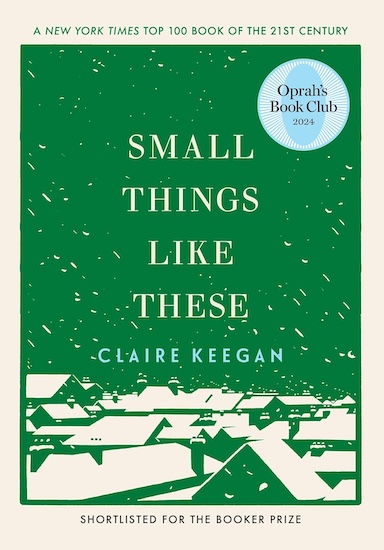
Small Things Like These
It is 1985 in a small Irish town, and coal merchant Bill Furlong is preparing for the busiest weeks of the year. A devoted husband and father of five daughters, he has built a modest but stable life through hard work. Yet as Christmas approaches, a delivery to the local convent reveals something deeply troubling: girls are being confined there under the authority of the Catholic Church, their suffering concealed behind respectable walls.
The discovery forces Bill to confront uncomfortable memories of his own childhood and the kindness that once helped him survive. In a community where the Church holds enormous power and silence protects those in authority, speaking out could jeopardise his livelihood and his family’s security. With remarkable economy and emotional depth, Small Things Like These explores complicity, moral courage, and the quiet choices that define a person’s character. It is a powerful story about the cost of doing what is right when looking away would be easier.
Ireland
2021
5
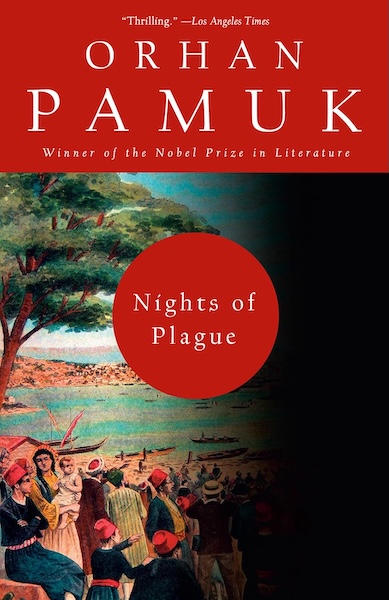
Nights of Plague
In 1901, a deadly plague reaches Mingheria, a fictional island in the eastern Mediterranean and the twenty-ninth province of the declining Ottoman Empire. Home to both Muslim and Greek Orthodox communities, the island is already divided by religious tensions and political rivalries. As the epidemic spreads, the Ottoman authorities send experts to impose quarantine measures, but suspicion, resistance, and competing loyalties threaten to undermine every attempt to contain the disease.
When a mysterious murder complicates the crisis, the island descends into a struggle involving religious leaders, government officials, scientists, and ordinary people desperate to survive. As the Ottoman administration loses control, the epidemic becomes a catalyst for rebellion and the emergence of a new national identity.
Blending historical epic, detective story, and political satire, Nights of Plague explores how fear reshapes societies and how crises expose the fragility of authority. Through an imagined history of an Ottoman island, Pamuk examines nationalism, religious conflict, scientific reasoning, and the human tendency to choose ideology over evidence.
Türkiye
2021
6
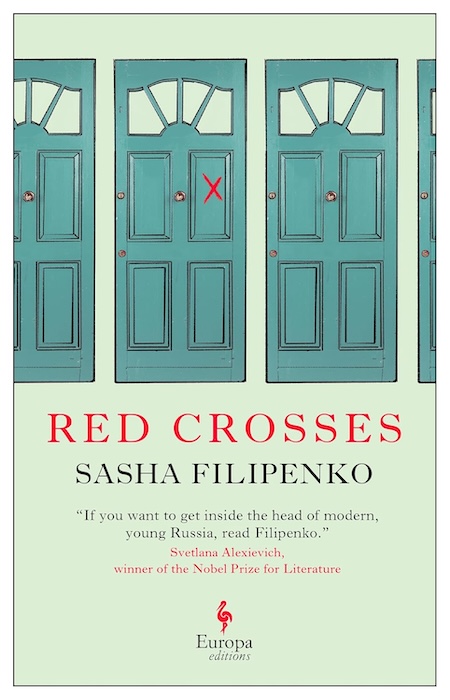
Red Crosses
Red Crosses tells the story of two people whose lives are shaped by tragedy, memory, and the lasting consequences of political repression. Alexander, a young man devastated by personal loss, moves to Minsk hoping to withdraw from the world. His plans change when he meets his elderly neighbour, Tatiana Alexeyevna, a woman in her nineties whose memory is gradually disappearing because of Alzheimer’s disease. To help herself navigate their apartment building, she marks doors with red crosses.
Despite her fading memory, Tatiana vividly recalls the horrors of twentieth-century Soviet history. She tells Alexander about her work during the Second World War, her husband’s capture by enemy forces, and her subsequent arrest and imprisonment in a labour camp under Stalin’s regime. As her story unfolds, Alexander becomes increasingly invested in preserving her memories before they disappear.
Through their unlikely friendship, Filipenko explores the relationship between personal grief and collective history. The novel examines political persecution, historical amnesia, and the importance of bearing witness to the past, suggesting that remembering those who suffered is an essential act of resistance.
Belarus
2021
7
Offended Sensibilities
Offended Sensibilities is a darkly comic, neo-noir novel set in a provincial Russian town where a series of sudden deaths among local officials exposes a deeply dysfunctional system. The investigation unfolds against the backdrop of legislation criminalising forms of expression deemed offensive to religious believers. As the characters navigate corruption, political manoeuvring, religious nationalism, and personal hypocrisy, the line between justice and absurdity becomes increasingly blurred. Ganieva uses the mystery to examine a society in which public morality can become a tool of political control and where almost everyone has something to hide. Combining elements of crime fiction and political satire, the novel offers a sharp critique of contemporary Russian institutions and the contradictions between official values and private behaviour.
Russia
2021
8
The Startup Wife
The Startup Wife follows Asha Ray, a brilliant computer scientist who leaves her academic career to build a technology startup with her husband, Cyrus Jones, and their friend Jules. Their company develops an app that offers users personalised rituals and a sense of connection in an increasingly secular world. When the platform becomes a sensation, Cyrus’s charisma turns him into the public face of the business, while Asha’s technical contribution and intellectual authority are gradually overshadowed. As the company grows, the imbalance between their professional recognition and personal responsibilities begins to threaten both their marriage and Asha’s sense of self. Anam combines satire and contemporary fiction to examine gender inequality, entrepreneurial ambition, technology, and the cult of charismatic leadership. The novel questions who receives credit for innovation and how power can shift within relationships when professional success becomes inseparable from public image.
Bangladesh
2021
9
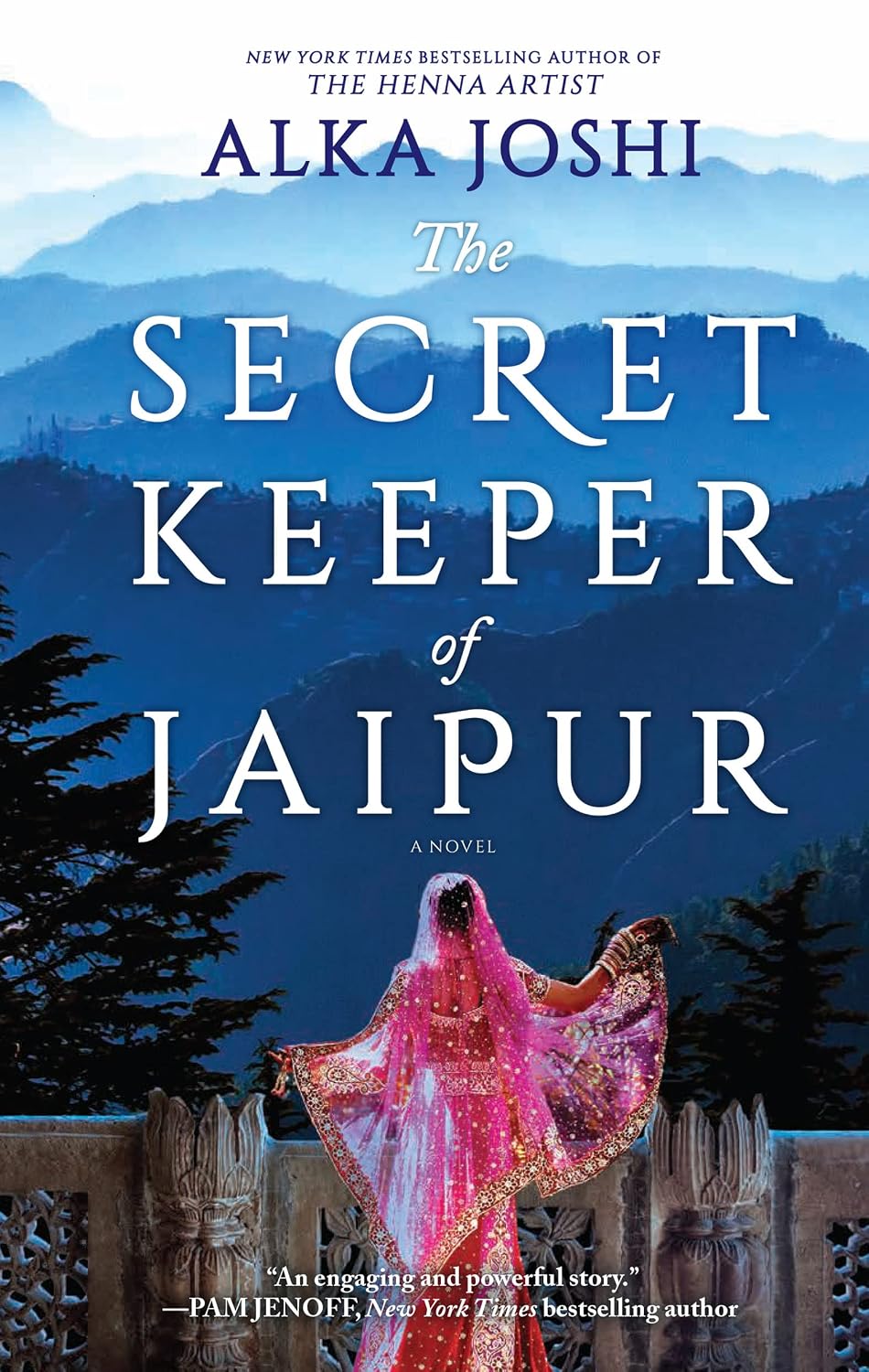
Secret Keeper of Jaipur
Set in Jaipur in 1969, The Secret Keeper of Jaipur follows Malik, a young man who returns to the city where he grew up to begin an apprenticeship at the royal palace. Under the guidance of Lakshmi, the former henna artist who has become a respected figure in the community, Malik hopes to build a promising future. His work brings him into contact with the wealthy and influential people overseeing the construction of a modern cinema. When the cinema’s balcony collapses on opening night, the resulting tragedy exposes corruption, concealed interests, and the unequal distribution of power. Suspecting that the disaster was not simply an accident, Malik begins investigating the truth, putting himself at risk as he challenges those determined to protect their reputations. Joshi examines social inequality, ambition, and the influence of wealth and privilege in a rapidly changing India.
India
2021
10
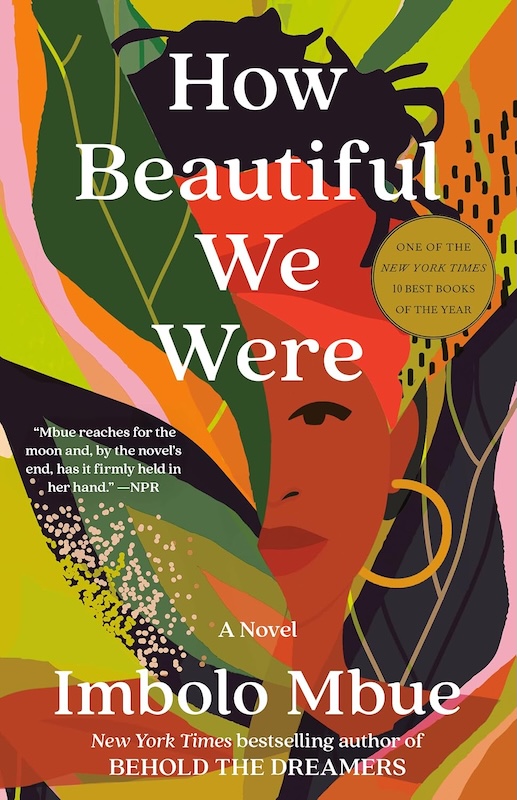
How Beautiful We Were
Set in the fictional African village of Kosawa, How Beautiful We Were follows a community struggling against the devastating consequences of an American oil company’s operations on its land. Pollution has contaminated the water, children are dying, and promises of compensation and environmental protection remain unfulfilled. Told through multiple perspectives across several decades, the novel traces the villagers’ resistance, from their initial protests to a younger generation’s increasingly radical efforts to demand justice. At its heart is Thula, a determined young woman whose education and political awakening inspire her to challenge corporate power and neocolonial exploitation. Through this multigenerational story, Imbolo Mbue explores environmental destruction, the legacy of colonialism, and the human cost of economic greed. The novel examines the tension between hope and disillusionment, asking what communities must sacrifice in their pursuit of justice and a better future.
Cameroon
2021
11
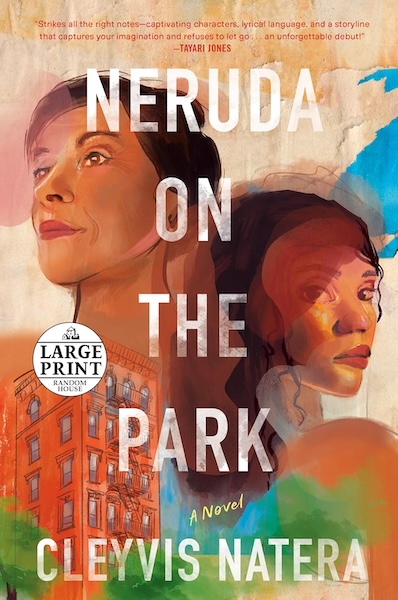
Neruda on the Park
For twenty years, the Guerrero family has called Nothar Park, a predominantly Dominican neighbourhood in New York City, home. But when a neighbouring tenement is demolished to make way for luxury condominiums, the threat of gentrification pushes the community toward a breaking point. Eusebia Guerrero, determined to protect the neighbourhood and the people who shaped her life, begins organising increasingly risky schemes to frighten developers away. Her daughter, Luz, has very different ambitions: a successful career in corporate law and the comfortable lifestyle her immigrant parents worked hard to provide.
When Luz loses her job and falls into a passionate relationship with a wealthy property developer connected to the very project her mother opposes, the conflict between them becomes deeply personal. Meanwhile, Luz’s father secretly plans their retirement in the Dominican Republic, reopening old tensions about home and belonging.
With humour and emotional depth, Neruda on the Park explores gentrification, generational conflict, immigrant identity, and the difficult choices families face when the place they call home begins to disappear.
Dominican Republic
United States
2022
12
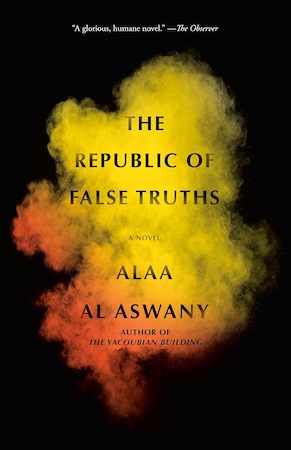
The Republic of False Truths
Cairo, 2011. After decades under a repressive regime, tensions are rising in the city streets. No one is out of reach of the revolution. There is General Alwany, a high-ranking member of the government's security agency, a pious man who loves his family yet won't hesitate to torture enemies of the state; Asma, a young teacher who chafes against the brazen corruption at her school; Ashraf, an out-of-work actor who is having an affair with his maid and who gets pulled into Tahrir Square through a chance encounter; Nourhan, a television personality who loyally defends those in power; and many more.
As these lives collide, a new generation finds a voice, love blossoms across class divides, and the revolution gains strength. Even the general finds himself at a crossroads as his own daughter joins the protests. Yet the old regime will not give up without a fight.
With an unforgettably vivid cast of characters and a heart-pounding narrative banned across much of the region, Alaa Al Aswany gives us a deeply human portrait of the Egyptian Revolution, and an impassioned retelling of his country's turbulent recent history.
Egypt
2022
About this theme
- Books
- 140
- Countries
- 54
Countries with this theme
Austria
Europe
Bangladesh
Asia
Belarus
Europe
Benin
Africa
Bhutan
Asia
Bosnia and Herzegovina
Europe
Brazil
South America
Bulgaria
Europe
Burundi
Africa
Cabo Verde
Africa
Cameroon
Africa
Chile
South America
China
Asia
Congo, Democratic Republic
Africa
Costa Rica
North America
Côte d’Ivoire (Ivory Coast)
Africa
Czech Republic
Europe
Denmark
Europe
Dominican Republic
North America
Egypt
Africa
Fiji
Oceania
France
Europe
Georgia
Asia
Germany
Europe
Ghana
Africa
Greece
Europe
India
Asia
Iraq
Asia
Ireland
Europe
Italy
Europe
Jamaica
North America
Japan
Asia
Jordan
Asia
Kuwait
Asia
Lithuania
Europe
Mexico
North America
Morocco
Africa
Nigeria
Africa
Pakistan
Asia
Palestine
Asia
Russia
Europe
Saudi Arabia
Asia
Senegal
Africa
South Africa
Africa
South Korea
Asia
Spain
Europe
Sudan
Africa
Sweden
Europe
Türkiye
Asia
Ukraine
Europe
United Kingdom
Europe
United States
North America
Uzbekistan
Asia
Zambia
Africa