Freedom & Resistance
Voices of resistance, liberation, and the fight for justice.
All countries
Afghanistan
Albania
Algeria
Argentina
Australia
Belgium
Brazil
Burkina Faso
Central African Republic
Czech Republic
Dominican Republic
Egypt
France
Greece
Hungary
Iceland
India
Iran
Ireland
Italy
Japan
Jordan
Kenya
Kuwait
Malta
Morocco
Oman
Pakistan
Palestine
Philippines
Puerto Rico
Romania
Russia
Rwanda
South Africa
South Korea
Spain
Türkiye
Turkmenistan
United Kingdom
United States
Uruguay
Uzbekistan
Yemen
Zambia
1
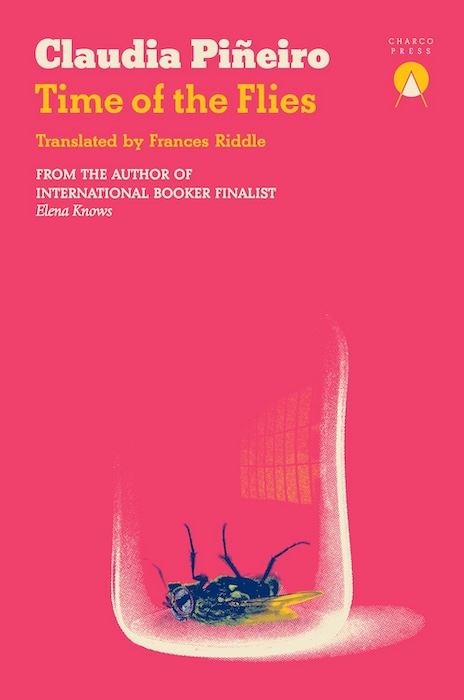
Time of the Flies
The Time of the Flies follows Inés, a woman rebuilding her life after spending fifteen years in prison for murdering her former husband’s lover. Released into a society that has changed considerably during her imprisonment, Inés struggles to understand the new social landscape, including shifting attitudes toward gender, sexuality, and women’s rights. She establishes a small fumigation business with another formerly imprisoned woman, hoping to achieve independence and leave her troubled past behind. However, an unexpected request draws her into a new mystery that threatens the fragile stability she has created. Blending crime fiction, dark humour, and social commentary, Piñeiro explores punishment, reintegration, and the difficulties women face when attempting to begin again. The novel asks whether freedom is simply the absence of prison walls or the more complicated ability to shape one’s own future.
Argentina
2022
2
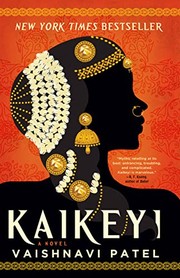
Kaikeyi
Kaikeyi reimagines the story of a controversial queen from the ancient Indian epic Ramayana, giving voice to a woman traditionally remembered as the villain responsible for Rama’s exile. Growing up as the only daughter of a king, Kaikeyi questions the restrictions placed upon women and longs to shape her own destiny. After discovering a mysterious power that allows her to influence the minds of others, she begins to challenge the patriarchal structures governing her world. Her marriage to King Dasharatha brings her into the centre of royal politics, where her ambitions and relationships become increasingly complicated. As she navigates motherhood, power, and loyalty, Kaikeyi must make decisions that will transform her family and the kingdom. Patel explores female agency, ambition, and the tension between personal freedom and social expectations, offering a nuanced portrait of a woman whose story has long been told by others.
India
2022
3
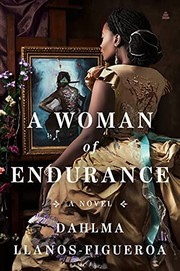
Woman of Endurance
Set in nineteenth-century Puerto Rico, A Woman of Endurance follows Pola, an African woman kidnapped from her homeland and forced into slavery on a sugar plantation. Subjected to horrific violence and forced to bear children who are taken from her and sold, she gradually loses her faith and trust in others. After escaping and being transferred to another plantation, Pola encounters a community of enslaved women who offer her compassion, friendship, and the possibility of healing. As she develops a bond with an orphaned girl and begins to trust those around her, she slowly reclaims her sense of humanity and reconnects with her Yoruba spiritual heritage. Through Pola’s journey, Dahlma Llanos-Figueroa explores the brutality of slavery, the resilience of women, and the power of solidarity, cultural identity, and hope in the face of oppression.
Puerto Rico
2022
4
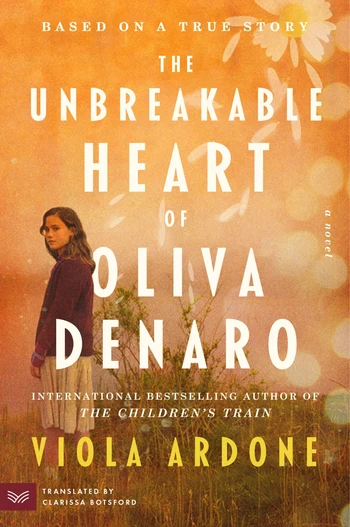
The Unbreakable Heart of Oliva Denaro
Sicily, 1960s. Fifteen-year-old Oliva Denaro loves running through the countryside and dreams of a life beyond the strict rules imposed on girls. But when a local boy decides he wants her, Oliva discovers how little control a young woman has over her own future in a society ruled by tradition and shame. Inspired by a true story, this moving novel follows Oliva’s courageous struggle to reclaim her freedom in a world that expects women to remain silent. Through her determination, Viola Ardone explores the cost of defiance and the extraordinary strength it takes to say no when everyone expects you to obey.
Italy
2021
5
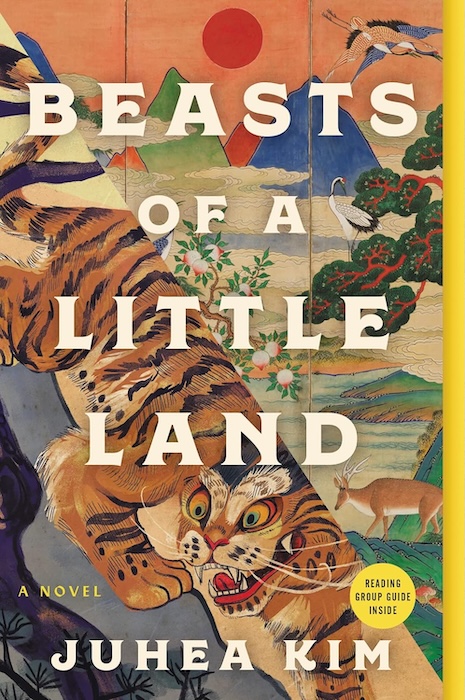
Beasts of a Little Land
In 1917, Korea is under Japanese colonial rule, and the lives of its people are shaped by poverty, violence, and the struggle for independence. When ten-year-old Jade is sold by her desperate family to a courtesan school in Pyongyang, she enters a world where survival depends on learning to navigate rigid social hierarchies. After fleeing to Seoul, she meets JungHo, an orphan boy struggling to survive on the streets. Their bond becomes a defining force in both their lives, even as their paths diverge and JungHo becomes involved in the resistance movement.
Spanning five decades, from the final years of the Korean Empire through colonial occupation and the upheavals of the twentieth century, this sweeping historical novel follows a cast of interconnected characters whose destinies are shaped by love, ambition, betrayal, and political turmoil. Moving between courtesan houses, bustling cities, and battle-scarred forests, the story explores what it means to fight for personal dignity and national freedom when the world seems determined to take both away.
South Korea
2021
6
Book Censor's Library
The Book Censor’s Library presents a dystopian world in which literature is treated as a threat and citizens are expected to follow an officially approved version of reality. The protagonist works as a book censor, examining manuscripts and identifying ideas that might undermine the established order. His work initially appears to be a straightforward responsibility, but his encounters with the books he must judge gradually complicate his understanding of truth, authority, and individual thought. As he becomes increasingly aware of the power of stories, he begins questioning the system he serves and the assumptions that have shaped his life. Al-Essa uses satire and speculative fiction to explore censorship, propaganda, and the relationship between literature and political power. The novel celebrates the freedom to read, imagine, and question, suggesting that controlling stories is also a way of controlling how people understand themselves and the world around them.
Kuwait
2021
7
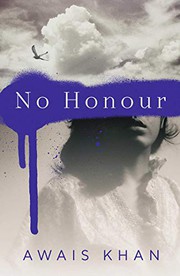
No Honour
No Honour follows sixteen-year-old Abida, who lives in a small Pakistani village governed by strict traditions and expectations surrounding family honour. Determined to choose whom she loves and build a life of her own, Abida challenges the conventions that control women’s lives. When her choices place her in grave danger, she escapes to Lahore with the help of her devoted father, Jamil, who risks everything to protect her.
As Jamil searches for his missing daughter, both are drawn into a world where the threats facing vulnerable women extend far beyond their village. Moving between rural Pakistan and the crowded streets of Lahore, Awais Khan explores the devastating consequences of honour-based violence, forced conformity, and gender inequality. The novel also examines the complicated relationship between parents and children, particularly the courage required to challenge deeply rooted cultural expectations. Through Abida’s struggle for survival and independence, No Honour becomes a powerful story about love, resilience, and the right to determine one’s own future.
Pakistan
2021
8
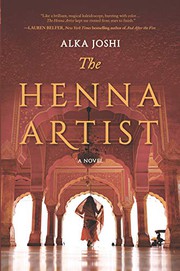
The Henna Artist
Set in Jaipur in the 1950s, The Henna Artist follows Lakshmi, a young woman who escapes an abusive marriage and builds an independent life in the Pink City. Through her exceptional skills as a henna artist and her knowledge of traditional remedies, she becomes a trusted confidante to wealthy women, gaining access to their private lives and secrets. Lakshmi dreams of establishing her own home and achieving financial security, carefully protecting the reputation that sustains her livelihood. However, her carefully constructed world is disrupted when her estranged husband appears with a young girl who turns out to be the sister Lakshmi never knew she had. Forced to reconsider her priorities, Lakshmi must navigate the tension between independence and family responsibility. Joshi explores women’s autonomy, social hierarchy, ambition, and the possibility of creating a new life despite the limitations imposed by society.
India
2020
9
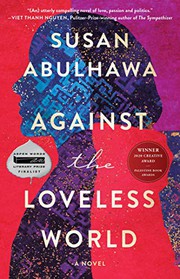
Against the Loveless World
Against the Loveless World follows Nahr, a Palestinian woman whose life is shaped by displacement, political conflict, and the struggle for independence. Born in Kuwait to Palestinian refugee parents, she dreams of finding love, raising a family, and building a stable future. Instead, a series of betrayals and difficult circumstances leads her through different countries in the Middle East, where she encounters exploitation, prejudice, and political upheaval. As the story unfolds through memories narrated from solitary confinement, Nahr reveals the experiences that shaped her transformation from a vulnerable young woman into someone determined to resist the forces controlling her life. Abulhawa explores the intersection of personal freedom and political oppression, examining how gender, exile, and economic hardship influence women’s choices. The novel is a powerful portrait of survival and the determination to claim dignity in an unjust world.
Palestine
2020
10
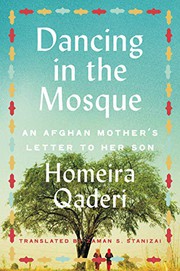
Dancing in the Mosque
Dancing in the Mosque is a memoir written as a letter from Homeira Qaderi to her young son, whom she was forced to leave behind after a painful separation. Growing up in Afghanistan during decades of political upheaval, Qaderi discovers the power of education and writing as ways to resist the restrictions imposed on girls and women. Despite the dangers surrounding her, she pursues her education and becomes a writer, determined to preserve her independence and give voice to women’s experiences. Later, under Taliban rule, her personal freedom becomes increasingly limited, and motherhood places her in an agonising position. Through intimate reflections on love, loss, and resistance, Qaderi recounts the sacrifices she makes to remain true to herself while navigating a society that seeks to control women’s lives. The memoir is a powerful exploration of maternal love, personal courage, and the cost of freedom.
Afghanistan
2020
11
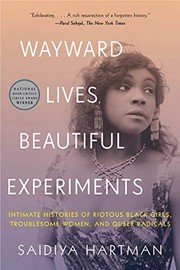
Wayward Lives, Beautiful Experiments
At the dawn of the twentieth century, black women in the US were carving out new ways of living. The first generations born after emancipation, their struggle was to live as if they really were free.
These women refused to labour like slaves. Wrestling with the question of freedom, they invented forms of love and solidarity outside convention and law. These were the pioneers of free love, common-law and transient marriages, queer identities, and single motherhood - all deemed scandalous, even pathological, at the dawn of the twentieth century, though they set the pattern for the world to come.
In Wayward Lives, Beautiful Experiments, Saidiya Hartman deploys both radical scholarship and profound literary intelligence to examine the transformation of intimate life that they instigated. With visionary intensity, she conjures their worlds, their dilemmas, their defiant brilliance.
United States
2020
12
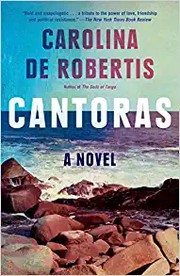
Cantoras
Set in Uruguay during the military dictatorship of the 1970s, Cantoras follows five women who find one another in a society where political dissent is brutally suppressed and homosexuality is criminalized through social persecution. Romina, Flaca, Anita, Paz, and Malena discover a remote coastal village where they can escape judgment and explore their identities, relationships, and desires. Over the next thirty-five years, their lives intertwine as they navigate love, family expectations, political repression, and personal transformation. Through their enduring friendships and shared sanctuary, Carolina De Robertis explores queer identity, chosen family, and the courage required to live authentically under oppressive circumstances. The novel is a powerful celebration of resilience, solidarity, and the freedom to define one’s own life.
Uruguay
2020
About this theme
- Books
- 107
- Countries
- 45
Countries with this theme
Afghanistan
Asia
Albania
Europe
Algeria
Africa
Argentina
South America
Australia
Oceania
Belgium
Europe
Brazil
South America
Burkina Faso
Africa
Central African Republic
Africa
Czech Republic
Europe
Dominican Republic
North America
Egypt
Africa
France
Europe
Greece
Europe
Hungary
Europe
Iceland
Europe
India
Asia
Iran
Asia
Ireland
Europe
Italy
Europe
Japan
Asia
Jordan
Asia
Kenya
Africa
Kuwait
Asia
Malta
Europe
Morocco
Africa
Oman
Asia
Pakistan
Asia
Palestine
Asia
Philippines
Asia
Puerto Rico
South America
Romania
Europe
Russia
Europe
Rwanda
Africa
South Africa
Africa
South Korea
Asia
Spain
Europe
Türkiye
Asia
Turkmenistan
Asia
United Kingdom
Europe
United States
North America
Uruguay
South America
Uzbekistan
Asia
Yemen
Asia
Zambia
Africa