Family & Heritage
Sagas of lineage, tradition, and the ties that bind generations.
All countries
Afghanistan
Argentina
Armenia
Australia
Bosnia and Herzegovina
Botswana
Brazil
Canada
Central African Republic
Chile
China
Colombia
Croatia
Cuba
Djibouti
Dominican Republic
Egypt
Ethiopia
France
Georgia
Germany
Hungary
India
Iran
Iraq
Ireland
Italy
Japan
Lebanon
Libya
Mexico
Netherlands
Nigeria
Norway
Oman
Pakistan
Palestine
Poland
Russia
Singapore
South Africa
South Korea
Sweden
Switzerland
Taiwan
Türkiye
United Kingdom
United States
Zambia
1
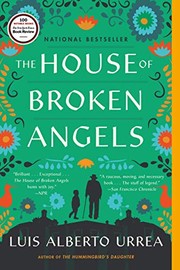
The House of Broken Angels
In The House of Broken Angels, Luis Alberto Urrea tells the story of the De La Cruz family as they gather in San Diego to celebrate the seventy-first birthday of patriarch Big Angel and the final days of their beloved matriarch, Mamá América. Over one emotionally charged weekend, siblings, children, grandchildren, and extended relatives come together, bringing unresolved conflicts, old memories, and complicated relationships to the surface. As Big Angel reflects on his life, he confronts his Mexican heritage, his experiences as an immigrant, and the legacy he will leave behind. Blending humor, grief, and tenderness, Urrea portrays the complexities of Mexican American identity and the bonds that hold families together across generations. The novel celebrates the resilience of immigrant communities while exploring mortality, belonging, cultural heritage, and the enduring power of family love.
United States
2019
2

At the Breakfast Table
On Büyükada, an island off Istanbul, relatives gather in the summer of 2017 to celebrate the hundredth birthday of Şirin Saka, a celebrated artist whose long life has spanned nearly a century of political and cultural change. What should be a joyful family occasion soon becomes an encounter with the past, as the younger generations begin to question the silences that have shaped their lives.
Şirin’s grandchildren, Nur and Fikret, and her great-granddaughter, Selin, know that something painful lies beneath the family’s carefully maintained image. Hoping to uncover the truth, they invite Burak, a family friend and investigative journalist, to interview Şirin. But the elderly artist has spent decades concealing a history that reaches beyond her personal life into the suppressed memories of the country itself.
Told through four perspectives, At the Breakfast Table explores the inheritance of family secrets, the psychological cost of silence, and the courage required to confront uncomfortable truths. Defne Suman weaves together intimate family drama and Turkey’s complicated history in a novel about memory, identity, and the possibility of breaking free from the past.
Türkiye
2018
3
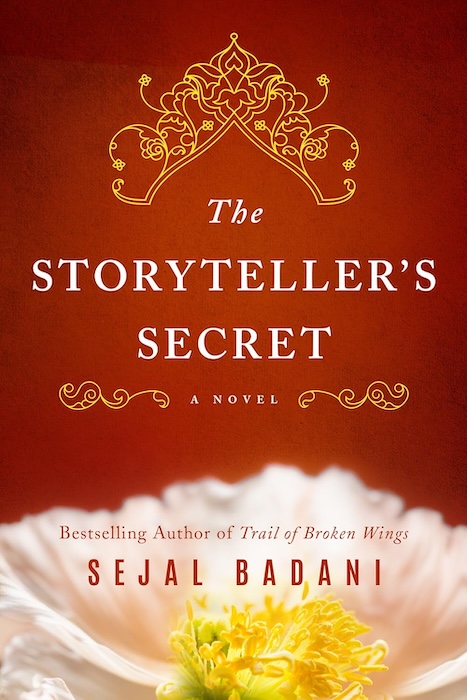
The Storyteller's Secret
The Storyteller’s Secret follows Jaya, an Indian American journalist whose personal life begins to unravel after she experiences a painful miscarriage and the breakdown of her marriage. Seeking answers and a fresh perspective, she travels to India to reconnect with her family’s roots. There, she meets Ravi, her grandmother’s former servant, who shares the story of Amisha, Jaya’s grandmother, and the difficult choices that shaped her life in a small Indian village during the 1930s. Amisha was a gifted storyteller whose aspirations extended beyond the traditional roles available to women, but her ambitions were constrained by social expectations and a marriage that offered little freedom. As Jaya uncovers her grandmother’s past, she begins to understand her own struggles differently. Badani explores family secrets, women’s independence, cultural traditions, and the healing power of understanding previous generations.
India
2018
4
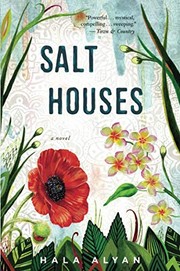
Salt Houses
Salt Houses follows several generations of the Palestinian Yacoub family as political upheaval repeatedly forces them to leave their homes and rebuild their lives elsewhere. Beginning in Nablus in the 1960s, the story traces the family’s experiences through the Six-Day War, the displacement caused by regional conflicts, and the subsequent lives of their descendants across the Middle East, Europe, and the United States. Each generation inherits a complicated relationship with Palestine, balancing memories of a lost homeland with the practical demands of creating a future in unfamiliar places. As family members develop different ideas about belonging, identity, and home, their relationships are shaped by both shared history and personal choices. Alyan explores the intergenerational effects of displacement, revealing how exile can become part of family identity even for those who have never experienced their ancestral homeland themselves.
Palestine
2018
5
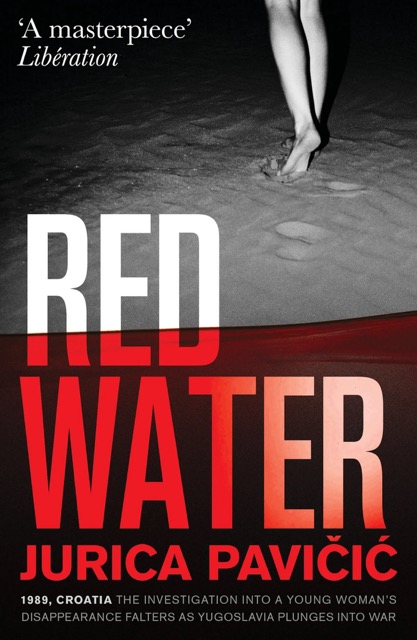
Red Water
One summer evening in 1989, seventeen-year-old Silva Vela disappears from a small coastal village in Dalmatia. At first, the police suspect she has run away, but as Yugoslavia begins to unravel, her disappearance becomes a mystery that will haunt two families for decades. Silva’s brother, Mate, refuses to give up searching for her, while the investigation exposes buried secrets, fractured loyalties, and the quiet transformations of a society caught between socialism, war, and capitalism. Spanning thirty years, Red Water is more than a gripping crime novel: it is a portrait of a community slowly changing beyond recognition. Against the backdrop of Croatia’s turbulent recent history, Pavičić explores how a single disappearance can reshape lives, reveal uncomfortable truths, and leave a wound that never quite heals.
Croatia
2017
6
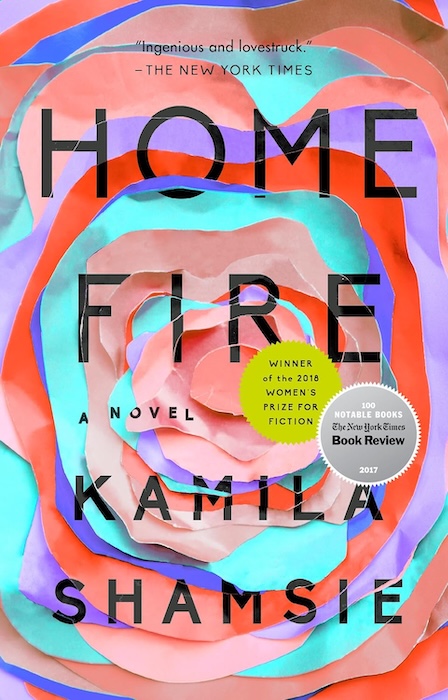
f
Home Fire is a contemporary reimagining of Sophocles’ ancient Greek tragedy Antigone, exploring family loyalty, political power, and the struggles of British Muslims to reconcile cultural identity with national belonging.
The novel follows Isma Pasha, who has spent years caring for her younger twin siblings, Aneeka and Parvaiz, after their mother’s death. When Isma finally leaves London to pursue her studies in the United States, she remains deeply concerned about her siblings. Parvaiz, haunted by the legacy of his deceased jihadist father, travels to Syria to join ISIS, only to discover that he has made a devastating mistake. Desperate to bring her brother home, Aneeka becomes involved with Eamonn Lone, the son of a powerful British politician whose hard-line policies threaten her family’s future.
As personal relationships become entangled with national security and political ambition, Shamsie examines the painful consequences of divided loyalties. The novel explores how governments define belonging, whose grief is considered legitimate, and what people are willing to sacrifice for those they love. Home Fire won the 2018 Women’s Prize for Fiction.
United Kingdom
2017
7
Green Island
Green Island follows several generations of a Taiwanese family whose lives are transformed by political repression and the legacy of the February 28 Incident of 1947. The story begins when Dr. Tsai, a young physician, is arrested by Chinese Nationalist authorities after the uprising in Taiwan. His eventual return to his family does not restore their former life; instead, fear, suspicion, and silence become part of their everyday existence. Years later, his youngest daughter grows up carrying the emotional consequences of her father’s experiences and eventually confronts difficult choices of her own. Moving between Taiwan and the United States, the novel examines how political violence enters private life and shapes family relationships across generations. It explores survival, complicity, memory, and the moral compromises people make to protect those they love.
Taiwan
2017
8
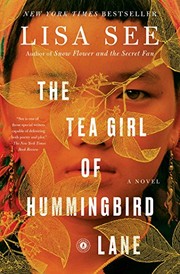
The Tea Girl of Hummingbird Lane
Set in the mountains of Yunnan, China, The Tea Girl of Hummingbird Lane follows Li-yan, a young woman from the Akha ethnic community whose life is shaped by centuries-old traditions surrounding tea cultivation, marriage, and family. When Li-yan gives birth to a daughter outside marriage, she makes the painful decision to leave her baby near an orphanage rather than follow a tradition that threatens the child’s life. The girl, Haley, is adopted by an American family and grows up far from her biological roots. As the years pass, both mother and daughter struggle with questions about their identities and origins. Connected by their shared heritage and the ancient tea trade, their stories explore motherhood, cultural change, adoption, and the enduring bonds between generations.
China
2017
9

A Girl Returned
A Girl Returned follows a thirteen-year-old girl who is suddenly sent back to the family she barely remembers after being raised by a couple she believed were her parents. Without explanation, she finds herself living with her biological family in a crowded apartment in a poor rural community in southern Italy. Surrounded by unfamiliar siblings and a mother who feels like a stranger, she struggles to understand why she was given away and why she has now been returned.
As she adjusts to her new circumstances, the girl develops a complicated relationship with her younger sister, Adriana, whose boldness and resourcefulness offer both companionship and conflict. Through the protagonist’s perspective, Donatella Di Pietrantonio explores the emotional consequences of abandonment, the divisions between social classes, and the meaning of motherhood and belonging. Written in a restrained, powerful style, the novel captures the vulnerability of adolescence and the lasting impact of secrets within families. It asks whether family is defined by blood, love, or the people who choose to stay.
Italy
2017
10
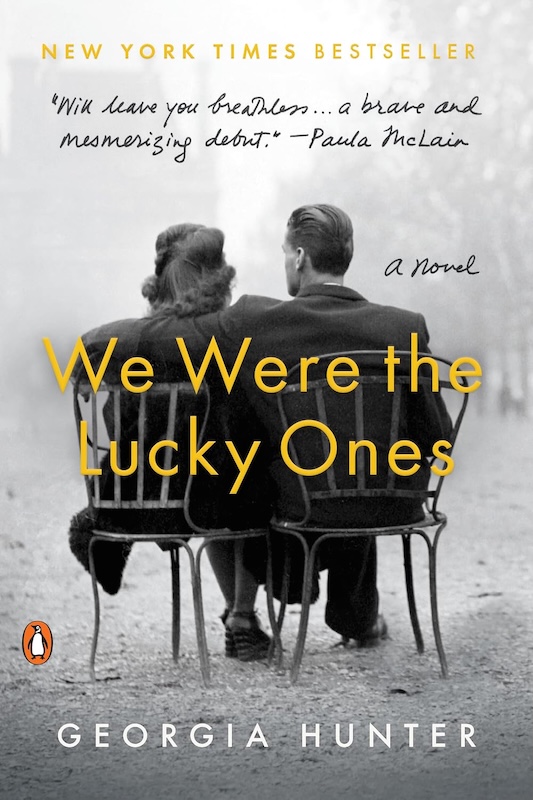
We Were the Lucky Ones
We Were the Lucky Ones is a historical novel inspired by the true story of the Kurc family, a Polish Jewish family separated by the Second World War. When Nazi Germany invades Poland, the family members are scattered across continents, each facing different dangers as they struggle to survive the Holocaust. From forced labor camps and occupied cities to resistance movements and refugee journeys, their experiences reveal the extraordinary lengths people will go to protect themselves and reunite with those they love. Despite persecution, loss, and uncertainty, the Kurcs maintain hope that they will one day find one another again. Drawing on her own family history, Georgia Hunter explores resilience, sacrifice, and the enduring bonds of family in the face of unimaginable adversity. The novel offers a moving portrait of survival and the determination to preserve love and humanity during one of history’s darkest periods.
Poland
2017
11
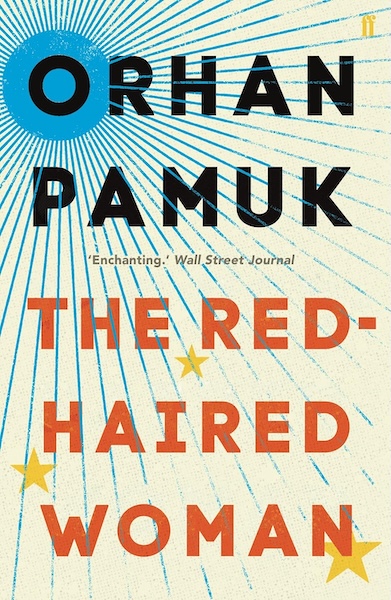
The Red-Haired Woman
In the mid-1980s, teenage Cem leaves Istanbul to work as an apprentice to Mahmut, an experienced well-digger. Together, they travel to a small town outside the city, where they labour to find water in the dry earth. As they work, Mahmut becomes a father figure to Cem, teaching him practical skills and sharing stories that shape the young man’s understanding of the world.
One summer, Cem encounters a mysterious red-haired woman performing with a travelling theatre troupe. Fascinated by her, he becomes entangled in an experience that will haunt him for decades. A terrible incident at the well changes the course of his life, and years later, when Cem has become a successful businessman, the past returns with consequences he could never have anticipated.
Drawing on the ancient myths of Oedipus and Rostam and Sohrab, The Red-Haired Woman explores fathers and sons, guilt, authority, and the forces that shape our destinies. It is a compact, unsettling novel about the stories we inherit and whether we can ever escape them.
Türkiye
2016
12
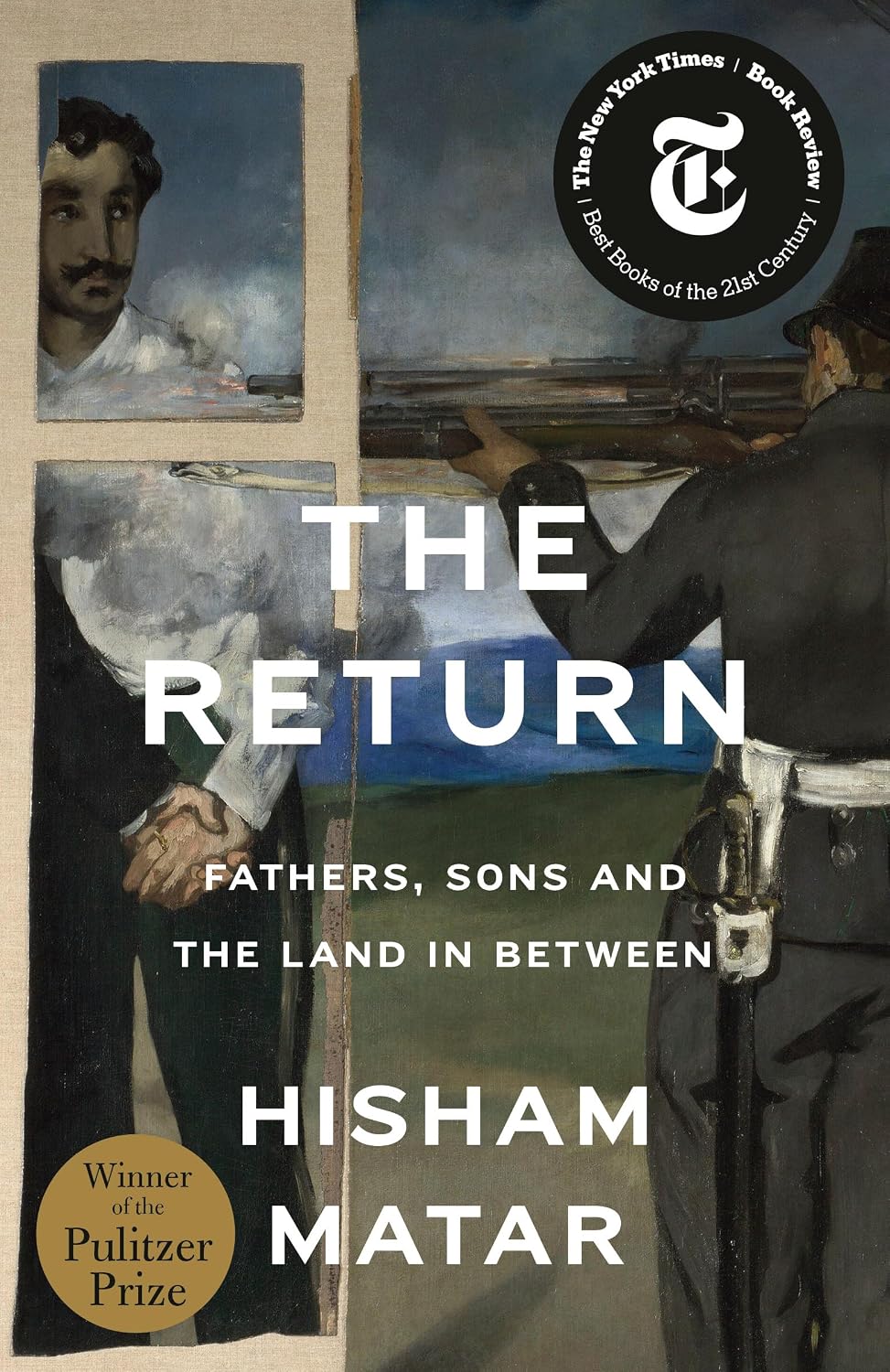
The Return
The Return is a memoir in which Hisham Matar recounts his search for his father, Jaballa Matar, a Libyan political dissident who disappeared in 1990 after being abducted in Egypt and taken to a prison in Libya. For years, Matar has lived with uncertainty about his father’s fate, holding on to memories and fragments of information while his family remains scattered by exile. Following the fall of Muammar Gaddafi’s regime in 2011, Matar returns to Libya for the first time in decades, hoping to discover what happened to his father and reconnect with the country he left behind as a child. His journey becomes both a personal investigation and a reflection on the lasting effects of dictatorship, political violence, and displacement. Through intimate recollections of family life, childhood, and loss, Matar explores the complex bonds between fathers and sons, the power of memory, and the emotional cost of living without answers. The memoir is a moving meditation on love, belonging, and the search for truth in the shadow of historical trauma.
Libya
2016
About this theme
- Books
- 105
- Countries
- 49
Countries with this theme
Afghanistan
Asia
Argentina
South America
Armenia
Asia
Australia
Oceania
Bosnia and Herzegovina
Europe
Botswana
Africa
Brazil
South America
Canada
North America
Central African Republic
Africa
Chile
South America
China
Asia
Colombia
South America
Croatia
Europe
Cuba
North America
Djibouti
Africa
Dominican Republic
North America
Egypt
Africa
Ethiopia
Africa
France
Europe
Georgia
Asia
Germany
Europe
Hungary
Europe
India
Asia
Iran
Asia
Iraq
Asia
Ireland
Europe
Italy
Europe
Japan
Asia
Lebanon
Asia
Libya
Africa
Mexico
North America
Netherlands
Europe
Nigeria
Africa
Norway
Europe
Oman
Asia
Pakistan
Asia
Palestine
Asia
Poland
Europe
Russia
Europe
Singapore
Asia
South Africa
Africa
South Korea
Asia
Sweden
Europe
Switzerland
Europe
Taiwan
Asia
Türkiye
Asia
United Kingdom
Europe
United States
North America
Zambia
Africa