Colonialism
All countries
Algeria
Australia
Brazil
Canada
Costa Rica
Côte d’Ivoire (Ivory Coast)
Egypt
Estonia
France
Ghana
India
Madagascar
Morocco
Palestine
Peru
Puerto Rico
Rwanda
Senegal
Spain
Sudan
Uganda
United Kingdom
United States
1
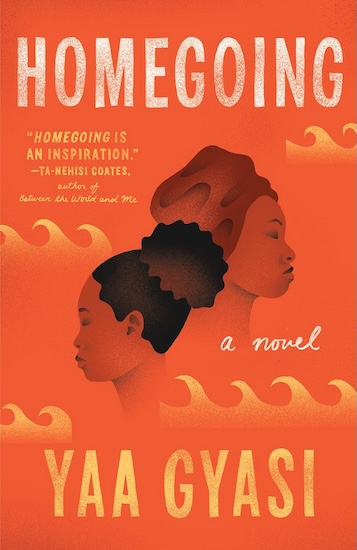
Homegoing
Two half-sisters, Effia and Esi, are born in eighteenth-century Ghana, their lives divided by the forces of slavery and colonialism. Effia marries a British slave trader and lives in comfort above the dungeons of Cape Coast Castle, unaware that her sister Esi is imprisoned below before being sold into slavery in America. From the villages of Ghana to the plantations of the American South and the streets of modern Harlem, their descendants inherit the consequences of choices, violence, and histories they never experienced themselves. Spanning eight generations and three centuries, Homegoing is a powerful exploration of how slavery reshapes families, how trauma travels across generations, and how the past continues to influence the present.
Ghana
2016
2
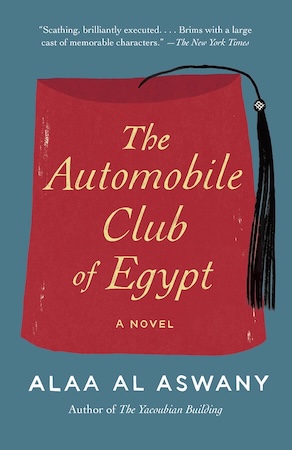
The Automobile Club of Egypt
When Egypt’s 2011 revolution brings millions into the streets demanding dignity, justice, and freedom, a diverse cast of Egyptians finds itself swept into a historic struggle. There are idealistic young activists, ambitious politicians, wealthy businessmen, religious conservatives, and ordinary citizens hoping for a better future. Yet as the revolution unfolds, the forces of money, military power, and religious authority begin to undermine its promises. Personal ambitions collide with political ideals, and those who once stood together discover how easily truth can be manipulated to preserve power. Through interconnected lives, Alaa Al Aswany captures the hope and disillusionment of a nation fighting to determine its future, exposing the mechanisms through which authoritarianism survives even when a revolution appears to have succeeded.
Egypt
2016
3
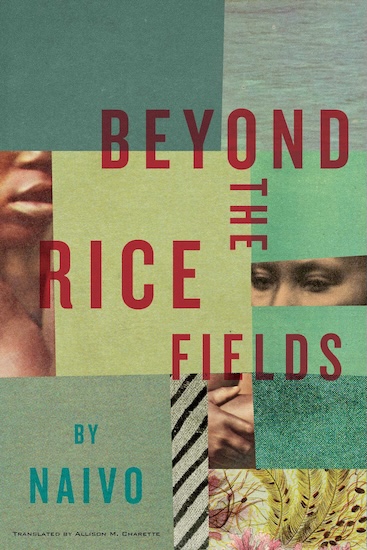
Beyond the Rice Fields
Nineteenth-century Madagascar is a kingdom on the brink of profound transformation. Tsito, a young boy enslaved after the destruction of his village, is taken to live in Sahasoa, where he develops a close bond with Fara, the daughter of his new master. As they grow older, their lives diverge: Tsito dreams of freedom, while Fara struggles with her family’s secrets and the restrictions placed upon her future. Their world is transformed by the arrival of British Christian missionaries and French industrialists, whose influence intensifies existing political and cultural tensions. As religious persecution and brutal royal purges spread across the kingdom, Tsito and Fara find themselves caught in a violent struggle over faith, power, and belonging. Through their intertwined stories, Naivo explores the legacy of slavery, the collision between Malagasy traditions and European influence, and the devastating consequences of political and religious intolerance.
Madagascar
2017
4
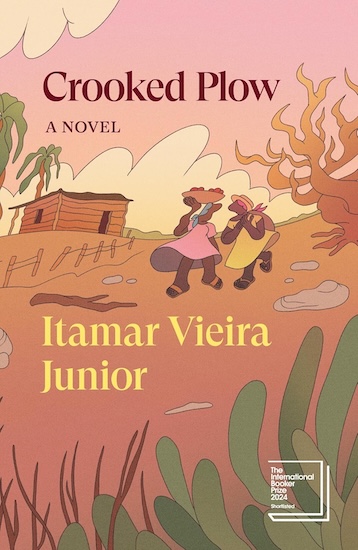
Crooked Plow
Set in the rural hinterlands of Bahia, Brazil, Crooked Plow follows Bibiana and Belonísia, two sisters growing up in a community of Black agricultural workers descended from enslaved people. Their lives change dramatically when, as children, they discover an old knife hidden beneath their grandmother’s bed. A sudden accident leaves one sister unable to speak, creating a bond between them that shapes their identities and futures.
As the sisters grow older, their paths diverge. Bibiana leaves home and becomes increasingly aware of the social and political forces that keep her community trapped in poverty, while Belonísia remains closely connected to the land and the traditions of her ancestors. Through their experiences, the novel reveals the exploitation of rural workers who cultivate land they do not own, despite generations of labour and their deep ancestral ties to it.
Blending social realism with magical elements and Afro-Brazilian spiritual traditions, Vieira Junior explores the enduring consequences of slavery, racial inequality, and land dispossession. The land itself becomes a source of both suffering and belonging, connecting the community to its history while providing the foundation for resistance. Through the sisters’ intertwined lives, the novel examines how people preserve their dignity, culture, and collective memory in the face of persistent injustice.
Brazil
2018
5
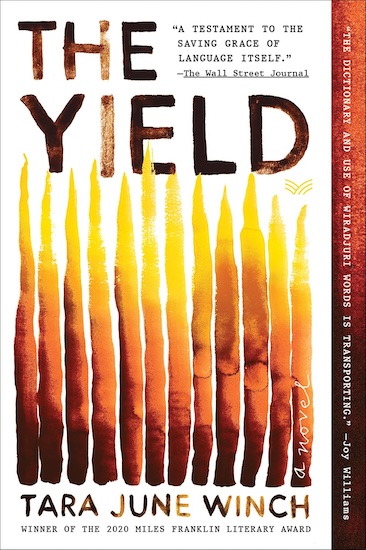
The Yield
In The Yield, Tara June Winch tells the story of Albert Gondiwindi, an elderly Wiradjuri man determined to preserve his people’s language and cultural knowledge before he dies. When Albert passes away, his granddaughter August returns to her family’s home in rural New South Wales after spending ten years in England. Her homecoming brings her face-to-face with painful memories, including the disappearance of her older sister, Jedda, and the colonial history that has shaped her family’s life.
August soon discovers that their ancestral home, Prosperous House, is threatened by a mining company seeking to take over the surrounding land. Determined to protect her family’s heritage, she searches for the dictionary Albert was compiling, a collection of Wiradjuri words and stories that preserves generations of knowledge. His work becomes a vital link to the past, helping August reconnect with her identity and understand the experiences of her ancestors.
The novel unfolds through three interwoven narratives: August’s return, Albert’s dictionary, and the historical account of a missionary whose actions reveal the destructive effects of colonial intervention. Through these different perspectives, Winch explores the connections between language, land, memory, and belonging. The Yield is both a powerful examination of Indigenous dispossession and a celebration of cultural survival, showing how reclaiming language and storytelling can help restore what history has attempted to erase.
Australia
2019
6
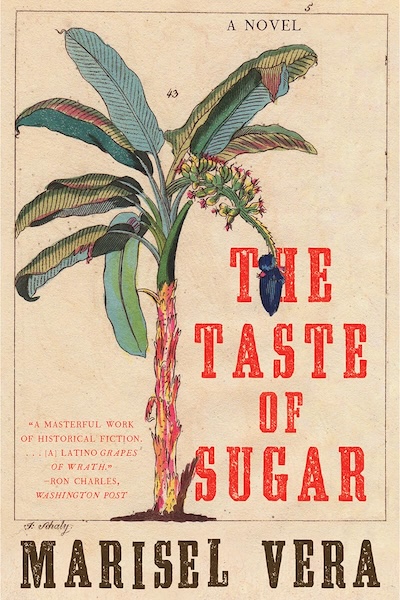
The Taste of Sugar
In late nineteenth-century Puerto Rico, seventeen-year-old Valentina Sánchez dreams of romance and a life beyond the expectations of her family. She marries Vicente Vega, a coffee farmer from the mountainous region of Utuado, hoping their love will bring happiness. But married life proves far more difficult than she imagined. Poverty, family tensions, and the struggle to keep their farm afloat threaten their future, while political upheaval transforms the island around them.
Following the Spanish-American War and the devastating San Ciriaco hurricane of 1899, Puerto Rico comes under American rule, and the Vegas lose their livelihood. Promised prosperity, Vicente and Valentina join thousands of Puerto Ricans who migrate to Hawaii to work on sugar plantations. Instead of the fresh start they hoped for, they encounter harsh working conditions, exploitation, and broken promises. Spanning generations and continents, The Taste of Sugar traces one family’s struggle to survive amid colonial domination and economic injustice. Marisel Vera brings a neglected chapter of Puerto Rican history to life, exploring how love, family, and resilience endure when the promise of a better future comes at an extraordinary cost.
United States
Puerto Rico
2020
7
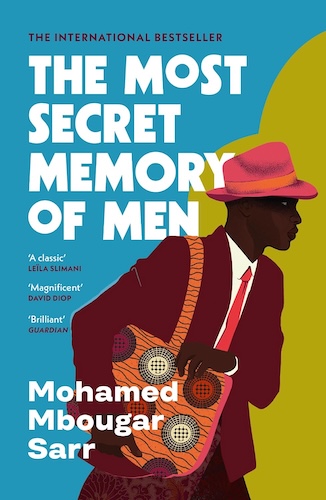
The Most Secret Memory of Men
A forgotten masterpiece. A disgraced writer. A mystery that spans continents and generations.
In Paris in 2018, young Senegalese novelist Diégane Latyr Faye discovers a legendary 1938 novel by T.C. Elimane, an African writer once celebrated as the “Black Rimbaud” before a plagiarism scandal destroyed his reputation and drove him into obscurity. Fascinated, Diégane sets out to uncover the truth about Elimane’s disappearance, following a trail from Senegal to France and Argentina. His search leads him into the darker corners of literary history, where colonialism, cultural prejudice, and the politics of recognition determine whose voices are remembered and whose are erased. Blending literary mystery with historical investigation, Mohamed Mbougar Sarr’s acclaimed novel is both a meditation on the power of storytelling and a passionate tribute to literature’s ability to transcend borders. Winner of France’s prestigious Prix Goncourt, it asks who gets to define literary greatness—and what it costs to pursue it.
Senegal
2021
8
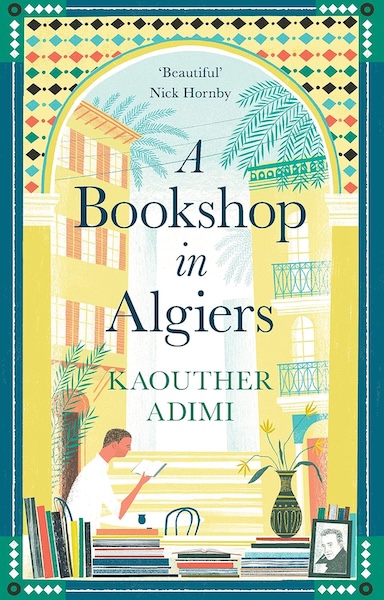
A Bookshop in Algiers
Can a small bookshop preserve the soul of a city through war, revolution, and the passing of generations?
In 1936, twenty-year-old Edmond Charlot opens a bookshop in Algiers with an ambitious dream: to create a home for writers and readers from across the Mediterranean. His little shop, Les Vraies Richesses (“Our True Riches”), becomes a cultural refuge, publishing emerging writers—including a young Albert Camus—while Algeria undergoes profound political and social change.
Decades later, the shop faces a very different future. Ryad, a young man with little interest in literature, arrives to empty its shelves before the premises are transformed into something else. But through the memories of its elderly guardian and the traces left by generations of readers, he begins to discover the extraordinary history contained within its walls.
Moving between past and present, Kaouther Adimi weaves together the story of a real literary landmark and the turbulent history of modern Algeria. A tender tribute to books, cultural memory, and the people who protect both, A Bookshop in Algiers asks what a community loses when it allows its literary heritage to disappear.
Algeria
2022
9
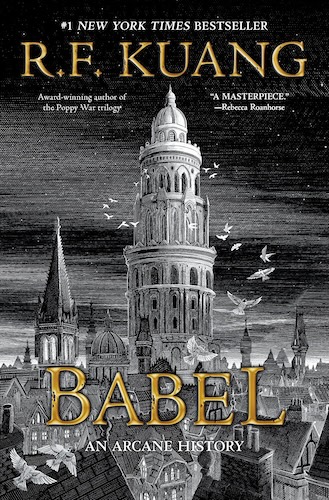
Babel: Or the Necessity of Violence
What if translation were the most powerful weapon in the world? In 1830s Oxford, Robin Swift, an orphan from Canton, is brought to England to study languages at the prestigious Royal Institute of Translation, known as Babel. There, silver-working transforms the subtle differences between languages into extraordinary magical power, helping the British Empire expand its influence across the globe. But as Robin and his fellow students uncover the violence and exploitation sustaining this system, they face an impossible choice: serve the institution that gave them a future or destroy the machinery of imperial power. Blending dark academia, historical fantasy, and political intrigue, Babel examines the relationship between language and power, asking what is lost when cultures are translated, exploited, and controlled by those who rule.
United Kingdom
2022
10
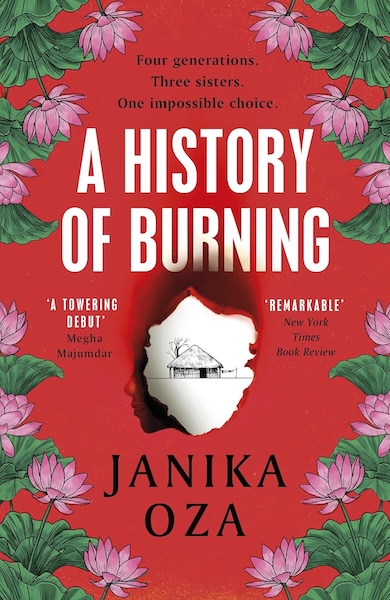
A History of Burning
In 1898, thirteen-year-old Pirbhai leaves his village in India, lured by the promise of work in East Africa. Instead, he is forced into labour on the British railway, where a desperate act committed in the name of survival becomes a secret that will haunt his descendants for generations.
Years later, Pirbhai builds a family with Sonal in Uganda. Their children and grandchildren grow up amid the final years of British colonial rule, the country’s struggle for independence, and the political turmoil that follows. Among the next generation are three sisters, each with her own ambitions and understanding of what it means to belong. When Idi Amin orders Uganda’s Asian population to leave in 1972, the family is scattered across continents, carrying with them the memories, silences, and secrets of their past.
Spanning more than a century and moving between India, East Africa, and Canada, A History of Burning traces how one act of survival reverberates through generations. Janika Oza weaves together colonial exploitation, political upheaval, family loyalty, and the search for home in an intimate multigenerational saga about the stories families preserve—and those they struggle to forget.
Uganda
India
Canada
2023
11
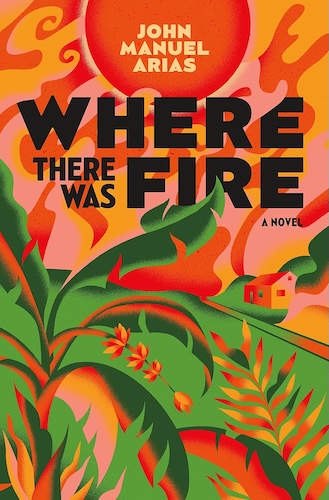
Where There Was Fire
In Costa Rica, 1968, a devastating fire at a banana plantation destroys evidence of a corporate cover-up, while a family is shattered by murder and a father’s sudden disappearance. Nearly three decades later, Teresa and her estranged daughter, Lyra, must confront the secrets that have haunted them for years. Blending family drama, ancestral spirits, and the legacy of corporate exploitation, this atmospheric novel explores how buried truths and inherited trauma can shape generations.
Costa Rica
2023
12
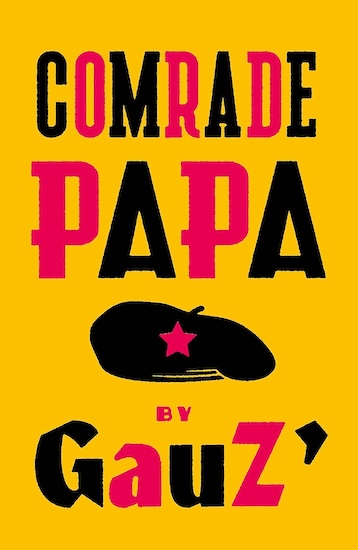
Comrade Papa
In Comrade Papa, Ivorian writer Gauz’ weaves together two stories separated by a century to examine colonialism, political ideology, and the complicated connections between Africa and Europe.
In 1880, Maxime Dabilly, a young Frenchman grieving the deaths of his parents, leaves France in search of adventure and joins a colonial expedition into Côte d’Ivoire. As he travels deeper into African territory, he becomes involved in the establishment of French trading routes and encounters the people whose lives and lands are about to be transformed by European expansion.
Nearly a century later, Anouman, a Black boy growing up in Amsterdam in a family of committed communists, is raised by a father who teaches him to oppose capitalism and imperialism. When family circumstances bring him to Côte d’Ivoire to live with his grandmother, he begins discovering his African heritage and unexpected connections to the past.
Through these parallel coming-of-age stories, Gauz’ uses irony, humour, and contrasting perspectives to challenge conventional narratives of colonial history. The novel explores how ideology shapes identity, how colonial power affects generations, and how personal histories can reveal the enduring consequences of imperialism.
Côte d’Ivoire (Ivory Coast)
2024
About this theme
- Books
- 33
- Countries
- 23
Countries with this theme
Algeria
Africa
Australia
Oceania
Brazil
South America
Canada
North America
Costa Rica
North America
Côte d’Ivoire (Ivory Coast)
Africa
Egypt
Africa
Estonia
Europe
France
Europe
Ghana
Africa
India
Asia
Madagascar
Africa
Morocco
Africa
Palestine
Asia
Peru
South America
Puerto Rico
South America
Rwanda
Africa
Senegal
Africa
Spain
Europe
Sudan
Africa
Uganda
Africa
United Kingdom
Europe
United States
North America