Short Stories
All countries
Argentina
Armenia
Austria
Benin
Bhutan
Bosnia and Herzegovina
Bulgaria
Croatia
Denmark
Ethiopia
Finland
Hungary
Iceland
India
Ireland
Jamaica
Japan
Jordan
Kazakhstan
Kenya
Kuwait
Nigeria
Norway
Pakistan
Palestine
Romania
Rwanda
Singapore
Taiwan
Türkiye
Turkmenistan
Uganda
Ukraine
United Kingdom
United States
1
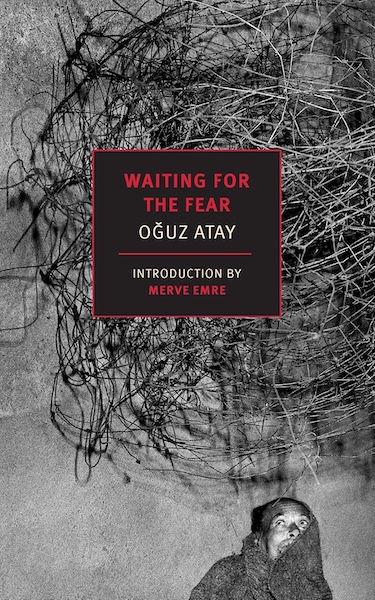
Waiting for the Fear
What happens when an ordinary letter makes you question everything you thought you knew? In the title story of Waiting for the Fear, an isolated man receives a mysterious message written in a language he cannot understand. As he struggles to decipher its meaning, suspicion gradually takes over his life, transforming his home into a place of dread and his everyday existence into an increasingly surreal nightmare.
Across eight stories, Oğuz Atay introduces a cast of outsiders, misfits, and troubled souls struggling to connect with a society that seems determined to misunderstand them. A woman confronts unsettling memories after discovering her former lover’s body; lonely storytellers sell invented tales to passengers at a remote railway station; other characters find themselves trapped between their private fantasies and an indifferent world.
Blending dark humour, psychological unease, absurdity, and experimental storytelling, Waiting for the Fear explores the fragile boundary between reality and imagination. Atay’s characters are haunted not only by external threats but also by their own thoughts, revealing the loneliness of people who can no longer trust the world—or themselves.
Türkiye
1975
2
The Summer Book
The Summer Book follows Sophia, a young girl, and her grandmother as they spend the summer together on a tiny island in the Gulf of Finland. Living in a simple cottage surrounded by rocks, forests, and the sea, they fill their days with conversations, explorations, small adventures, and moments of quiet reflection. Sophia is curious and sometimes stubborn, while her grandmother is wise, playful, and increasingly aware of her own mortality. Their relationship unfolds through a series of loosely connected episodes that capture the rhythms of island life.
Through their exchanges, Tove Jansson explores childhood, ageing, grief, freedom, and humanity’s relationship with the natural world. The island becomes a place where ordinary experiences reveal deeper truths about life, while the changing sea and weather mirror the characters’ shifting emotions. Gentle, humorous, and contemplative, the novel celebrates the beauty of everyday moments and the bonds that connect generations. Beneath its simplicity lies a profound meditation on impermanence, solitude, and the comfort of being close to nature.
Finland
1972
3
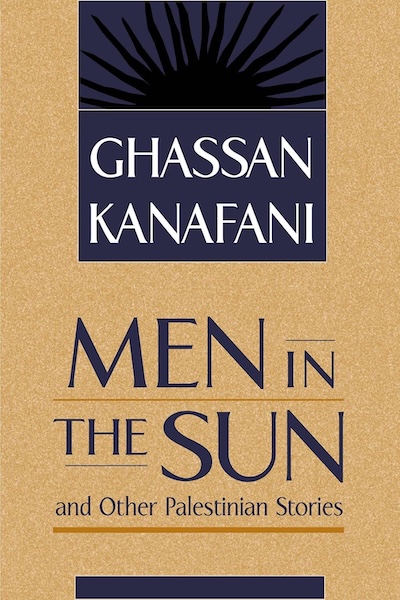
Men in the Sun and Other Palestinian Stories
Men in the Sun and Other Palestinian Stories brings together some of Ghassan Kanafani’s most powerful works of fiction, exploring the lives of Palestinians displaced by the creation of Israel in 1948 and the subsequent loss of their homes and homeland. The collection’s central novella, Men in the Sun, follows three Palestinian men of different generations who attempt to escape the poverty and desperation of refugee life by travelling illegally from Iraq to Kuwait in search of work. Entrusting their fate to a smuggler, they place their hopes in the possibility of a better future, only to confront the devastating consequences of their journey.
Through stories of exile, poverty, political oppression, and shattered aspirations, Kanafani portrays the psychological and material realities of displacement. His characters struggle not only with survival but also with questions of identity, dignity, and collective responsibility. Written with stark realism and symbolic depth, the collection examines the human cost of dispossession and the longing for a place to call home. It remains a significant work of Palestinian literature, giving voice to the experiences of a people shaped by exile and resistance.
Palestine
1962
4
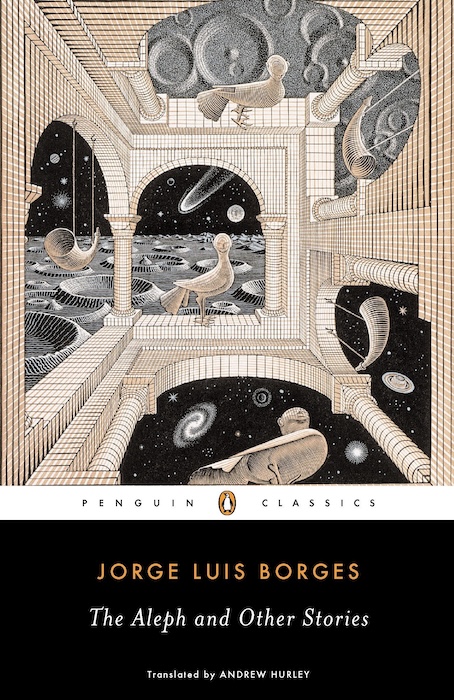
The Aleph
The Aleph is a collection of short stories that explores infinity, memory, identity, and the limits of human understanding. In the title story, a narrator discovers a point in space containing every other point in the universe, allowing him to perceive all things simultaneously without distortion or concealment. Other stories examine imaginary worlds, mysterious objects, labyrinthine histories, and the unsettling possibility that reality may be far stranger than it appears. Borges combines philosophical speculation with elements of fantasy, detective fiction, and literary scholarship, creating narratives that often feel like intellectual puzzles. His characters encounter knowledge that promises to reveal everything but frequently leaves them more uncertain than before. The collection asks whether human beings can ever comprehend the totality of existence or whether some mysteries must remain beyond the boundaries of language and reason.
Argentina
1949
5
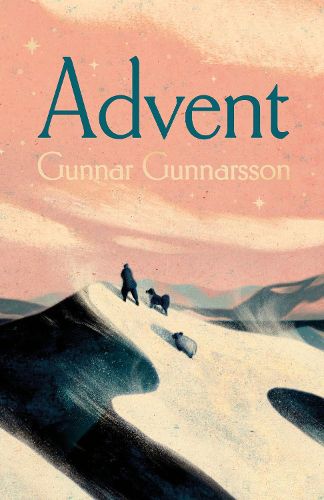
Advent
Every winter, in the days leading up to Christmas, Benedikt, a humble Icelandic shepherd, ventures into the mountains to rescue sheep stranded in the snow. Accompanied by his faithful dog and a stubborn old ram, he travels through a landscape of blizzards, frozen valleys and treacherous mountain passes, driven by a deep sense of responsibility toward vulnerable living creatures. His annual journey is physically demanding and potentially fatal, yet Benedikt accepts its hardships as an essential part of his life. Against the vastness and brutality of Iceland’s winter wilderness, his quiet determination becomes an extraordinary expression of compassion, humility and spiritual devotion. Blending the simplicity of a fable with vivid descriptions of the natural world, Gunnarsson creates a meditation on human endurance and the relationship between people and nature. Advent is both a portrait of an individual guided by kindness and a celebration of the profound peace that can be found in a life devoted to helping others.
Iceland
1940
6
My Name Is Aram
My Name Is Aram is a collection of interconnected stories narrated by Aram Garoghlanian, a young Armenian American boy growing up in California’s San Joaquin Valley. Through his observations of family members, neighbours, and fellow members of the Armenian immigrant community, Aram discovers the contradictions and wonders of adult life. His relatives are often eccentric, proud, impulsive, and fiercely attached to their heritage, providing him with lessons about generosity, ambition, family loyalty, and human imperfection. Saroyan combines humour with tenderness, portraying a community attempting to preserve its cultural identity while adapting to life in a new country. The stories celebrate the ordinary experiences that shape childhood and the resilience of immigrant families, capturing how language, memory, and shared traditions help maintain a connection to ancestral roots across generations.
Armenia
1940