Short Stories
All countries
Argentina
Armenia
Austria
Benin
Bhutan
Bosnia and Herzegovina
Bulgaria
Croatia
Denmark
Ethiopia
Finland
Hungary
Iceland
India
Ireland
Jamaica
Japan
Jordan
Kazakhstan
Kenya
Kuwait
Nigeria
Norway
Pakistan
Palestine
Romania
Rwanda
Singapore
Taiwan
Türkiye
Turkmenistan
Uganda
Ukraine
United Kingdom
United States
1

A Beautiful Lack of Consequence
A Beautiful Lack of Consequence is a collection of thirty short stories that explore the complexities of contemporary womanhood through a blend of realism, surrealism, dark humor, and feminist commentary.
Across its stories, Monika Radojevic depicts women confronting the pressures and expectations imposed on them by society. A woman enters a bar and finds herself completely invisible; a newly married couple faces a disturbing punishment for their childlessness; and a young girl trades her vocal cords for the possibility of freedom. These strange and unsettling scenarios transform familiar experiences of exclusion, fear, and powerlessness into imaginative explorations of resistance.
Moving between the everyday and the fantastical, the collection examines how women navigate relationships, social conventions, anger, and the struggle to make their voices heard. Radojevic combines tenderness with biting humor, capturing both the vulnerability and the strength of women pushed to their limits. Her stories ask what happens when those who have been expected to remain silent finally refuse to comply.
Dark, inventive, and sharply observed, the collection explores the possibilities of reclaiming agency in a world that continually attempts to define women’s lives.
United Kingdom
2025
2
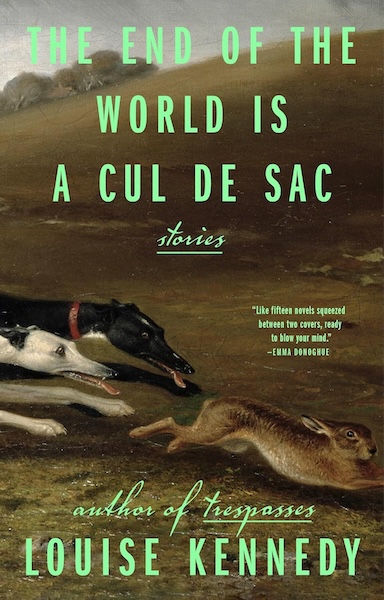
The End of the World Is a Cul de Sac
In this striking collection of fifteen short stories, ordinary lives unravel in unexpected ways. A newly married woman finds herself abandoned in a half-finished housing estate; a mother grows increasingly suspicious of her husband’s relationship with a teenage girl; a woman struggles with guilt after an abortion threatens her marriage. Across these stories, Louise Kennedy’s characters confront betrayal, poverty, violence, loneliness, and the quiet desperation of lives that have not turned out as planned.
Set against the landscapes and social realities of Ireland, the collection reveals how private struggles are shaped by wider forces, from the legacy of the Troubles to restrictive expectations placed on women. Kennedy balances bleak humour with moments of tenderness and beauty, finding humanity in characters who are often flawed, trapped, or complicit in their own unhappiness. The End of the World Is a Cul de Sac is an unflinching portrait of people at breaking points, exploring how cruelty and vulnerability coexist—and how unexpected glimpses of hope can emerge from the most difficult circumstances.
United Kingdom
2021
3
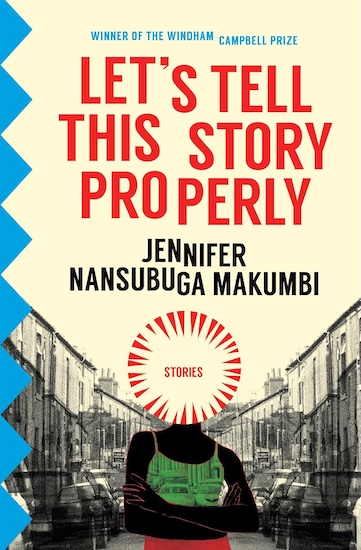
Let's Tell This Story Properly
In Let’s Tell This Story Properly, Jennifer Nansubuga Makumbi explores the experiences of Ugandans living in Britain, examining how migration reshapes identity, family relationships, and the meaning of home. Across a collection of interconnected stories, her characters navigate the challenges of building lives in a country where they may be highly visible as workers and neighbours yet remain socially marginalised. From airport security staff to healthcare workers and families divided between continents, the stories reveal the everyday realities of belonging to more than one place.
The title story follows Nnam, a Ugandan woman living in Manchester, who returns to Uganda with her husband’s body for his funeral rites. There, she discovers that the life she thought she understood concealed painful secrets. Other stories explore the difficult adjustment of immigrants, generational tensions within diaspora families, and the ways cultural expectations persist across distance. Characters often find themselves caught between the home they left and the new home they are trying to make, never feeling entirely at ease in either.
With emotional depth, sharp observation, and occasional dark humour, Makumbi portrays migration as more than a geographical journey. It is also a process of renegotiating family loyalties, cultural identity, and personal history. The collection asks how far people must travel to find belonging—and what happens when the meaning of home changes while they are away.
Uganda
United Kingdom
2019