Memoir
All countries
Afghanistan
Albania
Algeria
Azerbaijan
Bhutan
Bosnia and Herzegovina
Botswana
Cambodia
China
Congo, Democratic Republic
Cuba
Cyprus
Egypt
El Salvador
Finland
France
Germany
Ghana
India
Iran
Ireland
Jamaica
Japan
Libya
Malta
Morocco
Pakistan
Palestine
Russia
Rwanda
Taiwan
Tanzania
Türkiye
United Kingdom
United States
Yemen
Zambia
1
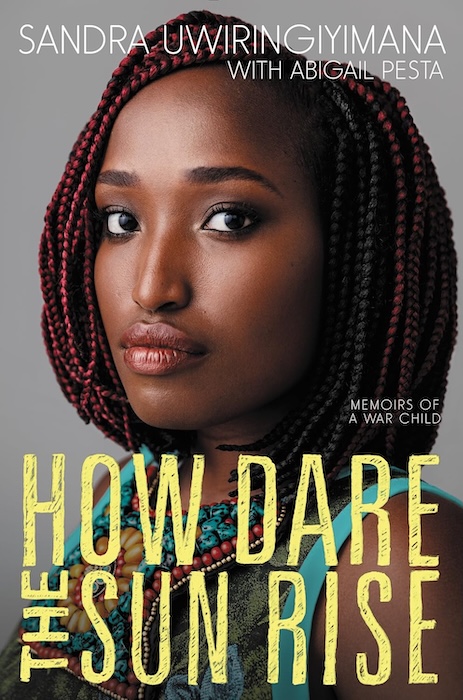
How Dare the Sun Rise
How Dare the Sun Rise is the powerful memoir of Sandra Uwiringiyimana, who recounts her childhood as a member of the Banyamulenge, a persecuted ethnic minority in the Democratic Republic of the Congo. When Sandra was ten years old, her family was living in a refugee camp in Burundi after fleeing violence in their homeland. In 2004, the camp was attacked by armed assailants, and Sandra witnessed the deaths of her mother and six-year-old sister. She narrowly escaped with her own life.
After the massacre, Sandra and her surviving family members eventually resettled in the United States, hoping to find safety and a fresh start. However, adjusting to a new country brought its own challenges, including racism, isolation, and the struggle to find a sense of belonging.
Co-written with journalist Abigail Pesta, this memoir explores trauma, displacement, identity, and resilience. Through her journey from a war-torn childhood to becoming an advocate for refugees and human rights, Sandra reflects on the power of storytelling to confront injustice and reclaim one’s voice.
Congo, Democratic Republic
2017
2
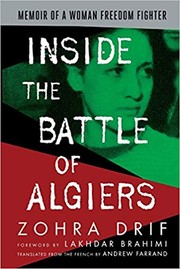
Inside the Battle of Algiers
In this memoir, Algerian revolutionary Zohra Drif recounts her experiences during Algeria’s struggle for independence from French colonial rule in the 1950s and early 1960s. A young woman studying law in Algiers, Drif joins the National Liberation Front (FLN) and becomes involved in its armed resistance alongside other women who challenge both colonial authority and traditional expectations of women’s roles in society.
Through personal recollections, she describes the political tensions, underground operations, arrests, and difficult choices that shaped the independence movement. Her account also explores the place of women in revolutionary struggle and the moral complexities of political violence. Offering a firsthand perspective on one of the defining conflicts of modern Algerian history, the memoir examines the sacrifices, convictions, and contradictions involved in fighting for national liberation.
Algeria
2017
3
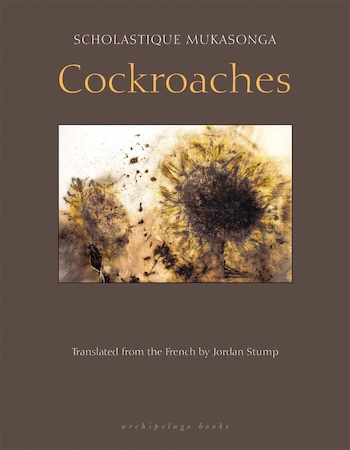
Cockroaches
In this moving autobiographical memoir, Scholastique Mukasonga recounts her childhood as a Tutsi girl in Rwanda, where ethnic persecution gradually transforms everyday life into a struggle for survival. After her family is forcibly displaced to the impoverished Bugesera region, she grows up surrounded by fear, humiliation, and uncertainty, yet also by the warmth of family life and the strength of her community. Eventually forced to flee to neighbouring Burundi, Mukasonga leaves behind the people and places that shaped her childhood. In 1994, while living in France, she learns that thirty-seven members of her family have been murdered during the Rwandan genocide. The title refers to inyenzi, a dehumanising slur used against Tutsis, reducing human beings to creatures considered fit for extermination. Through precise, restrained prose, Mukasonga transforms her memories into an act of remembrance, restoring individuality to those whom violence sought to erase. Cockroaches is both a personal testimony of survival and a powerful tribute to the enduring bonds of family, memory, and belonging.
Rwanda
2016
4
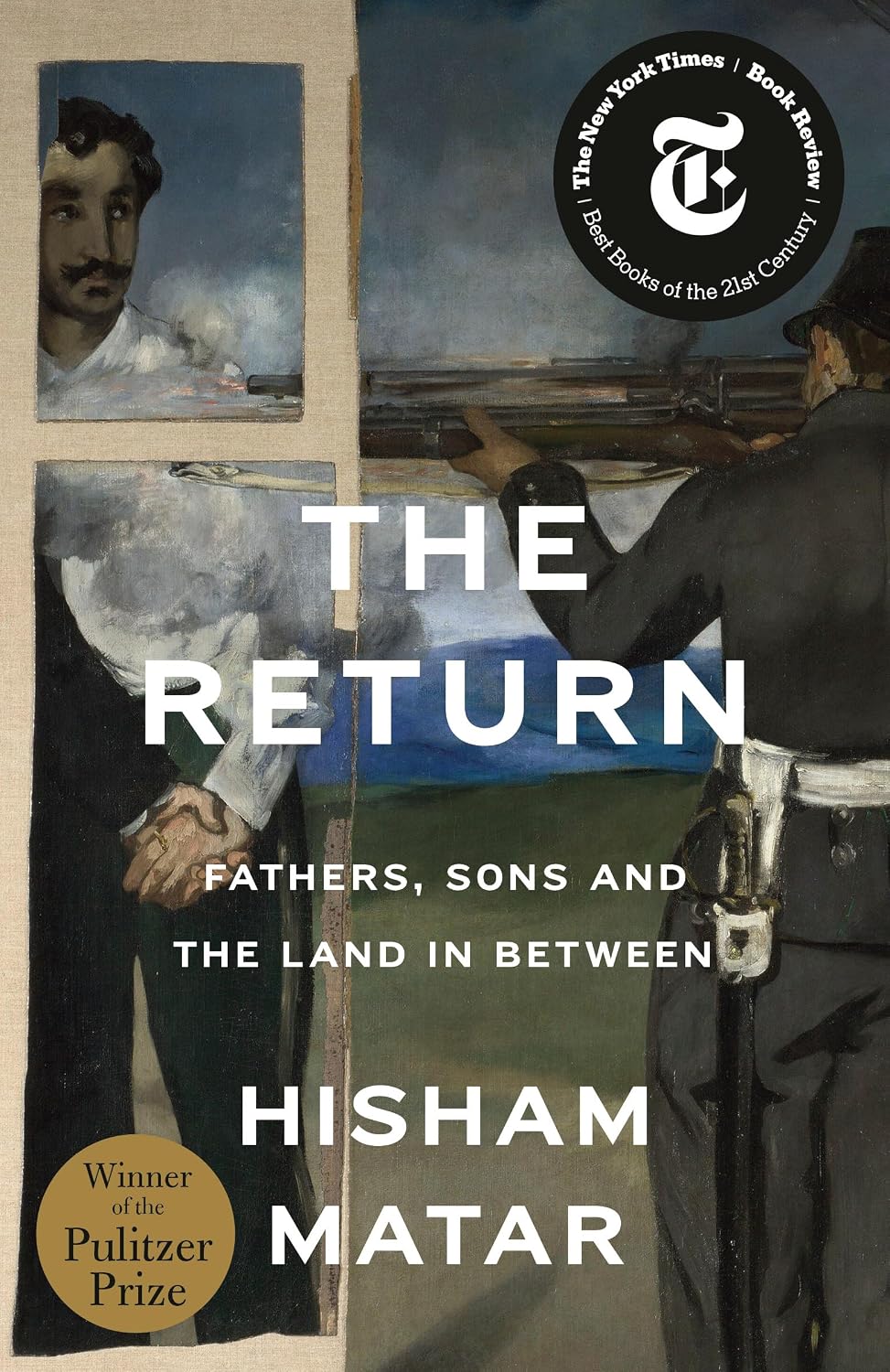
The Return
The Return is a memoir in which Hisham Matar recounts his search for his father, Jaballa Matar, a Libyan political dissident who disappeared in 1990 after being abducted in Egypt and taken to a prison in Libya. For years, Matar has lived with uncertainty about his father’s fate, holding on to memories and fragments of information while his family remains scattered by exile. Following the fall of Muammar Gaddafi’s regime in 2011, Matar returns to Libya for the first time in decades, hoping to discover what happened to his father and reconnect with the country he left behind as a child. His journey becomes both a personal investigation and a reflection on the lasting effects of dictatorship, political violence, and displacement. Through intimate recollections of family life, childhood, and loss, Matar explores the complex bonds between fathers and sons, the power of memory, and the emotional cost of living without answers. The memoir is a moving meditation on love, belonging, and the search for truth in the shadow of historical trauma.
Libya
2016
5
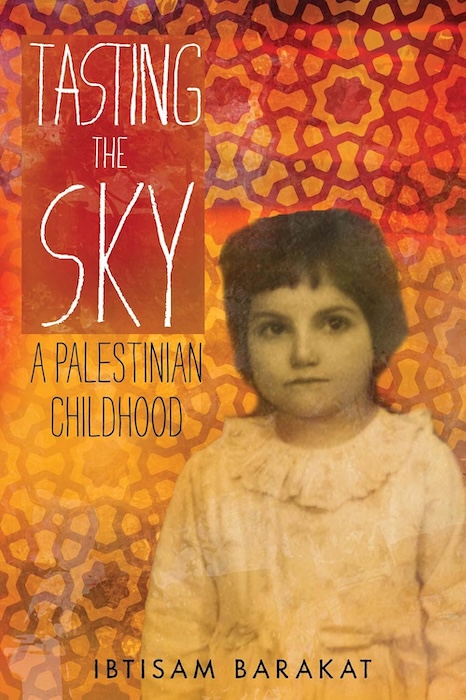
Tasting the Sky
Tasting the Sky: A Palestinian Childhood is a memoir recounting Ibtisam Barakat’s childhood during and after the 1967 Six-Day War. Growing up in Ramallah in the occupied West Bank, Barakat experiences the fear and confusion of war as her family flees their home, leaving behind the familiar world of her early years. Through the eyes of a young girl, she describes the uncertainty of displacement, the separation of families, and the emotional challenges of growing up amid political conflict. Despite the hardship surrounding her, Barakat discovers refuge in language, reading, and education, gradually finding ways to understand and express her experiences. Written in lyrical, accessible prose, the memoir captures how a child makes sense of violence and loss while holding on to curiosity and hope. It offers an intimate perspective on Palestinian history, exploring the relationship between memory, identity, language, and belonging, and demonstrating how storytelling can become a means of survival and self-discovery.
Palestine
2016
6
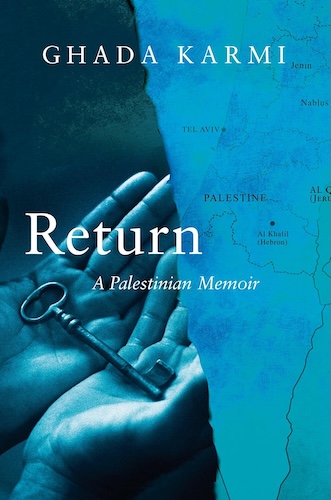
Return: A Palestinian Memoir
What happens when you finally return to the homeland you were forced to leave as a child—and discover that it no longer feels like home? More than fifty years after her family fled Jerusalem during the 1948 Nakba, Palestinian-British doctor and writer Ghada Karmi returns to Palestine, hoping to contribute to the struggle for peace and Palestinian statehood. Working with the Palestinian Authority in Ramallah, she encounters the realities of occupation, military restrictions, political bureaucracy, and a homeland transformed beyond recognition. As she revisits places connected to her childhood and confronts the loss of her family home, Karmi wrestles with a deeply personal question: can exile ever truly end? An intimate memoir of displacement and belonging, Return explores the painful distance between the homeland preserved in memory and the reality of returning to it.
Palestine
2015
7
In Other Words
In Other Words is a memoir about Jhumpa Lahiri’s decision to learn Italian and her determination to express herself through a language that is not her own. Although she grew up speaking English and Bengali, Lahiri develops a deep fascination with Italian and eventually moves to Rome with her family to immerse herself in the language. Written originally in Italian and published with an English translation, the book reflects on the vulnerability, frustration, and freedom involved in learning to communicate in unfamiliar words. Through personal anecdotes, literary reflections, and metaphors, Lahiri compares language learning to migration, describing the experience of becoming an outsider in a place where she longs to belong. The memoir explores creativity, cultural identity, and the relationship between language and selfhood, revealing how adopting a new language can create space for reinvention and a different understanding of oneself.
India
2015
8
Novelist As a Vocation
Novelist as a Vocation offers Haruki Murakami’s reflections on the craft of writing, the life of a novelist, and the habits that sustain a long creative career. Drawing on his own experiences, Murakami discusses how he became a writer, the importance of originality, and the discipline required to transform ideas into finished novels. He considers the relationship between imagination and reality, explaining how writers develop distinctive voices and create fictional worlds that feel convincing to readers.
Beyond practical advice, Murakami reflects on literary recognition, criticism, education, and the pressures of the publishing industry. He questions conventional ideas about literary talent and argues that persistence, curiosity, and a willingness to work consistently are essential to creative development. The book also reveals aspects of Murakami’s personal philosophy, including his commitment to routine, physical exercise, and independent thinking. Part memoir and part meditation on artistic practice, it offers insight into how a novelist builds a sustainable relationship with writing while protecting the freedom to follow an individual creative vision.
United Kingdom
2015
9
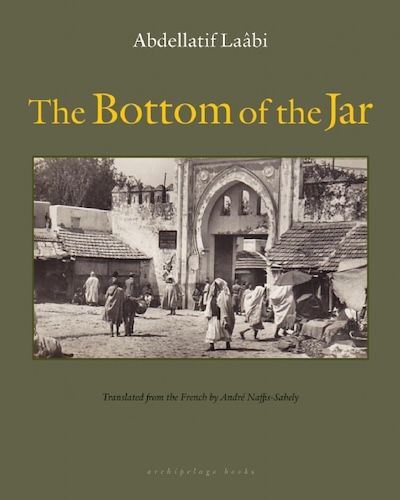
The Bottom of the Jar
Set in Fez during the 1950s, as Morocco struggles to free itself from French colonial rule, The Bottom of the Jar is a richly textured portrait of childhood, family, and a city on the threshold of transformation. Through the eyes of a young boy discovering the world around him, Abdellatif Laâbi evokes the bustling streets of the old medina, the colourful characters who inhabit them, and the intimate dramas unfolding behind closed doors. At the centre of this world is the boy’s family: a generous father, a formidable mother whose passionate prayers and sharp wit fill their home, and an eccentric uncle whose love of hashish and storytelling turns him into a kind of Homer after dark. Humorous, tender, and occasionally heartbreaking, the novel captures the contradictions of a society caught between inherited traditions and the promise of independence. Drawing on the author’s own childhood, it celebrates the imagination and resilience of ordinary people while exploring how political change reshapes private lives.
Morocco
2013
10
Kissing the Sword: A Prison Memoir
In Kissing the Sword, Iranian writer Shahrnush Parsipur recounts her experiences as a political prisoner in post-revolutionary Iran. Following the 1979 Iranian Revolution, the new authorities began detaining people associated with opposing political views. Parsipur herself was imprisoned without formal charges, experiencing the fear, uncertainty, and psychological strain of incarceration.
Through vivid personal recollections, she describes life inside Iranian prisons, including encounters with fellow prisoners, interrogations, ideological disputes, and the harsh treatment of detainees. Her memoir also explores the restrictions imposed on women, particularly debates surrounding religious authority, dress, and individual autonomy.
Combining painful memories with moments of dark humour and reflection, Parsipur examines the relationship between political power and personal freedom. The book is both a record of her own experiences and a broader meditation on censorship, resistance, and the resilience required to preserve one’s voice under repression.
Iran
2013
11
Book of My Lives
The Book of My Lives is a collection of autobiographical essays in which Aleksandar Hemon reflects on his childhood in Sarajevo, his experiences as an immigrant in the United States, and the events that transformed his understanding of home and belonging. Moving between memories of growing up in socialist Yugoslavia and his later life in Chicago, Hemon explores how personal identity is shaped by language, geography, family, and historical circumstances.
The collection takes a deeply personal turn when the Bosnian War begins while Hemon is visiting the United States, leaving him unable to return to Sarajevo as planned. Through sharp observations, dark humour, and emotional honesty, he examines the experience of exile and the complicated relationship between an adopted home and a homeland altered by violence. He also reflects on family life, fatherhood, football, and the unexpected details that give meaning to ordinary existence. Blending intimate memoir with broader historical reflection, the book explores how people rebuild their lives when the places they belong to become distant or irretrievably changed.
Bosnia and Herzegovina
2013
12
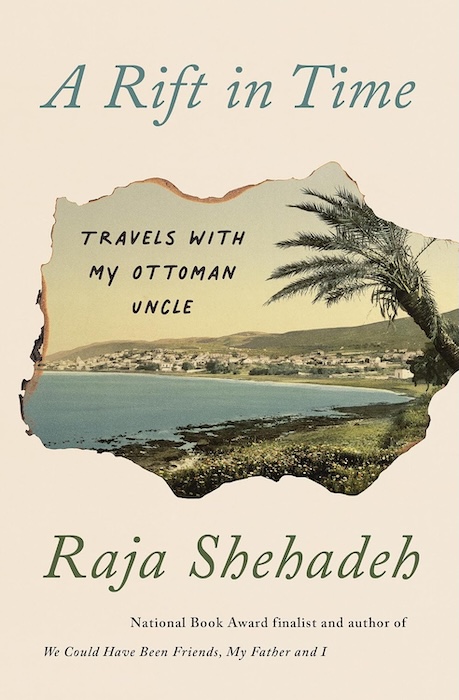
A Rift in Time: Travels with My Ottoman Uncle
In A Rift in Time: Travels with My Ottoman Uncle, Palestinian writer and human rights lawyer Raja Shehadeh explores the connections between family history, national identity, and the changing political landscape of the Middle East. Inspired by the life of his great-uncle Najib Nassar, a Palestinian journalist who lived during the final decades of the Ottoman Empire, Shehadeh traces the journey of a man who witnessed the collapse of an empire and the emergence of a new political order. Moving between historical research, personal reflection, and travel writing, the author examines how the experiences of earlier generations continue to shape contemporary Palestinian life. Through his uncle’s story, Shehadeh reflects on the meaning of belonging, the fragility of historical memory, and the ways political borders transform people’s relationships with their homeland. The book offers an intimate exploration of the past, revealing how an individual’s life can illuminate the wider forces that shape a nation’s history and collective identity.
Palestine
2010