Historical Fiction
All countries
Afghanistan
Albania
Algeria
Angola
Antigua and Barbuda
Argentina
Armenia
Australia
Austria
Azerbaijan
Bangladesh
Barbados
Belize
Benin
Bosnia and Herzegovina
Brazil
Bulgaria
Burundi
Canada
Chile
China
Congo, Democratic Republic
Côte d’Ivoire (Ivory Coast)
Croatia
Cuba
Cyprus
Denmark
Djibouti
Dominica
Dominican Republic
Egypt
El Salvador
Ethiopia
Fiji
France
Georgia
Germany
Ghana
Greece
Guatemala
Hungary
Iceland
India
Indonesia
Iran
Iraq
Ireland
Italy
Jamaica
Japan
Kazakhstan
Kenya
Kuwait
Latvia
Lebanon
Libya
Madagascar
Malaysia
Mexico
Moldova
Morocco
Myanmar
Netherlands
Nigeria
North Korea
Oman
Pakistan
Palestine
Philippines
Poland
Portugal
Puerto Rico
Romania
Rwanda
Saudi Arabia
Senegal
Singapore
Slovenia
South Africa
South Korea
Spain
Sri Lanka
Sudan
Sweden
Switzerland
Syria
Taiwan
Tanzania
Thailand
Türkiye
Turkmenistan
Uganda
Ukraine
United Arab Emirates
United Kingdom
United States
Uruguay
Uzbekistan
Vietnam
Yemen
Zambia
Zimbabwe
1
Bitter Orange Tree
When Omani student Zuhour leaves her home to study at a university in Britain, she finds herself caught between the promise of a new life and the memories of the people she has left behind. Among them is Bint Aamir, the woman she regarded as her grandmother, whose love and sacrifices shaped Zuhour’s childhood. Bint Aamir’s own life was marked by constrained choices and dreams she was never able to fulfil, finding solace beneath a beloved bitter orange tree.
As Zuhour struggles with loneliness, complicated friendships, and the challenge of finding her place in an unfamiliar country, memories and dreams draw her back to Oman. Through a lyrical, nonlinear narrative, Jokha Alharthi weaves together the lives of two women separated by generations but connected by longing, affection, and the desire for independence. Bitter Orange Tree explores how family histories, social class, and gender expectations shape women’s lives—and how understanding the past can help us imagine a different future.
Oman
2002
2
Queen of the South
When the phone rings, Teresa Mendoza knows her life is about to change forever. Her boyfriend, a pilot who smuggles drugs for the Mexican cartels, has warned her that if she ever receives that call, she must run for her life. When he is murdered, Teresa flees Mexico, leaving behind everything she knows and entering an unfamiliar world where survival depends on intelligence, courage, and the ability to trust no one.
Her journey takes her from Mexico to Spain, where she becomes involved in the dangerous business of smuggling hashish across the Strait of Gibraltar. Initially an outsider in a ruthless, male-dominated criminal world, Teresa gradually discovers her talent for negotiation, strategy, and business. As she builds her own network and accumulates wealth and influence, she transforms herself from a frightened young woman into a formidable criminal leader.
Spanning continents and more than a decade, Pérez-Reverte’s novel combines crime thriller, political intrigue, and a powerful portrait of female ambition. Inspired in part by real-world drug-trafficking networks, the story explores loyalty, betrayal, identity, and the price of power. Teresa’s rise challenges conventional ideas about femininity and authority, while revealing the brutal realities of a world where survival often demands becoming the very person one once feared.
Spain
2002
3
My Name Is Red
Set in sixteenth-century Istanbul during the Ottoman Empire, My Name Is Red follows a group of miniature painters commissioned to create an illustrated book for the sultan. Their work becomes controversial because it incorporates European artistic techniques that challenge traditional Islamic approaches to representation. When one of the artists is murdered, the investigation exposes rivalries, jealousy, and competing ideas about art, religion, and cultural identity. The story unfolds through multiple narrators, including artists, objects, and even a corpse, creating a complex picture of a society caught between established traditions and new influences. Pamuk explores the relationship between artistic expression and political authority, asking whether adopting foreign ideas represents progress or the loss of cultural heritage. The novel combines a murder mystery with a philosophical examination of how people understand themselves through art and tradition.
Türkiye
2002
4
Algerian White
Algerian White is a deeply personal and reflective work in which Assia Djebar mourns three intellectual friends who were murdered during Algeria’s violent civil conflict of the 1990s. Through memories, literary reflections, and historical commentary, Djebar examines the devastating consequences of political violence on writers, thinkers, and the cultural life of her country. The title refers to the white shroud associated with burial, symbolising both mourning and the silencing of voices lost to violence. Moving between intimate recollections and broader reflections on Algeria’s colonial past and post-independence struggles, Djebar explores the responsibilities of intellectuals in times of crisis and the fragility of freedom of expression. Her writing becomes an act of remembrance, resisting the disappearance of those who challenged oppression through their ideas and words. Blending memoir, essay, and elegy, the book reflects on friendship, loss, memory, and the enduring importance of literature in preserving the lives and convictions of those who have been silenced.
Algeria
2002
5
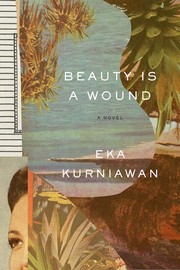
Beauty Is a Wound
In Beauty Is a Wound, Eka Kurniawan tells the extraordinary story of Dewi Ayu, a beautiful Indonesian woman who rises from the dead after twenty-one years in her grave. Set against the turbulent history of Indonesia, from Dutch colonial rule through the Japanese occupation and the political violence that followed independence, the novel follows Dewi Ayu and her four daughters as their lives become entangled in cycles of violence, desire, and revenge. Combining magical realism, dark humor, folklore, and historical fiction, Kurniawan explores the lasting consequences of colonialism, the brutality of war, and the oppression of women in a patriarchal society. Through grotesque imagery and fantastical events, the novel reveals how personal tragedies reflect a nation’s traumatic past, examining the ways violence and historical injustice shape generations of families.
Indonesia
2002
6
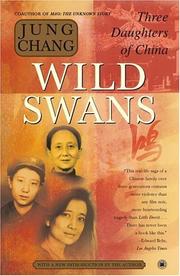
Wild Swans
Wild Swans: Three Daughters of China is a multigenerational memoir tracing the lives of Jung Chang, her mother, and her grandmother against the backdrop of China’s turbulent twentieth-century history. Beginning with her grandmother’s life under imperial rule, the narrative follows her mother’s experiences during the rise of the Communist Party and Chang’s own childhood during the Cultural Revolution. Through their personal stories, the book reveals the profound impact of political upheaval, traditional gender roles, and ideological control on ordinary Chinese families. Chang recounts her family’s experiences of arranged marriage, political persecution, forced labor, and shifting loyalties, illustrating how individual lives become entangled with national history. Combining intimate family memories with historical testimony, the memoir offers a powerful portrait of resilience, sacrifice, and the struggle for personal freedom across three generations of Chinese women.
China
2003
7
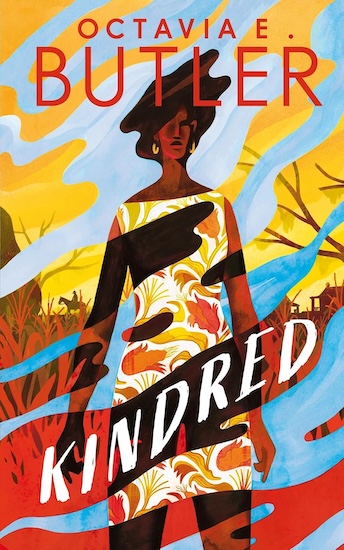
Kindred
In Kindred, Dana, a young Black writer living in California in 1976, is unexpectedly transported through time to an antebellum Maryland plantation. Each time she arrives in the past, she encounters Rufus Weylin, the white son of a plantation owner whose survival becomes mysteriously linked to her own. As Dana is repeatedly pulled between her modern life and the brutal realities of slavery, she must navigate a world where her freedom and safety are constantly threatened. Her relationship with Rufus grows increasingly complicated as she struggles to protect her ancestors while preserving her own identity and humanity. Blending historical fiction and science fiction, Octavia E. Butler explores slavery, racism, power, and the enduring consequences of historical violence. The novel offers a deeply personal examination of how the past shapes the present and challenges our understanding of freedom, survival, and belonging.
United States
2003
8
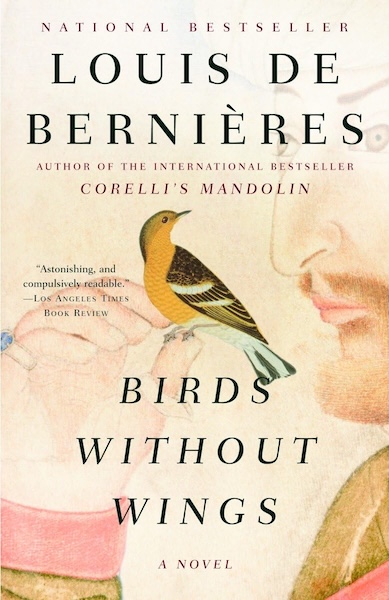
Birds Without Wings
In the small Anatolian village of Eskibahçe, Muslims and Christians have lived side by side for generations, sharing a language, traditions, friendships, and everyday life. At the heart of this close-knit community is the tender love between Philothei, a beautiful Greek Christian girl, and Ibrahim, a Muslim goatherd who has loved her since childhood. Their future seems possible—until the forces of history begin to tear their world apart.
As the Ottoman Empire collapses and modern Turkey emerges, the villagers are swept into the First World War, the rise of nationalism, and the brutal Greek-Turkish conflict. Through the voices of ordinary people, de Bernières creates an expansive portrait of a society destroyed by religious divisions, political ambition, and forced displacement. Both heartbreaking and darkly humorous, Birds Without Wings explores how people who once lived as neighbours can become enemies—and how love and humanity endure even amid extraordinary cruelty.
Türkiye
2004
9
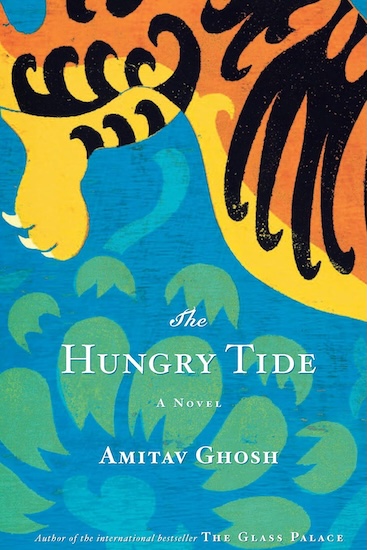
The Hungry Tide
Set in the Sundarbans, a vast archipelago of mangrove forests and tidal rivers on the eastern coast of India, The Hungry Tide brings together three people from different worlds. Piya Roy, an American marine biologist of Indian descent, arrives to study the endangered Irrawaddy dolphins. She meets Fokir, a local fisherman whose intimate knowledge of the waterways makes him an invaluable guide, and Kanai Dutt, a translator and businessman visiting his aunt on the islands. As their lives become intertwined, they encounter the region’s dangerous wildlife, political tensions, and precarious relationship between humans and nature. Through this richly layered story, Amitav Ghosh explores environmental conservation, cultural differences, displacement, and the struggle of vulnerable communities to survive in an unforgiving landscape. The novel examines the complex relationship between people and the natural world, questioning whether scientific knowledge, local traditions, and human ambition can coexist.
India
2004
10
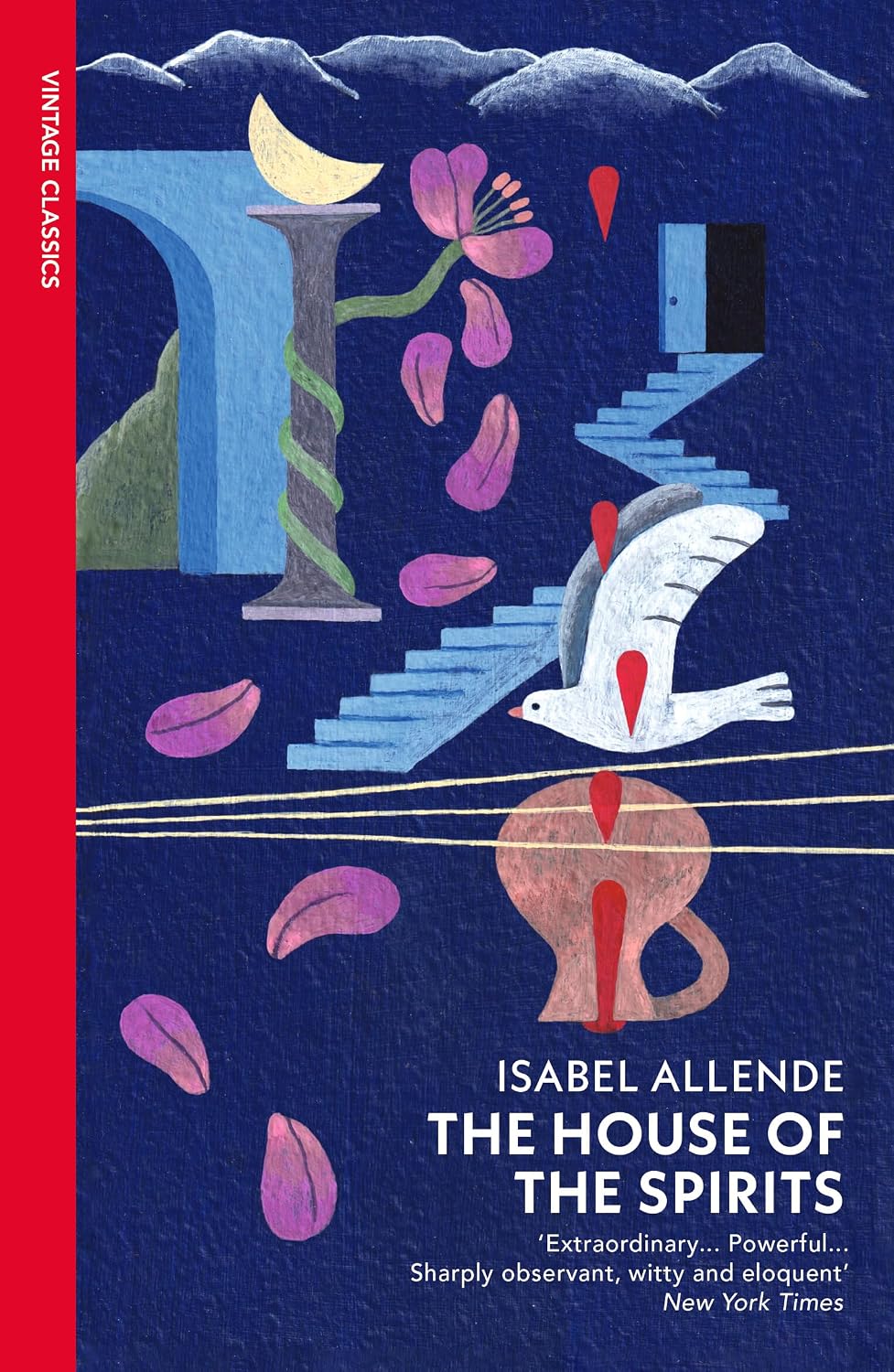
The House of the Spirits
The House of the Spirits chronicles several generations of the Trueba family in an unnamed Latin American country closely resembling Chile. At its centre are Clara, a woman with supernatural abilities, and Esteban Trueba, a powerful landowner whose ambition and authoritarian beliefs shape the lives of those around him. As the family experiences love, betrayal, political upheaval, and personal tragedy, their private struggles become intertwined with the country’s transformation. Allende blends magical realism with historical and political fiction, allowing spirits and supernatural events to coexist with the realities of class divisions and dictatorship. The novel explores how family secrets and inherited patterns of violence can persist across generations, while also suggesting the possibility of reconciliation and renewal.
Chile
2005
11
Three Day Road
In this powerful and mesmerizing debut, Joseph Boyden reinvents the tradition of Great War epics like All Quiet on the Western Front and Birdsong. It is 1919 and Niska, an Oji- Cree medicine woman, has left her home in the bush of northern Ontario to retrieve Xavier Bird, her only relation, who has returned from the trenches of Europe. Gravely wounded and addicted to morphine, Xavier recounts how he and his best friend, Elijah Whiskeyjack, prowled the battlefields as snipers of enormous skill—and how the circumstances of their deadly craft led them to very different fates. Told with unblinking focus, this is a stunning tale of brutality, survival, and rebirth that marks the arrival of a prodigious new talent.
Canada
2005
12
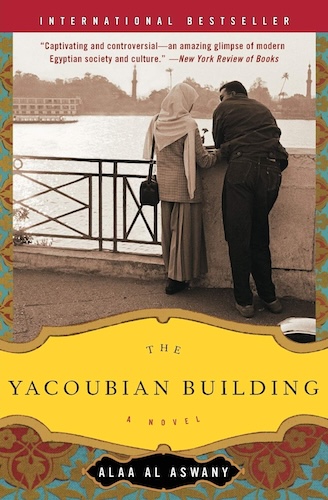
The Yacoubian Building
Behind the elegant façade of a once-grand Cairo apartment building lies a society fractured by corruption, poverty, and unfulfilled dreams. Its residents include a disillusioned journalist, a young man whose ambition to become a police officer is crushed by class prejudice, a wealthy businessman pursuing forbidden pleasures, and an ageing aristocrat haunted by a vanished past. As their lives intersect, the building becomes a microcosm of modern Egypt, exposing the hypocrisies of its ruling class and the quiet desperation of those struggling to escape their circumstances. Bold and provocative, The Yacoubian Building offers an unforgettable portrait of a nation caught between tradition, repression, and the desire for change.
Egypt
2006