Historical Fiction
All countries
Afghanistan
Albania
Algeria
Angola
Antigua and Barbuda
Argentina
Armenia
Australia
Austria
Azerbaijan
Bangladesh
Barbados
Belize
Benin
Bosnia and Herzegovina
Brazil
Bulgaria
Burundi
Canada
Chile
China
Congo, Democratic Republic
Côte d’Ivoire (Ivory Coast)
Croatia
Cuba
Cyprus
Denmark
Djibouti
Dominica
Dominican Republic
Egypt
El Salvador
Ethiopia
Fiji
France
Georgia
Germany
Ghana
Greece
Guatemala
Hungary
Iceland
India
Indonesia
Iran
Iraq
Ireland
Italy
Jamaica
Japan
Kazakhstan
Kenya
Kuwait
Latvia
Lebanon
Libya
Madagascar
Malaysia
Mexico
Moldova
Morocco
Myanmar
Netherlands
Nigeria
North Korea
Oman
Pakistan
Palestine
Philippines
Poland
Portugal
Puerto Rico
Romania
Rwanda
Saudi Arabia
Senegal
Singapore
Slovenia
South Africa
South Korea
Spain
Sri Lanka
Sudan
Sweden
Switzerland
Syria
Taiwan
Tanzania
Thailand
Türkiye
Turkmenistan
Uganda
Ukraine
United Arab Emirates
United Kingdom
United States
Uruguay
Uzbekistan
Vietnam
Yemen
Zambia
Zimbabwe
1
Music Against the Night
Set against the political and cultural upheavals of the late eighteenth and nineteenth centuries, Yiyun Li’s sweeping historical novel follows two gifted musicians whose ambitions take them across continents.
John Field, born in Dublin in 1782, is a musical prodigy whose father dreams of making him the next Mozart. His talent carries him from Ireland to England, France, and eventually Russia, where he becomes a celebrated pianist and composer. He helps popularize the nocturne, a musical form later associated most famously with Frédéric Chopin.
Meanwhile, in Pondicherry, French India, Adelaide Percheron—an orphan raised by her formidable grandmother—discovers her own passion for music. Determined to escape the limitations imposed by her circumstances, she pursues opportunities in Paris and Moscow, striving to build a life beyond the expectations placed upon women of her time.
When their paths eventually converge, John and Adelaide must navigate the complexities of marriage, artistic ambition, and competing desires. Through their intertwined lives, Li examines the price of genius, the exploitation of talent, and the fragile boundary between artistic achievement and personal fulfilment. The novel asks what artists must sacrifice for recognition—and whether their work can outlive the people who create it.
China
2026
2
A Beast Slinks Towards Beijing
Spanning three generations and moving between Japanese-occupied Manchuria, the Cultural Revolution, and contemporary America, A Beast Slinks Towards Beijing is a dark, magical-realist family saga about inherited trauma, historical violence, and the stories families carry across generations.
Twenty-five-year-old Qianze has not seen her father, Weihong, since he abandoned her on the night of her fourteenth birthday. Eleven years later, he reappears at her childhood home in Virginia, aged beyond recognition and struggling with dementia and alcoholism. Haunted by a half-forgotten prophecy, he begins recounting his past, including his violent experiences as a Red Guard during the Cultural Revolution and the hardships endured by his mother under Japanese occupation. As Qianze listens, she discovers a family history far more disturbing than she imagined. Strange visions begin to invade her everyday life: fox spirits follow her through the city, and a terrifying mythical creature stalks her nightmares.
Blending Chinese and Japanese folklore with historical fiction and supernatural horror, Yang explores how colonialism, political violence, and family secrets shape successive generations. The novel asks whether understanding the past can offer a path toward forgiveness—or whether some histories continue to haunt the living.
China
2026
3
The Imitation Englishman
In 1916, as the First World War reshapes the world, Madhusudan Chandra Joshi, a young Indian clerk from the Himalayan town of Almora, travels to Heidelberg to study law and secure a better future. His plans take an unexpected turn when he meets Amir Farooqui, a mysterious revolutionary who draws him into the Hindu–German Conspiracy, an international effort by Indian nationalists in exile to overthrow British colonial rule. As the war makes Germany increasingly dangerous for Indian students and activists, the two men embark on separate journeys: Madhusudan heads to London to continue his education, while Amir travels to San Francisco to reconnect with fellow revolutionaries. In London, Madhusudan encounters the racism and inequalities underpinning the British Empire, forcing him to question his ambitions and his understanding of identity. Moving between India, Europe, and America, Devki Pande’s historical novel explores the complicated relationship between colonialism, education, belonging, and resistance. Inspired by the author’s own family history, it is a story of political awakening, personal transformation, and the search for freedom in an unequal world.
India
2026
4
The Last Movement
In the spring of 1911, the celebrated composer and conductor Gustav Mahler boards a ship in New York, beginning his final journey back to Europe. Gravely ill and aware that his life is drawing to a close, he spends much of the voyage wrapped in blankets on deck, watching the vast ocean and revisiting memories of the past. His thoughts move between the musical triumphs that made him famous, the summers he spent in the mountains, the devastating death of his young daughter Maria, and his complicated relationship with his wife, Alma. Once the great love of his life, Alma has fallen for the young architect Walter Gropius, leaving Mahler struggling with jealousy, regret, and the painful realisation that love cannot be commanded. Through fleeting memories and quiet moments of reflection, Robert Seethaler creates an intimate portrait of a brilliant artist confronting mortality. Poignant and restrained, the novel meditates on love, loss, artistic ambition, and what remains when a life approaches its final note.
Austria
2026
5
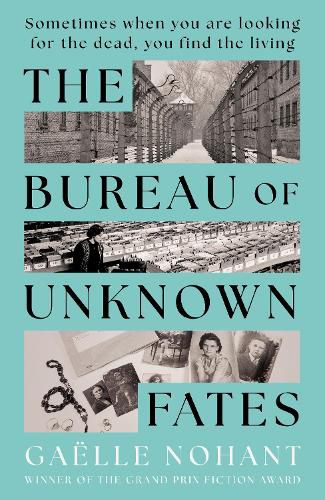
The Bureau of Unknown Fates
In the aftermath of the Second World War, the Allies establish the International Tracing Service in Bad Arolsen, Germany, to investigate Nazi crimes and help families discover the fates of millions of missing and displaced people. In 1990, Irène, a young Frenchwoman who has moved to Germany after marrying a German man, begins working at the institution. Meticulous and deeply committed to her work, she gradually becomes absorbed in the stories preserved within its archives. Years later, she is entrusted with returning thousands of personal belongings confiscated from concentration camp prisoners. A cloth doll, a medallion, and an embroidered handkerchief become clues to the identities of their former owners and the families they left behind. As Irène follows these traces across Europe, she uncovers stories of persecution, complicity, survival, and loss, while confronting the troubling silences surrounding Germany’s wartime past. Weaving together individual lives and collective memory, Gaëlle Nohant’s moving historical novel explores the enduring consequences of the Holocaust and the power of remembrance to restore dignity to those history has nearly erased.
France
2026
6
A House in Sicily
Set in postwar Japan in 1959, Twilight in Musashino begins with the discovery of a young Japanese flight attendant strangled on the icy banks of a river. As Detective Fujisawa investigates the murder, his attention turns to a foreign priest and the Guglielmo Church, a charitable Christian mission with an unsettling connection to the victim. What initially appears to be a straightforward criminal investigation gradually reveals a tangled web involving narcotics, postwar relief operations, and international diplomacy. The deeper Fujisawa digs, the more he encounters powerful institutions determined to protect their reputations and conceal uncomfortable truths. Blending meticulous police work with an incisive examination of social power, Seicho Matsumoto constructs a slow-burning mystery in which the pursuit of justice collides with political influence and institutional silence. The novel offers a compelling portrait of a society negotiating its identity in the aftermath of war, exposing the tensions between public morality and private corruption.
Italy
2026
7
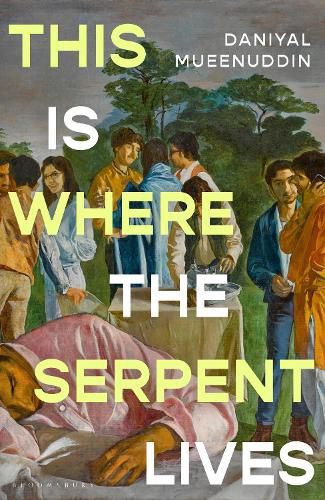
This is Where the Serpent Lives
Spanning six decades, This Is Where the Serpent Lives is an expansive portrait of contemporary Pakistan, where wealth, privilege and inherited social hierarchies shape the destinies of generations. At its centre is Yazid, an orphan who rises from poverty on the streets of Rawalpindi to become a trusted chauffeur in the household of a powerful landowning family. Around him, the lives of aristocrats, servants, ambitious farmers and young lovers intersect across Pakistan’s chaotic cities and feudal countryside. Saqib, the son of a poor gardener, receives an opportunity to manage a new agricultural enterprise, but his determination to improve his position leads him into dangerous territory. Meanwhile, rivalries, romantic entanglements and political corruption threaten the fragile order maintained by the wealthy elite. Through a richly interconnected cast of characters, Mueenuddin examines the price of ambition and the ways class, money and power perpetuate inequality. The novel offers an intimate, unsparing view of a society caught between changing aspirations and deeply entrenched traditions.
Pakistan
2026
8
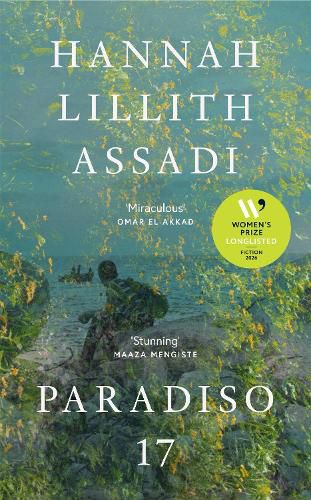
Paradiso 17
Born in Palestine on the eve of the 1948 Nakba, five-year-old Sufien is forced to leave his family’s ancestral home, beginning a lifelong journey shaped by displacement and the search for belonging. From a refugee camp in Syria to the oil-rich deserts of Kuwait, the university streets of Florence, and the crowded neighbourhoods of New York, Sufien moves between countries and cultures, repeatedly attempting to build a home somewhere new. Yet every place offers both the promise of reinvention and the painful reminder of what he has lost.
In Kuwait, he experiences first love and family estrangement. In Italy, he discovers intellectual freedom and the intoxicating possibilities of life beyond his upbringing. Later, in New York, he forms an unlikely friendship with a wealthy Jewish American man and falls in love with a Jewish woman, creating a family of his own. But even as he establishes roots in the United States, the past remains an enduring presence.
Recounted from his deathbed, Sufien’s story moves between memory and reflection, tracing the complicated relationship between exile, identity, and the desire to belong. Inspired by the life of Assadi’s Palestinian father, this lyrical novel explores how displacement reverberates across generations and asks whether home is a place we can recover, a community we create, or an idea we carry within ourselves.
Palestine
2026
9
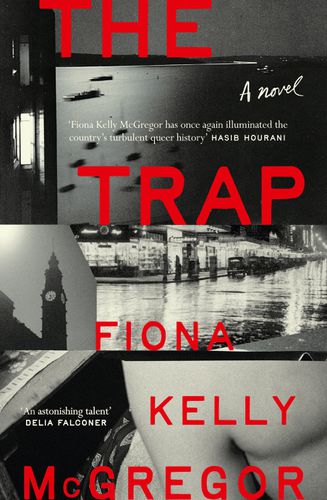
The Trap
Sydney, October 1942. As the Second World War transforms the city, blackouts, curfews, thriving black markets, and an influx of American servicemen create an atmosphere of opportunity and danger. Beneath the respectable surface of wartime society, nightclubs and underground bars offer refuge to people living outside conventional social norms. Among them is Ray Sayles, a nightclub manager whose encounter in the Domain, a public park in central Sydney, brings him to the attention of the police.
Detectives Thomas Carney and William Grigg are conducting a campaign against homosexual men, using entrapment in public toilets to manufacture arrests. As Ray becomes caught in their scheme, a scandal begins to expose the corruption and hypocrisy of those entrusted with upholding the law. Journalists, lawyers, and influential establishment figures become entangled in a struggle over truth, reputation, and justice.
Inspired by a real historical scandal, this compelling novel brings to life Sydney’s marginalised communities during wartime. Blending crime fiction with social history, McGregor examines institutional homophobia, police corruption, and the resilience of people forced to conceal their identities to survive. At its heart, The Trap asks who gets to define morality—and what happens when the law itself becomes an instrument of persecution.
Australia
2026
10
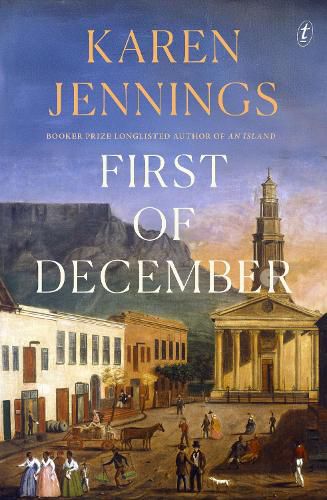
First of December
Set during the final week before the emancipation of enslaved people in South Africa, First of December follows three individuals whose lives intersect on the eve of a historic turning point. Caroline Kendrick, an English bride living in the Cape Colony, finds herself trapped in an unhappy marriage and a place she despises. Her husband, James, is determined to build a successful future and restore his fortunes through an ambitious banking venture, even as his relationship with Caroline deteriorates. Meanwhile, an unnamed enslaved woman, devastated by the loss of her stillborn child, escapes and travels along the coast toward Cape Town, desperate to reunite with her lover before freedom is declared.
As their journeys unfold, the characters confront loneliness, ambition, desperation, and the brutal inequalities of colonial society. Their personal struggles take place against the historical reality of emancipation, which formally took effect in the Cape Colony on 1 December 1838, following a period of compulsory apprenticeship for formerly enslaved people.
With restrained prose and profound psychological insight, Jennings explores the distance between legal freedom and lived experience. The novel examines how historical change transforms individual lives while exposing the enduring power imbalances embedded in society.
South Africa
2026
11
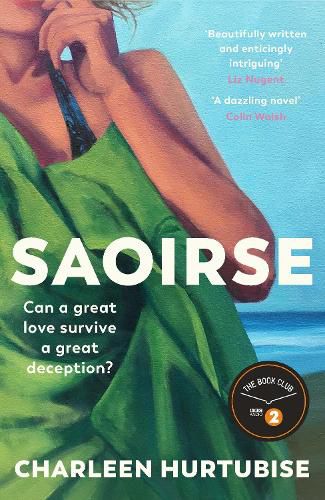
Saoirse
In 1999, Saoirse Byrne appears to have found the life she always dreamed of. Living on Ireland’s rugged Donegal coast, she shares a peaceful home with her partner, Daithí, and their two daughters. A talented artist, she pours her love for her family and her appreciation of the surrounding landscape into her paintings. But beneath this seemingly idyllic existence lies a secret: Saoirse has been living under a stolen identity since fleeing the United States as a teenager. She has crossed an ocean to escape a traumatic childhood and the dangerous people connected to her past, determined never to return to the life she left behind.
When an exhibition in Dublin brings her unexpected acclaim, the attention threatens to expose the carefully constructed identity that has allowed her to survive. As memories of her troubled upbringing and the choices she made to escape resurface, Saoirse must confront the possibility that the past she has tried to bury could destroy the family and freedom she has worked so hard to build.
Moving between Ireland and the United States, this suspenseful literary novel explores trauma, reinvention, the complexities of love, and the fragile boundary between survival and deception. It asks whether it is possible to escape one’s past—or whether true freedom requires facing it at last.
Ireland
2026
12
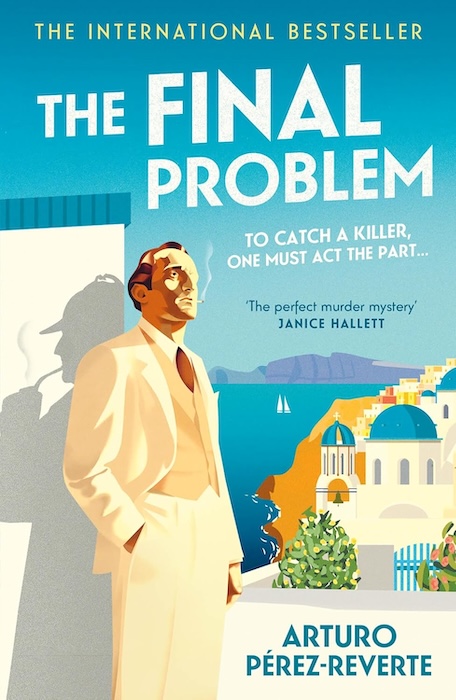
The Final Problem
In June 1960, a violent storm traps nine travelers on the secluded Greek island of Utakos, where they are staying at the island’s only hotel. Their isolation takes a sinister turn when Edith Mander, a quiet British tourist, is found dead in a beach pavilion. Although her death initially appears to be suicide, the circumstances suggest something far more mysterious. With the island cut off from the outside world, the guests find themselves trapped in a classic locked-room mystery, and everyone becomes a potential suspect.
Their unlikely investigator is Ormond Basil, a once-famous actor whose most celebrated role was Sherlock Holmes. Although Basil has spent his career portraying the legendary detective rather than solving real crimes, his familiarity with Holmes’s methods may be the group’s only hope. When another body is discovered, the mystery deepens into a deadly game involving literary clues, carefully staged murders, and a killer who seems to understand detective fiction as intimately as Basil himself.
A witty homage to the golden age of crime fiction, the novel explores the boundaries between fiction and reality, the nature of storytelling, and the intellectual duel between a detective and a murderer—and between an author and a reader.
Spain
2026