Historical Fiction
All countries
Afghanistan
Albania
Algeria
Angola
Antigua and Barbuda
Argentina
Armenia
Australia
Austria
Azerbaijan
Bangladesh
Barbados
Belize
Benin
Bosnia and Herzegovina
Brazil
Bulgaria
Burundi
Canada
Chile
China
Congo, Democratic Republic
Côte d’Ivoire (Ivory Coast)
Croatia
Cuba
Cyprus
Denmark
Djibouti
Dominica
Dominican Republic
Egypt
El Salvador
Ethiopia
Fiji
France
Georgia
Germany
Ghana
Greece
Guatemala
Hungary
Iceland
India
Indonesia
Iran
Iraq
Ireland
Italy
Jamaica
Japan
Kazakhstan
Kenya
Kuwait
Latvia
Lebanon
Libya
Madagascar
Malaysia
Mexico
Moldova
Morocco
Myanmar
Netherlands
Nigeria
North Korea
Oman
Pakistan
Palestine
Philippines
Poland
Portugal
Puerto Rico
Romania
Rwanda
Saudi Arabia
Senegal
Singapore
Slovenia
South Africa
South Korea
Spain
Sri Lanka
Sudan
Sweden
Switzerland
Syria
Taiwan
Tanzania
Thailand
Türkiye
Turkmenistan
Uganda
Ukraine
United Arab Emirates
United Kingdom
United States
Uruguay
Uzbekistan
Vietnam
Yemen
Zambia
Zimbabwe
1
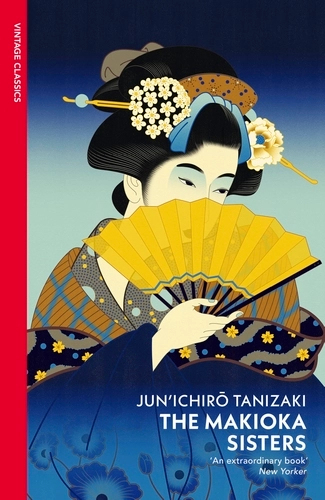
The Makioka Sisters
Set in Osaka and its surrounding areas during the years leading up to the Second World War, The Makioka Sisters follows four women from a once-prosperous merchant family struggling to preserve their social standing as Japanese society undergoes profound change. The story centers on the sisters’ efforts to arrange a suitable marriage for Yukiko, the quiet and reserved third daughter, whose future is complicated by family expectations, social conventions, and a series of unsuccessful matchmaking attempts. Meanwhile, the youngest sister, Taeko, pursues a more independent life, challenging the traditional values that govern her family’s decisions.
Through the sisters’ daily routines, seasonal celebrations, family gatherings, and romantic entanglements, Tanizaki captures the tensions between tradition and modernity in prewar Japan. Beneath the novel’s elegant descriptions of clothing, festivals, and landscapes lies a poignant portrait of a family confronting the gradual erosion of its privilege and influence. The novel explores the bonds between sisters, the pressures of social conformity, and the difficulty of adapting to a changing world. Rich in cultural detail and psychological insight, it is both an intimate family saga and an elegy for a disappearing way of life.
Japan
1957
2

Best of Everything
The Best of Everything follows five young women working in a New York publishing company during the late 1950s as they navigate professional ambition, romance, and the expectations placed on women in postwar America. Caroline Bender dreams of building a meaningful career, while her colleagues struggle with relationships, financial insecurity, and the pressure to find suitable husbands. Their experiences reveal a world in which women are encouraged to pursue independence but are still judged by their marital status and appearance. As the characters encounter workplace discrimination, emotional disappointments, and difficult personal choices, they begin to question what success and happiness really mean. Jaffe offers an unvarnished portrait of women’s lives in a rapidly changing society, exploring the conflict between individual aspirations and conventional expectations. The novel examines gender inequality, ambition, and the price women are often expected to pay for trying to have both a career and a fulfilling personal life.
United States
1958
3

Men in the Sun and Other Palestinian Stories
Men in the Sun and Other Palestinian Stories brings together some of Ghassan Kanafani’s most powerful works of fiction, exploring the lives of Palestinians displaced by the creation of Israel in 1948 and the subsequent loss of their homes and homeland. The collection’s central novella, Men in the Sun, follows three Palestinian men of different generations who attempt to escape the poverty and desperation of refugee life by travelling illegally from Iraq to Kuwait in search of work. Entrusting their fate to a smuggler, they place their hopes in the possibility of a better future, only to confront the devastating consequences of their journey.
Through stories of exile, poverty, political oppression, and shattered aspirations, Kanafani portrays the psychological and material realities of displacement. His characters struggle not only with survival but also with questions of identity, dignity, and collective responsibility. Written with stark realism and symbolic depth, the collection examines the human cost of dispossession and the longing for a place to call home. It remains a significant work of Palestinian literature, giving voice to the experiences of a people shaped by exile and resistance.
Palestine
1962
4
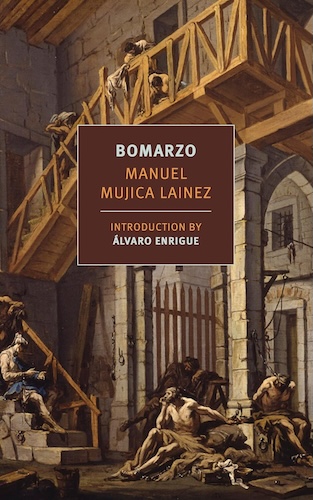
Bomarzo
Set in Renaissance Italy, Bomarzo tells the story of Pier Francesco Orsini, a physically deformed nobleman who becomes the Duke of Bomarzo. Intelligent, sensitive, and deeply conscious of his appearance, he grows up surrounded by cruelty, political intrigue, and family rivalries. Determined to overcome his vulnerabilities and secure his place in a world obsessed with power and beauty, he navigates the dangerous world of Renaissance aristocracy. Narrated from beyond the grave, his story blends historical events with fantasy, philosophical reflection, and dark humor. Through Orsini’s life and his creation of the extraordinary Garden of Monsters, Manuel Mujica Lainez explores mortality, ambition, identity, and humanity’s enduring desire to defy death.
Argentina
1962
5
Arrow of God
Arrow of God is set in the Igbo communities of southeastern Nigeria during the early twentieth century, as British colonial rule and Christian missionary activity begin to transform traditional society. At the centre of the novel is Ezeulu, the chief priest of Ulu, the most powerful deity of six neighbouring villages. Proud, intelligent, and deeply committed to his religious responsibilities, Ezeulu sees himself as the guardian of his people’s spiritual and cultural traditions. However, his growing conflicts with colonial administrators, Christian missionaries, and rival community leaders gradually undermine his authority.
When Ezeulu refuses to cooperate with the British authorities, his decision creates a crisis that threatens both his position and the unity of his people. His personal pride and religious convictions become entangled with broader struggles over power, belief, and cultural survival. Through Ezeulu’s tragic story, Chinua Achebe examines the consequences of colonialism, the tensions between tradition and change, and the dangers of political and spiritual inflexibility. The novel offers a nuanced portrait of a society confronting profound transformation from within and without.
Nigeria
1964
6
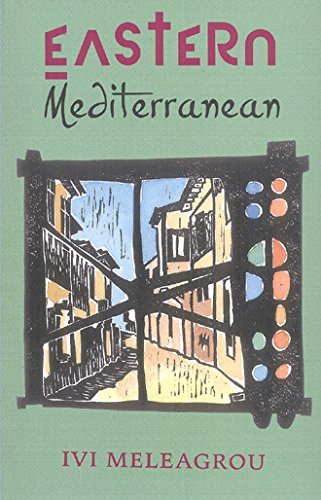
Eastern Mediterranean
Set in Nicosia between 1960 and the beginning of the intercommunal violence in 1963, Eastern Mediterranean portrays Cyprus during the turbulent early years of its independence. Through a cast of interconnected characters, Ivi Meleagrou explores a society caught between hopes for a new national future and the growing tensions threatening to tear it apart.
At the centre of the novel is Margarita, whose relationship with her homeland reflects the emotional and political uncertainty of the period. As the island struggles to define its identity following British colonial rule, longstanding divisions between Greek Cypriots and Turkish Cypriots deepen. Political ideals collide with personal loyalties, while ordinary people find their relationships and everyday lives increasingly shaped by forces beyond their control.
Alongside its portrayal of political upheaval, the novel examines romantic disappointment, marital alienation, and the struggle to preserve one’s sense of self amid collective uncertainty. Meleagrou connects the private lives of her characters with the wider fate of Cyprus, showing how historical events enter homes, reshape relationships, and challenge deeply held beliefs.
First published in Greek in 1969, this landmark work of Cypriot literature offers a nuanced portrait of a society approaching a critical historical turning point. It is particularly significant for its exploration of national identity, political division, and the fragile hopes surrounding independence.
Cyprus
1969
7
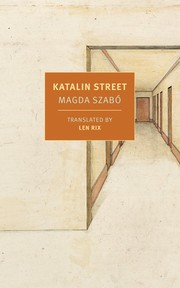
Katalin Street
Set in Budapest before, during, and after the Second World War, Katalin Street follows three families whose lives are closely intertwined through friendship, love, and shared childhood memories. At the centre of the story is Henriette, a Jewish girl whose death during the war leaves an enduring wound in the lives of her neighbours and friends: the Bálints, the Elekes, and the Helds. As political upheaval transforms Hungary, the survivors struggle to rebuild their lives, yet remain haunted by the past and by the choices they made. Through shifting perspectives and a nonlinear narrative, Szabó explores how trauma, guilt, and nostalgia shape personal identity and relationships across generations. The street itself becomes a powerful symbol of a lost world, representing the fragile security of childhood and the impossibility of returning to what once was. Both intimate and historically resonant, the novel examines the lasting consequences of war and the ways the dead continue to inhabit the lives of the living.
Hungary
1969
8
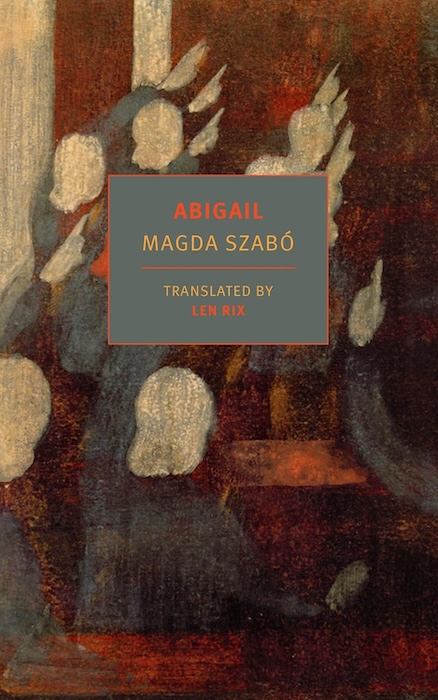
Abigail
Set in Hungary during the Second World War, Abigail follows fourteen-year-old Gina Vitay, the sheltered daughter of a Hungarian general. When her father unexpectedly sends her to a strict boarding school in the countryside, Gina feels betrayed and struggles to adapt to the school’s rigid rules and unfamiliar environment. Forbidden from revealing her father’s identity or explaining the circumstances of her arrival, she initially rebels against her teachers and classmates. Gradually, however, she discovers that the school hides secrets of its own, and that an enigmatic figure known as Abigail may offer help to those in danger. As the war intensifies, Gina must abandon her childish assumptions and learn to trust others, confront difficult truths, and take responsibility for her actions. Blending coming-of-age fiction, mystery, and historical drama, Szabó’s novel explores courage, loyalty, sacrifice, and the struggle to preserve one’s humanity under an oppressive regime.
Hungary
1970
9
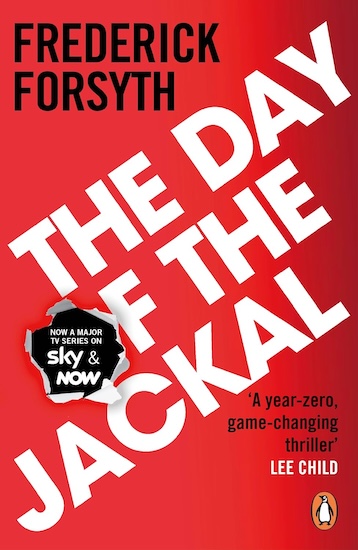
The Day of the Jackal
France, 1963. Following repeated attempts to assassinate President Charles de Gaulle, a militant organisation determined to overthrow him hires a professional killer known only by his codename: the Jackal. Brilliant, meticulous, and almost impossible to identify, the assassin begins preparing an elaborate plan to kill the French president. He obtains false identities, arranges specialised equipment, and carefully studies the security measures surrounding his target.
When French intelligence discovers the conspiracy, the authorities launch a desperate hunt for the unknown assassin. Commissaire Claude Lebel, a methodical detective with an exceptional ability to follow small clues, is assigned to lead the investigation. As the Jackal moves closer to his target, Lebel must navigate political pressure, bureaucratic obstacles, and a trail of deception stretching across Europe.
Combining painstaking procedural detail with relentless suspense, The Day of the Jackal explores the deadly intersection of political extremism, state security, and individual ambition. Frederick Forsyth transforms a fictional assassination plot into a gripping contest between two professionals, each determined to outwit the other before time runs out.
France
United Kingdom
1971
10
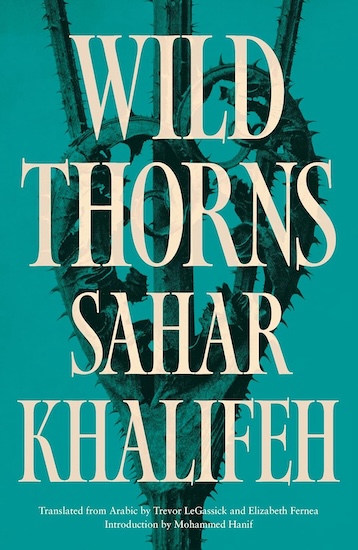
Wild Thorns
After five years working in the Gulf, Usama returns to the occupied West Bank determined to join the Palestinian resistance. He is shocked to discover that life in his hometown of Nablus has changed dramatically. Many Palestinians now work in Israel to support their families, navigating military checkpoints and economic dependence while enduring the daily humiliations of occupation. Frustrated by what he sees as resignation, Usama plans to sabotage buses transporting Palestinian workers into Israel. Yet his encounters with family members, former friends, and fellow Palestinians force him to confront the difficult choices people face between resistance and survival. Through a vivid portrait of ordinary lives under military occupation, Sahar Khalifeh explores political resistance, economic hardship, family loyalty, and the moral complexities of living under oppression. First published in Arabic in 1976, Wild Thorns is a landmark of Palestinian literature that examines the psychological and social consequences of occupation without reducing its characters to simple heroes or victims.
Palestine
1976
11
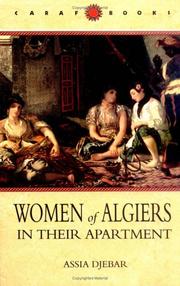
Women of Algiers in Their Apartment
Women of Algiers in Their Apartment is a collection of short stories by Algerian writer Assia Djebar that explores the lives of women navigating the aftermath of colonialism and the Algerian War of Independence. Through interwoven narratives, Djebar portrays women from different generations as they confront the restrictions imposed by patriarchal traditions, the trauma of violence, and the challenges of claiming independence in a changing society. Drawing inspiration from Eugène Delacroix’s painting of the same name, the collection reimagines women traditionally depicted as silent and secluded, giving them voices through which to express their desires, memories, and struggles. Djebar combines personal testimonies, historical reflection, and lyrical prose to examine how women’s experiences have been marginalised in official accounts of national history. Her characters negotiate the tension between tradition and modernity while seeking autonomy and meaningful connection. The collection becomes both an act of remembrance and a literary form of resistance, revealing the complex relationship between women’s liberation, cultural identity, and the unfinished struggle for freedom in postcolonial Algeria.
Algeria
1980
12
Purple Hibiscus
Purple Hibiscus follows fifteen-year-old Kambili Achike, who grows up in a wealthy Nigerian family ruled by her father, Eugene, a respected businessman and devout Catholic. In public, Eugene is admired for his generosity and outspoken opposition to political corruption. At home, however, his rigid religious beliefs and authoritarian behaviour create an atmosphere of fear and violence. Kambili and her brother, Jaja, learn to remain silent and obedient to avoid their father’s anger.
Their lives begin to change when they visit their aunt Ifeoma, a university lecturer who raises her children in a household filled with debate, laughter, and intellectual freedom. Through this experience, Kambili gradually discovers her own voice and begins to question the beliefs that have shaped her childhood. Set against the political instability of postcolonial Nigeria, the novel explores religious fanaticism, domestic abuse, freedom, and the courage required to challenge authority. With sensitivity and psychological depth, Adichie portrays a family’s struggle to break free from fear and rediscover the possibility of love and independence.
Nigeria
1980